
Unlock the Editor’s Digest for free
Roula Khalaf, Editor of the FT, selects her favourite stories in this weekly newsletter.
SpaceX expects to have its flagship Starship rocket ready to launch a new fleet of its Starlink satellites by the middle of next year, as the company prepares for a crucial test ahead of an initial public offering.
Speaking at the Mobile World Congress event in Barcelona, executives at Elon Musk’s rocket company gave the clearest timetable yet for the commercial debut of its next-generation rocket.
Michael Nicolls, senior vice-president for Starlink at SpaceX, said that Starship would be ready in time to launch a new, upgraded constellation of Starlink’s mobile satellites in “mid-2027”.
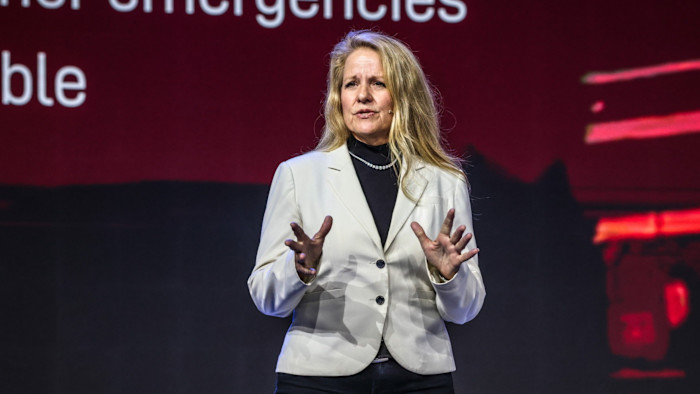
A Starship test flight is expected in the next “four to six weeks”, SpaceX’s president Gwynne Shotwell told the FT on the sidelines of the event. Musk had previously suggested in a social media post in January that Starship’s 12th test flight would occur by early March.
The launch will be closely watched by prospective investors ahead of an IPO that could value SpaceX at as much as $1.5tn later this year, in what would be the biggest stock market debut ever.
SpaceX successfully completed its 11th test of Starship from its Texas launch pad in October, with the rocket flying for more than an hour before landing in the Indian Ocean. It is expected to offer significant improvements in cost and capacity over SpaceX’s current Falcon launch vehicles.

Starship is pivotal to Musk’s ambitions to win more contracts from the Nasa space agency and transport humans to the Moon and ultimately Mars. Designed to be fully reusable, Starship will be capable of carrying up to 250 metric tonnes.
Starship’s success is central to the company’s pitch to Wall Street. Reusable vehicles promise to transform the economics of getting to space and could propel SpaceX to a new phase of growth.
The rocket’s expanded capacity will accelerate the pace at which SpaceX can grow its network of thousands of Starlink communications satellites, which are already used by millions of customers.
“We’ll be able to launch more than 50 satellites on every launch [using Starship] and we’ll begin launching in mid-2027,” Nicolls said. “With this, Starship will be able to deploy the constellation very quickly.”
Recommended

Last month, Starlink Mobile surpassed 10mn monthly users and Nicolls said it was aiming to more than double that number to 25mn by the end of this year.
Nicolls said SpaceX hoped to deploy 1,200 satellites within six months of the launch next year, forming a new constellation with improved networking capabilities.
Starlink Mobile at present partners with operators such as T-Mobile US and the UK’s Virgin Media O2 to provide a mobile signal where terrestrial networks do not.
“Overall, the system may even replace the need to deploy terrestrial networks in certain locations,” said Nicolls.
Asked whether SpaceX’s priority was to reach the Moon or Mars first, Shotwell said both were important to the company’s mission.
“Elon has talked a lot about the Moon recently, but Mars is his passion,” she said. “Let’s call them co-priorities.”