
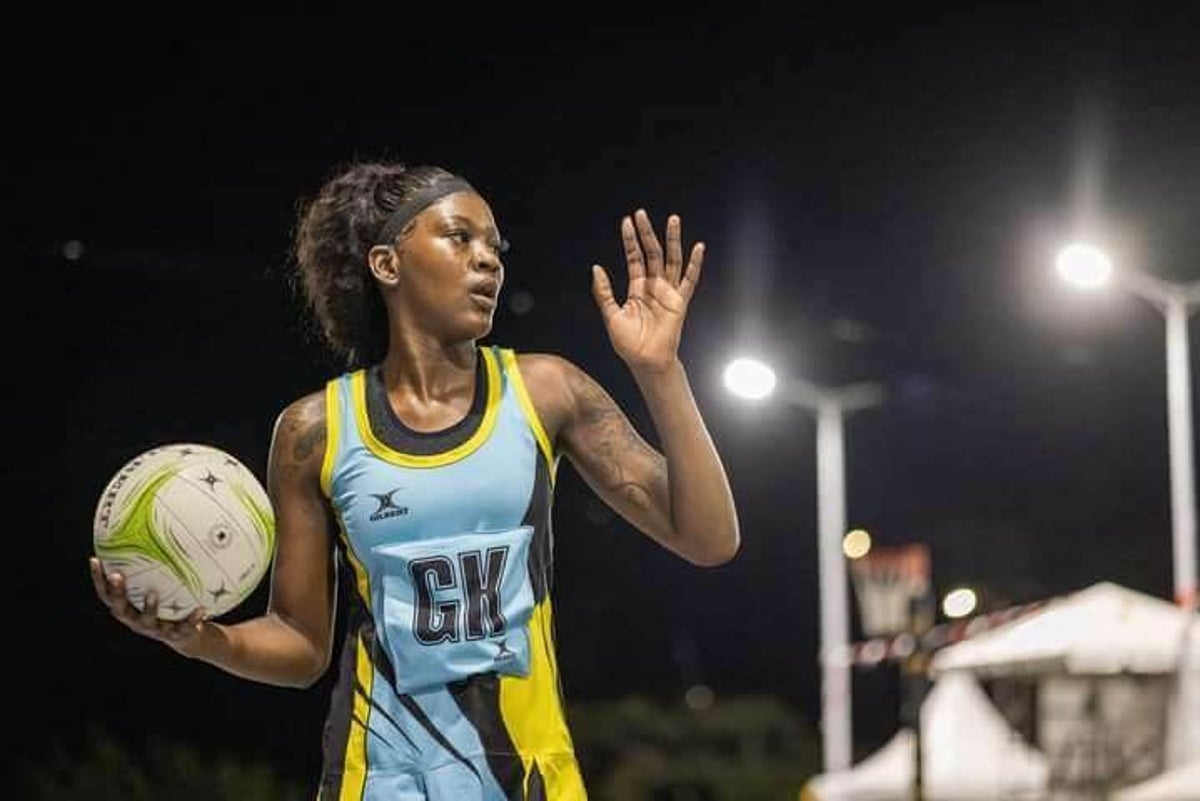
When Megan Nestor first arrived in Plainview, Texas, she was worried. First, she worried about the dry heat. Growing up in St. Lucia, an island in the Caribbean, Nestor was accustomed to perfect beach weather: humidity, sunshine and blue skies.
Then, she worried about finding her way around. Nestor had never visited Wayland Baptist before. But now, in a matter of days, she would be attending classes without so much as a tour.
The only thing Nestor wasn’t worried about was the sport she came to Texas to play. Though in hindsight, she should have been. Nestor had been given a scholarship to be a part of the basketball team. The only problem? She’d never played. In fact, she’d never even watched a game on TV.
“I just blindly went along with it,” said Nestor, who now plays for North Texas. “I had no idea what I was getting myself into.”
At home in St. Lucia, basketball “wasn’t really a thing,” she says. St. Lucia is known for its paradisal beaches, organic food and a dormant volcano that can be toured by driving straight into its crater. A former British territory, the island gained independence in 1979, but maintains some aspects of British culture, including its sports scene. One of those sports is netball.
Basketball is a global sport, but netball has an intense hold on young girls and women in places like New Zealand, Australia, England and the Caribbean. Because of this, there is a cohort of women’s college basketball players who spent their childhoods playing netball. Like Nestor, Columbia’s Fliss Henderson, Kentucky’s Amelia Hassett and UCLA’s Charlisse Leger-Walker grew up playing netball.
All four have found success as basketball players in the U.S. UCLA is the No. 2 team in the country with Leger-Walker at point guard, Hassett is a sharp-shooter on a Kentucky squad that has competed with the SEC’s best, Henderson’s Lions are atop the Ivy League, and Nestor has set countless records this season, including a 34-point and 31-rebound game.
Their talent at basketball is undeniable. But so are the fundamental skills that netball provides.
“It helps in so many different ways that I didn’t even realize until my basketball career started taking off,” Hassett said.
As a kid in North Curl Curl, a suburb of Sydney, Henderson always knew where she would spend Saturday mornings. Breakfast restaurants and coffee shops were filled with women and girls dressed in spandex skorts and matching fitted tops. They walked down the streets in their uniforms and ponytails, all heading to the same place.
“Saturday mornings are for netball,” she said. “Literally everyone in Australia plays netball. You see everyone you know at the netball courts. It brings the community together in a really nice way.”
Netball and basketball are like cousins. They share genes, but ultimately they are more different than they are similar. The first thing you’ll notice about netball is the hoop. Aptly named, there is a rim with a net, attached to a pole. No backboard to be found.
“It looks kind of funny,” Leger-Walker said.
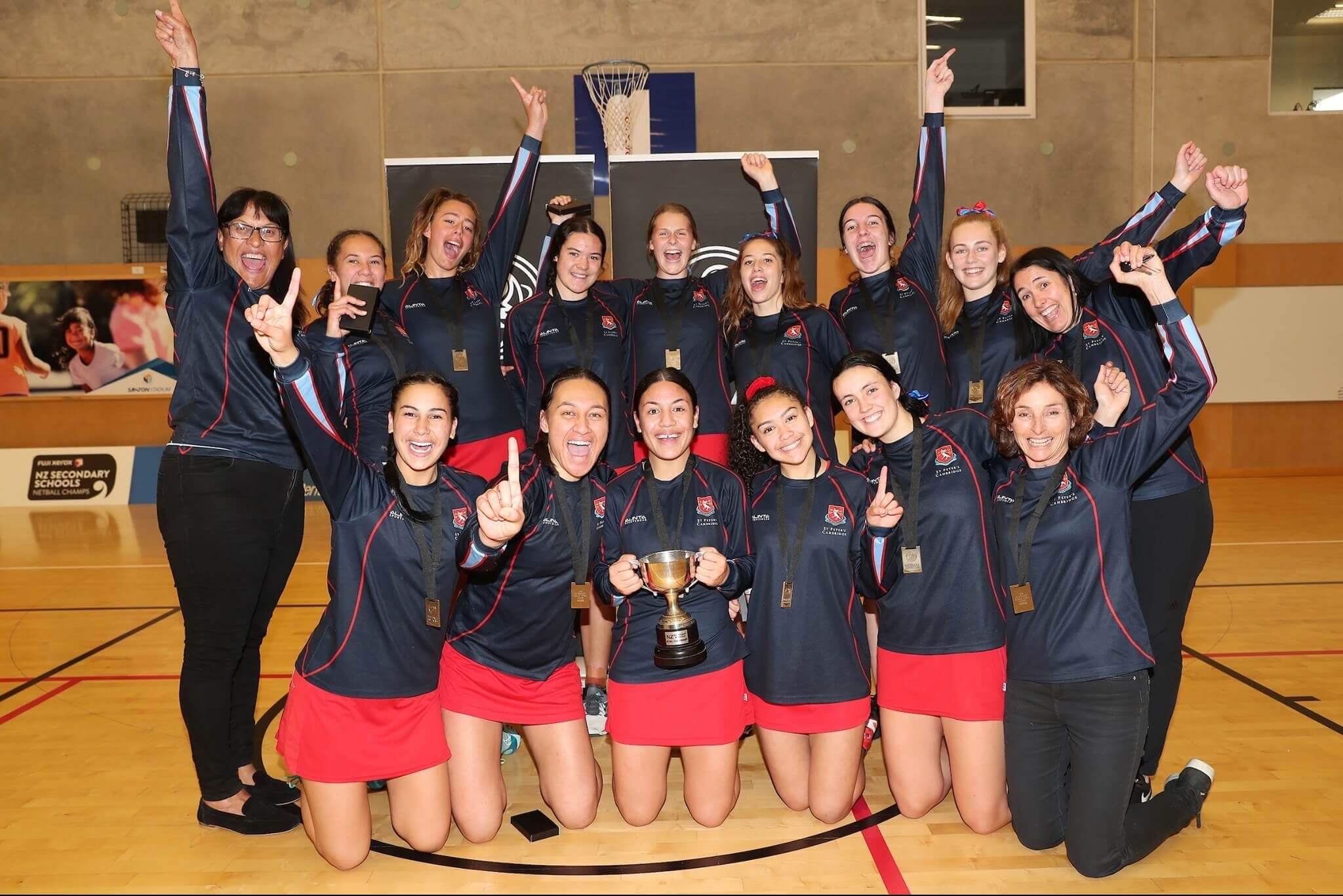
UCLA’s Charlisse Leger-Walker, fourth from left in back row, celebrates the 2019 netball high school national championship in New Zealand. (Courtesy of Leger-Walker family)
Like basketball, the goal is to get the ball into the hoop. But in netball, players can’t dribble. They also have to give three feet of space to opposing players, making shot blocking more difficult, and are confined to certain spots on the court. There are seven players for each team, no physical contact allowed, and the ball cannot be held for more than three seconds. The result is a game with spacing similar to the forward, midfield and defender concept used in soccer, mixed with the quick ball movement of a three-man weave.
Netball is often the first sport girls in Australia or New Zealand play, unless they have a prior connection to something else. Leger-Walker’s mom was an Olympic basketball player, and her dad represented New Zealand in rugby, so her first sports were basketball and touch (like rugby without tackling). In Albury, New South Wales, Hassett started out playing field hockey like her mom, before eventually switching to basketball because her older brother was playing. But even with other sports in the mix, netball is almost unavoidable.
“All of my friends played netball,” Hassett said. “So, of course, I joined too because I wanted to hang out with them.”
Both Leger-Walker and Hassett played netball and basketball simultaneously until coming to the United States for college. Basketball was their primary sport, while netball remained a fun hobby to play with friends.
Henderson didn’t even consider basketball until a coach from a local girls team came by the netball courts. The coach approached her mom and asked if Fliss and her older sister, Kitty (who also played at Columbia), would be interested in trying basketball. At first, their mom said no without asking the girls.
“She didn’t like the uniforms,” Henderson said with a laugh. “Because in netball you wear dresses. It took my mom a long time to adjust to the American style of things, like the long shorts.”
Like Leger-Walker and Hassett, Henderson continued playing netball until college, but she instantly fell in love with basketball.
“I loved the amount of freedom you have and the physicality in basketball,” Henderson said. “How you can just rip the ball off someone else and how the game happens so quickly.”
It was for those same reasons that Nestor was anti-basketball.
She started playing netball in primary school and was a natural talent. She quickly advanced through the ranks of school ball and by the time she was 11, Nestor was representing her national team, playing alongside girls who were 16 and older.
Her stepfather, who lives in Connecticut, tried to get Nestor to try basketball, but she was not interested. She wanted to be a professional netballer, and basketball, she told him, had way too much contact. She would never play such an aggressive sport.
“But,” Nestor said with a laugh, “plot twist!”
In 2021, Nestor was working two jobs when she got a call to represent St. Lucia in a netball tournament. Not an unusual call for her to get. But after the tournament she got another phone call, which was both unexpected and life-changing.
Wayland Baptist’s head coach, Jason Cooper, was desperate for a rebounder. Nestor was 6-foot-4, and had a nose for the ball – in netball at least – which was enough for Cooper. He was optimistic that he could turn her into a basketball player.
Of course, Cooper had no way of knowing Nestor had vowed never to play such an “aggressive” sport. But the promise of a full scholarship changed her mind, and within days she was on a plane to Texas.
“Because of how I grew up and where I come from, I knew how hard it was to get an opportunity like this,” Nestor said. “So I immediately grabbed it. But I didn’t take this opportunity for basketball. I really took it for school.”
Basketball was just something she had to do in order to get an education. As a freshman, Nestor spent more time carrying equipment onto the bus than she did on the court, playing just 47 minutes all season. When Henderson transitioned from netball to basketball, she had youth and a group of equally inexperienced teammates on her side. Nestor did not have the same luxury.
“I didn’t know basketball plays; I didn’t know we switched defenses,” Nestor said. “I didn’t know what fouls were. I didn’t even know we switched sides at halftime.”
Nestor struggled the most with ballhandling because dribbling doesn’t exist in netball. It took her until her junior season to get the hang of it. Nestor had been a star netballer, but as a basketball player, she barely got any reps during her first season. It was a hard adjustment, and Nestor spent hours on the phone with her mother discussing the same question: “What am I doing here?”
But during her sophomore season, something changed. Nestor realized that even when she played only a minute or two, she was making an impact. A rebound here, a steal there, a basket – backboard and all. By the time she recorded her first double-double, Nestor discovered that not only was she getting good at basketball, she was starting to enjoy it.
She was officially a basketball player.
After setting records at NAIA Wayland Baptist, Nestor transferred to North Texas, now with the goals of playing professional basketball.
“People ask me all the time if I wish I would have started playing basketball sooner,” Nestor said. “But if I did, maybe I wouldn’t be the person I am. Maybe I wouldn’t even be the player I am.”
Nestor isn’t alone in that thinking. Henderson, Hassett and Leger-Walker all credit aspects of netball with making them stronger basketball players. Netball helped them learn to move without the ball, how to cut to space and how to anticipate and intercept passes.
It’s also a selfless game. Because players are confined to certain spaces on the court, not everyone gets the glory of scoring or the excitement of blocking shots. One-on-one doesn’t exist in netball.
“You literally cannot get down the court in netball without all seven players,” Henderson said. “It helped me to embrace my role in basketball because I never felt the urge to do everything.”
Each of the former netballers has found a passion for basketball, but they aren’t opposed to playing netball again. Henderson and Hassett both said if they moved back to Australia, they would likely play with their friends, just like they did as kids.
For Nestor, the pull is a bit stronger.
“I will never forget about netball,” she said. “Never. Netball is my first love.”
But basketball is her current love. At least for the time being, Nestor prefers dribbling, long “American” shorts and hoops with backboards.