
Simon Crafar has taken on one of the toughest jobs in MotoGP. Having gone from being a grand prix winner to a respected TV pundit, Crafar stepped into the role of chief steward at the start of last year when he replaced the much-divisive Freddie Spencer. It’s a position that rarely earns praise. Get every call right and nobody notices, but make one contentious decision and criticism arrives from every direction.
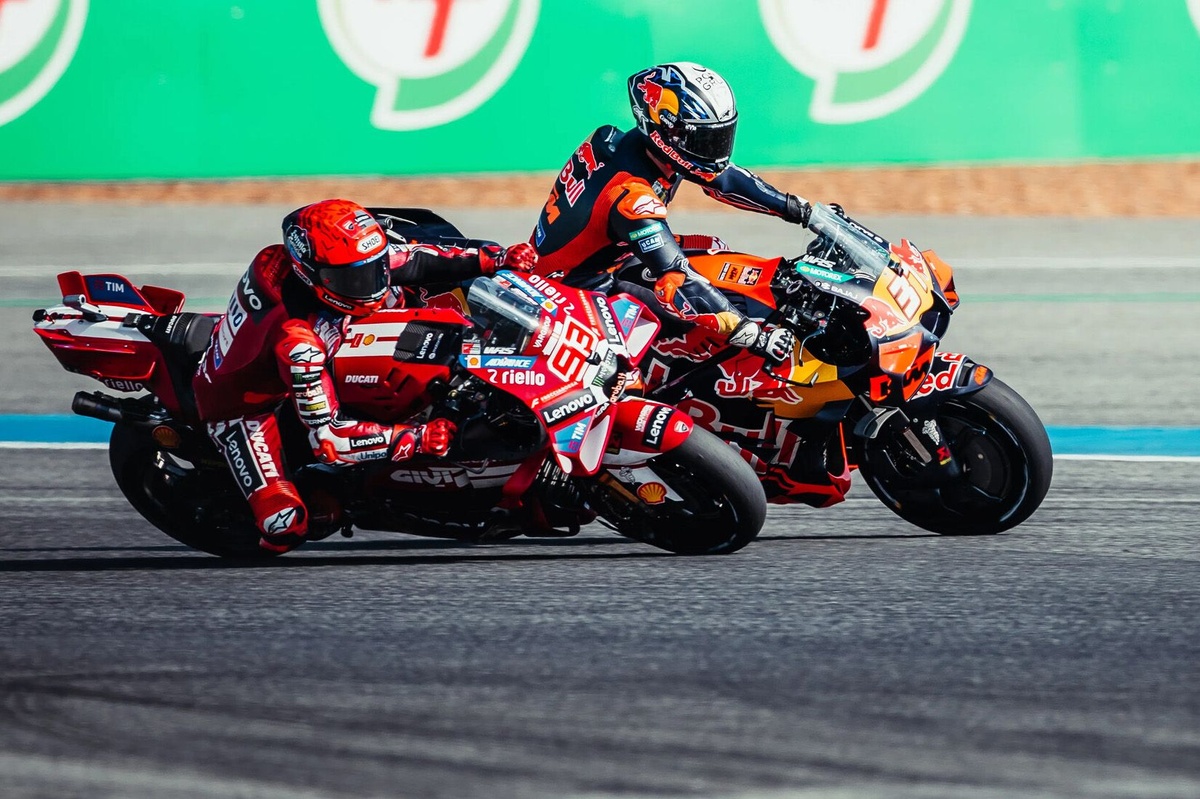
That was witnessed over the weekend when MotoGP stewarding was thrust back into the limelight on Saturday, following the sprint race for the 2026 season-opening Thailand Grand Prix. On the penultimate lap, Marc Marquez attacked Pedro Acosta into the final turn, launching his trademark block pass on the KTM rider. But the duo made light contact and Acosta was forced off the track. Marquez himself managed to keep it within the white lines, but was instructed to drop a position on the final lap. The Ducati rider reluctantly complied with the order, allowing Acosta to become a first-time sprint winner.
Marquez was visibly agitated with the call, and on the cooldown lap, he sarcastically applauded while riding past the stewards’ office. In his post-race interview, the reigning world champion did little to hide his feelings, while team boss Davide Tardozzi almost immediately questioned the call on TV.
When a rider of Marquez’s stature and popularity is involved, there is bound to be some controversy. And it’s fair to say that this became the main topic of conversation after the sprint, somewhat overshadowing Acosta’s brilliant charge to victory from sixth on the grid.
Dissecting Marquez and Acosta’s scrap could open a can of worms, but it is important to establish some facts. Firstly, contrary to what Tardozzi claimed, Marquez and Acosta did make contact, as Acosta confirmed himself. And while Marquez expressed frustration at being notified late, television graphics showed the penalty had been issued much earlier. Whether there was a delay in the dashboard notification or he was simply unable to check it mid-lap is unclear.
Everybody will have their own opinion on the incident. Some people strongly advocate the ‘let them race’ philosophy, while others call for clear boundaries in wheel-to-wheel combat. Both positions have merits.
Marquez has always been known for making aggressive but decisive block passes that leave his rivals little opportunity to retaliate. Acosta, however, has never shown much inclination to yield – not even against Marquez. On his very debut in MotoGP in 2024, he took the fight with the then-Gresini rider, showing he was not scared of going head-to-head with MotoGP’s biggest stars.
It’s also understandable why some observers were a little uneasy with Marquez’s move. The seven-time MotoGP champion came from a long way behind and left his fellow Spaniard with little room. The 21-year-old was fortunate to not lose second place to Raul Fernandez, who had caught up with the leading duo as they scrapped for the lead.
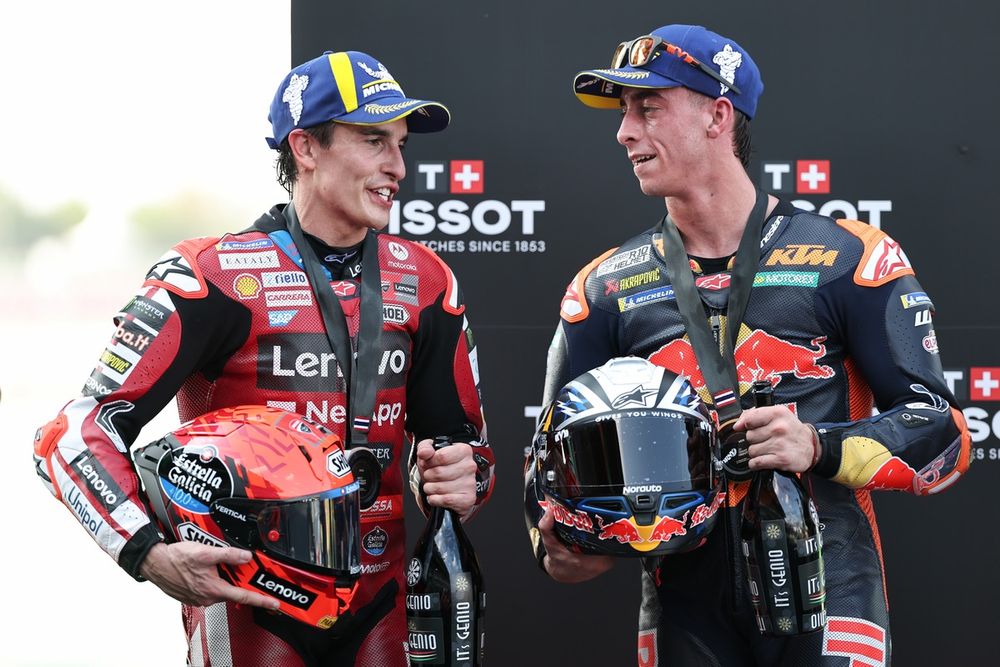
The two riders who are expected to form Ducati’s factory 2027 line-up collided on Saturday in Thailand
Photo by: Qian Jun / MB Media via Getty Images
While the timing of the Marquez-Acosta decision was questioned, there would have been an even greater backlash if the sprint was decided hours afterwards behind closed doors. Fans should always know who the winner is when they leave the track at the end of the day.
But there is one grey area in this incident: whether Marquez staying within the white lines matters if his rival was forced off track. Unfortunately, there is no clear answer to that, as it’s hard to say whether Marquez would have made the corner if Acosta wasn’t on the outside.
It was also interesting to hear what other riders felt about the matter. After the sprint, most suggested that the penalty was not necessary and argued for greater freedom to race. If Marquez had made the same move on them, many would have questioned the world champion’s tactics. Acosta himself admitted that, if the roles were reversed, he would have also tried to pass Marquez in the same manner. Riders are racers at heart and will always operate at the edge of the regulations. Even if they end up in a marginal situation, there will be a chance that the decision might go their way.
The Thai GP weekend highlighted a lack of transparency in how incidents are judged by the stewards. Marquez referred to the “new rules” in his post-race interviews without elaborating on what those actually are
Ultimately though, stewarding in MotoGP has significantly improved since Crafar took charge last year. In 2025, riders were almost unanimous in their praise of the Kiwi, who has improved communication and delivered some much-needed consistency. Even Marquez credited Crafar after he and team-mate Francesco Bagnaia were summoned to the stewards’ office at the Italian Grand Prix last year. Neither had fallen on the foul side of the regulations and the clash had already been judged as a racing incident, but Crafar still wanted to hear their viewpoints.
However, the Thai GP weekend highlighted a lack of transparency in how incidents are judged by the stewards. Marquez referred to the “new rules” in his post-race interviews without elaborating on what those actually are. While his comments implied that the riders have been briefed on how contact will be assessed, the sporting regulations don’t go into detail about matters like ‘responsible riding’ and ‘causing a collision’. It would certainly help if MotoGP adopts Formula 1’s approach and publishes its own rules of engagement – for riders, teams and fans in general.
There is already an almost black-and-white approach with track limit infringements in MotoGP, and much of the process has also been automated through the use of pressure systems at circuits. As such, fans broadly understand how track limits are adjudicated, particularly on the final lap, but overtaking standards remain a mystery.
Stewarding will never be free from controversy, but clearer, publicly accessible guidelines on what constitutes acceptable contact and what doesn’t will go a long way towards reducing confusion in grand prix racing. Saturday’s sprint saw some of the best racing since the introduction of the short-race format in MotoGP. If MotoGP is capable of delivering that kind of action, the conversation should centre on what happens on track – and not what is decided in the stewards’ office.
Read Also:
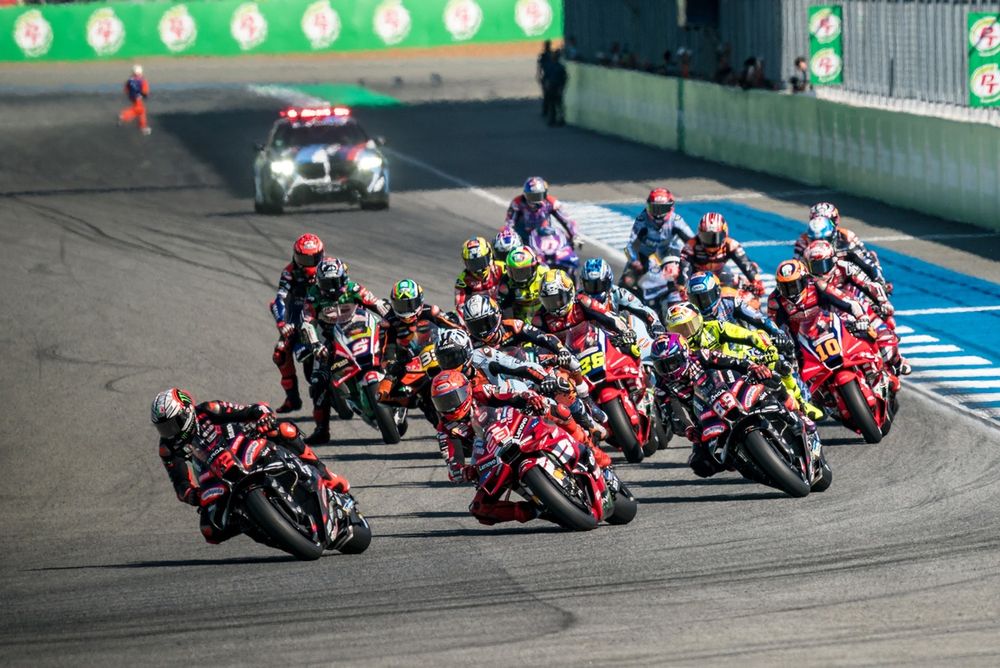
MotoGP should provide public explanations for its stewarding decisions
Photo by: Steve Wobser / Getty Images
We want to hear from you!
Let us know what you would like to see from us in the future.
– The Autosport.com Team