
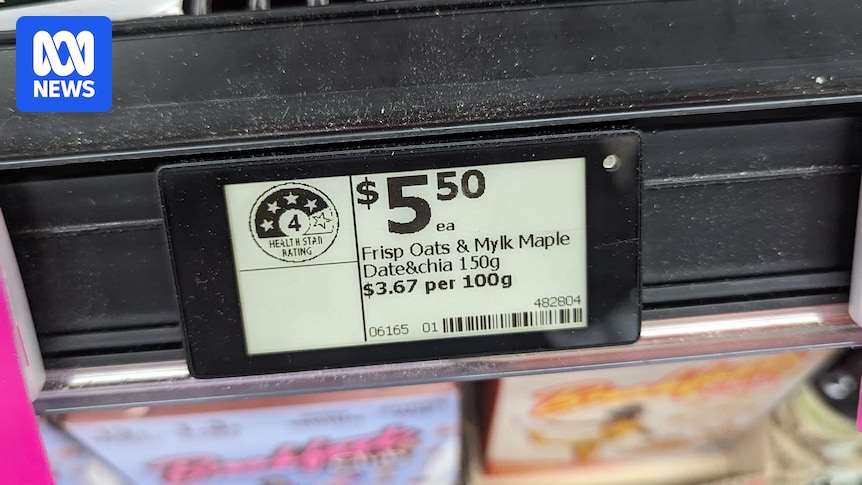
From supermarkets to hardware stores, bottle shops to pharmacists, paper price labels are being ditched for digital ones.
These unobtrusive e-ink screens may seem unimportant, but they could have profound long-term effects on what shoppers pay for everyday items like groceries.
Every in-store price can now be updated instantly.
Online-style “dynamic pricing” has come to the local shopping centre, and there are fears that customers could even be targeted with “personalised pricing”.
Here’s how these new price tags could change retail and why some in the US want to ban them from large grocery stores.
Millions of tags installed over past year
When a regional chemist in NSW switched to electronic shelf labels (ESLs) a bit over a year ago, the head pharmacist was so delighted he threw out the label printer.
For years, he and his staff arrived early on Wednesdays to change hundreds of paper price tags.
“The good old paper tickets took 10 hours a week to put out, replace and update,” Stephane Bredenbac said.
Not anymore.
Prices are updated twice a day in the chemist, instead of once a week, and in seconds, not hours.
ESLs show the price for a product on a digital screen rather than on paper.
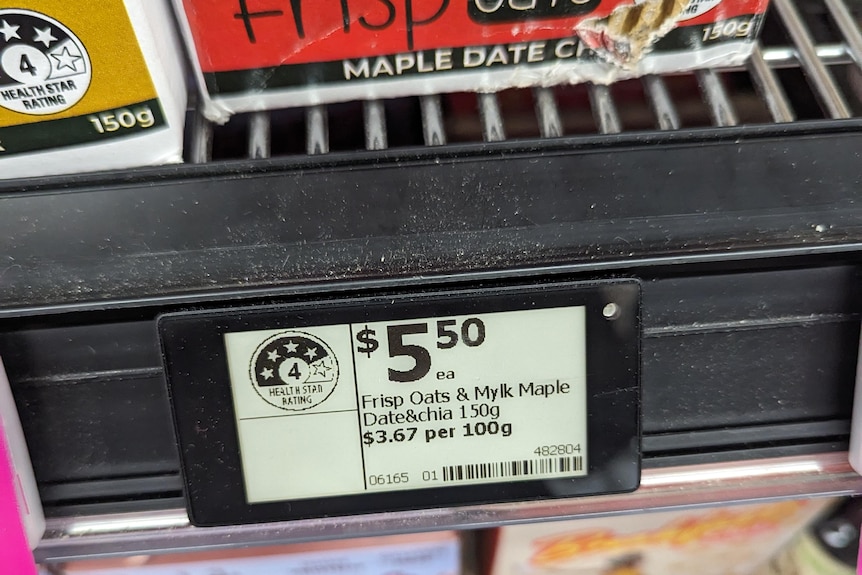
A standard-size e-ink shelf label now costs about $8 a pop and can last a decade on one charge. (Reddit)
The technology has been around for decades, but in recent years, the price of the business-card-size e-ink screens has halved, driving rapid adoption.
“Four years ago we had basically bugger-all interest,” said Geoff Olds, managing director of Technology 360 group, which installs ESLs.
“Now we’re getting hit with tenders for hundreds of stores at a time.”
He estimated that about a third of retailers in Australia would use ESLs by 2030.
Why Woolworths’ new AI system needs careful scrutiny
Woolworths plans to convert all its stores within the next few years.
“We’ve already installed around 17 million ESL tags across more than 600 Australian stores and more than 170 stores in New Zealand,” a spokesperson said.
Coles and Bunnings are trialling the technology.
Liquor retailer Dan Murphy’s completed installing ESLs at all of its 273 branded stores in 2024.
A Woolworths spokesperson told the ABC: “[ESLs] make updating labels far more efficient, they save a lot of paper, and they free our store teams up for other customer-focused tasks.”
But the switch to digital doesn’t only mean less work swapping labels.
Now, the prices can change more often.
What’s the harm with dynamic pricing?
The strategy of businesses adjusting prices, sometimes in real-time, based on potentially hundreds of variables, is known as “dynamic pricing”.
If you’ve ever refreshed a website and seen the price of a product change, that’s dynamic pricing.
ESLs remove a final barrier between dynamic pricing and in-store retail.
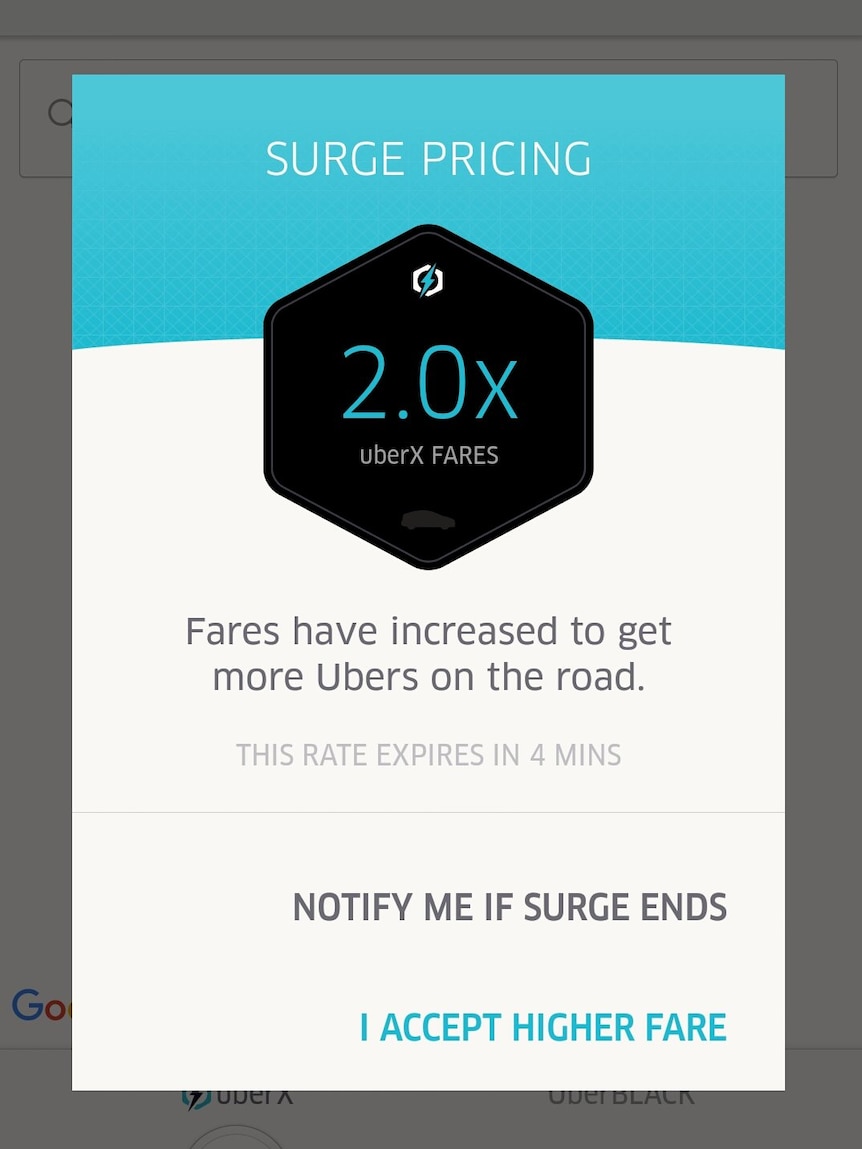
Uber’s surge pricing is an example of dynamic pricing responding to elevated demand. (Flickr: avlxyz)
There’s nothing essentially unfair about dynamic pricing, which is ultimately an attempt to balance supply and demand more accurately.
Sometimes, it can lead to products being heavily discounted.
But it can also sometimes mean higher costs.
Some dynamic pricing strategies are seen as more likely to exploit consumers by taking advantage of an imbalance in information between the buyer and seller.
Supermarkets could, in theory, jack up the price of ice cream on hot days.
Or they could charge a customer more if they know the customer always buys the same product.
AI has exacerbated this information imbalance.
Many retailers, mostly online, use AI systems to predict the maximum amount each customer will pay for a product, based on personal data such as credit history, location, age, and buying habits.
These AI systems have also been trained on millions of hours of shopping data to sniff out patterns in consumer behaviour.
The worry is that they’re too good at getting customers to pay more.
ESLs mean this could now happen in-store and not just online.

Allan Fels says dynamic pricing has “plusses and minuses” for consumers but personalised pricing can be exploitative. (ABC News)
Allan Fels, the former chair of the Australian Competition and Consumer Commission (ACCC), said he was particularly concerned about the risk of shoppers being charged different prices for the same groceries at the same time.
Professor Fels said digital tags “open the door to personalised pricing” for in-store retail.
“It’s going to mean … that different consumers pay a different price for the same product at the same time. It seems unfair.”
Calls to ban digital price tags in US grocery stores
In the US, unions and lawmakers are sounding the alarm about retailers using a supercharged form of personalised pricing, known as “surveillance pricing”.
They fear tools like facial recognition, AI, big data and digital price tags could combine to gouge consumers at the check-out and worsen the cost-of-living crisis.
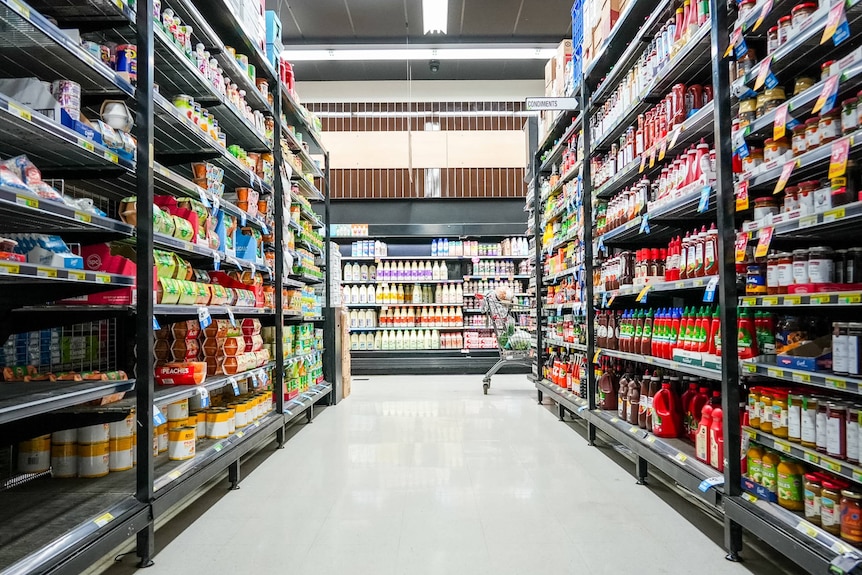
Replacing thousands of paper labels in a big supermarket is a lot of work. (ABC News: Jessica Black)
In February, a union representing more than a million US essential workers in industries including groceries, retail and healthcare called for a ban on ESLs in large stores.
On the same day, Democratic Party senators introduced legislation in the US Senate to implement the ban. It hasn’t yet been passed.
Ademola Oyefeso, international vice president of the United Food and Commercial Workers International Union (UFCW), told the ABC: “ESLs are the technology that will facilitate any type of predatory pricing scheme.”
“Grocery prices could be raised at the end of the workday as people stop in on their way home from work, or the price of an umbrella could be hiked if there is rain in the forecast,” he said.
Surveillance pricing has already happened with groceries, to an extent, in the US.
An investigation last year found the online grocery app Instacart had charged some customers up to 23 per cent more for the same items, based on their personal data.
“While brick-and-mortar shoppers have mostly been spared, new trends in the grocery industry tend to spread quickly,” Mr Oyefeso said.
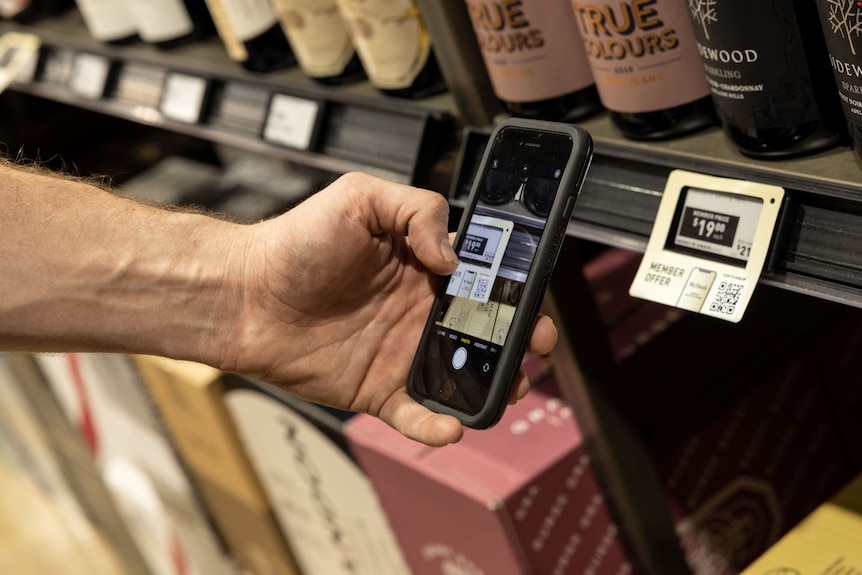
Bottle shops were one of the first forms of retail to embrace digital price tags. (Supplied: Dan Murphy’s)
Current-generation digital tags are cloud-connected and equipped with Bluetooth or NFC (short-range wireless technology used for contactless payments) to communicate with phones.
A phone loaded with a shopping app can pass information to the tag about the user’s identity.
The tag then briefly displays a personalised price when the shopper taps the phone.
Mr Oyefeso said retailers could also pair ESL with facial recognition, so that “prices change depending on who is in the aisle or looking at the shelf”.
Although many retailers use facial recognition, there are no confirmed reports in the US of them pairing this with ESLs.
So, what will Australian retailers do?
The ABC asked Woolworths, Endeavour Group (Dan Murphy’s and BWS), and Bunnings whether ESLs would lead to a surge in personalised in-store pricing, but the retailers either failed to answer the question or did not comment.
Woolworths previously said ESLs wouldn’t lead to sudden in-store price increases.
Businesses can legally use surge or personalised pricing strategies, provided they do not mislead consumers or discriminate based on race, gender, age, or disability.
From July 2026, under new price-gouging laws, very large retailers can’t charge “excessive” prices compared to the cost of supply.
Here’s what’s at stake when the ACCC takes Coles to court
The main barrier to charging more for groceries at busy times isn’t legal but reputational.
Chad Gates, managing director of the veteran Australian technology firm Pronto Software, which sells retail pricing systems, said his “gut feeling” was the pushback from consumers could be significant unless pricing were managed carefully.
“There may be a perception created that [customers] are being manipulated and a friend got a better price than they did.”
But consumer expectations could change, he noted.
“As consumers, we’re getting trained over time to get more used to dynamic pricing through things like Uber,” he said.
“When there were just taxis no-one had heard of surge pricing.”
In-store surge pricing anticipated
Geoff Olds, from Technology 360 Group, said digital price tags would make in-store surge pricing “common” and also enable “a much more sophisticated approach around personalisation”.
He predicted some shops would stay open longer as they could easily increase prices for after-hours periods.
He also said retailers would introduce more in-store loyalty-member and personalised discounts to compete with the dynamic pricing of online platforms.
The humble price tag will become “shelf-edge retail media”—essentially a small billboard that can interact with phones and respond to shoppers.
The retail industry calls this idea “shelf awareness”.
“We know 80 per cent of marketing is spent online or outside of store, but 80 per cent of decision making happens at the shelf,” Mr Olds said.
For now, we don’t know how retailers will use the technology or what consumers will accept.
In general, retailers are looking for ways to innovate in-store pricing and compete with online outlets and platforms, while retaining shoppers’ trust.
Professor Fels said he was not “entirely satisfied” by any assurances that online-style surges or personalised pricing wouldn’t come to shopping centres.
“These promises typically last two or three years, and then further down the track they [retailers] introduce the other changes.”