
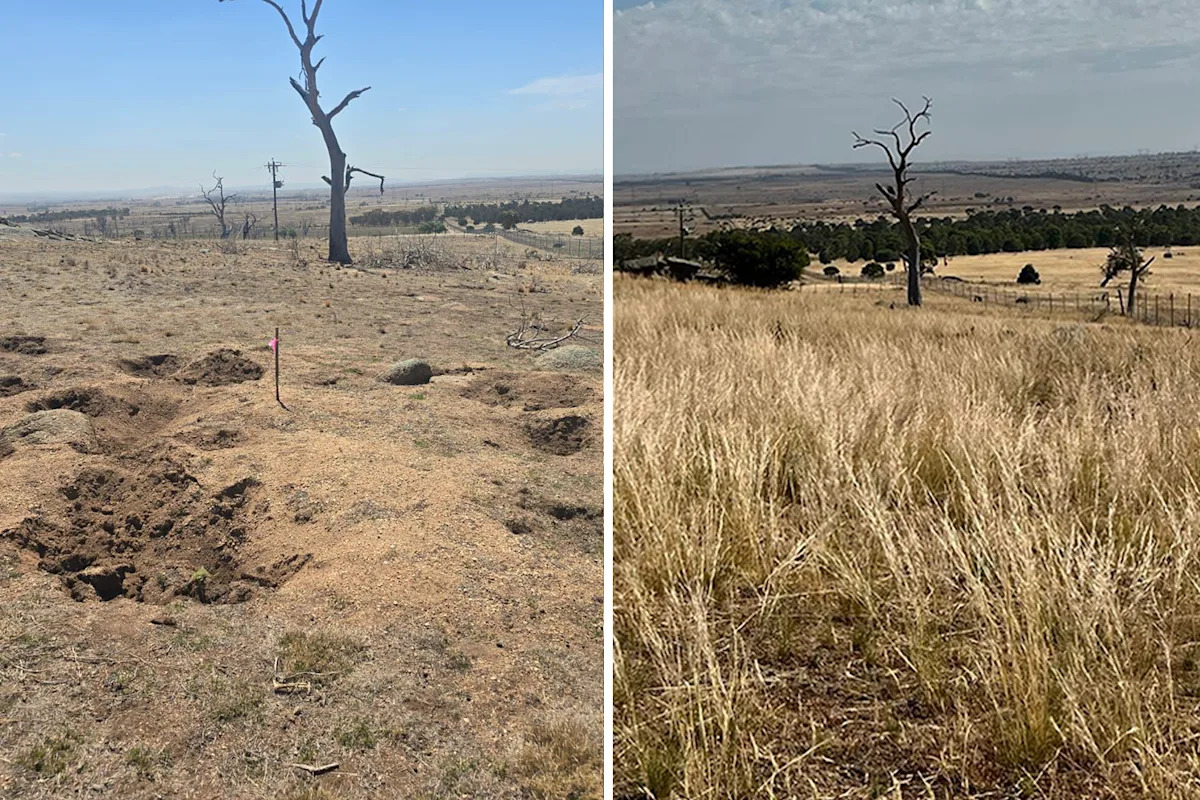
Photos taken one year apart of the same hillside highlight the extraordinary power of the Australian landscape to recover after invasive species are eradicated. There was no need for seed, only rain, sunlight and a fence to keep rabbits out, and the 11-hectare paddock west of Melbourne sprang back to life.
Taken at the Mount Rothwell sanctuary in January 2025, the first image shows a network of warrens pockmarking the ground, which has been grazed bare by the hungry herbivores.
The second, taken in 2026, shows flourishing native grasses now dominating the same spot.
Odonata Foundation added the parcel of land to a 170-hectare invasive-species-proof reserve in the town of Little River, which was set up to allow rare and endangered native marsupials to flourish.
Its chief operating officer, Matt Singleton, said the rapid change achieved at the site provides “encouragement to keep going” in their mission to revitalise the site.
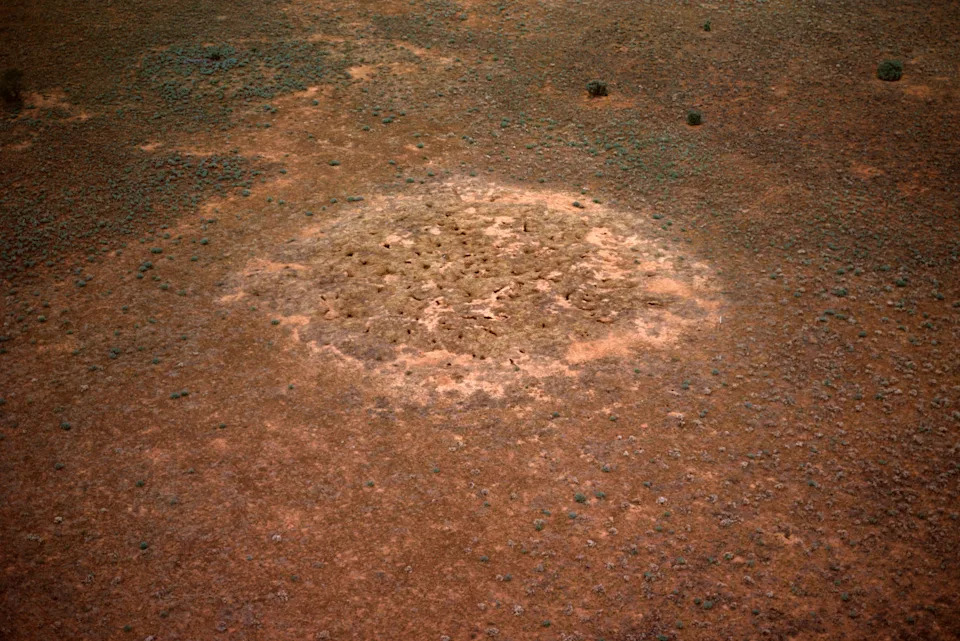
This aerial photo taken in western NSW highlights the impact that rabbit warrens have on Australia’s fragile landscape. Source: Getty
(Universal Images Group via Getty)Native marsupials ‘smashed’ by invasive species
Unlike native marsupials, rabbits have been largely resilient to attacks from cats and foxes because they burrow deep underground, and so a concerted effort is needed to eradicate them.
But native marsupials didn’t evolve alongside these invasive predators and are essentially sitting ducks.
“The eastern barred bandicoot and eastern bettong nest in grass, so they’re very easy for cats and foxes find,” he told Yahoo News.
“They’re getting outcompeted by the herbivore pressures that rabbits provide, and they’re also getting smashed by feral predators.”
Once rabbits, foxes and cats are fenced out, then native marsupials can thrive.
Rather than denuding paddocks of native plants, their digging helps aerate the soil and germinate native seeds.
“They are repairing the landscape alongside our teams, who are controlling weeds,” Singleton said.
Do you have a story tip? Email: newsroomau@yahoonews.com.
You can also follow us on Facebook, Instagram, TikTok, Twitter and YouTube.