
Goldman Sachs’ David Solomon has expressed concerns about lending standards falling in the midst of a long credit cycle, arguing any economic slowdown could make private credit a more risky asset class.
“We haven’t had a credit cycle in more than 15 years … when you go through these long cycles, people get more aggressive. Due diligence standards come down,” he said.
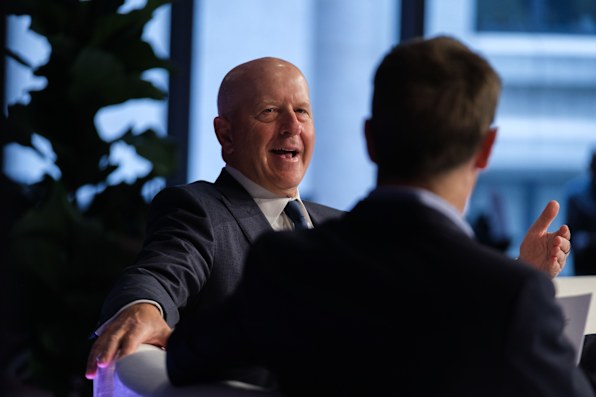
Goldman Sachs’ David Solomon: “Retail investors were given an impression that they had more liquidity than they actually have. These products are illiquid.” Oscar Colman
“Lending standards come down because there’s a competition to deploy capital, and I’m a little concerned about that.
“And so when we do have a credit cycle, or we do have a slowdown, or we do have a recession, you’ll have more visibility as placed where lending standards have weakened, and those that weaken the lending standards will perform more poorly on a relative basis, but at the moment, with the economy being OK, I’m not seeing that broadly across these portfolios.
He said a lot of retail investors were deciding they wanted liquidity on these products when it was not possible.
“There’s a whole discussion going on around retail liquidity in a bunch of public structures, where I think retail investors were given an impression that they had more liquidity than they actually have. These products are illiquid. They are not semi-liquid. They are illiquid products.
“That speaks to the structures of some of these vehicles and how their liquidity mechanisms work … that is creating heightened agitation with retail investors.
“I was concerned a year ago, a year and a half ago, when I saw people selling [something] that was called semi-liquid. This has a place in certain retail investors’ portfolios, but you have to understand that you’re taking illiquid risk.”