
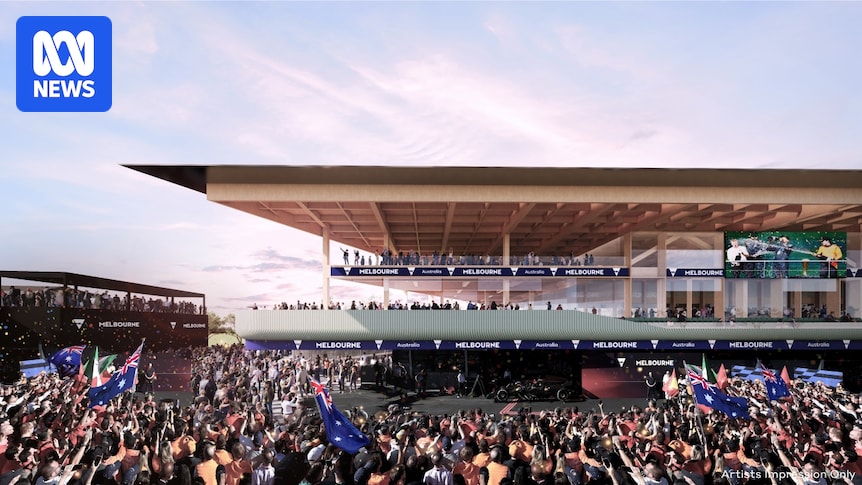
The cost of a lavish rebuild of the Melbourne’s Grand Prix’s pit lane, designed to boost hospitality for corporate guests, has blown out more than $100 million after asbestos was discovered at the site.
The Pit Lane building is set to be demolished following Sunday’s F1 Grand Prix season opener and replaced a new building featuring better facilities for events.
It was initially expected to cost around $350 million, but early works in June last year detected asbestos in the ground, sending estimated costs soaring.
A report from the state’s financial watchdog into major projects uncovered that the cost to remove the asbestos and finish construction would be up to $395 million — $115 million higher than initially budgeted for.
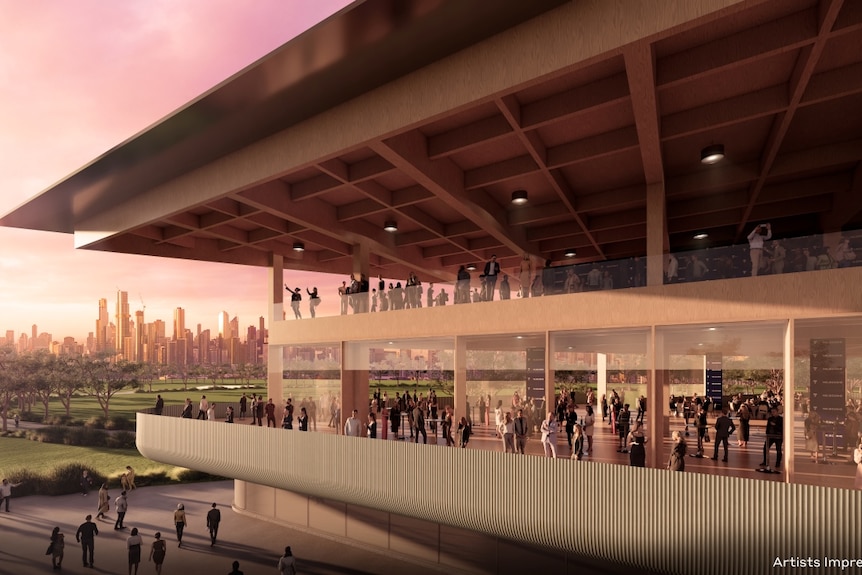
The new pit building is due to be constructed in time for the the 2028 Melbourne Grand Prix. (Development Victoria)
The Victorian Auditor-General Office’s report said it was likely the government would need to scale back the project due to the blow outs.
“The Project team is assessing value management options however it is likely that these will result in breaching the [Australian Grand Prix Corporation’s] contract with F1 and/or not delivering scope previously announced by government,” the report said.
The existing pit building was constructed in 1995, but currently does not meet the standards required by Formula 1 and the motorsport governing body, Fédération Internationale de l’Automobile.
Government says no choice but to pay up
Treasurer Jaclyn Symes told ABC Melbourne Radio that due to “a contractual arrangement”, the government had no choice but to stump up.
“Unfortunately, there’s not much you can do apart from deal with asbestos when you find it to ensure that you’re providing a safe workplace and a safe building going forward,” Ms Symes said.

Treasurer Jaclyn Symes says the government does not have much choice and must deal with the asbestos appropriately. (AAP Image: Diego Fedele)
Ms Symes spruiked the benefits of hosting the race.
“I can point to the fact that the Grand Prix is a major economic contributor to the state and I know that many people are going to get along to that race this weekend,” she said.
“It fills beds in hotels and people going out for dinner and it keeps everyone busy and it supports thousands of jobs.”
Despite ticket sales nearly tripling in the space of a decade due to the surging popularity of Formula 1, the Australian Grand Prix continues to run at a loss.
In 2024, the state government spent more than $102 million to fund the race.