
A Kansas City resident has tested positive for measles, marking the city’s first confirmed case in eight years. The Missouri Department of Health and Senior Services and the Kansas City Health Department said the case involves an unvaccinated adult. The last confirmed measles case in a Kansas City resident was reported in 2018.Health officials are now tracing potential exposures and notifying anyone who may have come into contact with the virus.“Measles remains one of the most contagious diseases, with the potential for serious complications. The good news is that MMR vaccination is an effective way to prevent measles,” said Dr. Marvia Jones, director of the Kansas City Health Department. “We are working swiftly to identify the source of exposure and notify anyone who may have been exposed. We urge residents to review their vaccination status and consult their healthcare provider if they have symptoms such as fever, cough, or rash.”Symptoms typically appear seven to 14 days after exposure.Early signs include a high fever that can spike above 104 degrees, cough, runny nose and red, watery eyes. Tiny white spots inside the mouth, known as Koplik spots, may also appear.Three to five days after symptoms begin, a blotchy red rash usually develops. The rash often starts on the face near the hairline and spreads downward to the neck, trunk, arms and legs.Health officials said people born before 1957 or those who have received the measles, mumps, and rubella vaccine are unlikely to get measles.Community members can call 816-513-6152 or 816-513-6008 for more information about vaccination or possible exposure.
KANSAS CITY, Mo. —
A Kansas City resident has tested positive for measles, marking the city’s first confirmed case in eight years.
The Missouri Department of Health and Senior Services and the Kansas City Health Department said the case involves an unvaccinated adult.
The last confirmed measles case in a Kansas City resident was reported in 2018.
Health officials are now tracing potential exposures and notifying anyone who may have come into contact with the virus.
“Measles remains one of the most contagious diseases, with the potential for serious complications. The good news is that MMR vaccination is an effective way to prevent measles,” said Dr. Marvia Jones, director of the Kansas City Health Department. “We are working swiftly to identify the source of exposure and notify anyone who may have been exposed. We urge residents to review their vaccination status and consult their healthcare provider if they have symptoms such as fever, cough, or rash.”
Symptoms typically appear seven to 14 days after exposure.
Early signs include a high fever that can spike above 104 degrees, cough, runny nose and red, watery eyes. Tiny white spots inside the mouth, known as Koplik spots, may also appear.
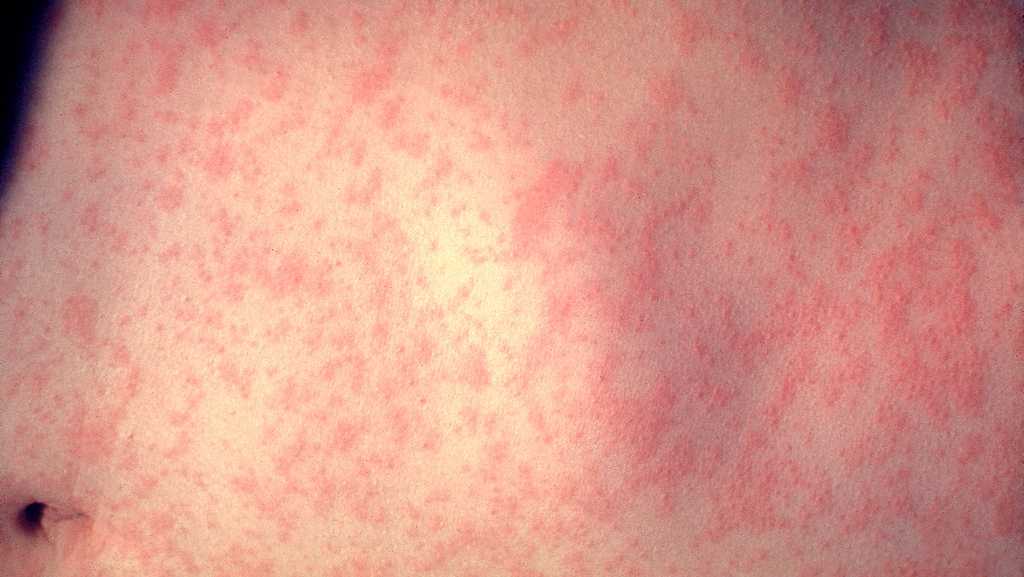
Three to five days after symptoms begin, a blotchy red rash usually develops.
The rash often starts on the face near the hairline and spreads downward to the neck, trunk, arms and legs.
Health officials said people born before 1957 or those who have received the measles, mumps, and rubella vaccine are unlikely to get measles.
Community members can call 816-513-6152 or 816-513-6008 for more information about vaccination or possible exposure.