
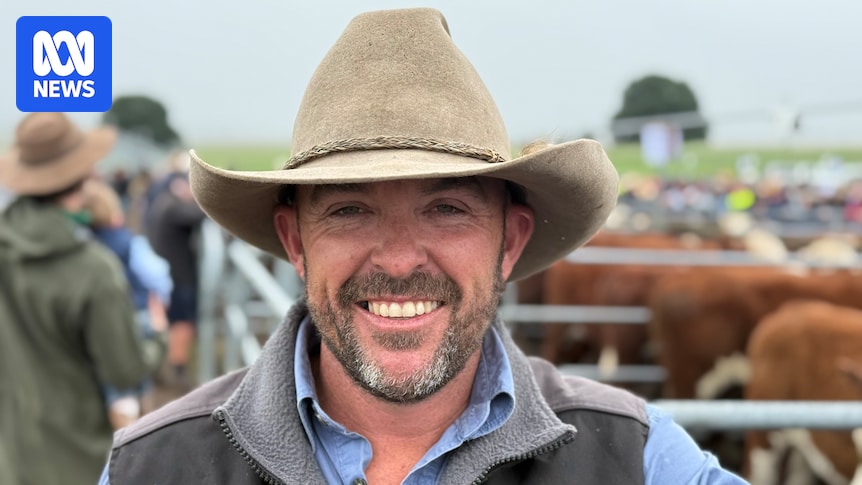
Dry cattle yards turned to mud as steady rain fell at the Victorian high country sales.
It was a welcome sight for drought-weary farmers at the sales on Monday and Tuesday, who have endured worsening dry conditions in recent months.
The big dump of early autumn rain fell across most of Victoria, filling up dams, soaking paddocks and lifting spirits.
North-east Victorian livestock producer Stuart Pendergast was at the sales and said: “No-one’s complaining, we love the rain.”
“It’s a really nice problem to have wet boggy yards … it’s just confidence-inspiring,” he said.
But not all farmers are glad to see the rain this early in autumn, as the falls cause problems for fruit and almond harvests.
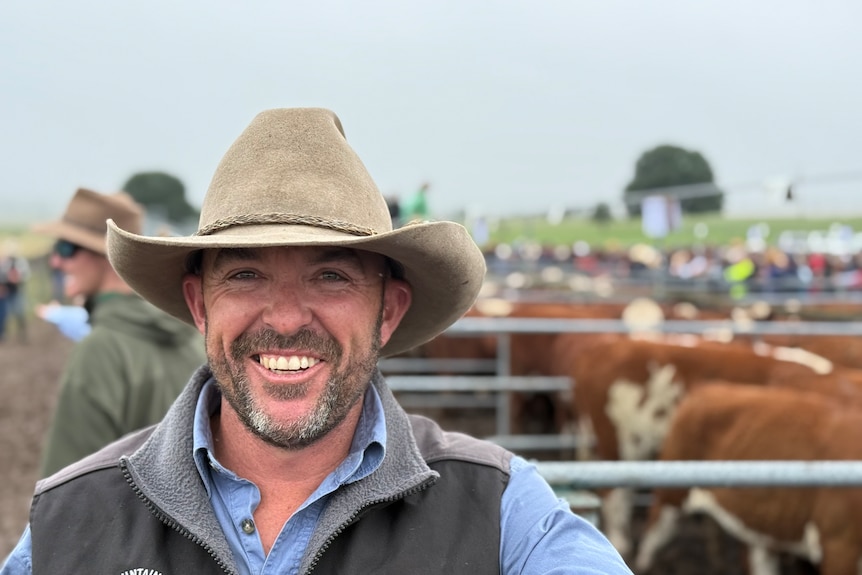
Livestock farmer Stuart Pendergast is happy about the rain. (ABC Rural: Warwick Long)
Relief after consecutive ‘ordinary’ seasons
South-east Australia experienced its driest start to the year in 2026 after a run of dry seasons.
Mr Pendergast, who farmed at Benambra, said it was still looking “pretty tough” at his place until last month.
“It’s been three years, really, of pretty ordinary conditions,” he said.
But with some rain in recent weeks and this downpour, Mr Pendergast is happy.
“We’ve had 65 [millimetres] in the last four days,” he said.
“It’s just incredible.
“It goes from dust to green that quickly with the right conditions.”
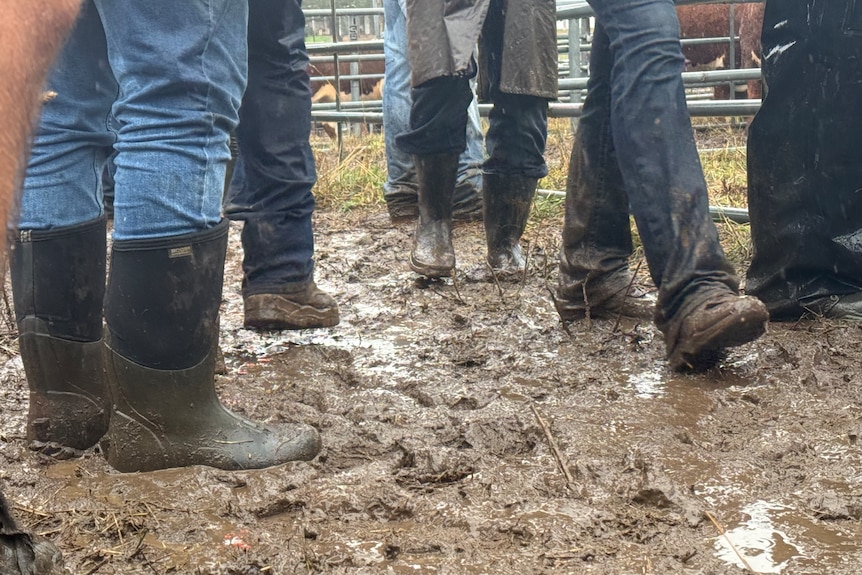
There were no complaints about the mud at the cattle sales in Omeo. (ABC Rural: Warwick Long)
Best March rain in a decade
In the southern Wimmera near Horsham, grain grower Russell Heard said he was thrilled to get a good dump of rain.
“We’ve had 67mm and [it’s] been very unexpected,” Mr Heard said.
“Other areas have had more.”
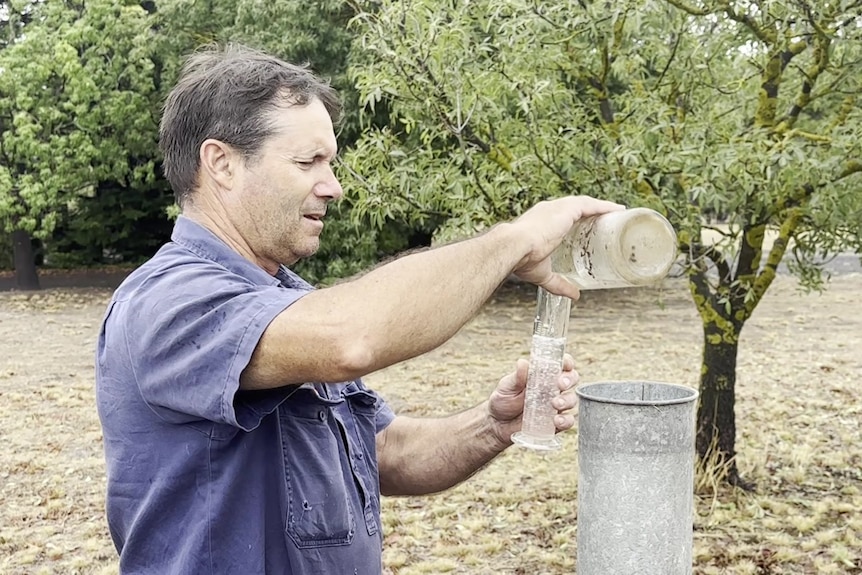
Russell Heard tipped 67 millimetres of rain out of his gague. (ABC News)
He said he had not experienced rainfalls like this a decade.
“It’s been about 10 years I think since we’ve had a March fall of this number,” Mr Heard said.
“It’s good moisture to bank in the soil for this coming crop we’re going into in 2026.
“We’ll have some summer weeds appearing late now … which will keep us grain growers busy spraying.”
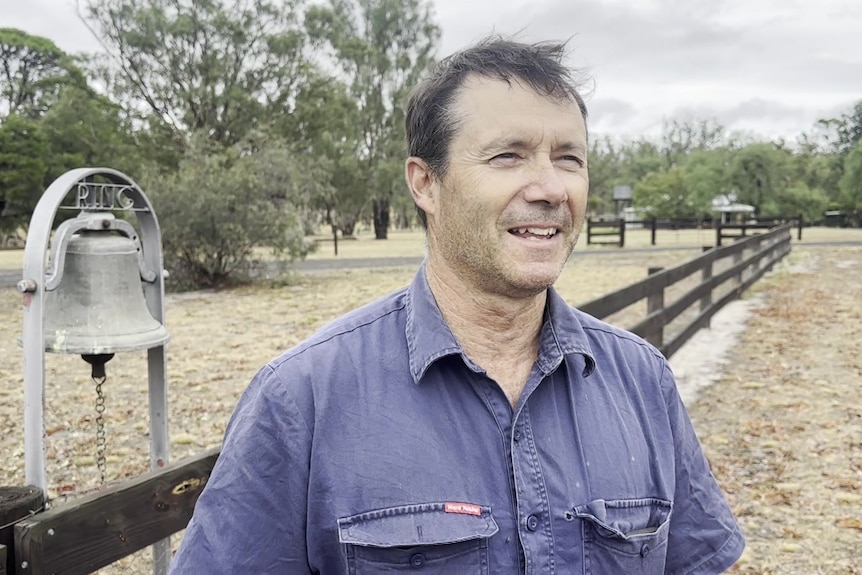
Russell Heard says the rain sets up his 2026 season. (ABC News)
Soggy fruit and almonds
While the rain has brought relief to many, the timing is challenging for fruit and almond producers.
Dried fruit growers around Mildura are monitoring their grapes for rot, after 150mm fell in the area.
“It’s certainly not what we want, not by a long way,” Pomona grower and Dried Fruits Australia chair Mark King said.
“It will actually split the grapes and once they start to split they’ll go rotten.”
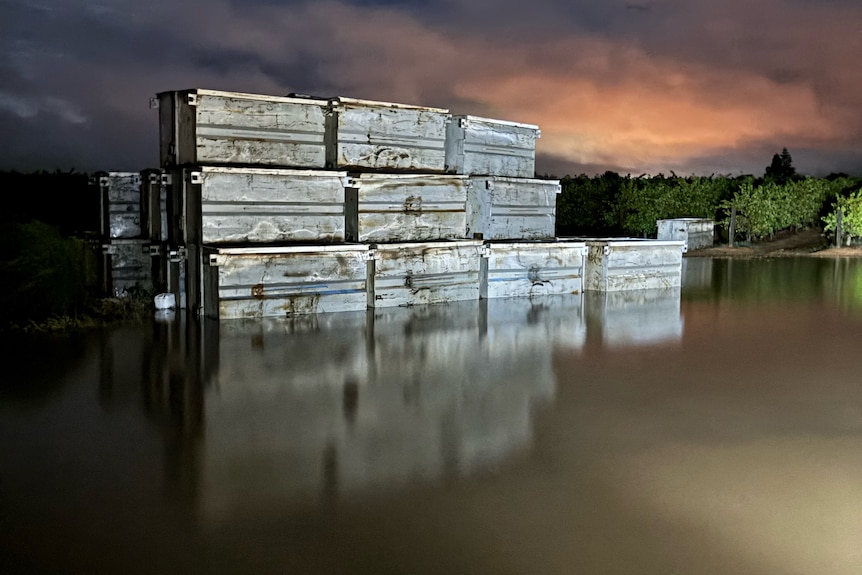
The rain around Mildura flooded this grape operation. (Supplied)
The rain has also halted the almond harvest in the Sunraysia and the Riverland, in South Australia, Victoria and New South Wales.
Australian Almond Board chief executive Tim Jackson said the harvest had “barely” started there.
“Once the excess water has dissipated, the next steps will involve drying out the in-form volumes that have been most affected by the rain,” he said.
“If the weather clears and there’s no further rainfall, harvesting is expected to resume next week.”
For fruit growers in northern Victoria, around Cobram, their late-season peach crops could be affected.
“When you do get rain like this, brown rot can start and you can lose quite a bit of your crop,” Fruit Growers Victoria industry development officer Michael Crisera said.
“Between 20 and 30 per cent of the crop could drop on the ground.”
But he said for most growers in the Goulburn Valley and northern Victoria, the rain was welcome.
“We’re seeing an increase in water prices in the temporary market. We’re paying four times what we were paying compared to last year,” he said.
“This rain will hopefully buy us a bit of time so we’re not needing to buy water to finish our late-season crops.”