
China could accelerate the development of the Zhuri “Chasing the Sun” project, an ambitious plan to build a space-based solar power station.
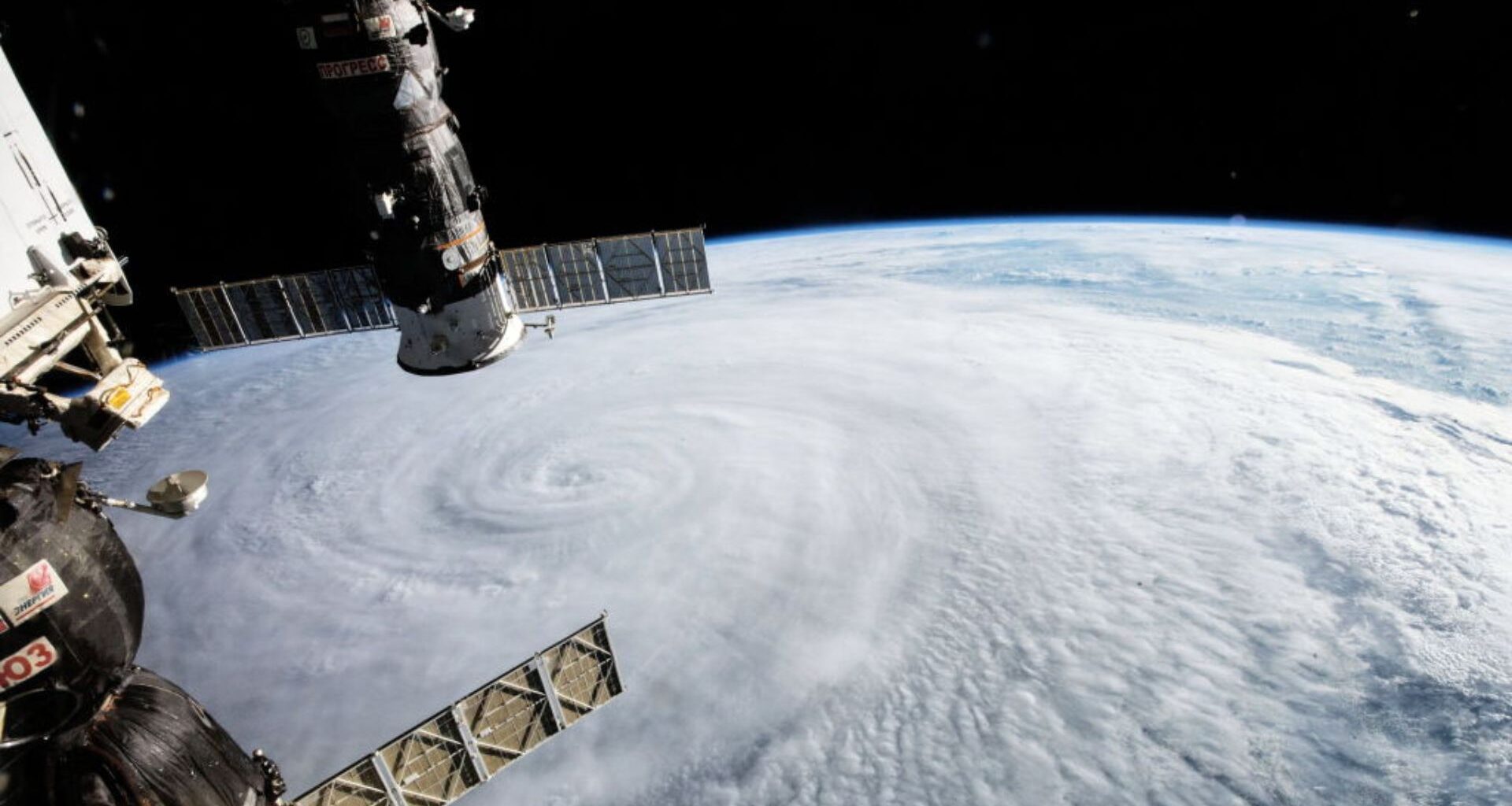
If China pulls this off, then the tech could allegedly offer a perpetual fountain of clean energy while potentially turning the destructive storms into manageable weather events.
And not just this, an expert claims that it could charge satellites and other space-based infrastructure.
The South China Morning Post (SCMP) recently reported that the project’s roadmap includes a major 2030 orbital test capable of generating a full megawatt of power.
To reach its 2030 goal, China would need to assemble an orbital structure that weighs more than the International Space Station.
Chase the sun and stop storms plan
Without clouds or night cycles, space solar is roughly 10 times more efficient than ground-based panels.
The project’s ultimate blueprint calls for a massive, kilometer-wide circular power station in geostationary orbit, 36,000 kilometers (22,370 miles) above Earth.
At this strategic altitude, the facility would be capable of generating gigawatt-level electricity, providing a constant and high-capacity stream of clean energy back to the planet.
The technology is being designed for both energy transmission and climate intervention.
In a recent article for the People’s Daily, Duan, a professor at Xidian University, suggested that the high-frequency microwave beams used to transmit electricity could be redirected.
It could be repurposed to heat atmospheric moisture in storms.
This targeted thermal energy could disrupt regional air circulation, allowing scientists to theoretically “tame” typhoon intensity or steer them away from vulnerable coastlines.
“If the energy output were high enough, it could alter regional atmospheric circulation and change a typhoon’s intensity and path,” Baoyan, the lead project scientist, stated. However, this needs to be demonstrated first.
In addition to its Earth-facing goals, the station is envisioned as a “space-based power bank” capable of wirelessly charging satellites, future space stations, and deep-space probes.
With a continuous power supply in orbit, this technology could extend the lifespan and range of exploration missions, like future lunar bases and global space internet networks.
Project challenges
Since its inception in 2013, the project has transitioned from theory to tangible milestones, anchored by a 75-meter ground-based test tower built in 2022 to simulate the full solar-to-microwave energy cycle.
Recent technical milestones include a “one-to-many” transmission capability — allowing a single beam to power multiple moving targets simultaneously. The team also made improvements in beam precision and hardware miniaturization.
These advancements are key steps toward making huge equipment lighter and more efficient for feasible space deployment.
However, the path to “taming” typhoons is littered with risks.
Critics point out that a gigawatt-level microwave beam is, by definition, a high-energy directed weapon. If a beam strays by even a fraction of a degree, it could fry the electronics of passing satellites or trigger electrical discharges in an already congested Low Earth Orbit.
The global race is tightening. While China has its 75-meter test tower, Caltech successfully beamed power in orbit, and Japan continues its own active transmission trials.
As launch costs plummet, space is no longer just for observation but for massive infrastructure to address clean energy needs and much more.
And if Duan Baoyan is right, the tech might soon curb storm-related destruction.