
Australian creators are urging the federal government to “hold its nerve” amid what they fear is a renewed push from big tech to water down copyright protections for artists.
Copyright advocates have warned the threat has not passed, despite Labor last year announcing it would not allow artificial intelligence companies to freely train their models on Australian music, writing, film and art.
Mushroom Music co-chief executive Chris Maund told the ABC the government must not relent on copyright.
“They’ve done the right thing by artists and this country and those of us who invest in them, so hold your nerve,” he said.
“Big tech thinks music is data — zeros and ones and patterns. It’s not.
“It’s the fruits of hard work by humans. If they have used it to train their models, they must pay for that.”
The government ruled out a text and data mining exemption for AI in October and said it remained committed to that position.
Mr Maund said there was an existing licensing marketplace where big tech could go to rights holders to negotiate access to works.
“It’s a relatively easy process to do,” he said.
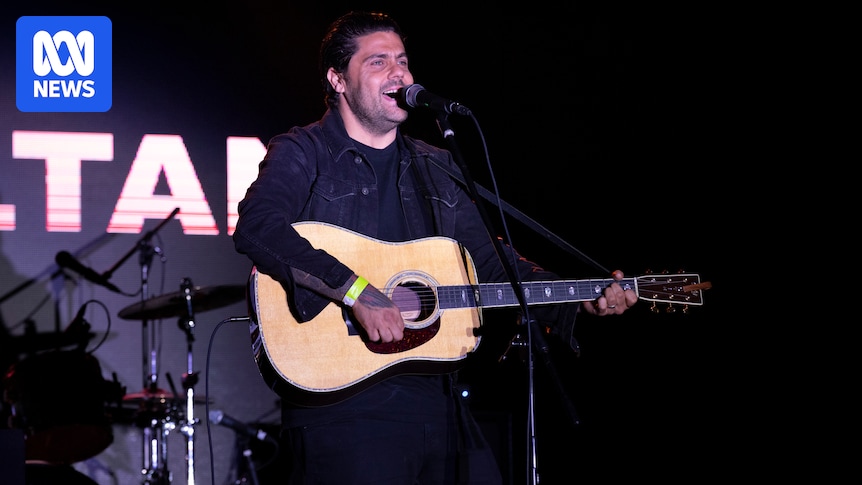
Australian artists such as The Temper Trap, Dan Sultan, Mia Wray and Vance Joy are among those represented by Mushroom Music, an independent publisher that is part of the Mushroom Group.
Mr Maund said further protections would be required for musicians.
“It may be that the names of artists can’t be used in the text prompt to create a new AI work,” he said.
“This sort of protection can ensure AI models are additive and not reductive or taking away from artists in the industry.”
Dispute over copyright impact on AI
Prior to the government ruling out the exemption, Atlassian co-founder and Tech Council of Australia chair Scott Farquhar said he believed “all AI usage of mining or searching” was “probably illegal under Australian law”.
“I think that hurts a lot of investment … in Australia,” he said.
Speaking at SXSW Sydney last year, OpenAI global affairs chief Chris Lehane said countries either enabled “frontier” AI development or maintained tighter copyright limits.
Artists rejoice as Labor rules out copyright carve-out for AI
Meta, Google and others in the tech sector have consistently warned excessive regulation could deter investment and impede Australia’s AI development.
But copyright advocates have rejected the idea Australia must choose between protecting artistic work and benefiting from AI investment.
Copyright Society of Australia board member and Marque Lawyers partner Emma Johnsen said the “narrative that copyright is incompatible with AI innovation is just wrong”.
“Every major creative industry, like music, film or publishing, already operates on licensed use of content at scale. It’s been happening for a very long time,” she said.
“A perfectly acceptable model already exists. That just needs to be used, and it needs to be used fairly,” she said.
Ms Johnsen said the certainty for creators established when the government ruled out the exemption had begun eroding amid lobbying by big tech.
She pointed to “incorrect” claims Australia’s copyright laws made it illegal to train AI models as a source of growing “anxiety”.
“It feels like there’s now a risk of change by a thousand cuts,” she said.
“Creators are not asking for special treatment, they’re just asking for AI companies to participate in the licensing economy that you know is already in existence.”
Labor expects tech to support Australian artists
Attorney-General Michelle Rowland said the government had been “clear for some time” there were “no plans to weaken copyright protections when it comes to AI”.
“This includes ruling out a text and data mining exemption,” she said.
Ms Rowland said the government was committed to supporting Australia’s creative sector.
“We expect that tech companies share that same commitment,” she said.
Ms Rowland said the government was consulting with creators, industry and experts in the Copyright and AI Reference Group to “shape how copyright works in the age of AI”.
“We encourage the tech industry and the creative sector to come together and find sensible and workable solutions to support innovation while ensuring creators are fairly compensated,” she said.
In recent months, the reference group has been discussing how to encourage fair and legal avenues for using copyright material in AI.
This includes examining whether a new paid collective licensing framework should be established, or if the current voluntary system should remain.
The group is also looking at ways to enforce copyright laws that are less costly, such as potentially through a new small claims forum to handle lower-value infringement matters.