
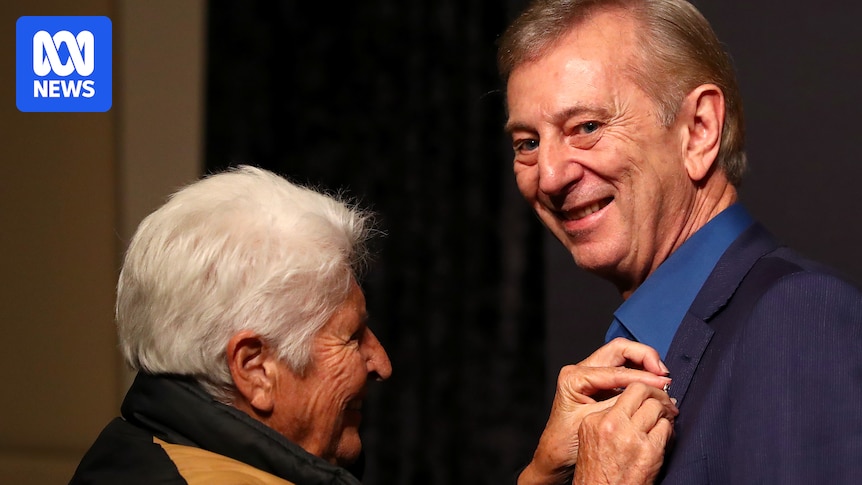
Dennis Cometti, the highly acclaimed sports commentator whose sonorous voice and witty asides made him a celebrity on par with the players whose deeds he described with an uncommon flair, has died at the age of 76.
Cometti’s death was confirmed on Wednesday, with former colleague Mark Gibson struggling through tears to pay tribute to “a legend in broadcasting, in sports, in media, and a much-loved member of the community”.
Known for catchphrases like “centimetre perfect” and “like a cork in the ocean”, Cometti was a star feature of the Seven Network’s AFL coverage for the better part of four decades, after starting his career with the ABC.
Dennis Cometti hailed as ‘the best of his kind’ after death
With Bruce McAvaney, he formed one of the most popular and enduring double acts in Australian broadcasting. Earlier in his career, Cometti also commentated extensively on Test cricket and his defection to the Nine network for five years in 2002 was greeted as momentously as a high-profile player trade.
Even around the game’s biggest stars, Cometti’s commanding presence, neatly combed hair and inescapable aura made him stand out.
“You know he’s in the room,” his former broadcasting colleague Michael Roberts once said.
“And when he speaks, people listen.”
Loading…
Cometti was renowned among colleagues for his unstinting preparation for his work. In airport lounges around the country, Cometti was known for splitting from colleagues and refusing to socialise with players, lest it compromise his ability to call the play as he saw it.
At the height of his broadcast career, Cometti would spend 15-20 hours per week watching game footage in a room dedicated to the task, and often lugged a suitcase full of research files into the commentary box.
“Sometimes a bloke runs straight at you and you can’t see a [guernsey] number,” Cometti’s late colleague, Drew Morphett, once said.
“You think, ‘Who the hell is that?’ if he’s playing game number five or something, but Dennis will know him back to front because he’s watched the videos.”
Richmond great Matthew Richardson once remembered Cometti telling him, before his first game as a broadcaster, to make sure he did his “homework”.
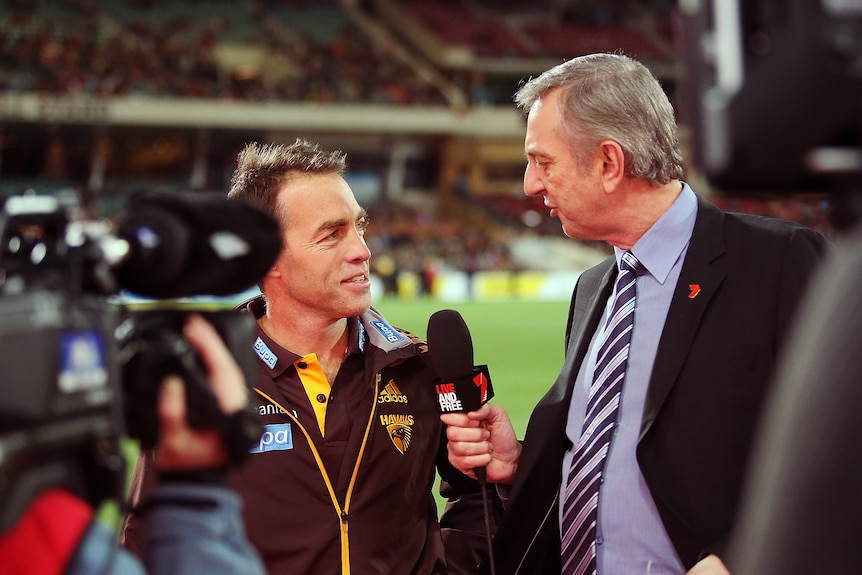
Generations of players’ feats were scored by Cometti’s voice. (Getty Images: Morne de Klerk)
“I had three or four pages of notes and thought I was going pretty well,” Richardson later said.
“[Then Cometti] gets out of this black limo with his massive briefcase of notes and immediately I just thought to myself, ‘Gee, I’ve got a long way to go.'”
Colleagues also appreciated his good humour when they ribbed Cometti about the can of hairspray he carried everywhere to ensure there was never a strand out of place in his iconic helmet of hair.
‘Most of what I have I owe to them’
A former footballer and coach in his native Western Australia before he made a bigger name for himself in broadcasting, Dennis John Cometti was born in 1949, the son of second-generation Italian migrant James “Jack” Cometti and wife Dulcie.
Jack’s parents had battled long odds to establish themselves in Australia. Cometti would often tell the story of his grandfather Giovanni’s brutal arrival from Tirano in the northern Italian Alps in 1909; seeking any work he could get, he walked 800 punishing kilometres from Perth to the dust-swept goldfields of Meekatharra.
Cometti said he was strongly influenced by the women in his family. Mother Dulcie was an aspiring novelist when she met Cometti’s father, and Cometti’s aunt Esme Fletcher opened Western Australia’s first child daycare centre and also a women’s refuge.
Dennis Cometti’s most iconic AFL one-liners
“I think it’s safe to say that Esme and my mother were feminists, perhaps before feminists were invented,” Cometti told SBS.
“What do I think about it? Well, I think they were both admirable people. I mean, I agree with what they were on about — there’s no question about that. Sometimes, it needs to be said, they saw men as the enemy and as a young man in that environment you needed to be careful.
“Most of what I have I owe to them … a lot to be thankful for.”
Cometti inherited his love of Australian Rules football from his father James, who died of a heart attack in 1969 when Dennis was a teenager establishing himself as a young star at WAFL club West Perth. In 1968, playing alongside the legendary Graham “Polly” Farmer, gangly Cometti kicked 60 goals as West Perth reached the semifinal.
Loading…
From his father’s death, Cometti said he took the lesson that life was precarious and to be cherished. He adopted a lifelong motto from 1970s singer-songwriter Paul Williams: “You can go back to the place but not the time.”
Cometti drifted from football after his father’s death, donning a pair of leather pants and pursuing his passion for radio. His first foray was spinning “the platters that matter” for 6KY, on one of Perth’s Top 40 shows.
Cometti imported reel-to-reel tapes of America’s best disc jockeys and studied them for hours to hone his style, but in the early days there was the occasional gaffe, too.
Cometti once mispronounced a live-read ad for an incense boutique, which he described as “specialising in incest”.
‘We were all taught the basics of broadcasting’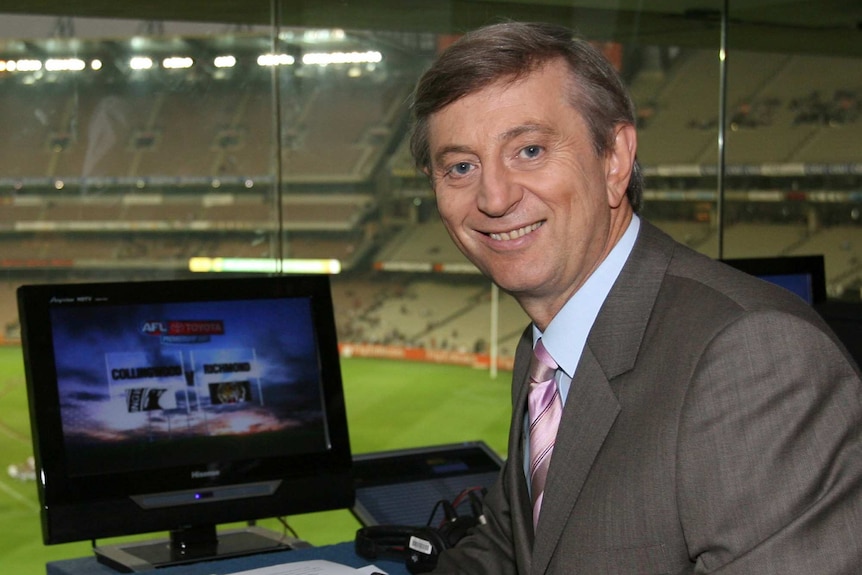
Dennis Cometti spent decades in the commentary box. (Allen and Unwin)
Between 1973 and 1986, Cometti rose to be a star at the ABC, working out of the national broadcaster’s Perth offices in Adelaide Terrace.
On FM radio he’d discovered his inner court jester — the flair he would later unleash in AFL broadcasts — but at the ABC he received the same rigorous, old-school broadcasting training as his colleagues and future co-stars Morphett and Tim Lane, learning there was a right and wrong way of doing everything.
“We were all taught the basics of broadcasting,” Morphett once said.
“He [Cometti] didn’t need much coaching to do football broadcasting because he was a coach and a former player.”
In 1971 a lack of opportunities at ABC Perth prompted a move to Melbourne, where Cometti also made a football comeback in the reserves for the Ted Whitten-led Footscray. Whitten dubbed Cometti “Mr Part-time”, never elevating him to the seniors, but his broadcast career progressed sufficiently for a transfer back to Perth.
In 1973, a late call-up to pair with 3KZ luminary Ian Major on the Victoria-WA state game at Subiaco set Cometti on his path into serious sports broadcasting. Within a year Cometti was calling Test cricket beside Alan McGilvray and Lindsay Hassett during the 1974-75 Ashes.
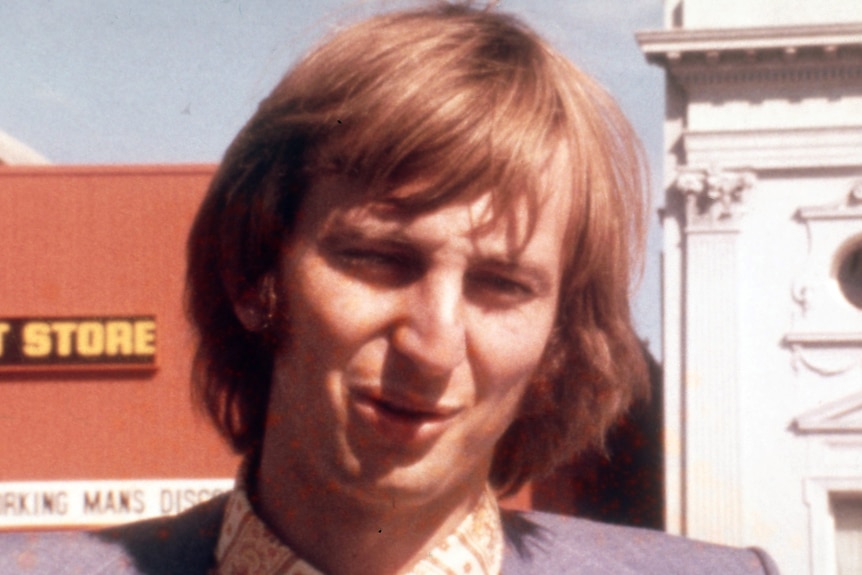
Dennis Cometti moved straight from playing football into coaching and calling. (ABC News)
Intimidated by his company, Cometti cemented his lifelong habit of over-preparing; Hassett sometimes rewarded him by taking off from the box, pipe in hand, leaving the rookie to his own devices.
Cometti, in time, was a far more generous colleague.
“He always throws down to you in a great way and brings you into the conversation with a perfect little lead-in,” his former colleague Jude Bolton once said.
“That’s made my transition as easy as possible.”
Roberts once said: “There’s blokes that I work with that just get their kicks out of putting you on the spot and getting a laugh out of seeing you stuff up. But Dennis is all about looking after you. He’s a team player.”
‘Not many Dennis Comettis come along in broadcasting’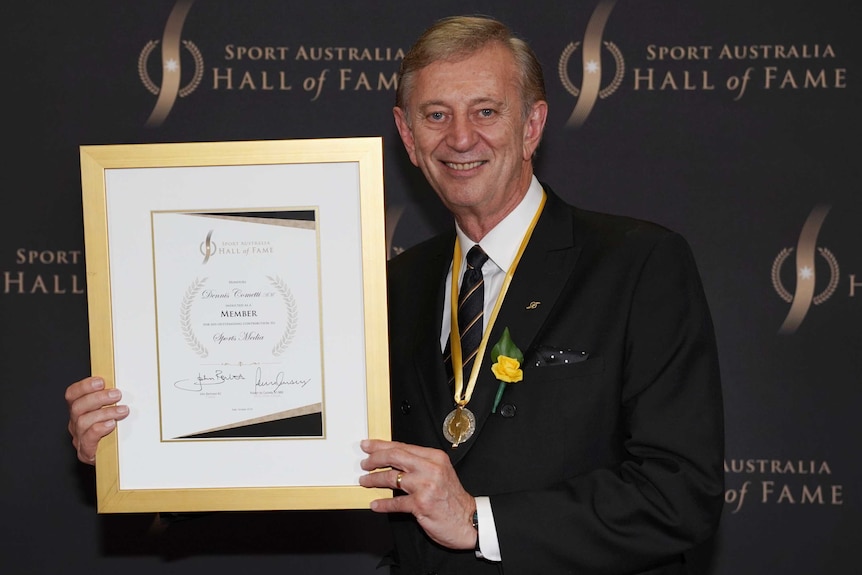
Dennis Cometti was inducted into the Sport Australia Hall of Fame in 2019. (AAP: Michael Dodge)
At the Seven Network, from the late 1980s until his retirement in 2016, Cometti rose to national prominence and became one of the most revered broadcasters in sport. In addition to the AFL duties that made his name, Cometti called Olympic Games action in 1992, 1996 and 2000.
In an unusual arrangement for the time, he was also occasionally released to call international cricket alongside Richie Benaud, Ian Chappell and Tony Greig on the Nine network, to which he made a highly publicised move in 2002.
Alongside his AFL work, Cometti’s calls of Kieren Perkins’s 1,500m gold medal and Susie O’Neill’s triumphs at Atlanta ’96 are classics in the annals of Australian sports broadcasting.
Loading…
With McAvaney, he formed a football commentary dream team.
“There’s never been a harsh word,” Cometti said in 2016.
“We’re good friends. We don’t live in each other’s pocket but we work in each other’s pocket. It’s been a wonderful relationship. I’ve got the utmost respect for him.”
The closest Cometti came to controversy was when his lifelong approach of remaining apolitical during broadcasts left him flailing when Sydney Swans great Adam Goodes performed his famous war dance in 2015.
Of the stinging criticism that came after the incident, Cometti said: “There was nothing sinister in it. I don’t think I fully understood what that was all about.”
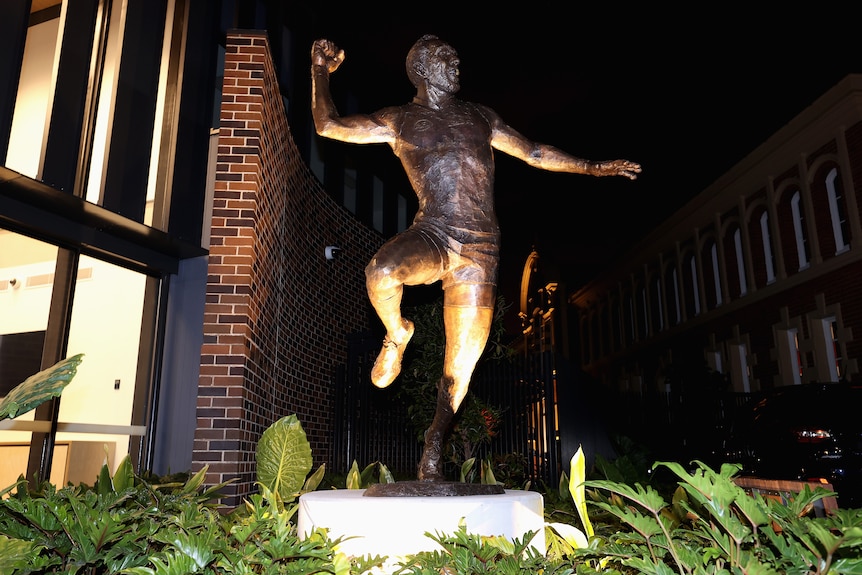
Dennis Cometti said he had not fully grasped the significance of Adam Goodes’s dance as it happened. (Getty Images: Cameron Spencer)
“I think I said at the time that I wouldn’t have done that, probably at the time not fully understanding what was involved,” he said.
“I didn’t think it was as significant as it perhaps played out to be. But that’s the problem with live television sometimes. It was the opposition cheer squad, so I thought it was provocative in that way, but it was one of those situations looking back that I probably should have bitten my lip.”
Plenty thought his 2016 retirement may have been premature, though not Cometti himself.
“A lot of people are talking to me now, saying that it might be a Johnny Farnham retirement,” Cometti said at the time.
“I use the analogy that sooner or later, if you stay out long enough, forget about Johnny Farnham, you become Meat Loaf. So we don’t want to do that either.”
Cometti’s love of his wife Velia, daughter Ricki and son Mark were well known to all who knew him, but Cometti once noted he’d missed the births of both children due to work commitments. Mark, born as his father called a Sheffield Shield game, later became a professional wrestler and Dennis his biggest fan.
Cometti was awarded the Order of Australia and inducted into the Sport Australia Hall of Fame in 2019, and in 2020 took his rightful place in the Australian Football Hall of Fame.
He will most likely be remembered best for his one-liners, but it is the deep, resonant voice and common sense that sports fans will most miss. That voice, like much of the inspiration for his career in sport, came from his father.
“He was a very quiet man,” Cometti said in 2016.
“It’s not to say he didn’t have a deep, manly voice, my father. It was hardly ever raised in anger or raised in any way. It was just a different time.”
Cometti’s former colleague Matthew Richardson once gave a succinct summary.
“Not many Dennis Comettis come along in broadcasting,” he said.
“I guess it’s like a superstar footballer. They only come along once in a while.”