
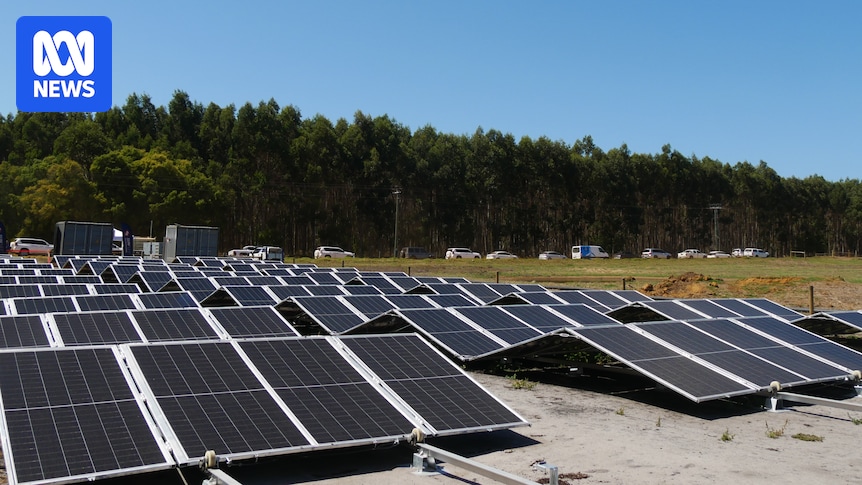
Western Australia’s biggest dairy is investing thousands of dollars into building its own power supply, hoping to bypass unreliable electricity from the grid and costly fuel to cut production costs.
Peninsula Downs has been operating for more than 70 years and has eight properties across Scott River and Warner Glen in the state’s South West region.
For decades, the business has relied on grid electricity and diesel generators to power centre pivot irrigation, which pumps groundwater and dam water to grow feed for the herd.
Now the company is investing $650,000 of its own money in a large-scale hybrid solar and battery system at the Scott River dairy to reduce reliance on diesel and the grid.
Hybrid system
Managing director of Peninsula Downs Ross Woodhouse said the system would combine solar panels, battery storage and a diesel generator.
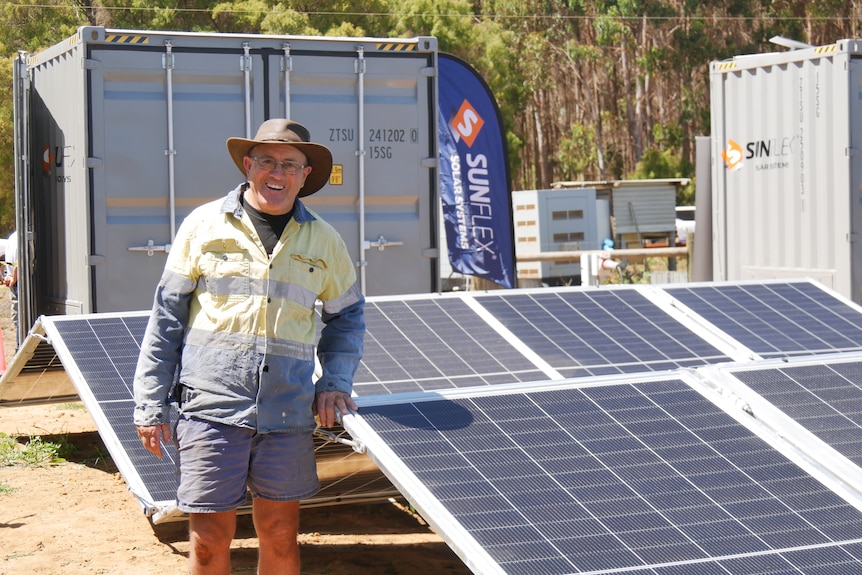
Ross Woodhouse’s company has invested $650,000 in a hybrid solar and battery system. (ABC South West: Rachel Boothman)
“We built a system over 30 years, spent probably $30 million in that vicinity, to develop centre pivot irrigation, groundwater, dam water,” he said.
“We had to look for alternatives, and this is what we came up with, which is a hybrid system still using the generator but basically solar and batteries,” he said.
The solar and battery system will provide about two-thirds of the dairy’s energy supply, with diesel making up the remainder, Mr Woodhouse said.
“The generator will run for 7 hours a day, whereas before it was running 24 hours a day.”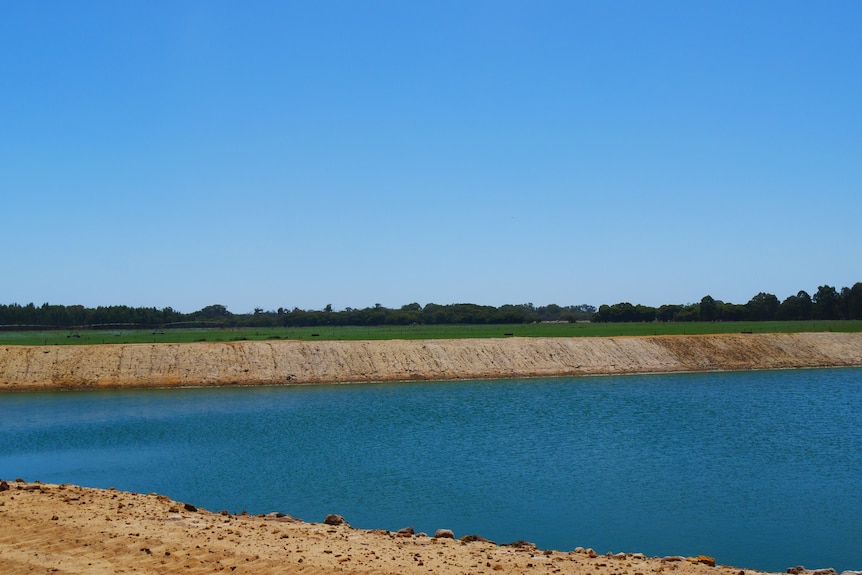
The bore pump connected to an on-farm dam is now powered by a hybrid solar and diesel battery system. (ABC South West: Rachel Boothman)
Costly, unreliable power
Unstable electricity supplies were the dairy’s main reason for going off-grid. Every hour without power cost the dairy about $600, and “that’s too significant,” Mr Woodhouse said.
“In 2024, we were down 21 times on this property, and then this year we’ve been down seven times already,” he said.
Mr Woodhouse also said power charges had gone up by 50 per cent in the past 12 months.
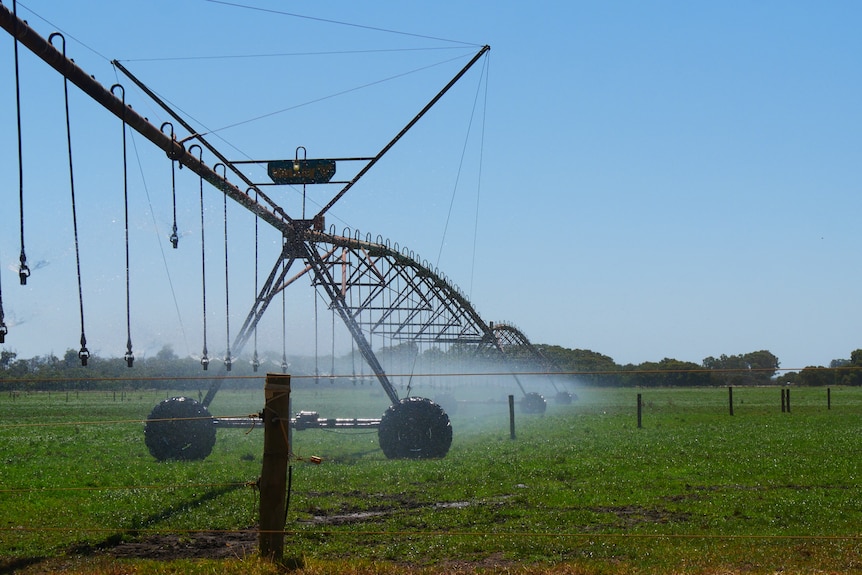
Frequent power outages have disrupted irrigation and cost the dairy thousands in lost feed production. (ABC South West: Rachel Boothman)
The number of dairy farmers in Western Australia has fallen sharply over recent decades, from about 400 producers to fewer than 100 today.
Mr Woodhouse said high land values, rising input costs and an aging workforce had contributed to the decline.
“We’ve got land that was worth $1,000 an acre [0.4 hectares], now worth in excess of $11,000 an acre, and our return on that asset is very, very poor,” he said.
“The young people aren’t wanting to come into a life like that.”Industry challenges
WA Agriculture Minister Jackie Jarvis said the declining number of dairy farms in the state was a concern, which made Peninsula Downs’ off-grid innovation significant.
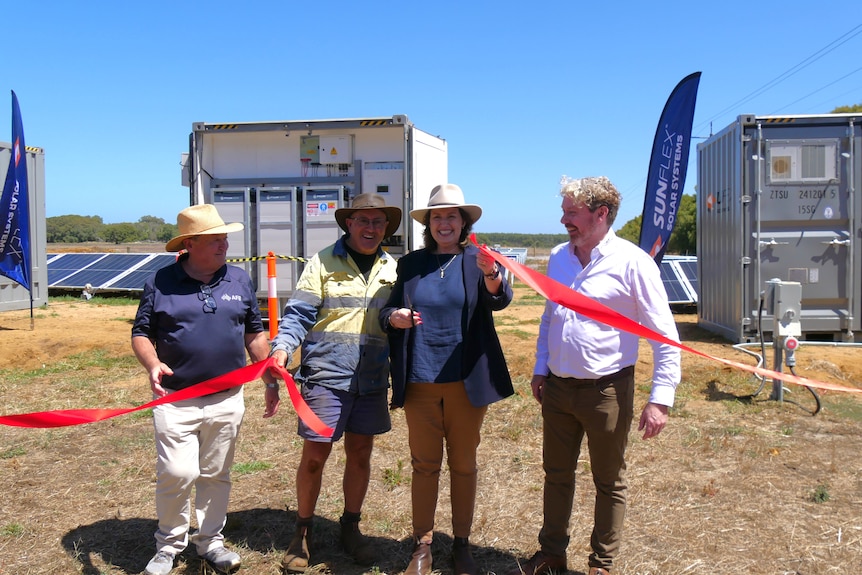
Jackie Jarvis says investments in technology at larger farms help maintain milk supply despite fewer dairy farms. (ABC South West: Rachel Boothman)
“I think investments like this are showing positive signs for the dairy industry, but we’re keeping a close eye on it. We want to make sure that the fresh milk supply in Western Australia remains,” she said.
“It is a no-brainer that businesses like this that use a lot of diesel or are spending a lot of money on power from the grid can actually go off-grid.”
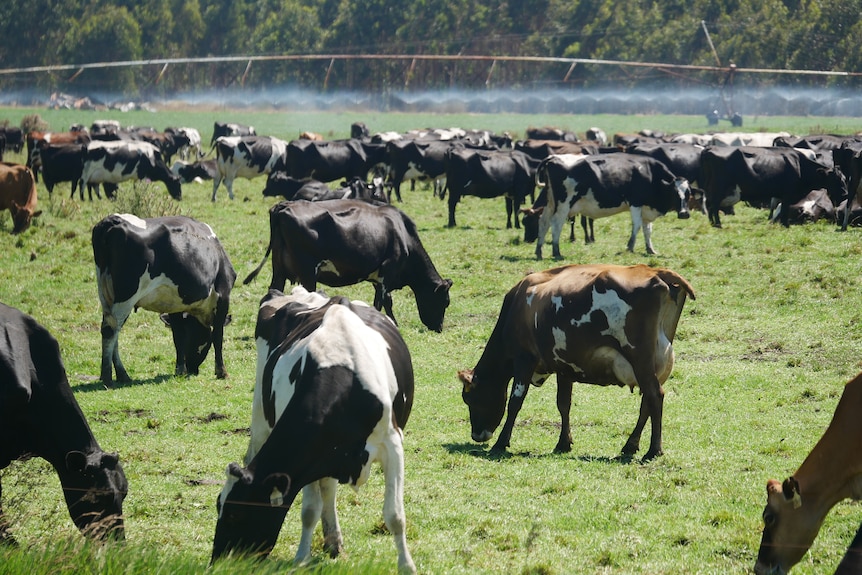
Centre pivot irrigation at Peninsula Downs waters extensive pastures to feed thousands of cows. (ABC South West: Rachel Boothman)
Mr Woodhouse said technology and renewable energy were key to keeping the dairy industry running.
“We need to get off the grid for power supply for cost and reliability, and we need to automate so that we’re less reliant on our labour input or employed labour’s input,” he said.
“It should be here in 400 years’ time, exactly the same.”