
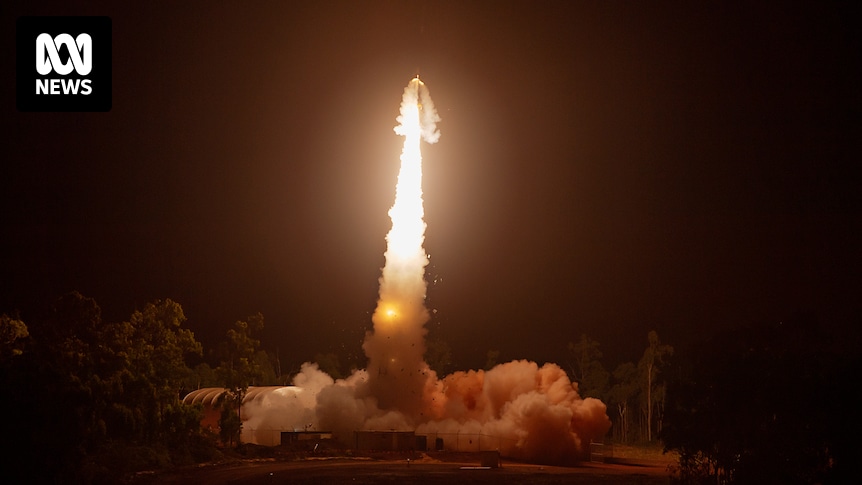
A space start-up once billed as the future of Australia’s rocket launch industry has collapsed into liquidation, still owing the Northern Territory government more than $5 million.
A notice issued by financial regulator the Australian Securities and Investments Commission (ASIC) last week confirmed Equatorial Launch Australia (ELA) would be wound up and Geoffrey Peter Granger appointed as liquidator.
ELA captured national attention in 2022 when it launched three NASA rockets from its Arnhem Space Centre launch pad in the Northern Territory, in a moment hailed by Prime Minister Anthony Albanese as “a new era” for the Australian space sector.
The rockets marked Australia’s first launches in more than 25 years and spurred the company to lodge ambitious plans to expand to 14 launch pads with hopes of launching a rocket a week.
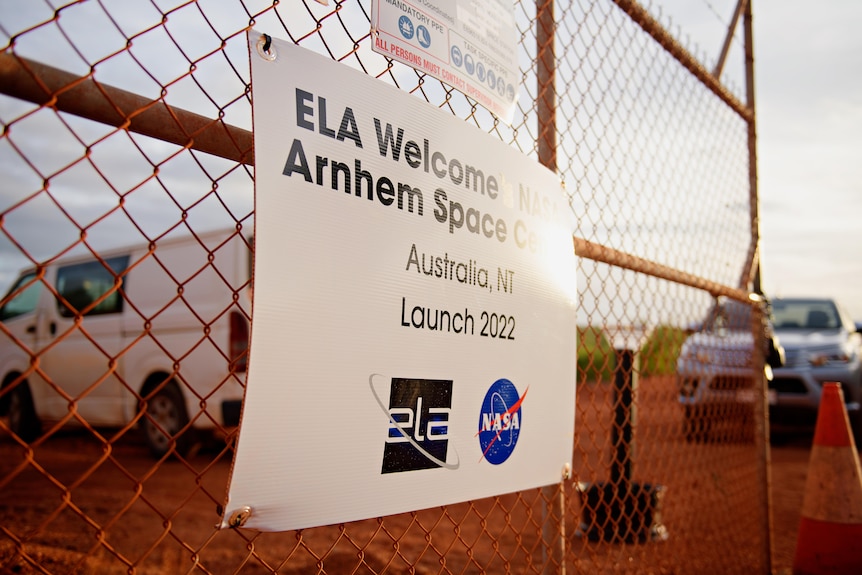
ELA’s Arnhem Space Centre was located on the outskirts of Nhulunbuy in Arnhem Land. (ABC News: Michael Franchi)
But in 2024, ELA ceased operations in the NT.
The company blamed delays and failed negotiations with the Northern Land Council over a proposed lease to expand its East Arnhem Land rocket launch base — claims the NLC rejected.
At the time, a spokesperson for the then-NT Labor government confirmed it had invested about $5 million in ELA and was “exploring legal options” in relation to its 5 per cent stake in the company.
On Wednesday, Chief Minister Lia Finocchiaro said ELA’s collapse was a “mess” the current Country Liberal Party (CLP) government would now need to work through.
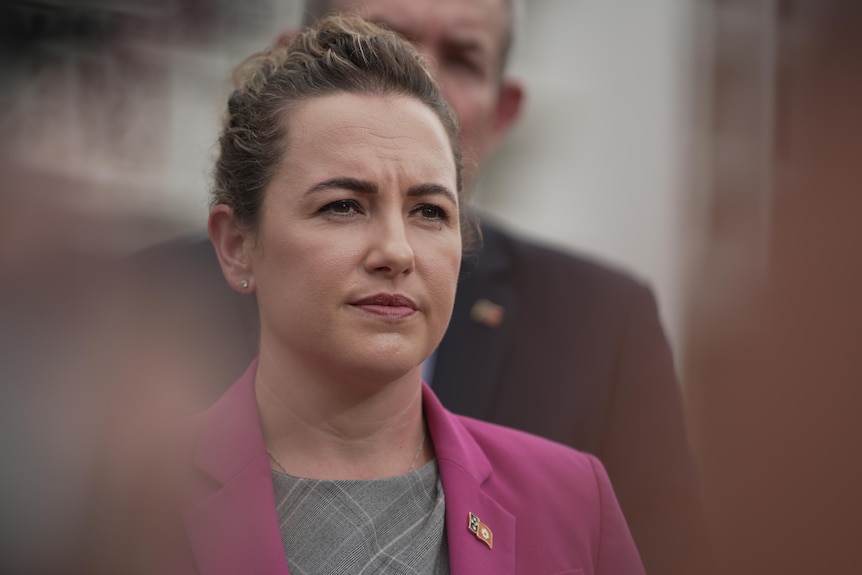
Lia Finocchiaro says ELA’s collapse is concerning. (ABC News: Pete Garnish)
“This has been a very disappointing chapter, where first [ELA] pulled out of the Northern Territory and now news around the liquidation,” she said.
“So we have to work back through and pick up the pieces of this mess that Labor left behind.
“Millions have been spent on failed projects and it’s Territorians who have suffered.”
Trade, Business and Asian Relations Minister Robyn Cahill confirmed the NT government retained shares worth $5.44 million in ELA.
A spokesperson for her office said the the government was “considering options related to our shareholding that are in the best interest of the Territory”.
ELA chief executive Michael Jones declined to comment.
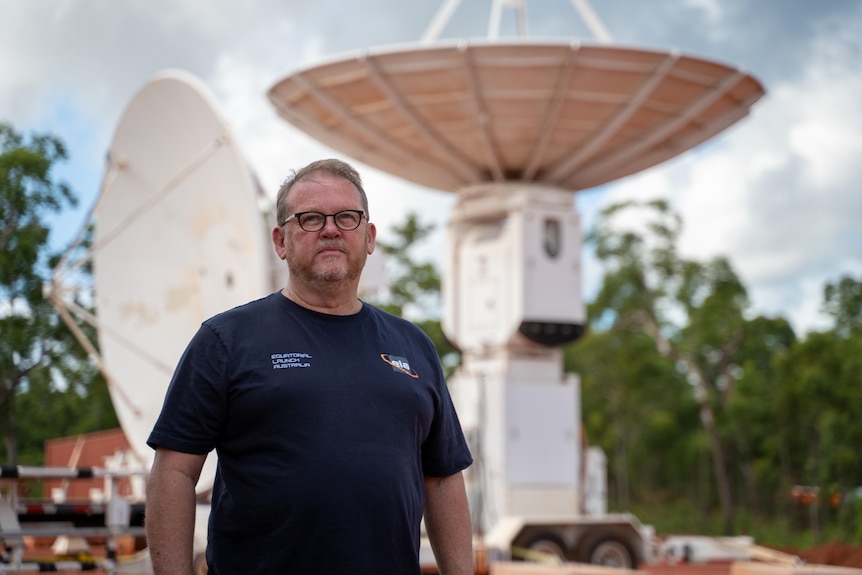
Michael Jones declined to comment on ELA’s collapse. (Supplied: ELA)
A spokesperson for ASIC said the liquidator had taken over ELA and would be settling accounts in an “orderly and fair way” to benefit creditors.
“It is up to the liquidator to determine what returns, if any, may be available and to examine the causes of the company’s collapse,” the spokesperson said.Failure to launch
Jamie Gane, the chair of the Weipa Town Authority, said ELA had attempted to relocate its launch site to the major mining town in Queensland, but abandoned those plans last year.
She said the company had been unsuccessful in its attempts to secure the necessary land agreements.
New space company launches with plans for high-tech outback hub
In December, the Cook Shire Council received a development application from Australian Space Centre — a different trading name used by ELA — for a new spaceport on a cattle station in Bloomfield, a rural town in Far North Queensland.
However, local mayor Robyn Holmes said the application had been withdrawn in January.
Federal Industry, Innovation and Science Minister Tim Ayres did not respond to questions about whether he was concerned about ELA’s collapse.
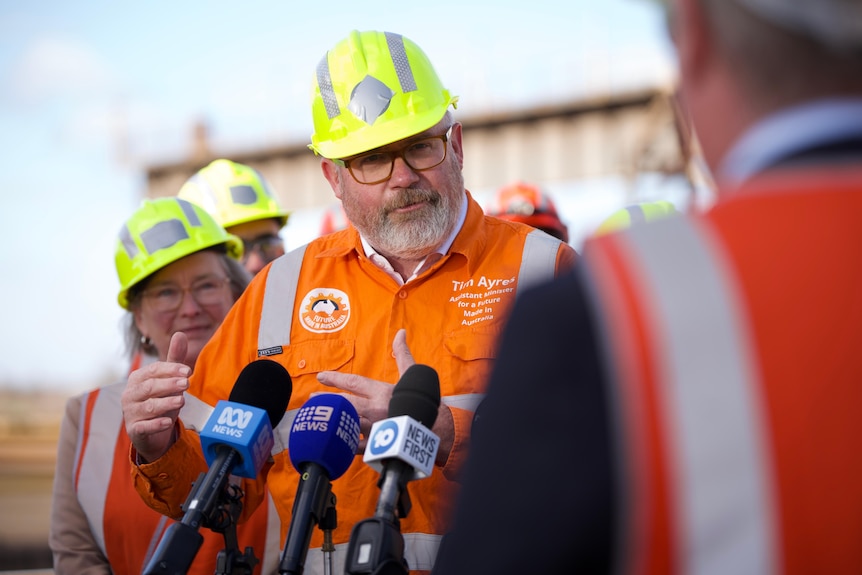
Tim Ayres says Australia’s space sector is continuing to grow. (ABC News: Lincoln Rothall)
However, in a statement, a spokesperson for the minister said Australia’s space sector continued to grow.
“Launch and returns are an area of growth for Australia’s space sector, with several operational facilities, historic spaceflight activities, and a transition to recurring operations around the nation in recent times,” they said.
“The Australian government is setting the conditions to support the launch and returns ecosystem, including implementation of a Technology Safeguards Agreement with the US which could generate up to $1.2 billion in economic activity over the next decade.”