

Deportations from Australia are at their highest rate because we have rewritten our laws to enable them, writes Gerry Georgatos.
FOR MORE THAN A DECADE, Australia has been quietly executing one of the harshest deportation regimes in the so-called democratic world. It has done so not through emergency powers or wartime necessity, but through ordinary legislation — principally the Migration Act 1958, and s 501, the so-called “character” provision.
The consequences have been profound. Long-term permanent residents – many of whom arrived as children, built families, paid taxes, and know no other country as home – have been expelled from Australia after serving criminal sentences, separated from Australian-born children, and exiled to countries they barely remember or have never known as adults. These are not marginal cases. They are now structural outcomes of the law.
This article argues that Australia’s deportation regime has become draconian by design, not accident. It compares Australia’s approach to other deporting states, exposes the legal mechanics that enable mass removals, and proposes specific statutory amendments capable of halting the deportation of long-term residents and parents of Australian children. Deportation, as currently practised, is not immigration control. It is civil banishment.
Section 501 and the architecture of exile
Section 501 of the Migration Act empowers the Minister for Home Affairs to refuse or cancel a visa if a person fails the “character test”. That test is extraordinarily broad. A person automatically fails if they have been sentenced to imprisonment for 12 months or more – whether in one sentence or cumulatively – regardless of how long ago the offence occurred, the age of the offender at the time, or the degree of rehabilitation.
Since amendments introduced in 2014, the law has operated with increasing severity. Mandatory cancellation provisions require visas to be cancelled first, with affected individuals forced to argue for reinstatement from detention — often after completing their criminal sentence. The presumption is deportation. Human circumstances are treated as discretionary afterthoughts.
Critically, length of residence in Australia is not a legal shield. Someone who arrived at age two and lived here for forty years is treated no differently in law from someone who arrived two years earlier. Nor does the Act recognise the moral or social reality that long-term residents are, in every meaningful sense, Australian.
The result is a system that double-punishes. A non-citizen serves their sentence under Australian criminal law — the same law that governs citizens — but then faces a second, permanent penalty: exile.
The human cost: Families, children and permanent exclusion
The human consequences of this framework are devastating and predictable. Parents are removed from Australian-born children. Families are fractured across borders. Individuals with no meaningful ties to their country of nationality are deported into social isolation, economic precarity, and, in some cases, danger.
The Australian Human Rights Commission has repeatedly warned that s 501 cancellations disproportionately affect long-term residents and raise serious concerns under international human rights law. Yet these warnings have not translated into legislative restraint.
What is particularly striking is what the law refuses to see that a person’s formative life has occurred in Australia. That their family, language, culture, and identity are Australian. That criminal behaviour, where it occurs in Australia, is already addressed by Australian courts and prisons. That deportation is not neutral administration, but an extreme state act.
Australia’s deportation system treats belonging as revocable, conditional, and ultimately disposable.
Australia in global context: Not an outlier in numbers, but in cruelty
Globally, many states deport non-citizens. The United States deports more people in raw numbers than any other democracy. Over the past century, tens of millions have been removed, and deportation rhetoric there is often driven by fearmongering and racialised narratives about crime and border invasion.
Yet even in the United States, there are structural features Australia lacks: constitutional due-process protections, stronger judicial oversight, and, in many cases, greater weight given to family unity and long-term residence. While the U.S. system is punitive, it is also more openly contested in courts and politics.
In the United Kingdom, deportations of “foreign national offenders” have increased, but the courts have repeatedly intervened to restrain removals that would breach family life protections under human rights law.
Australia’s distinctiveness lies not merely in deportation rates, but in how comprehensively the law silences counterarguments. Ministerial discretion is shielded. Judicial review is narrow. Merits review has been progressively curtailed. The law is structured to deport first and ask moral questions later — if at all.
Internationally, there is growing unease about Australia’s approach. UN human rights bodies have raised concerns about arbitrary detention, family separation, and disproportionality. Yet Australia continues to frame deportation as a technical migration issue rather than a profound human rights question.
Deportation as punishment
A central failure of Australian law is its refusal to acknowledge that deportation is punitive. In substance, deportation functions as a life-long exclusion order. A penalty imposed after sentence completion. A sanction affecting not only the individual, but their children and community.
Under criminal law principles, punishment must be proportionate, finite, and imposed by a court. Deportation meets none of these criteria. It is imposed administratively, often decades after arrival, and without meaningful temporal limit.
For long-term residents, crimes committed in Australia are Australian crimes. The offender is judged by Australian courts, imprisoned in Australian prisons, and released under Australian law. To then deport that person is to deny Australia’s own responsibility for rehabilitation, reintegration, and social repair. This is not public safety. It is outsourcing punishment.
The case for a five-year non-deportation rule
At the core of reform must be a statutory time-based protection. Australia once recognised this principle. Prior to 1998, long-term residence provided meaningful insulation against deportation. That protection must be restored and strengthened.
The law should be amended to provide that any permanent visa holder who has resided in Australia for five years or more cannot have their visa cancelled under s 501, except in the most exceptional circumstances involving demonstrable, ongoing risk of serious harm.
Time spent in Australia as a child must count in full. Length of residence must operate as a jurisdictional bar, not a discretionary factor. This reform alone would prevent many current long-term deportations.
Parents, children, and the presumption of family unity
A second, essential reform concerns families. The Migration Act currently allows the deportation of parents of Australian-born children, treating children’s interests as merely one factor among many. This is indefensible.
The Act must be amended to include a statutory presumption against deportation where the person is a parent or primary carer of an Australian citizen child or the child has been born and raised in Australia or deportation would result in family separation or effective exile of the child.
Only compelling evidence of ongoing, danger should be capable of rebutting that presumption. Family unity should be the rule, not the exception.
Clean slate: Ending double punishment
Australia must also confront the injustice of perpetual punishment. Once a person has served their sentence, complied with parole, and demonstrated rehabilitation, the law should recognise closure.
A clean-slate provision should be introduced, providing that past criminal convictions cannot be relied upon indefinitely for character cancellation after a defined rehabilitation period, offences are spent for migration purposes. Deportation cannot operate as a shadow sentence. This aligns migration law with foundational principles of criminal justice.
Courts, review, and legal pathways
Reform must also address process. Merits review must be restored as a genuine safeguard. Judicial review must not be reduced to technical error-hunting. Decision-makers must be required to give reasons that engage substantively with length of residence; family and community ties; rehabilitation; best interests of children; proportionality.
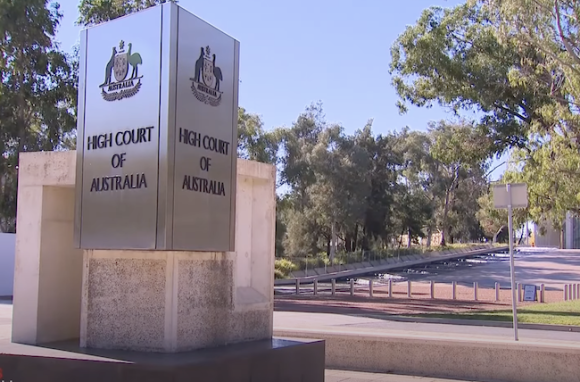
Strategic litigation will continue to play a role, particularly through the Federal Court and High Court. But litigation alone cannot cure a statute designed to deport. The law itself must change.
Silences, vulnerability, and the politics of expendability
Perhaps the most troubling feature of Australia’s deportation regime is the silence that surrounds it. Those deported are often voiceless: non-citizens, prisoners, people without media access or political power. Their removal is administratively tidy and politically convenient.
Governments have framed deportation as toughness. In truth, it is abdication. It allows Australia to disown people it helped shape, raised, and punished — and then discard them. This is not sovereignty. It is moral retreat.
From exile to belonging
Australia stands at a crossroads. It can continue to use migration law as an instrument of banishment, or it can recognise that belonging grows with time, family, and shared responsibility.
Reforming s501 and related provisions is not radical. It is restorative. A five-year non-deportation rule, family unity protections, clean-slate provisions, and genuine review mechanisms would return the Migration Act to something recognisably humane.
Australia does not lack the legal capacity to change. It lacks the political courage. That courage must now be summoned because a nation that treats long-term residents as disposable will, in time, find that its own values are just as easily discarded.
What follows is written so it can be appended directly to a Bill, a Senate inquiry submission, or used as briefing for counsel preparing strategic litigation. I have been deliberately precise, conservative in drafting assumptions, and aligned with current High Court doctrine. This is the kind of work that survives hostile scrutiny.

EXPLANATORY MEMORANDUM
Migration Amendment (Long-Term Residence and Family Unity) Bill 2026
Overview
This Bill amends the Migration Act 1958 (Cth) to restore proportionality, fairness, and legal coherence to Australia’s deportation regime by:
Introducing a statutory protection for long-term residents;
Establishing a presumption against deportation of parents of Australian citizen children;
Ending double punishment through a clean-slate mechanism;
Restoring independent merits review of character-based visa cancellations.
The Bill responds to the exponential expansion of deportations under s 501 since 2014, particularly affecting long-term permanent residents and families with Australian-born children.
Clause-by-Clause explanation
Clause 1 — Short Title
Provides that the Act may be cited as the Migration Amendment (Long-Term Residence and Family Unity) Act 2026.
Clause 2 — Commencement
Provides for commencement on the day after Royal Assent.
Clause 3 — Schedule(s)
Provides that each Act specified in the Schedule is amended as set out
Schedule 1 — Amendments
Item 1 — Amendment of section 501 (Insertion of subsection 501(6A))
What this clause does
This clause inserts a new subsection establishing a statutory bar on visa refusal or cancellation under s 501 for long-term residents.
Legal effect
Converts length of residence from a discretionary factor into a jurisdictional threshold. Requires the Minister to establish a present and ongoing risk of serious harm before cancellation is legally available. Prevents retrospective punishment based solely on historical offending.
Policy rationale
Long-term residence gives rise to deep social, familial, and civic ties. Deportation in such cases functions as exile rather than migration control. This amendment restores proportionality and reflects pre-1998 legislative practice.
Item 2 — Insertion of section 501AA (Family Unity Protection)
What this clause does
Creates a presumption against visa cancellation where the visa holder is a parent or primary carer of an Australian citizen child.
Legal effect
Elevates the best interests of the child from a discretionary consideration to a determinative statutory principle. Allows cancellation only where necessary to prevent a serious and imminent risk of physical harm. Prevents indirect exile of Australian citizen children.
Policy rationale
Australia’s deportation law currently permits family separation inconsistent with international norms and domestic child-welfare principles. This amendment aligns migration decision-making with fundamental family unity protections.
Item 3 — Insertion of section 501AB (Clean Slate Provision)
What this clause does
Prevents reliance on historical convictions after a defined rehabilitation period.
Legal effect
Ends perpetual punishment via migration law. Harmonises migration law with criminal justice principles of rehabilitation and finality. Applies regardless of sentence length to prevent arbitrary distinctions.
Policy rationale
Once a sentence is served and rehabilitation demonstrated, continued reliance on past offending undermines reintegration and public confidence in justice outcomes.
Item 4 — Amendment of section 500 (Restoration of Merits Review)
What this clause does
Restores access to independent merits review for s 501 cancellation decisions.
Legal effect
Enables proportionality assessment and factual correction. Reduces litigation burden on courts by restoring administrative review. Reinforces procedural fairness.
Policy rationale
Judicial review alone cannot assess humanitarian considerations. Merits review is essential to lawful, fair administration.
Compatibility with human rights
The Bill is compatible with human rights and advances protections under Articles 9, 17, and 23 of the ICCPR and Articles 3 and 9 of the Convention on the Rights of the Child. The Bill does not limit Australia’s ability to remove persons who pose a genuine and serious threat to public safety.
High Court test case roadmap
Strategic Constitutional Litigation to Restrain Deportation of Long-Term Residents
Objective
To establish constitutional limits on the deportation of long-term residents under the Migration Act, particularly where deportation operates as punitive exile rather than migration regulation.
Ideal plaintiff profile
The strongest test case would involve a permanent visa holder. Arrival in Australia as a child (preferably under age 10). Residence exceeding 10–20 years. Australian citizen children and/or partner. Criminal offending already punished and sentence fully served. No ongoing risk of serious violence. This profile maximises proportionality and constitutional tension.
Stage 1 — Federal Court (Judicial Review)
Primary Grounds
Jurisdictional Error
Failure to consider length of residence as a legally relevant consideration. Failure to assess proportionality of cancellation consequences. Failure to treat children’s interests as a primary consideration.
Legal Unreasonableness
Deportation outcome manifestly disproportionate to purpose. Reliance on historical offending without current risk assessment.
Procedural Fairness
Mandatory cancellation followed by retrospective justification and denial of meaningful opportunity to respond.
Stage 2 — Constitutional Questions for the High Court
Ground 1 — Limits of the Aliens Power (s 51(xix))
Argument
At some point, long-term residence and social membership attenuate constitutional “alienage”. Deportation of a person whose entire adult life has been lived in Australia exceeds the core purpose of the Aliens power.
Doctrinal hook
Builds incrementally on Love without asserting citizenship, arguing instead for constitutional gradation of alienage.
Ground 2 — Separation of Judicial Power
Argument
Where deportation follows completion of a criminal sentence and is triggered by the same conduct, it functions as additional punishment imposed by the executive. This may constitute an impermissible exercise of judicial power.
Ground 3 — Constitutional Proportionality
Argument
Even where power exists, its exercise must be proportionate to legitimate purpose. Deportation of long-term residents for historical offending may be constitutionally disproportionate.
Stage 3 — Remedy Sought
Declaration that s 501 is constitutionally invalid in its application to long-term residents or reading down to require proportionality, residence weighting, and family unity consideration or injunctive relief restraining removal.
Strategic value of the case
Even if full invalidity is not achieved, the litigation would force Parliament to legislate residence protections; expand jurisdictional error doctrine; shift deportation discourse from “border control” to constitutional belonging.
Australia’s deportation regime currently operates in the shadows of constitutional doctrine — tolerated, not tested. A carefully constructed case, paired with statutory reform, can force the law to confront a simple truth, that a nation cannot punish people forever for not being citizens when it treated them as Australians for decades.
Gerry Georgatos is a suicide prevention and poverty researcher with an experiential focus on social justice.
Support independent journalism Subscribe to IA.


Related Articles
Independent Australia desperately needs your help!
Please donate to our GoFundMe here
Support Fearless Journalism
If you got something from this article, please consider making a one-off donation to support fearless journalism.


© Copyright 2026 Independent Australia – All rights reserved.
Save IA
It’s never been more important to help Independent Australia survive!
Fearless news publication IA has exposed deep-rooted secrets
other media routinely ignored. Standing up to bullies and telling
the truth — that’s our speciality.
As misinformation and disinformation become the norm,
credible, independent journalism has never been more important.
We need to raise $60,000 to help us continue our
powerful publication into 2026.
If you value what we do, please donate now.