
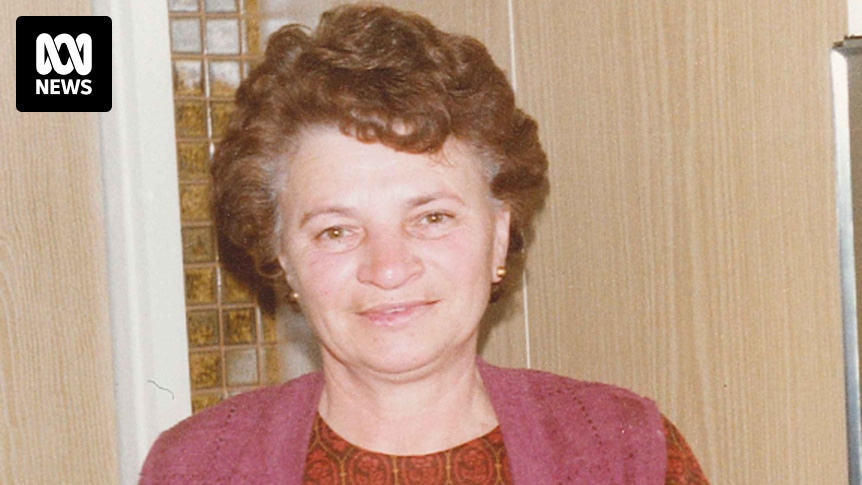
A forensic pathologist has told the Australian Capital Territory (ACT) Supreme Court it was impossible to determine a precise cause of death after the cold case murder of Irma Palasics in 1999.
Professor Johan Duflou has given evidence in the murder trial of Melbourne men Steve Fabriczy and Joseph Vekony.
The two are alleged to have murdered Mrs Palasics after she and her husband Gregor were attacked, bound and gagged, before being robbed of $30,000 in 1999.
The pathologist who carried out the original autopsy has since died.
Professor Duflou told the court that he had prepared his report based on crime scene photos, autopsy photos and material the original doctor provided to the coroner.
He said Mrs Palasics had suffered multiple blunt force injuries, including a broken nose.
“The injuries were very much those of interpersonal violence,” Professor Duflou said.
He said Mrs Palasics’s airways were filled with blood, but given all of her injuries, a precise cause of death could not be determined.
He said one issue was whether Mrs Palasics had been unconscious and without “protective reflexes” to cough up the blood.
Mistaken position of body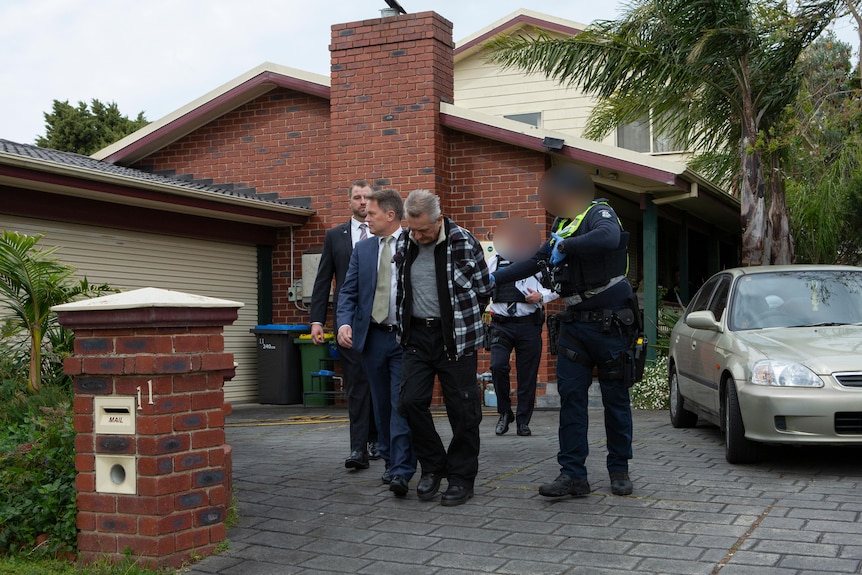
Steve Fabriczy is charged over the death of Irma Palasics. (Supplied)
Professor Duflou also admitted that he had based his original report on the mistaken belief that Mrs Palasics had been left on her back, which is shown in the crime scene pictures.
He told the court he was only informed two days ago that she had originally been found face down.
Mr Vekony’s lawyer, Travis Jackson, queried Professor Duflou over how that may have changed the situation.
Professor Duflou said whether the body was in one position or another, or was moved, was immaterial.
“The airway is still full of blood … so there is not uncertainty there,” Professor Duflou said.
Professor Duflou was also critical of the original autopsy.
“I would have preferred it to be done in greater detail if it was one being supervised by me,” Professor Duflou said.
He gave a list of measures that were standard practice for the time, including measuring each injury, viewing injuries through a microscope, and a brain examination.
But he told the court even with extra tests, it may not have helped.
“I don’t know if I would have got it over the line,” Professor Duflou said.
Alleged contamination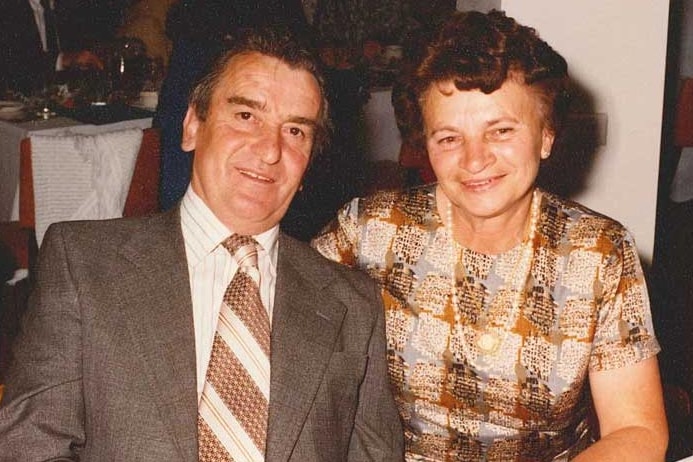
Gregor Palasics managed to free himself from his bonds after the home invasion and tried to revive Mrs Palasics, who was lying on the floor. (Supplied: ACT Policing)
The main target of the defence lawyers has been the forensic operation.
The officer in charge on the night, Cifton Frost, told the court it took eight days to process the crime scene.
He said Mr Palasics’s blood was concentrated in the lounge room, with Mrs Palasics’s blood in the hallway, where she was found.
Mr Frost said the blood spatter indicated Mrs Palasics received most of her injuries in a space in front of the bathroom door, with her dentures found on the floor nearby.
Mr Fabriczy’s lawyer Skye Jerome subjected Mr Frost to intense questioning about whether there could have been contamination of the scene.
This included the use of a so-called “grey square” used by each forensic officer while taking photographs at the scene.
The grey square is used as a contrast to enhance the colour when developing the film used at the time.
The squares were used on the pavers outside, on the carpet inside and on other items.
Mr Frost admitted it was unlikely it was cleaned between shots.
Ms Jerome queried him about whether that was best practice.
Mr Frost conceded that it was not best practice.
“That’s because it could transfer biological material and transfer DNA?” Ms Jerome said.
Mr Frost agreed there was a potential to transfer DNA.
It is alleged Mr Vekony’s DNA was found on a water jug in the fridge, and Mr Fabriczy’s DNA on a milk carton.
Mr Frost will continue his evidence tomorrow.