
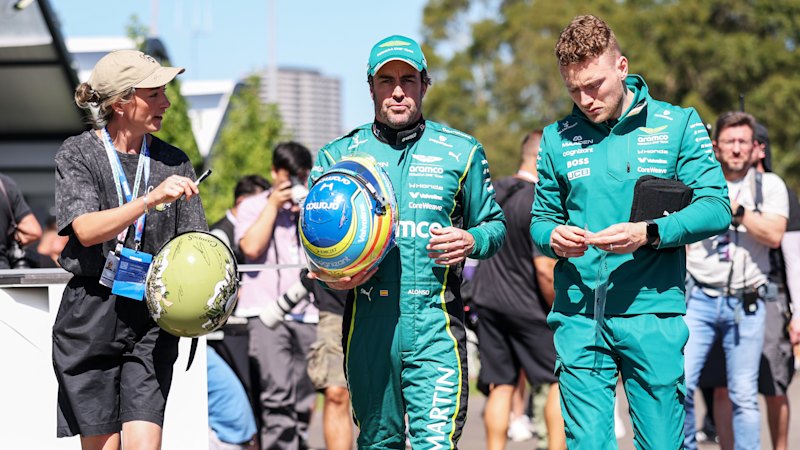
Newey’s comments came after Australian Grand Prix Corporation chair Martin Pakula conceded he was fearful some Formula 1 teams would not make to make it to Melbourne because of the war in the Middle East.
After denials all week from grand prix officials that the Australian Grand Prix could be impacted by the conflict between Iran, Israel and the US, Pakula revealed on Thursday morning that it had been “a hairy weekend”.
“We didn’t have war breaking out on our bingo card of things that might go wrong,” Pakula said at the Victorian Chamber of Commerce Grand Prix breakfast.
He received a phone call at 11.45pm on Saturday night from Stefano Domenicali, president and chief executive of Formula 1, and thought it was unlikely to be good news.
Israel and the US attacked Iran in a joint military strike on Saturday, killing the country’s Supreme Leader Ayatollah Ali Khamenei and attacking targets in Tehran and other major cities.
Loading
The bombings prompted the closure of the major airport hubs in Doha and Dubai – which are key airports and flight pathways for many F1 teams and staff travelling to Melbourne.
Travel arrangements from Europe, particularly Italy and Spain, and the United Kingdom were among the key changes required after original flights were cancelled.
Pakula said he was always confident the race would go ahead but thought it might have to proceed without some of the teams.
“There were moments when we weren’t sure all the teams were going to get here,” he said.
Loading
“I thought rather than 11 teams on the grid, we might have had nine or 10, which would have been very, very disappointing but wouldn’t have stopped the event going ahead.”
Pakula said he didn’t want to stage a “compromised event” given the amount of work that had been put in.
“It would have been such a shame,” he said. “It would have been so disappointing.”
He was relieved when all teams made it to Melbourne.
However, there were still several key F1 personnel missing from Albert Park.
On Thursday, the Australian Grand Prix Corporation presented “In Her Corner”, a lunch celebrating women in motor sport, held in honour of Red Bull principal strategist Hannah Schmitz and Haas engineer Laura Muller who will have turn six of the circuit dedicated to them.
While Muller was there for the lunch and Q&A session, Schmitz, who works with four-time world champion Max Verstappen, was missing.
“Hannah is still making her way around the world, I believe, with the trouble of flight disruption,” F1 presenter Ruth Buscombe told the crowd.
Schmitz’s role boils down to analysing the weather, tyres, the track and pit stop times to prepare the best possible strategy for the weekend for Verstappen in a bid for victory.
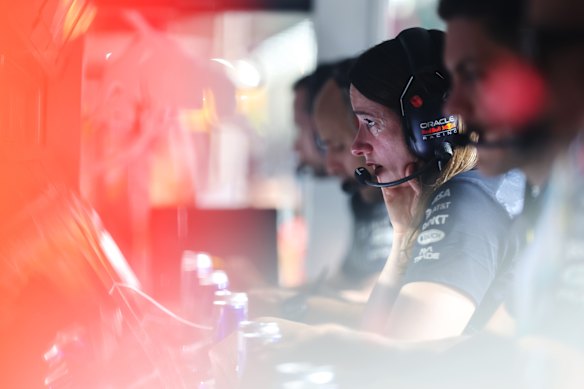
Red Bull principal strategist Hannah Schmitz has been delayed by the flight disruptions.Credit: Getty Images
The event also hosted Australian F1 academy drivers Aiva Anagnostiadis and Joanne Ciconte, rally driver Molly Taylor and racing driver Jessica Hawkins.
A key topic was the barriers women face in the motor sport, and the race to see the next female F1 driver.
Loading
“For us it was very important to take away, first of all, any physical barriers to preventing females … because at the end of the day, the beauty of our sport is that the stopwatch is the same for everybody,” Domenicali said.
“The stopwatch doesn’t lie, the stopwatch doesn’t watch if you’re a man or woman.”
News, results and expert analysis from the weekend of sport are sent every Monday. Sign up for our Sport newsletter.