
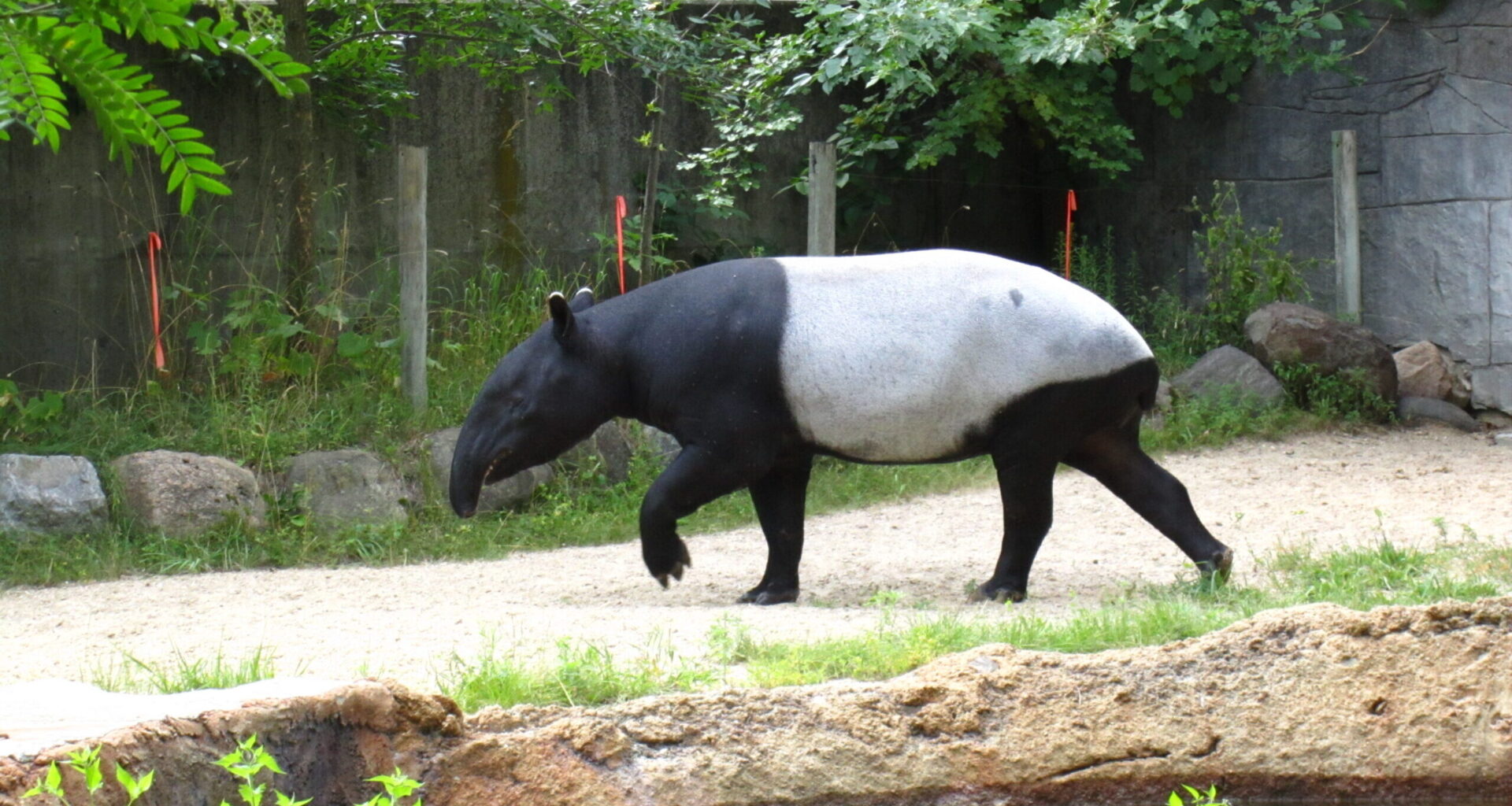
Archived camera-trapping images have revealed a new stronghold for Asian tapirs in Khlong Seang–Khao Sok Forest Complex, in southern Thailand.
Mongabay’s Carolyn Cowan reports that a recent study found camera-trap “bycatch” data — images of species that researchers hadn’t intended to photograph — can be used to monitor Asian tapirs (Tapirus indicus). The camera traps were originally set up in Khlong Seang–Khao Sok between 2016 and 2017 to monitor Asian black bears (Ursus thibetanus), and sun bears (Helarctos malayanus).
Tapirs weren’t a target because, historically, they’ve mostly been surveyed visually, with researchers walking a path through the forest and recording any tapirs they spot along the way.
Modeling based on images from the Thai forest complex suggests it could hold up to 436 tapirs, significantly more than the previous estimate of fewer than 250 individuals for all of Thailand and Myanmar combined.
But researchers urge caution in interpreting this number, as tapirs may be unevenly distributed across the forest complex, suggesting a smaller actual number.
Globally, the species is endangered, with fewer than 2,500 mature individuals remaining, according to a 2014 assessment.
Adult Asian tapirs can weigh up to 350 kilograms (772 pounds), making them the largest of the four tapir species and the only one found outside of Latin America.
In addition to being nocturnal and shy, said ecologist Naparat Suttidate from Walailak University in Thailand, Asian tapirs “are [a] large, slow-reproducing species requiring large areas of specific habitat [and] play a vital role as seed dispersers, helping to maintain biodiversity in plant communities.”
Unlike populations in Sumatra, tapir numbers in the Thai forest complex increased at higher elevations, possibly due to seasonal variations there, whereas conditions in the Sumatran forest are more consistent year-round.
Males were twice as likely to be photographed, suggesting females may have much larger home ranges than males.
The population of the species has dropped by roughly half over the last several decades due to habitat loss and fragmentation, and snaring. “The few populations which remain in Peninsular Thailand persist within protected areas and their numbers continue to dwindle,” Suttidate told Mongabay.
He added that understanding tapirs has broader benefits. “Fascination with these creatures and concern for their future sparks interest, funding and action that benefits tropical forest conservation as a whole.”
Read the full story by Carolyn Cowan here.
Banner image: An adult Asian tapir (Tapirus indicus). Image courtesy of Ali Eminov via Flickr.
