
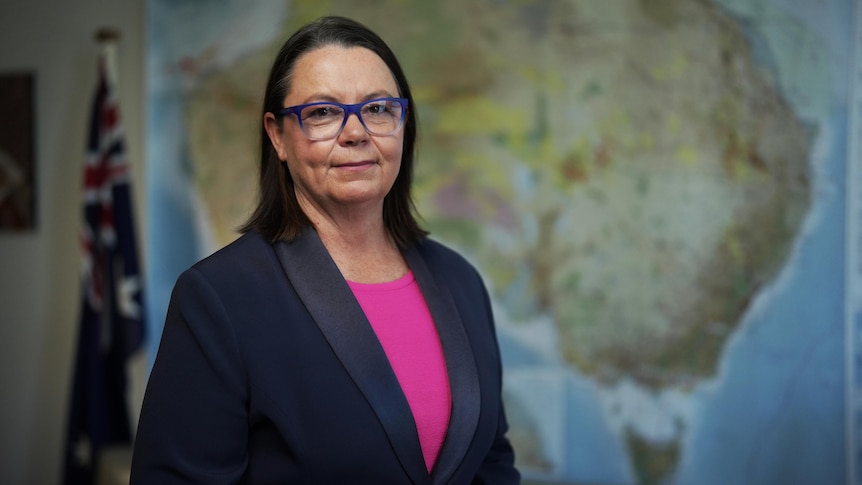
Rachel Mealey: Well, the ongoing attacks on Iran and the ever-expanding retaliatory attacks have had a major impact on the world’s seaborne crude oil supply, sending energy prices soaring. For motorists in Australia, this means the price of fuel will keep climbing at the pump. Madeleine King is the Resources Minister. She joined me earlier. Minister, Australia’s oil and gas supplies are going to be hit hard by this war. Exactly how much do we have in reserve?
Madeleine King: Well, disruptions like this, as we’re seeing in the Middle East, are obviously disturbing to everyone and we can’t always avoid the ripple effects of such quite large conflicts, as we’ve seen, through the travel disruption. But in relation to fuel, Australia is well-stocked with fuel, like petrol for everybody’s cars and diesel for the trucks that moves food and goods around. So we’re confident that will remain the case. There has been some concern amongst the community that there may be some price gouging going on and I’m concerned about that as well. Very importantly, the Treasurer has written to the ACCC to make sure they monitor fuel prices and take action as needed. At the moment, prices are holding steady. But as for gas, we are well-supplied with gas as well and a lot has changed since 2022 when we came into government and we saw a massive spike in gas prices. Since then, this government has taken action to disconnect the domestic price system and supply system from the export pricing system, especially on the East Coast. So that bodes well. And at the moment, gas prices are holding very steady and they’re down to $10 a gigajoules.
Rachel Mealey: On gas, energy analysts say that Australia is still vulnerable to global gas supply markets. How can you make sure that Australians won’t fall victim to the current volatility?
Madeleine King: Well, we are a global player in international LNG supplies. That is absolutely a fact and that’s been of great benefit to this country. But as I said before, we are not immune and there are ripple effects. But we have taken action. So when we came into government, we reformed the Australian domestic gas security mechanism, which means should there be an urgent shortage of gas, I can take action and make sure that we hold that gas in this country for our own use. But that’s not being demonstrated at the moment and there’s no indication that there will be a shortage. But should that happen, we have got the tools to make sure that gas will be available to Australian consumers.
Rachel Mealey: There are reports this morning that Australian personnel were on board a US submarine when it torpedoed and sank an Iranian warship off the coast of Sri Lanka yesterday. Can you confirm that?
Madeleine King: Well, we’re not going to talk about the cruise and operational matters on the submarines. There are longstanding arrangements relating to third country deployments. So it really isn’t appropriate to go into those details.
Rachel Mealey: Are Australians currently training with the US Navy as part of the AUKUS submarine training rotation?
Madeleine King: Yes, they absolutely are. And I’m very pleased to say that I’ve met some of these Australian sailors when they have returned to HMAS Stirling, which is in my hometown of Rockingham.
Rachel Mealey: Shouldn’t we know whether our sailors are in harm’s way?
Madeleine King: Of course, the country, it’s an operational matter. So we are not going to reveal either the names or who’s who on a submarine.
Rachel Mealey: I don’t want names. I just want to know whether our sailors are in a submarine.
Madeleine King: It’s just simply not appropriate to go into these details. I’ve just explained that we do have personnel training through the AUKUS system, as one would expect, and we’ve been very open about that. But for operational security reasons, the Australian Defence Force does not and should not disclose specific details regarding third country deployments. And no one would expect us to.
Rachel Mealey: Minister, on evacuations from the Middle East, is the government happy with the rate at which Australians are being able to return from the region?
Madeleine King: Oh, look, we’d be happier if everyone was free to fly as they normally do. And we’ve got very accustomed to going through global hubs like Doha and Dubai. And I know I certainly do it semi-regularly. But in good news, there are more repatriation flights occurring. I know last night over 280 Australian passport holders landed in Sydney, and there are now four scheduled Emirates flights to Australia from Dubai in the next 24 hours. Two planned Etihad flights from Abu Dhabi as well. And I have heard, and I hope this comes to fruition, that Qatari Airways has started to organise a limited number of relief flights.
Rachel Mealey: Has the consular response been good enough?
Madeleine King: Absolutely. It’s been exceptional. These are very difficult times. It’s a conflict in the Middle East. It’s a long way from home, and there are Australians caught out a long way from home. And the Department of Foreign Affairs are working very hard to make sure every Australian finds their way to a safe place, and hopefully home. They might choose to go onward elsewhere, but in the meantime, we’re keeping our people as safe as we can.
Rachel Mealey: That’s Federal Resources Minister, Madeleine King.