
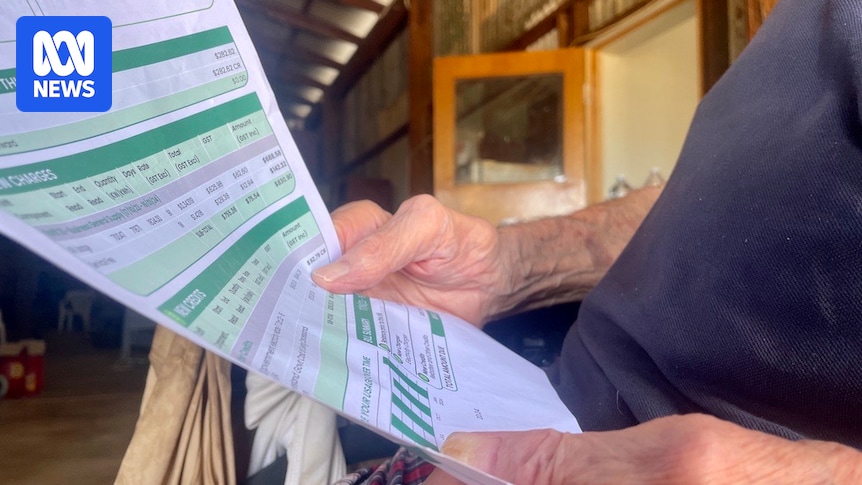
The last time a global energy crisis sent Australian power bills skyrocketing was when Russia invaded Ukraine in 2022.
Now, the world’s energy security is again at risk, with Iran’s response to US-Israeli strikes threatening to expand the conflict into a broader regional war.
Although the scale of the Middle East conflict is unknown, the Albanese government insists the impact on Australian power prices won’t be as extreme as in 2022, while energy analysts say the nation is still exposed to price shocks.
So what’s changed?
Unlike in 2022, energy regulators have forecast sufficient domestic gas supply for 2026.
Resources Minister Madeleine King said Australia was better protected this time, with prices so far remaining under $10 a gigajoule.
“The circumstances of 2022 are not going to be replicated here in 2026,” she said.
“There will be ripple effects, but we have the tools to manage that for the benefit of Australian consumers.”

Madeleine King says the government has introduced new measures since 2022. (ABC News: Andrew O’Connor)
Part of the reason power bills surged in 2022 was that Australia’s gas industry exploited the crisis by increasing prices to match international demand, boosting profits on exports by an estimated $26 billion to $40 billion.
Ms King said a price cap of $12 a gigajoule for new domestic wholesale gas contracts would help keep a lid on bills this time.
The measure was introduced in 2022 and aims to lower costs, but has some limitations.
Grattan Institute energy and climate change program director Alison Reeve said some loopholes meant in practice the cap worked out to be closer to $14 a gigajoule.
She also said the cap did not always prevent Australian power bills from going up becauseit didn’t apply to the spot market, where power generation companies tended to buy gas to produce electricity.
Australians likely face price hikes
Ms King also pointed to an emergency “gas trigger”, which she could pull to compel gas producers to divert supplies to the domestic market in the event of a shortfall.
However, energy analysts say this trigger — the Australian Domestic Gas Security Mechanism — is a measure of last resort, and has never been used.
The measure is based on domestic gas supply forecasts, and is not for curbing power prices.

Australians experienced a cost-of-living crisis after Russia’s invasion of Ukraine in 2022. (ABC Rural: Jane McNaughton)
The government is also preparing to outline a framework for its domestic gas reserve, due to begin in 2027, which will set aside between 15 and 25 per cent of gas extracted in Australia for local use.
“The reservation we’re working on is about building resilience in supply, and making sure that not just Australian manufacturers but Australian consumers have the gas they need at affordable prices,” Ms King told reporters on Wednesday.
“There’s no doubt when we see global shocks like this … it says to me we made the right decision to go down this path.”
Will a domestic gas reserve protect Australians from global price hikes?
First of all, Australia’s abundant gas supply does not result in cheap power bills — especially for those living on the east coast.
That’s because most of our gas is locked into long-term contracts with overseas buyers, and east coast gas supplies are directly tied to the volatile global market via LNG export facilities in Queensland.
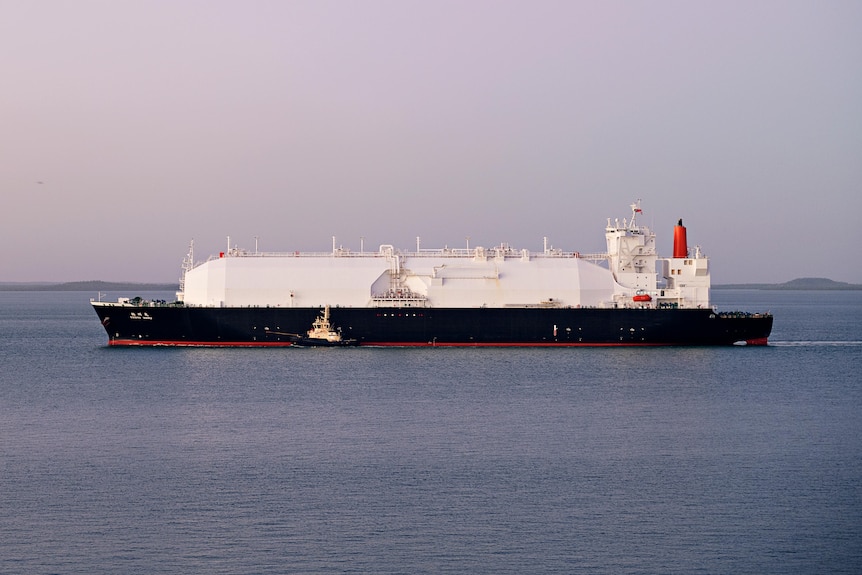
Australia is among the world’s top exporters of liquefied natural gas (LNG). (ABC News: Michael Franchi)
MST Marquee head of energy research Saul Kavonic agreed a domestic gas reserve would offer greater protection to Australians — but only if it was designed to work effectively.
“If you have a broad-based, well-functioning gas reservation policy, it will quarantine Australia from international gas price shocks,” he said.
Mr Kavonic said gas companies were seeking protection for certain contracts, which could undermine the reserve’s effectiveness.
Ms Reeve said a domestic gas reserve could make energy cheaper for Australians with the right settings.
“The extent to which [a domestic gas reserve] will put downward pressure on prices is very much going to depend on how it’s designed,” she said.
“If it’s going to push prices down … it needs to send more gas to the domestic market than the domestic market needs because if the market’s oversupplied, the price tends to fall.”
Gas companies under increased pressure to behave
The gas industry’s role in Australia’s cost-of-living crisis, while making windfall profits, significantly damaged its reputation.
“One thing that I thought was really astonishing last time was, when the prices shot up to things like $30 a gigajoule, at no point did the gas industry realise that this was going to be politically untenable,” Ms Reeve said.
Long queues form at servos as fuel prices climb
With the government’s gas reservation policy still under development, Mr Kavonic said the industry was under increased pressure not to take advantage of the current conflict.
“I think there’s a much more heightened awareness of their social licence and responsibility to Australia’s domestic market,” he said.
“But overlaying that is the threat that the government could intervene very heavily if they are seen to be taking undue advantage of the situation to the detriment of Australia’s gas users.”
Independent MP Allegra Spender has urged the government to apply a windfall tax on gas and oil sold at inflated prices during the Middle East conflict.
“These are Australian resources and the Australian public deserves to share in these gains from war-driven price spikes,” she said.
Benefits to the budget
Australia’s reputation as the world’s third-largest LNG exporter — behind the United States and Qatar — meant this crisis was “actually good for Australian exports and Australian taxes”, Mr Kavonic said.
Severe disruptions to the Strait of Hormuz have prevented about 20 per cent of the world’s LNG supplies from accessing the international market.
“What this does for Australia is, it starts to make Australia look like a much better, reliable source of LNG for Asia,” Mr Kavonic said.
Australia’s LNG export industry injects billions of dollars into the federal budget through export revenue, corporate taxes and the Petroleum Resource Rent Tax (PRRT), although the government is under pressure from some critics to increase taxes further.
Independent Senator David Pocock tabled a motion in parliament this week proposing to establish a Senate committee examining the amount of PRRT paid on LNG, and ways to generate additional revenue.