
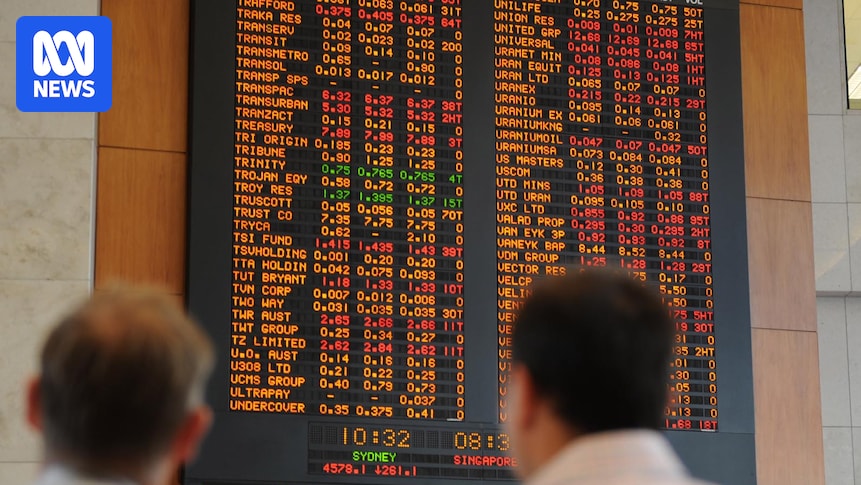
The forces pushing global financial markets into a major meltdown are growing stronger.
The Middle East war is yet another risk to the global monetary system, already sieving through a shopping list of potentially disruptive financial events.
Iran war live updates: For the latest news on the Middle East crisis read our blog.
There is a lot on the line.
The total pool of Australian superannuation is worth roughly $4.5 trillion.
About 20 per cent (or between $800 to $900 billion) of the total pool is invested in US assets, including shares.
A major market meltdown would change the financial plans of millions of Australians overnight.
So, how likely is it?
LoadingEnergy prices soar
The multi-trillion-dollar question for the global economy and financial markets is whether the conflict between Iran, Israel and the United States will be short-lived or a drawn-out, costly war.
If the conflict is prolonged, and the Strait of Hormuz remains closed, “energy prices [will] move significantly higher but kill global growth in the process,” Jamieson Coote Bonds chief investment officer Charlie Jamieson said.
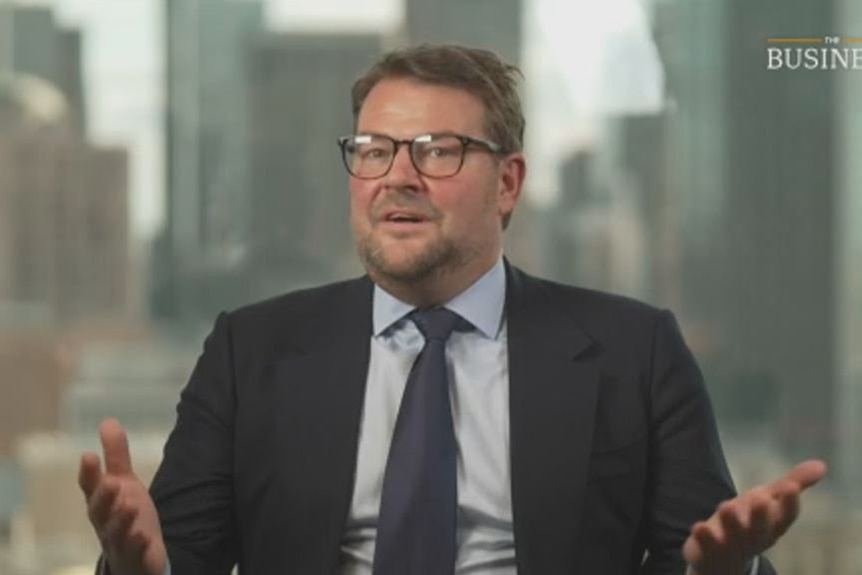
Charlie Jamieson says issues are surfacing. (ABC News)
This, he said, would collide with “a macro cycle which is already mature”.
“Valuations are high, credit cracks are evident, liquidity issues are surfacing,” he said.
And add to this, Jamieson said, “all the AI disruption issues above (plus the debt financing)”.
It presents the real risk of a financial crisis, but “no-one wants GFC mark II”, he said.
Read more about the Iran war:Credit crisis fears
The risks mentioned above are significant.
An oil price spike that sees the crude price rise above the symbolic $US100 per barrel mark would set cost-push inflation on fire.
The result could cause stagflation — soaring prices (for petrol, for example) along with subdued growth as consumers are forced to pull back spending on other goods and services to cater for fuel price hikes.
This would likely hit company valuations and see significant share market falls, especially as rising unemployment hits aggregate, or total, demand in the economy.
Could private credit spark the next financial market meltdown?
But the black swan event is a collapse of the private credit market.
UK-based Market Financial Solutions (MFS) collapsed last week, adding to concerns the private credit sector was in financial trouble.
Also known as the “alternative asset” lending sector, it’s been heavily invested in software companies that are now being threatened by power or artificial intelligence.
Funds those private credit firms own now run the risk of increasing redemptions, and a broader credit squeeze.
A credit crisis, combined with an inflation spike, would have the potential to cause dislocation in financial markets.
“The huge rise in energy costs into the GFC [global financial crisis], on a weakening credit complex, gave way to incredible demand destruction once the systemic effects started triggering,” Jamieson said.
Guessing game
For now, investors can only guess where the market is heading.
“In the short term, it’s more of a guessing game than normal,” AMP’s head of investment strategy, Shane Oliver, said.
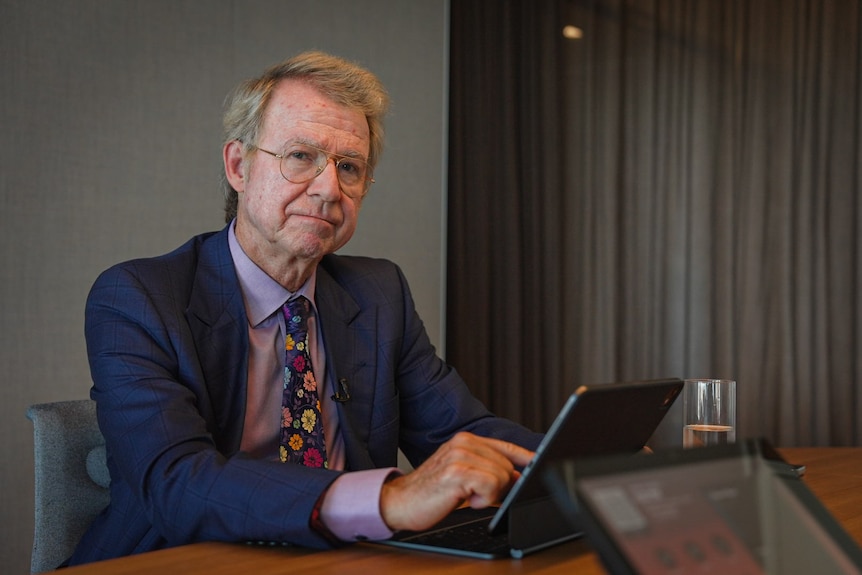
Shane Oliver says markets were already vulnerable before the war. (ABC News: Daniel Irvine)
He believes overall market sentiment is dominated by the hope that the conflict will be resolved within weeks, or even days.
“And there are some good reasons for that,” he said, “as Trump is under big political pressure as the war is unpopular in the US, the midterms are approaching and Iran’s military capabilities are getting rapidly degraded.”
But Oliver notes the risks of a further fall are still high as “markets were already a bit vulnerable and, the longer the disruption continues, the more oil prices will drift up”.
He warns the share market is at risk of a 15 per cent fall from current levels.
This would see tens of billions of dollars wiped off Australian superannuation accounts, including self-managed super funds.
Fear and greed
The period ahead will likely be dominated by fear and greed, which also has the potential to produce significant volatility in financial markets.
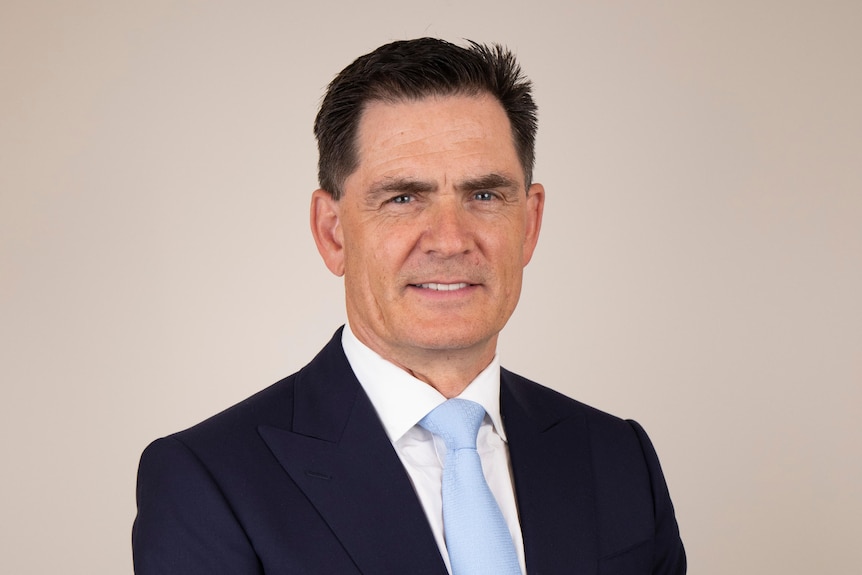
Marcus Padley says the US markets continue to “fail to fail”. (Supplied)
South Korea’s benchmark share index (KOSPI 100), for example, plummeted 10 per cent on Wednesday before rocketing up 12 per cent on Thursday.
That’s enough to give anyone whiplash.
Expert analysis on the Middle East:
If fear ultimately wins out in 2026, veteran stockbroker Marcus Padley insists it will create a once-in-a-generation buying opportunity for some.
“Our hope is that this dangerous Trump chapter provides one of those rare opportunities to buy low, which is not yet,” Padley said.
The hubris that is evident in some market participants stems from the post-global financial crisis policy stimulus trend.
“Nothing is as permanent as a temporary solution in politics; do markets get the antidote before the alignment sets in?” Jamieson said.
“Break out the emergency stimulus programs list. We will need monetary, more fiscal, liquidity QE [money printing], yield curve control [central bank bond buying], manipulated issuance, etc, etc.”
For now, though, as Padley says: “There is nothing safe, reliable or certain about the outlook for equities [shares].”
Analysts say global financial markets are now looking at every headline the war generates.
“Headlines stating the conflict is now extending beyond Iran and the likelihood of prolonged conflict are breathing life into stagflation worries and pushing investors to ‘safer’ ground such as the dollar, Treasuries and gold,” MooMoo Australia’s Michael McCarthy said.
“Markets remain highly volatile, with news about one missile attack [able to] erase an entire day of gains in minutes.”
Loading…