
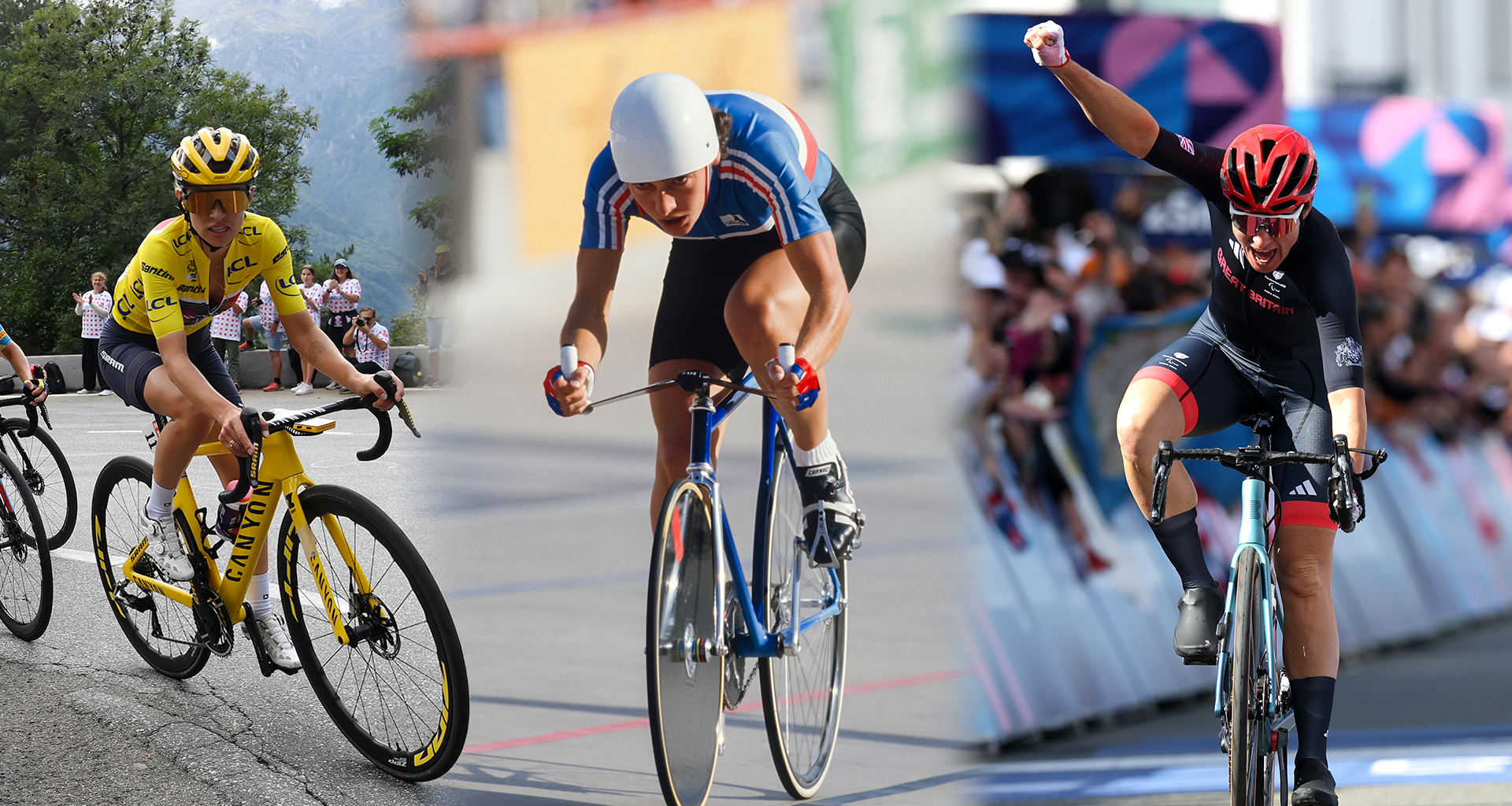
Ever since bikes were first invented, people have been using them to set records, and many of those people have been women. But what is it about records, why are we so obsessed with them? A quest for immortality, a need to tick something off, “because it’s there”, like George Mallory said of Everest, or perhaps a desire to raise awareness for a cause?
The Guinness World Records website has more than 50 pages devoted to women’s and men’s cycling records. They range from the silly (the world’s longest, tallest and smallest rideable bikes – 55.16m, 7.77m and 8.4cm respectively, since you ask) to the astounding, such as the greatest distance cycled in a year, or the fastest speed achieved behind a pacer (both of these records have been set by women).
You may like
Around the same time, on the other side of Australia, a newspaper reported that, “Miss O’Meagher, a Menzies cycliste, thinks nothing of riding between that town and Coolgardie. The other day she covered the journey—a little over 90 miles—in about nine hours, and attended a ball in the evening.”
Records have greater significance in the history of women’s racing than in the men’s sport. Men have always had races, but for women, racing opportunities have been intermittent – even non-existent – for large chunks of time. Setting records was sometimes the only way they could show what they were capable of. The first women’s World Championships were introduced in 1958. Modern women’s racing only really ‘got started’ in the 1980s, with the first women’s Olympics road race and a women’s Tour de France in 1984. Racing professionally – and by that I mean being able to earn a living from it – has arguably only really been a reality for the professional women’s peloton in the last 10 years or so. But in Britain and Australia in the 1930s, women made headlines by setting place-to-place records, and were paid for their efforts by bike manufacturers who sponsored them.
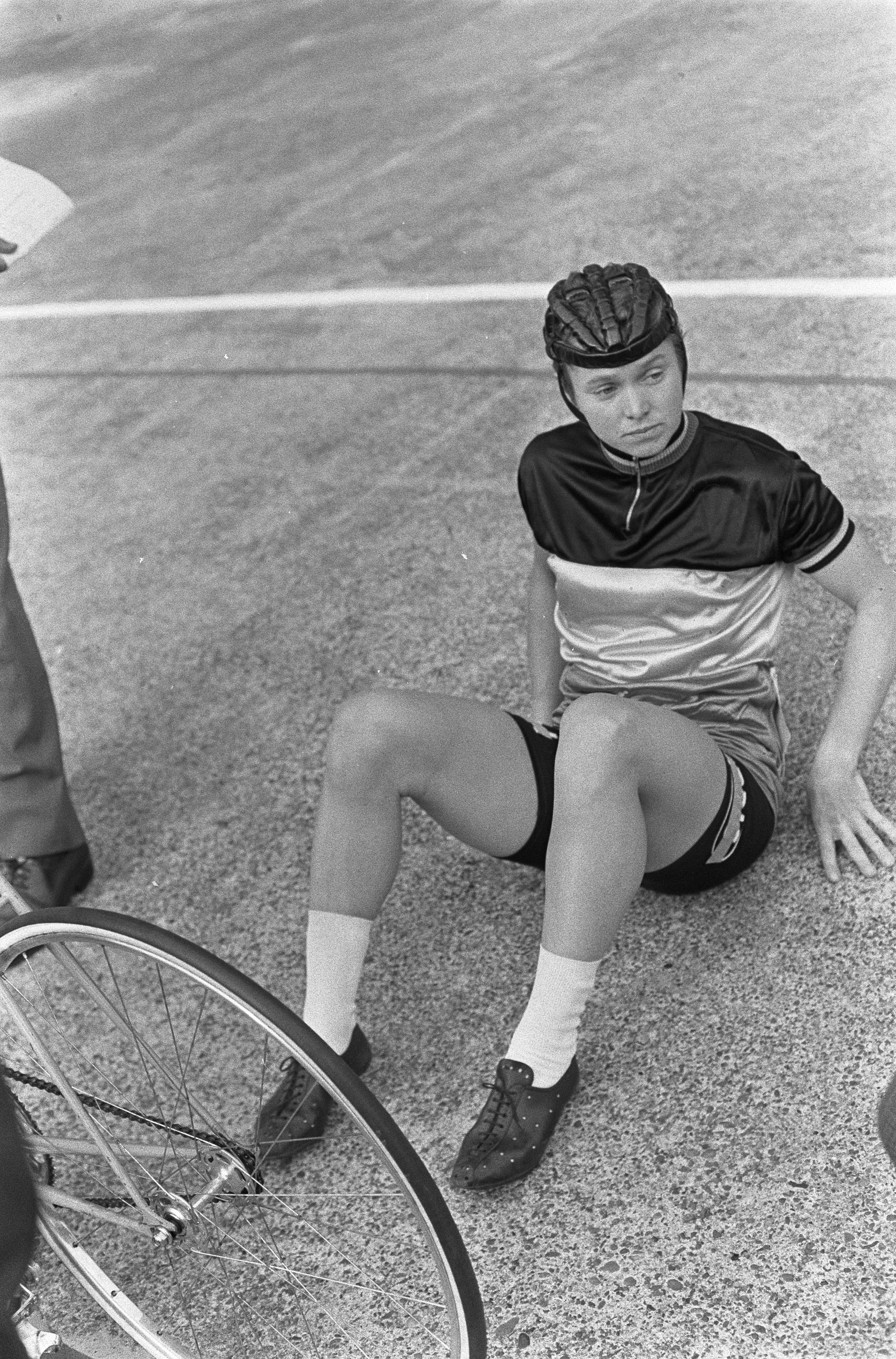
Yvonne Reynders in 1967 (Image credit: Getty Images)
Record breaking is a profoundly feminist thing to do, even if the women who break those records often hesitate to apply that label to themselves. In recent years, there has been a resurgence of interest in ultra distance records, with women sometimes beating men’s records, opening up new vistas of possibility. Not that women need to compare their achievements against men. Just as in the 1890s, when women started setting records – whether in six-day races, place-to-place records or going for the Hour – the act of establishing a record is an affirmation. Like the suffragettes who chained themselves to railings, records have a kind of physicality. They mark out territory. They challenge the way women are viewed –and how they view themselves. They say, “we’re here, and we’re strong, and we’re not done yet.”
What to read next
Disclaimer: some of these records are hard to verify, and for each one detailed here, there are many, many more that deserve to be mentioned, but aren’t, just because there isn’t the space, and I am not an endurance writer. This is by no means a conclusive, global view. Approach it rather as a pick’n’mix of some inspiring, astounding and frankly mad achievements.
The original recordsThe Hour Record
You could argue this is the one constant in women’s racing history, a thread that connects us all the way back to the very origins of the sport. So let’s begin at the beginning, with Mademoiselle de Saint-Sauveur setting the first record in Paris with a distance of 26.102km in 1893, which set off a flurry of Hour attempts culminating in Louise Roger’s record of 34.684km in 1897. As Feargal McKay points out in his research on the subject: “In that period, 14 Hour Records were set in the space of 52 months. The unpaced record was set and reset four times, while 10 new distances were recorded for the paced version of the challenge.”
In 1911, the Italian rider Alfonsina Strada set a new record of 37.192km in Turin.
After WWII, there were renewed record attempts, although the UCI only officially recognised women’s records from 1955 onwards. Russian rider Tamara Novikova set the first of these, with a distance of 38.473km.
In the intervening years, many of the great names in women’s cycling history have nudged it forward, including Millie Robinson, Elsy Jacobs, Keetie van Oosten-Hage, Jeannie Longo and Leontien van Moorsel, who got the record up to 46.065km in 2003.
The last ten years have seen a fresh round of attempts following changes in UCI rules, with new rivalries and a dramatic increase of distances, kicked off by Molly Shaffer Van Houweling in 2015 with a distance of 46.273km, leading us through a subsequent seven new records culminating in Italian rider Vittoria Bussi’s current title – the third time she has taken it – with an astounding distance of 50.455km set in May 2025.
The first man to crack the 50km barrier, incidentally, was Francesco Moser, in 1984, with disc wheels and a skin suit.
Overall distance in one year
In 1938, Billie Dovey (who later changed her surname to Fleming) rode across Britain to set a women’s record for the longest distance cycled in a year with 29,603.7 miles (47,642.5km), with the mission to promote the health benefits of cycling for women.
That same year, on the opposite side of the world, a flurry of Australian women’s records sponsored by competing bike manufacturers came to a climax with three riders setting and breaking a seven-day distance record all within the space of a few months.
Pat Hawkins came out triumphant, with a distance of 1,546 miles that smashed a men’s record of 1,507 miles held by another Aussie rider: Ossie Nicholson, who had been coaching some of the women. In 1942 Hawkins went after Dovey’s record. During that year her mother died, and she had to spend every morning preparing packed lunches for her 10 siblings before setting off on her rides. She also lost seven weeks due to illness and injury. Not only did she break Dovey’s record, covering a distance of 45,402 miles (73,067.44km), but she once again surpassed a record that Ossie Nicholson had set in 1933. However, a week later, cycling officials found ‘certain irregularities in Miss Hawkins’ log sheets,’ and the record was never ratified.
So Billie Dovey held onto her record until her death, aged 100, in 2014. Two years later, on December 31, 2016, Swedish cyclist Kajsa Tylen set a new record with 32,326 miles (52,025.09km). This time, the record only held for a few months. In May 2017, American rider Amanda Coker set a staggering new record with a distance of 86,573 miles (13,9325.74km). She had also broken the men’s record, 76,076 miles (122,432 km) set by Kurt Searvogel. And in a nice bit of symmetry with Pat Hawkins and Ossie Nicholson, it was meeting and riding with Searvogel as he was making his record attempt that inspired Coker to give it a go. But instead of catching her breath, she carried on, to break the record for the shortest time to complete 100,000 miles, set 77 years previously by Tommy Godwin with 500 days of riding. Coker reached it in 423 days.
She rode more than 200 miles a day, sometimes 300, mostly on the same seven-mile loop. And she did all this while recovering from a crash in 2011, caused by a careless driver, that had left her with a traumatic brain injury.
For most riders, that would be enough. But in October 2021, Coker set a new record for the longest distance ridden on a road in 24 hours (there are separate 24 hour track records, where the smooth surface and lack of traffic means riders can go faster). She became the first woman to break 500 miles, with a total distance of 512.506 miles. Over the course of her ride, she collected another 10 Guinness World Records over other times and distances.
The Grand ToursShortest winning margin in a Tour de France victory

Niewiadoma-Phinney clung onto the yellow jersey by just four seconds on the final stage of the 2024 Tour (Image credit: Getty Images)
No, it’s no longer Greg Lemond’s time-trial upset on the last stage of the Tour de France in 1989, where he took back the yellow jersey from Laurent Fignon in Paris to win by only eight seconds. That’s ancient history. The most nail-biting finale in terms of winning margin happened in the women’s race in 2024, when Kasia Niewiadoma-Phinney won with a mere four seconds over Demi Vollering, on a thrilling final stage up the Alpe d’Huez.
Giro d’Italia Women
When it comes to the history of women’s stage racing, it’s patchy. The women’s Tour de France has a complicated on-off history, which we won’t go into here. The women’s Giro, however, has been held consistently since 1998, apart from a two-year hiatus in 1991 and 1992, making it the Grand Tour of reference in women’s racing.
Its most dominant winner is Fabiana Luperini, who took five victories in the late 1990s, followed by Anna van der Breggen and Annemiek van Vleuten, who share four victories each. The record for the most stage wins, however, goes to Marianne Vos, with a stunning 32 victories.
Long distance recordsFastest circumnavigation of the globe
The first women’s attempt to cycle round the globe took place not in the 1990s, but the 1890s, when Annie Kopchovsky – who called herself Annie Londonderry after one of the companies that sponsored her record attempt – set off in response to an alleged bet that no woman could cycle around the world.
She was a married woman with three young children, who had never ridden a bike until a few days before undertaking the challenge. After realising she could complete a significant part of the journey in a boat, you might argue that there was more sailing than cycling going on. Regardless, she was a pioneer, and courageous, and extremely good at getting sponsorship and promoting her ride, writing articles, selling photographs and giving talks en route. She made it back within 15 months and was hired to write a newspaper column in which she declared: “I am a journalist and a ‘new woman,’ if that term means that I believe I can do anything that any man can do.”
Fast-forward to December 2012 and German cyclist Juliana Buhring set the first official Guinness World Record as the fastest woman to cycle around the world, unsupported, covering 18,000 miles (29,000km) in 152 days. She had spent eight months training, having only taken up cycling the previous year, at the age of 30. She had survived an abusive childhood in a religious cult, and undertook the ride to raise money for her charity, Safe Passage Foundation, to help children born and raised in religious sects. “I wanted to prove you don’t have to be a professional to do something incredible,” she later explained. She has since written a best-selling book about her ride and become a celebrated ultra cyclist.
The record was broken again by Scottish rider Jenny Graham in 2018 (124 days, 10 hours and 50 minutes), who rode unaccompanied as a representative of The Adventure Syndicate, a collective of female cyclists that aims to empower women and girls in cycling. Her ride featured 300km days in the saddle, encounters with bears and negotiating terrifying roads with speeding trucks across Russia.
There have also been records set with riders benefitting from a support crew, with Italian rider Paola Gianotti covering 18,389 miles (29,595 km) in 144 days in 2014 (although the clock was stopped for several months to recover from a crash) and American ultra-distance rider Lael Wilcox who was accompanied by her wife, and holds the current women’s around-the-world record, completing the ride in 2024 in 108 days, 12 hours, and 12 minutes.
Wilcox is something of a legend in ultra cycling circles. Other remarkable achievements include being the first woman to win the Trans Am Bike Rice, that crosses the USA from the Pacific to the Atlantic coast; and setting a women’s ITT record for the Tour Divide, which involves mountain biking the length of the Rockies. This year, she’s attempting to beat the record outright, chasing Mark Beaumont’s record of 78 days, 14 hours and 40 minutes.
There have been other female around-the-world records. In 2020, Cat Dixon and Raz Marsden, both in their fifties, rode around the world on a tandem in 263 days. Last year, 50-year-old Alana Conner achieved a Guinness World Record as the oldest (presumably individual) person to circumnavigate the globe, a feat she achieved in 299 days.
Perhaps even more remarkable was a record attempt in 2018 by a 19-year-old Indian girl, Vedangi Kulkarni, covering 29,000km in 159 days, about 80% of which she rode solo. Her ride was never ratified by the Guinness Book of Records, but she’s considered the youngest woman to have completed the challenge, turning 20 by the time she finished. Last year she completed a second circumnavigation. She’d hoped to tackle the overall record again, but was slowed down by visa issues and having to change her route. Nonetheless, she completed her ride, which has also been for her about changing the narrative for Indian girls and women about what they can do. Talking about the experience to Bikepacking.com afterwards, she said, “I learned that absolutely nothing is ever the end of the world. There’s always a solution to every problem.”
There’s one last record I’d like to add in this category: a 54-year-old ex-headmistress called Anne Mustoe who set off on her own round-the-world adventure in 1987, covering 11,552.1 miles in 439 days. Her entertaining book, A Bike Ride, which tells her story, makes it clear she had no intention of setting any speed records. Among the essentials in her panier bags were a silk suit and high heels for fancy parties. But I think her ride can nonetheless be included here. Utterly hands-off as far as bike maintenance was concerned, she did the whole ride (as far as I can tell) without fixing a single puncture herself.
Greatest distance covered on a tandem in 24 hours
The greatest distance covered by a female tandem team in 24 hours is 434.94 miles (699.96km). This was achieved by American riders Anna Schwartz and Betsy King in 1991.
Betsy King also goes in the record books as the first woman to take part in (and complete) France’s oldest men’s race, Bordeaux-Paris, a 586km suffer-fest founded in 1891. The race was organised at that point by the Société du Tour de France, which was launching the inaugural women’s Tour de France later in the summer. Xavier Louy, one of the Tour organisers, presented the challenge to King, with the calculation that her ride would demonstrate to journalists that women were quite capable of taking on the Tour de France.
Land’s End to John O’Groats
When there are so many other ultra-distance records you could potentially set, in places with nicer climates, better roads and more forgiving terrain, why does Land’s End to John O’Groats – connecting the two most distant points on the British mainland with a distance of approximately 870 miles – hold so much importance in the ultra-distance community?
It’s partly its long history, with the first record set on a Penny Farthing in 1886. The first women’s attempts took place in the 1930s, with Lilian Dredge and then the formidable Marguerite Wilson, who set a record of two days, 22 hours and 52 minutes. The current women’s record is held by Scottish rider Christina Mackenzie, who completed 839 miles in 51 hours, five minutes and 27 seconds.
Breaking this record is about exploring your own breaking points. It’s not only about being strong or fast, but being able to cope with lack of sleep, busy roads, riding into the wind and rain, endless hills and mountains, moments of extreme self-doubt, finding you no longer have the muscle strength to hold up your head, or keep your eyes open, or tell what’s real and what’s a hallucination.
There are so many other LEJOG records that it’s become a bit of an ‘Everest’ of ultra-distance challenges, with records for tricycles, tandems, folding bikes and even unicycles. And that’s before we even get on to the walkers, paddleboarders and bus pass holders.
Land’s End to John O’Groats and back
Canadian Sarah Ruggins set a new outright record for LEJOG and back last year, covering a total distance of 1,677 miles (2,700km) in five days, 11 hours and 14 minutes, beating the men’s record by six hours and 43 minutes. This year she plans to set a new record riding from the southernmost to the northernmost point of continental Europe, a distance of 6,000km. The current record stands at 16 days, 20 hours and 59 minutes. Set your dot-watching calendar reminder for June.
Britain’s coastline
While we’re on the subject of British ultra distance records, here’s another one set last year. Former pro Molly Weaver set a new record for riding all the way round Britain’s perimeter, a distance of 7,700km, which she achieved in 21 days, 10 hours and 48 minutes, breaking the previous record set in 1984 by 17 hours.
Beryl Burton’s 25 years of BBAR
There are endless discussions about who is the greatest of all time. It’s a fun thing to mull over, but impossible to give a definitive judgement on. The sport – and the challenges it has presented women – has shifted so dramatically over the years. There are no fair parameters by which you can compare the achievements of, say, Jeannie Longo and Marianne Vos.
Beryl Burton began racing in the late 1950s, at the same time the first women’s World Championships were introduced, with a road race and two track events. She was 47 when the women’s first Olympics and Tour de France were introduced. Time trials, her forte, finally appeared at the Olympics the year she died. Apart from a once-yearly trip to the World Championships (where she won seven gold medals), Burton’s world of racing was limited to British amateur racing, which revolved primarily around time trials.
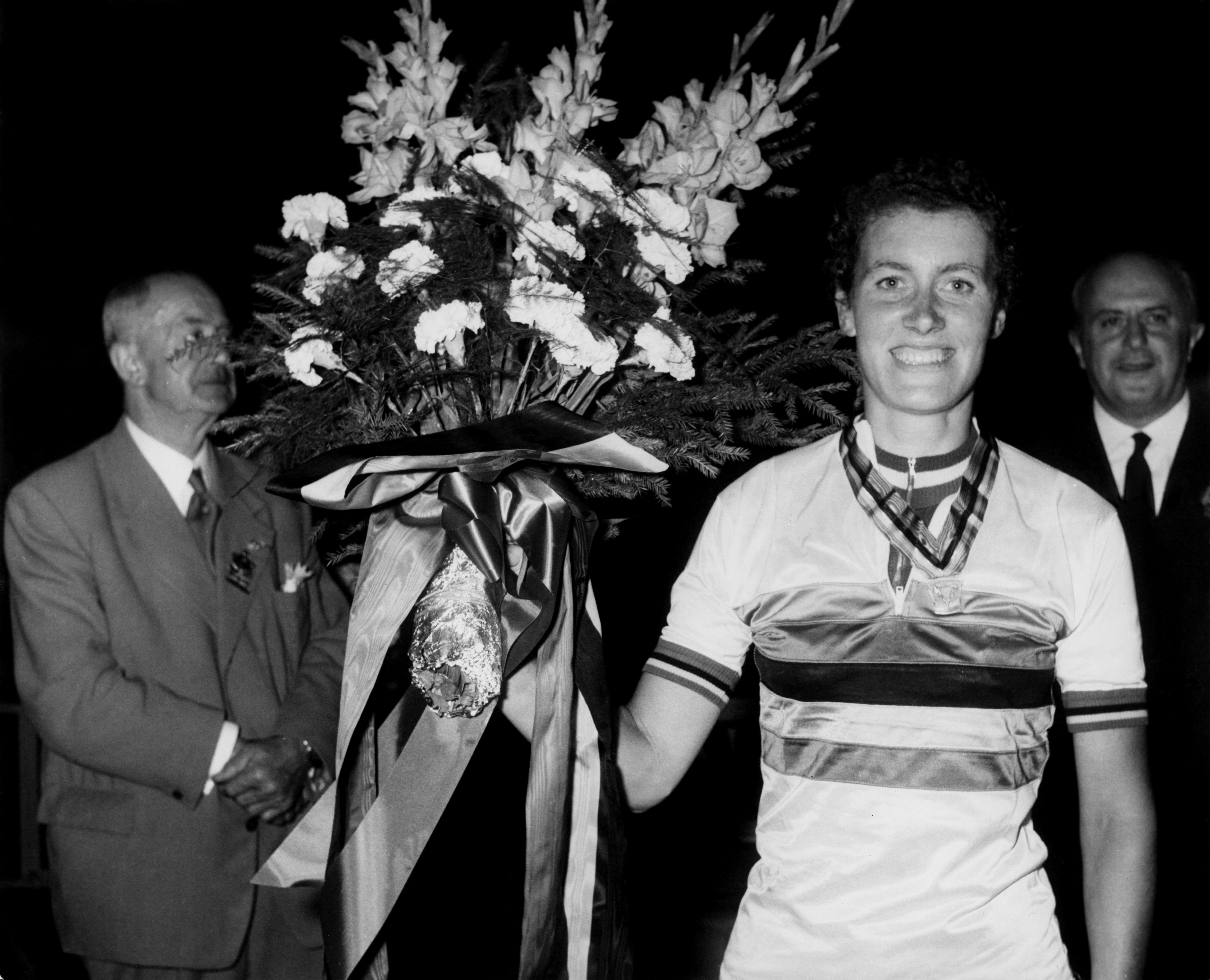
Beryl Burton in 1963 (Image credit: Getty Images)
It’s estimated that in the course of her more than 25-year career, she won around 1,000 races (no one, not even Burton herself, was able to keep track), of which 96 were national titles. Sometimes, she even beat the men in the same discipline. Her most famous achievement in that regard was the 12-hour time trial in which she not only beat all the men taking part, but also broke the men’s record, which had been held for nine years. It took two years for a man to crack Burton’s distance, and a further 50, with all the additional benefits of aerodynamic gear, for a woman to better Burton’s time.
But the most remarkable record of hers that needs celebrating here is her 25 consecutive years of winning the BBAR – or British Best All Rounder. It goes to the rider with the best average speed throughout the year across three competition distances: a 25-mile, 50-mile and 100-mile time trial. (The men’s record is calculated on their best 50-mile, 100-mile and 12-hour results.) When rivals are equally matched, pursuit of the BBAR becomes a season-long duel. Some records come and go, but no one will ever come close to Burton’s achievement.
Worlds and OlympicsWorld Championship road race records
Jeannie Longo has the most World Championships road race wins (5), and also has the record for most consecutive wins (4), holding eight medals overall. Marianne Vos has three road race victories but the highest number of total medals (9).
Olympic road medals
Two riders have each achieved the record of three Olympic road racing records, with Dutch rider Leontien van Moorsel winning gold in both the road race and two time trials, and American Kristin Armstrong winning three consecutive time trials between 2008 and 2016, becoming also the oldest road cycling gold medallist, the day before her 43rd birthday.
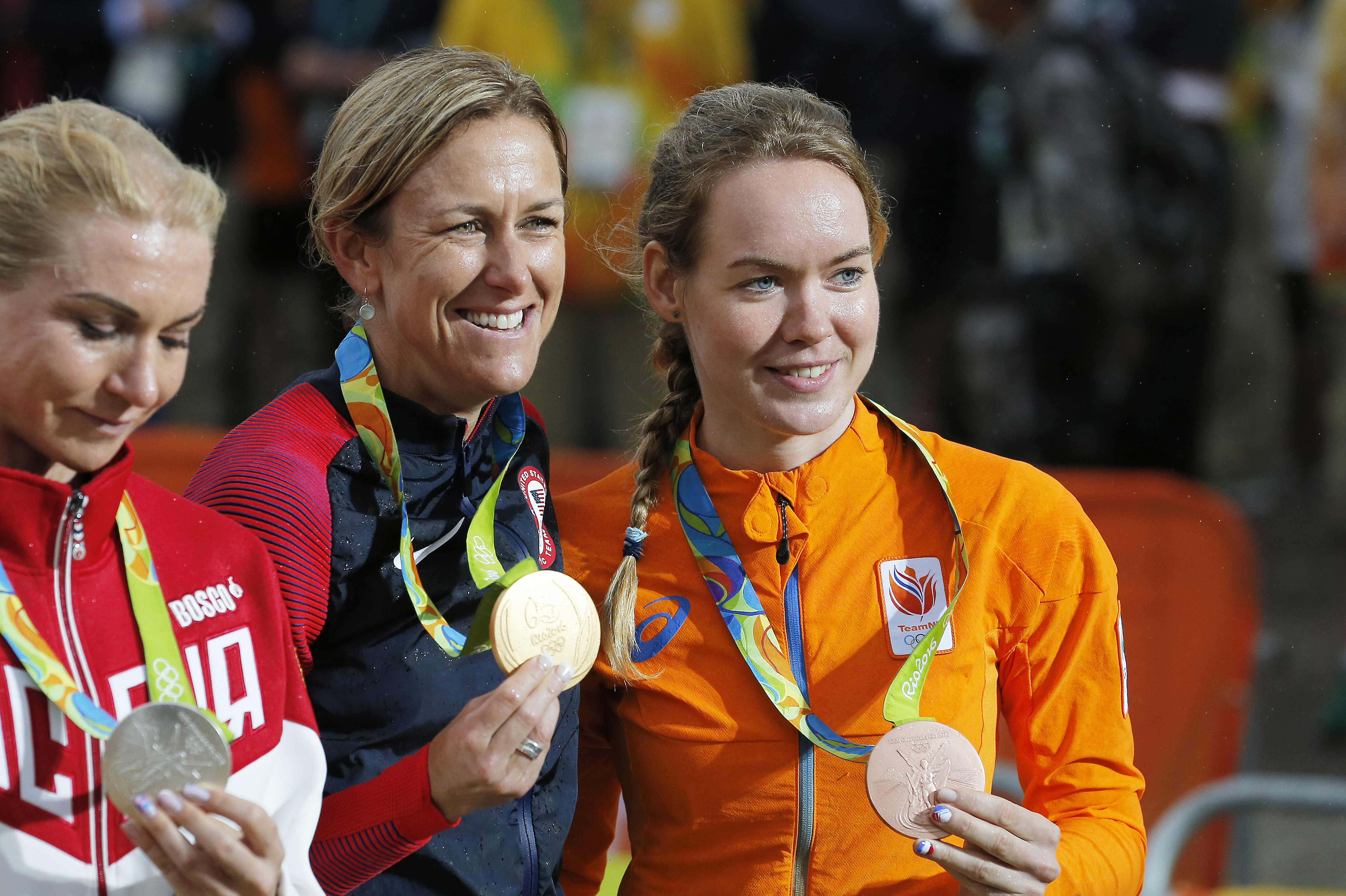
Kirstin Armstrong (centre) won gold in Rio in 2016 (Image credit: Getty Images)
On the track
Women’s track racing is one of the exciting areas for following record breaking at the moment, partly because so many new disciplines have been introduced in the last decade or so, and partly because of the professionalisation of women’s racing – in the sense of women being able to earn a living full from racing, and therefore being able to train to the best of their abilities, unlike their parents’ generation.
Just last month Emma Finucane set a new world record in the women’s flying 200m time trial at the 2026 UEC European Track Championships in Turkey. With a time of 9.982 seconds she is now the third woman to go under the mythic 10 second mark, riding at an average speed of 73.8kph (45.8mph).
The record for Olympic gold medals on the track is shared between Anna Meares of Australia and Laura Kenny of Great Britian, who each have six.
Individual Sprint
Talking of previous generations, the women’s Individual Sprint is one of the longest-held international track races, first introduced at the 1958 World Championships, together with the individual pursuit. Since there is no fixed distance in this discipline, which varies according to the track being used, there’s not much point in talking about records in terms of time. However, there are some remarkable records in terms of winners.
From 1958 until 1973 it was dominated by riders from the USSR, with its first champion, Galina Yermolayeva, winning six gold medals at the World Championships, five of them consecutive, followed by a nine-year gap before winning her sixth. She shares her record with Galina Tsareva, also Russian, and more recently, British rider Victoria Pendleton.
American riders finally broke the Russian hegemony with Sheila Young’s victory in 1973. A dominant American generation in the 70s and 80s featured Young, Sue Novara and Connie Paraskevin each taking several victories. All three riders also competed on the international stage as speed skaters. The 1990s were dominated by French rider Felicia Ballanger, who holds a joint record with five consecutive victories. In the last decade, the Germans have been particularly dominant, with Kristina Vogel taking four victories before her career was tragically cut short in a crash that left her paralysed.
Team Sprint
First introduced at the UCI world championships in 2007, the Team Sprint initially covered a distance of 500m, with teams of two riders. The Chinese have been particularly dominant, setting new records at each Olympic Games since 2012. The current record was set at the Tokyo Olympics by the Chinese riders Bao Shanju and Zhong Tianshi, with a time of 31.804 seconds.
Since 2021, the distance has been increased to 750m with teams of three riders. At the Paris Olympics, the record fell five times in a single day, and is currently held by the British riders Katy Marchant, Emma Finucane and Sophie Capewell with a time of 45.186 seconds.
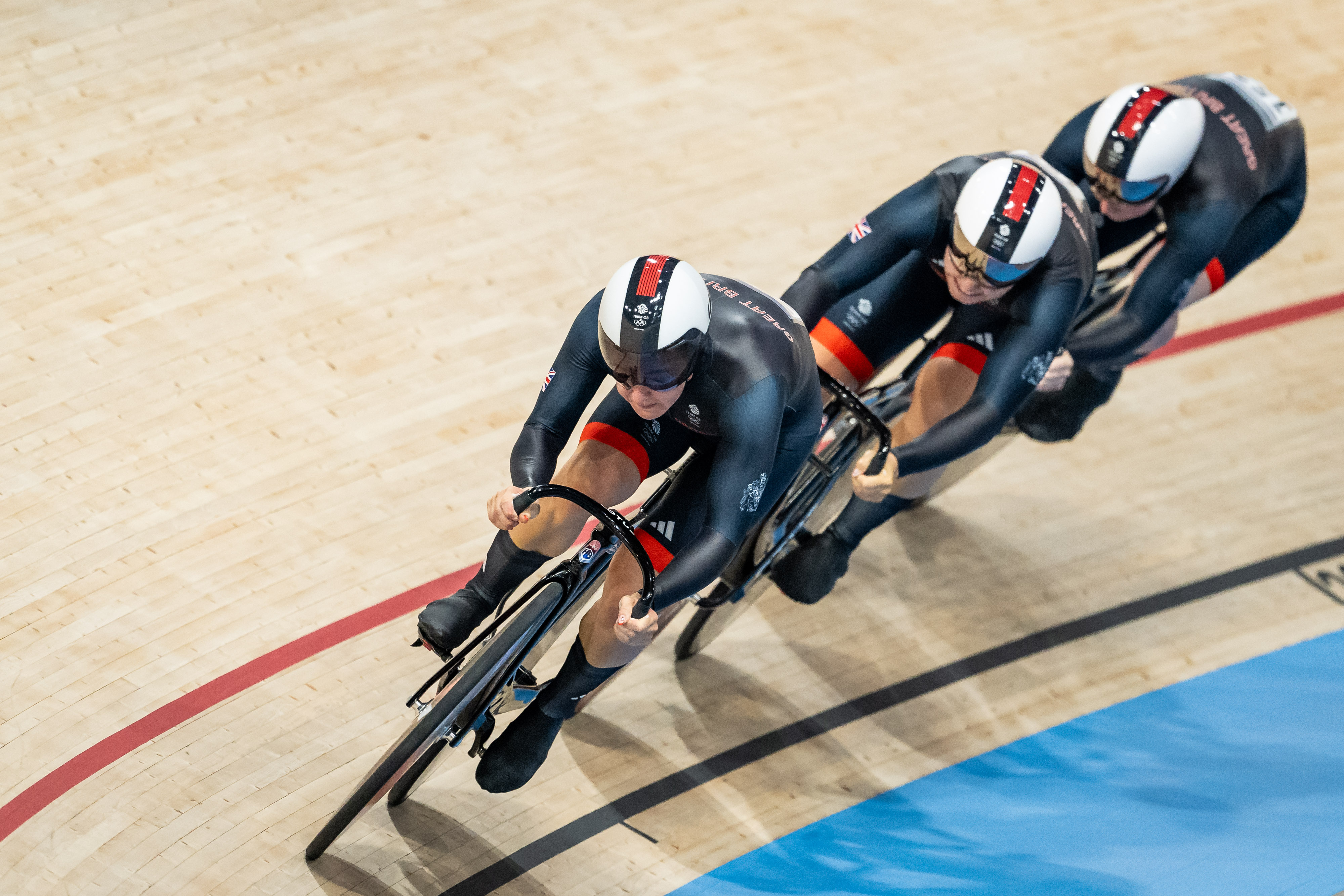
The record-holding GB sprint team (Image credit: Getty Images)
Greatest distance covered in 24 hours on an indoor track
Riding for 24 hours. On an indoor track. Is there anything worse? Ukrainian rider Elena Novikova set this record in 2017, covering a jaw-dropping distance of 781.637km (485.686 miles) with an average speed of 32.57kph (20.23mph). The ride broke a total of 11 world records in addition to the 24-hour distance.
Cyclo-cross
Amongst Marianne Vos’ many, many records, are her eight Cyclo-cross World Championship victories, six of which were consecutive. Where does she keep all her medals and trophies?
Para-cycling
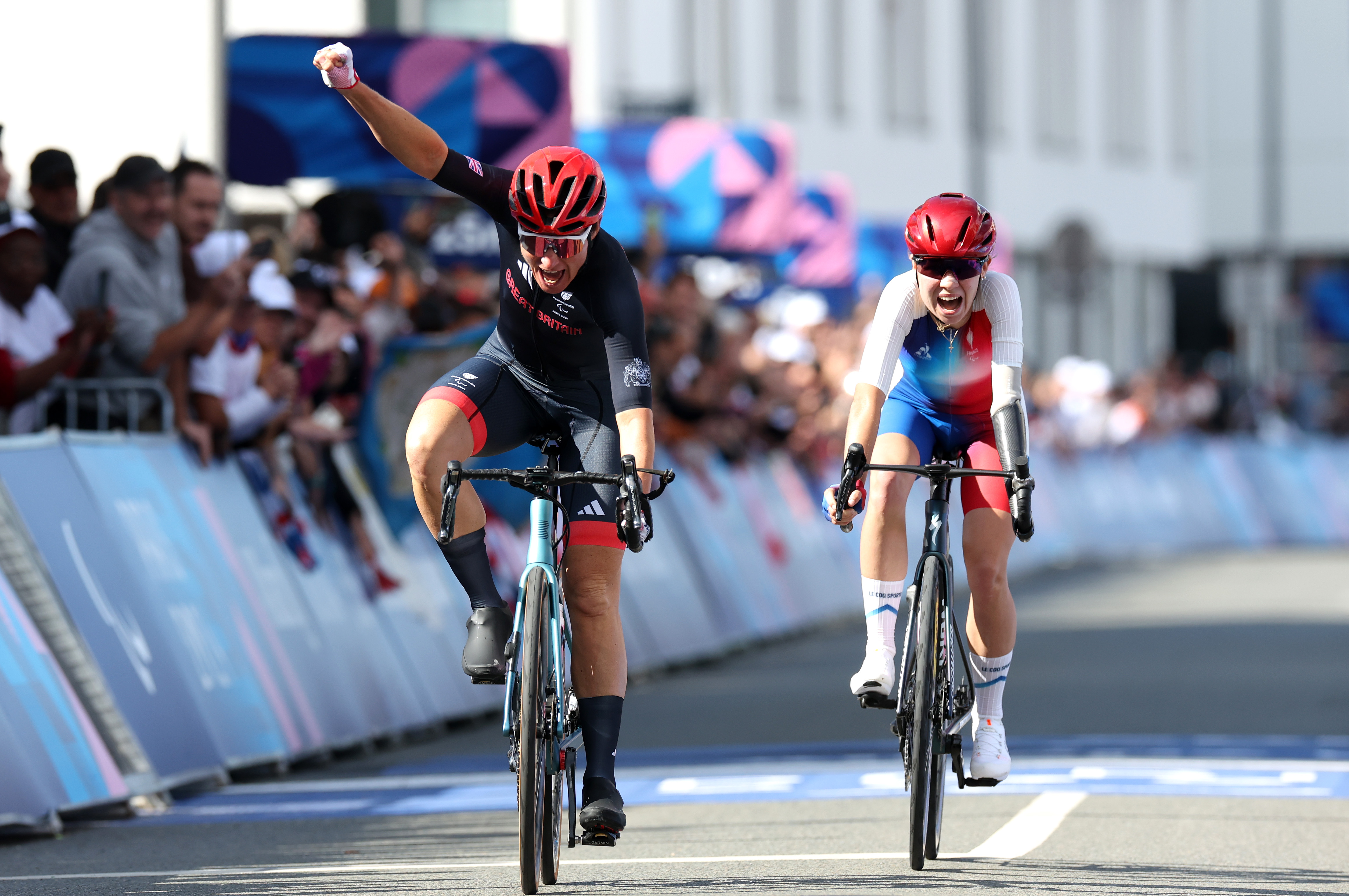
Storey winning her final gold medal in Paris (Image credit: Getty Images)
Sarah Storey has broken so many records it’s hard to keep track of them all, combining an exceptionally long career and another sport. In the Olympics alone, she has won 30 medals, of which 19 are gold. She won her first medals as a 14 year-old swimmer at the 1992 Barcelona Olympics, and her last medal at the Paris Games in 2024 in the C4-5 road race, against a rider 27 years her junior.
She has won six National Championships competing with able-bodied riders.
She has 23 World Championship cycling titles and six in swimming.
She has 77 world records.
She tried to break the women’s able-bodied Hour Record in 2015, attaining a distance of 45.502km, but it was 563m short of Leontine van Moorsel’s record at the time. She did, however, set a new record in the C5 class of paracycling and a new British record.
Hour Record
In February 2025, Svetlana Moshkovich, an Austrian 3-time world champion of Russian origin, set a new Hour Record in the women’s hand bike WH4 category, covering an astonishing 36.132kilometers using only her arms.
The potential GOATSJeannie Longo
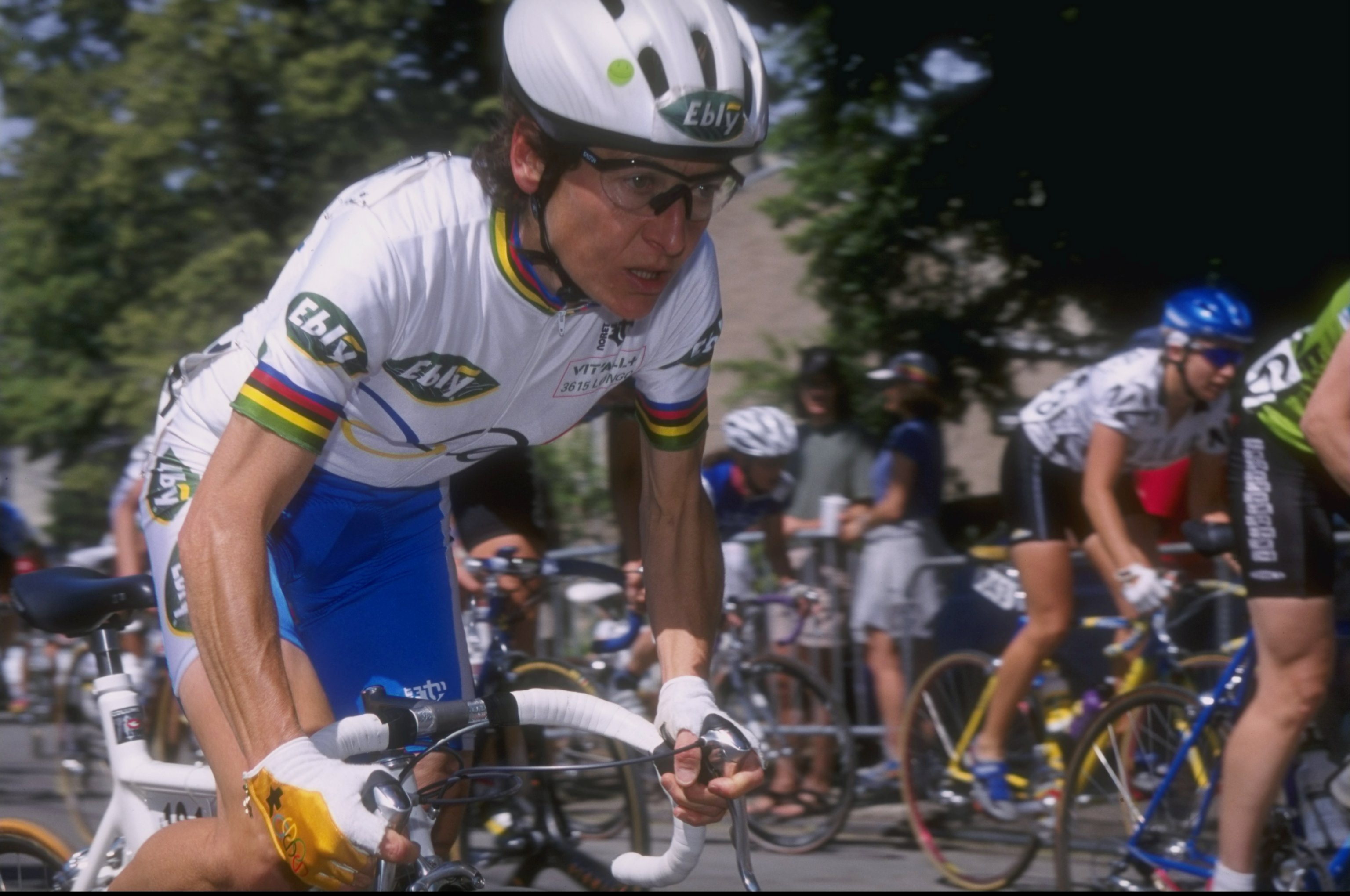
Jeannie Longo in 1998 (Image credit: Getty Images)
Jeannie Longo warrants a category of her own, as the rider with arguably the longest racing career, winning her first French National Championships in 1979, and her last in 2011. As with Beryl Burton, you lose track of all her many victories. And also like Burton, who continued to race until the day she died, Longo has never really stopped: last year, aged 66, she won her 61st national title in the masters category.
She has 13 World Championship gold medals, including five in the road race, of which four were won consecutively – a feat no one else, male or female – has achieved.
She also won the French women’s national road race title 20 times. Eleven of those victories were consecutive.
She has, according to her Wikipedia page, broken 38 world records and has won 1,157 races.
Pauline Ferrand-Prévot
Pauline Ferrand-Prévot – or PFP as the French call her – is perhaps the most versatile rider in the peloton. She is the only rider to have held simultaneous world championship titles in road racing, cyclo-cross and mountain biking. She also won the first women’s Gravel World Championships and has a record five cross-country mountain biking world titles.
Is there anything she can’t do? Who knows. She won a mountain biking gold medal at the Paris Olympics, followed last year by Paris-Roubaix and the women’s Tour de France, neither of which she had raced before.
Unusual recordsThe world’s largest GPS drawing
In 2024, American cyclist Kristy Bellmer created the world’s largest GPS drawing, in honour of her late dog, Slinky. The virtual canine portrait covers six countries, and is a little bit wobbly in places where she combined the ride with visits to see friends. She covered 4,707km in two months, and despite encountering a lot of rain, and some mountains she wasn’t expecting, doesn’t seem to have had too much difficulty in achieving her record, being already a seasoned long-distance touring cyclist.
“I’d met several people who had set Guinness World Records titles before and I knew this one was very achievable,” she said.
Longest jump on a unicycle
How far can you jump on a unicycle? 3.35m, if you’re German cyclist Lisa-Maria Hanny, who set the women’s record in 2018. It’s hard to even visualise how this is possible.
First person to ride a bicycle around a wall of death
In addition to her nine World Championship gold medals in BMX and track cycling, Shanaze Reade also has a Guinness World Record as the first person (male or female) to ride a bicycle around a wall of death. Her record involved riding at 26.8mph on a vertical wooden track with a diameter of 9.75m and a circumference of 30.63m.
Long before the Guinness World Records existed, however, there was another woman who had the same idea. In July 1903, Hélène Dutrieux – a great Belgian champion who broke the Hour Record a few times, amongst other things – turned to stunt riding, and performed a loop of a vertical track in Marseille. She went on to do terrifying aerial stunts with her bike, which she later swapped for a motorbike, before becoming a champion aviator and the first Belgian woman to hold a pilot’s licence.
High speedsThe fastest cyclist on earth
The fastest speed ever attained on a bike is 296.009kph, or 183.931mph. This was achieved by Denise Mueller-Korenek in 2018 at the Bonneville Salt Flats in Utah, riding behind a custom-built vehicle to minimise wind resistance. She had previously set the women’s record in 2016, before smashing the men’s record with an extra 16.931 miles per hour. Her coach was John Howard, who’d previously set the record himself in 1985. The custom bike had motorbike rims and tyres and double reduction gearing that allowed the bike to travel 138ft, or 42m, per pedal revolution.
“I could almost certainly have died doing this,” she later said. “It certainly was a terrifying ride.”
Fastest ever women’s WorldTour Race
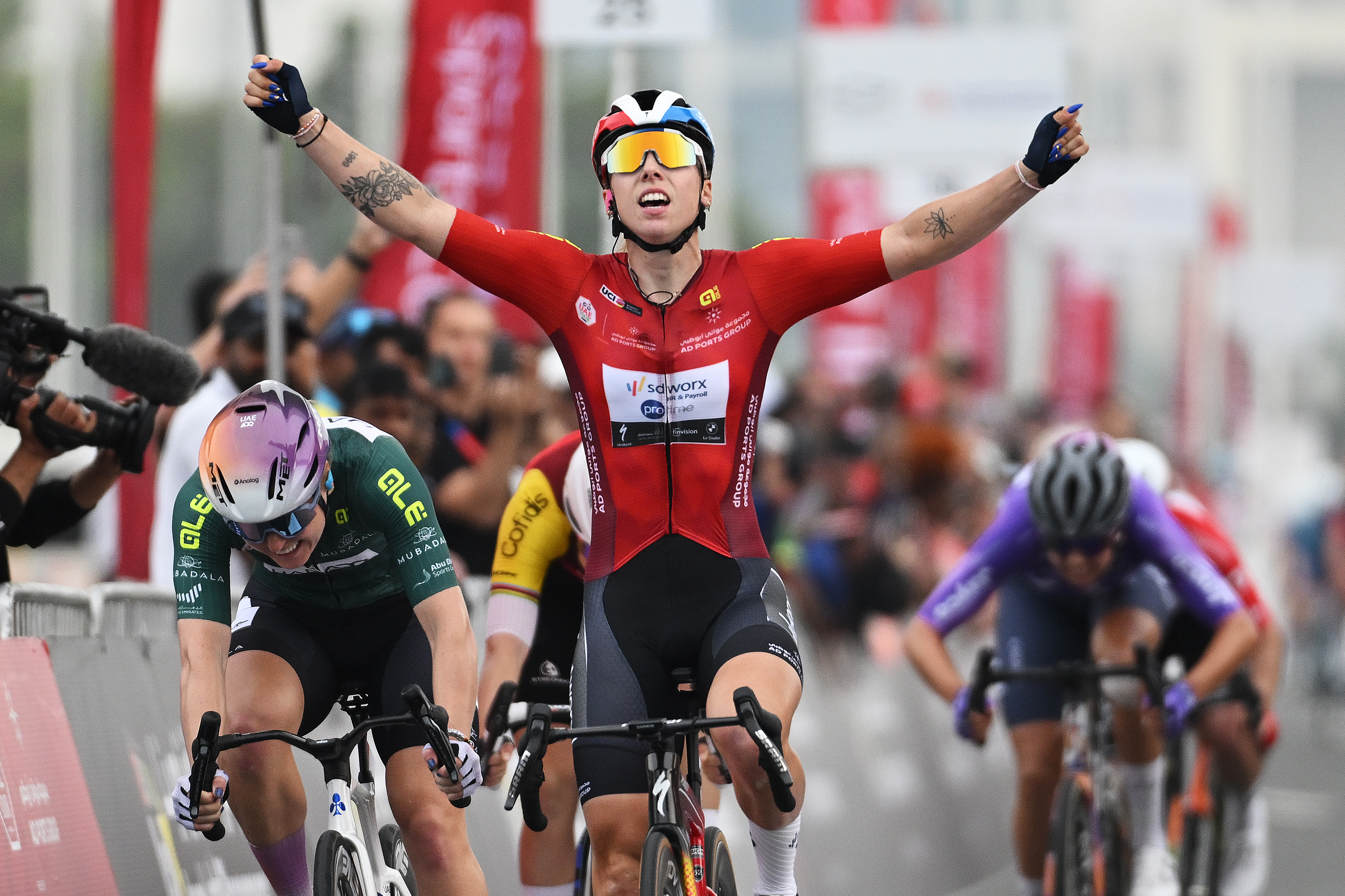
Lorena Wiebes is officially the fastest rider in the peloton (Image credit: Getty Images)
This record was set on the second stage of the 2025 UAE Tour Women, when Lorena Wiebes won the stage with an average speed of 48.407kph.
EverestingThe fastest time to climb the equivalent of Mount Everest
To end on a literal high note, British rider Illi Gardner holds the women’s Everesting record, which she set in 2022, covering 9,006m of elevation over 107.82km in eight hours, five minutes and 15 seconds.
To take us back to the climber George Mallory, this record requires ascending 8,848 metres – the height of Mount Everest – in one ride. Mallory’s grandson, also called George Mallory, first came up with the idea in 2014. Covid-19 made it a popular challenge for pros unable to race, and since then it’s become a ‘thing’, although it sits outside of the jurisdiction of any established governing body like the UCI. Illi Gardner is a pure climber, who has won the British Hill Climb championships three times, and last year she also won the inaugural Everesting World Championship, which took place on Mount Etna.
If you feel inspired to have a go, just remember: if it’s not on Strava, it didn’t happen.
To mark International Women’s Day 2026, Cyclingnews is proud to be shining a light on the many women with inspiring stories from across the sport. Subscribe to Cyclingnews for our unrivalled women’s cycling coverage, and much more. Find out more.