
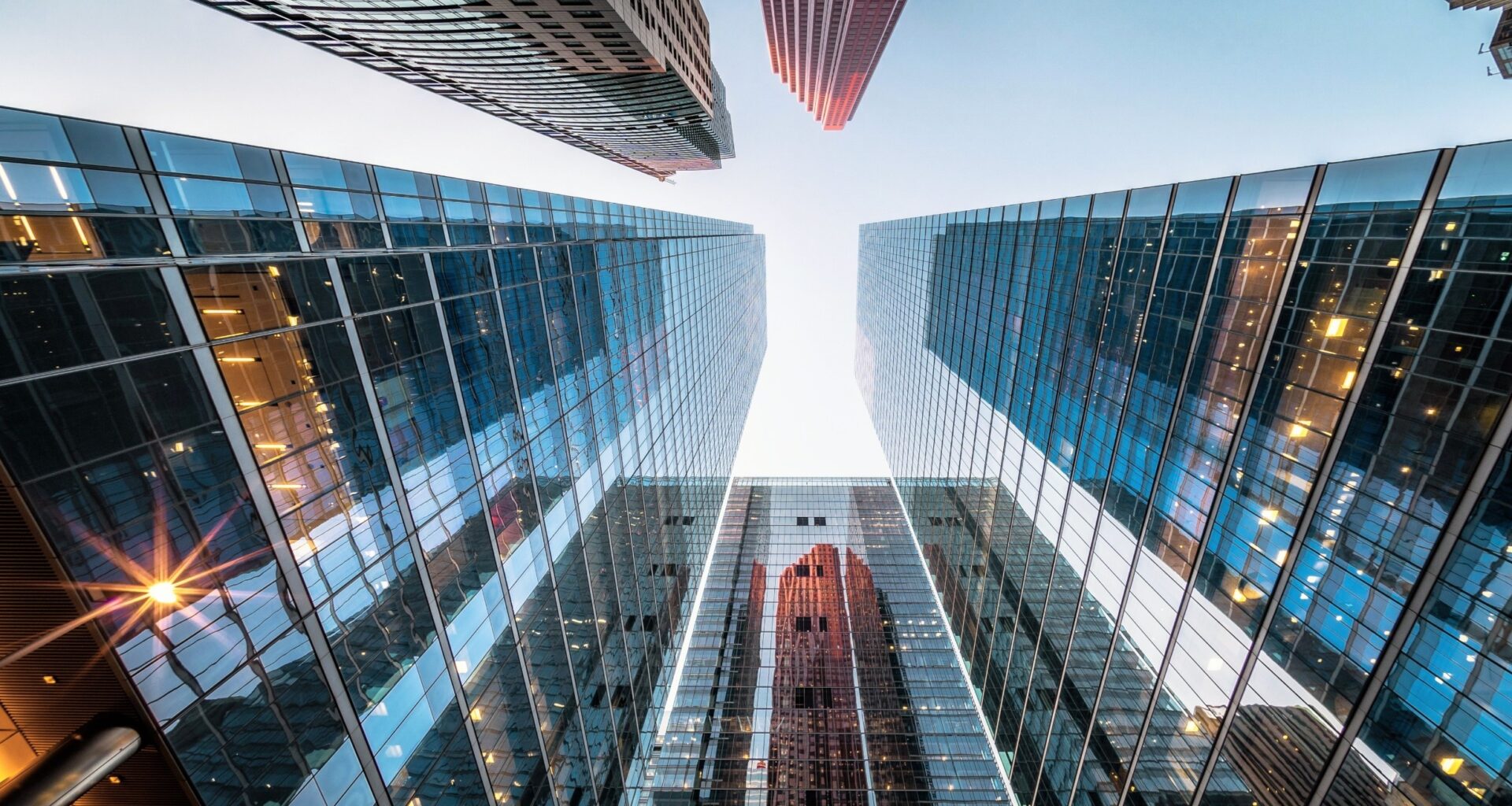
Most of us don’t see buildings as life-support systems. But that’s exactly what they are. We sleep inside them, work inside them, shelter from storms inside them, and retreat to them when the air outside feels like an oven.
People spend 90% of their lives in buildings, and those walls, roofs, and windows act as a protective ‘third skin’ from the elements.

That “third skin” is starting to get tested. Weather is swinging harder than it used to, and lots of houses and offices simply weren’t built for the kind of heatwaves and cold storms that are showing up more often.
That’s a problem, because a building that can’t keep you at a safe temperature isn’t just uncomfortable. It can be dangerous.
When buildings stop working
Many homes and workplaces are not designed to withstand the extreme weather fluctuations we will increasingly experience in a hotter future.
You can feel it in the way some places heat up fast and stay hot, even after the sun goes down. Or how a room turns icy the second a cold front hits.
The authors of the book Adaptive Thermal Comfort: At the Extremes – Susan Roaf, Fergus Nicol, and Michael Humphreys – are direct in their assessment.
“In reality, many modern buildings, and particularly homes, are already failing in various ways. During extreme weather events, they overheat. During power outages, some buildings do not even remain habitable,” they noted.
A power outage during a heatwave or a winter storm isn’t rare anymore. And when the lights go out, a lot of modern buildings don’t just lose comfort. They lose basic safety.
The price of staying comfortable
“Even many in the middle classes in developed economies are finding it increasingly hard to afford the energy needed to keep their homes thermally safe, let alone comfortable, even before the onset of the evermore extreme weather events we will all face in the future,” wrote the authors.
That’s not only about money. It’s about choices people get forced into. Do you run the air conditioner all night and pay for it later, or sweat it out and hope you don’t get sick?
This is where building design becomes personal. It shapes who gets to feel safe, who gets to rest, and who has to grit their teeth through the season.
Why modern design often makes it worse
A lot of today’s design trends look nice in photos but behave badly in real weather. Some common issues in building design include overheating risks in single-sided flats with poor ventilation, and any buildings in dense cities that retain high temperatures day and night in hot weather.
There’s also the glass problem. Most modern homes have large open-plan spaces and big glass walls without curtains or shades.
These designs make it easy for heat to escape or enter quickly, causing the rooms to quickly get too hot or too cold, which can negatively affect the health and comfort of the people living there.
The book argues that we backed ourselves into this corner over time.
In the twentieth century, the authors explain, the Western world exported a very narrow definition of “thermal comfort” in building design, which saw lightweight, glass-walled air-conditioned buildings proliferate around the world, in which windows do not open.
Not only are these highly energy-intensive to run and will only become more so as climates become more extreme, but many also are super-polluters – major drivers of climate change.
So the same style of building that struggles in extreme weather can also make that extreme weather worse. That feedback loop is hard to ignore.
Rethinking how we design buildings
The authors argue that we need to stop treating machines as the only answer.
“The way we currently measure and design buildings for the climate is not working. It is leading us to a dead-end generation of unadaptable and thermally dangerous buildings that require so much energy to remain habitable, that only the very wealthiest will be able to afford to occupy them,” they warned.
The researchers describe a crossroads in which one direction points to continuing to design buildings that are shut off from the climate around them in order to be conditioned by efficient machines.
“The other direction points to the seemingly revolutionary idea that we urgently need to reconnect indoor climates to those outside them to create buildings in which people are enabled to use local, natural, renewable energy from sun, wind and planting to stay comfortable indoors for as much of the year as possible, free of cost to themselves and with minimal impacts on the planet.”
That “reconnect” idea can sound strange if you grew up thinking comfort means sealing everything tight and blasting cooled air. But it’s also how humans lived for a long time: buildings that worked with local weather instead of fighting it nonstop.
Making extreme climates habitable
The team points out that humanity has always managed to adapt to its surroundings across a huge variety of climates, made habitable in locally evolved buildings.
They argue that we now need to relearn from the wisdom of traditional builders around the world who design for already extreme climates.
The book pulls lessons from traditional yurts in Mongolia to the Māori philosophy on human well-being.
It points to Sweden, where community support can keep people safer in harsh conditions, and to architects in South East Asia who build comfort using local and natural resources instead of depending fully on constant air conditioning.
That shift also changes who we listen to. Instead of assuming “Western” design is the default, the book argues that real expertise already exists in places that have dealt with heat, humidity, and weather swings for generations.
What the new builders are doing differently
Susan Roaf, professor of architectural engineering at Heriot Watt University, calls for a reset.
“We need radical new thinking. We need completely new thinking that enables buildings to run on local energy, using natural ventilation, solar gain in winter, and time cooling in summer, so profoundly reducing energy use in, and carbon emissions from buildings. More efficient machines are not the solution,” said Professor Roaf.
“What’s really exciting is the new generation of pioneering architects who design beautiful, comfortable, naturally-ventilated buildings that keep people cool.
“It’s time we in the North start listening to others. It’s time for architects in South East Asia, for instance, who are creating wonderful buildings, to export their wisdom back to teach the West how to design responsible climate-friendly homes and workplaces.”
“This is the message: we need hybrid or mixed-mode buildings that can be run for as much of the year as possible on local, free, natural energy, and only heated or cooled when necessary.”
That “hybrid” approach lines up with what many engineers now push for in practice. Buildings that stay stable through smart orientation, shading, insulation, airflow, and thermal mass, while using mechanical heating or cooling as backup instead of the main plan.
The full study was published in the journal Adaptive Thermal Comfort.
—–
Like what you read? Subscribe to our newsletter for engaging articles, exclusive content, and the latest updates.
Check us out on EarthSnap, a free app brought to you by Eric Ralls and Earth.com.
—–