
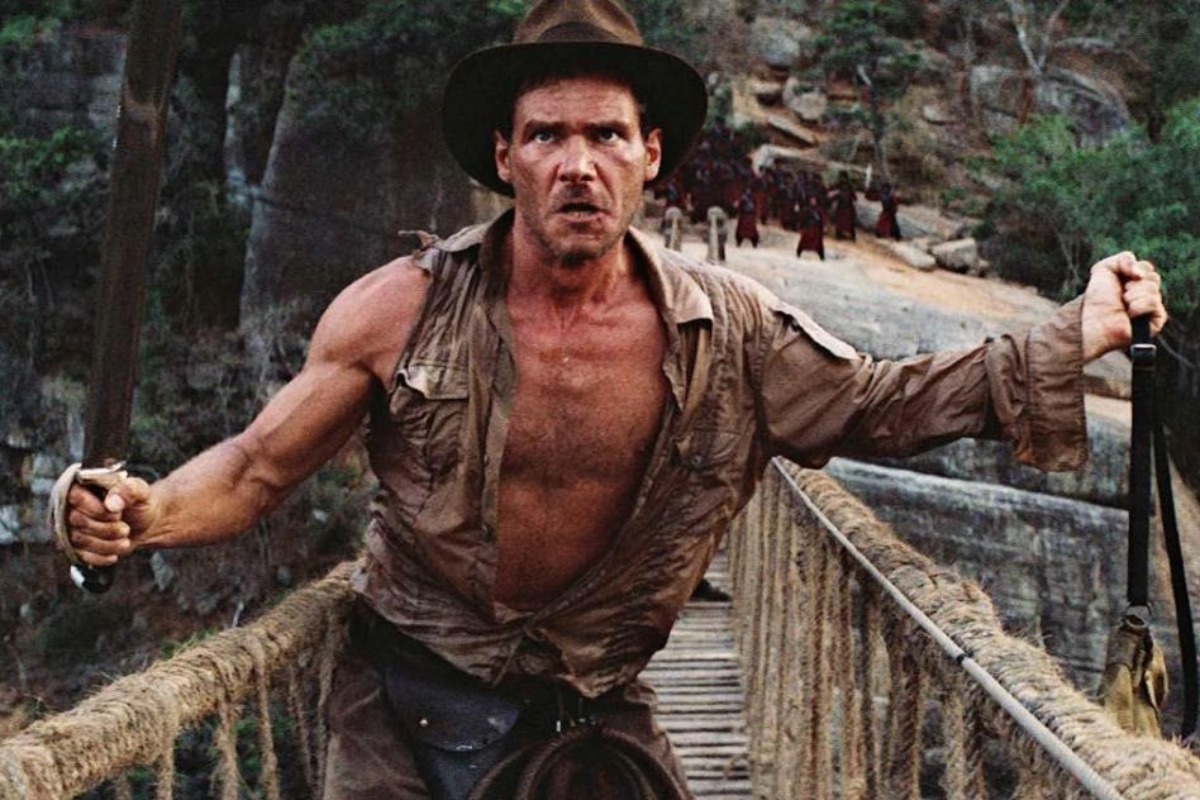
It set its sights on Indiana Jones, then stumbled into a hall of mirrors. How did a would-be blockbuster become a beloved fiasco?
Early 80s producers smelled box office gold in whips and relics, so they rolled out Le Trésor des quatre couronnes with 3D thrills and globe-trotting bravado. Directed by Ferdinando Baldi and led by Tony Anthony, it careened past its means and straight into legend for all the wrong reasons. Cannon Films and European partners pinched pennies while Ennio Morricone’s score lent gravitas to the mayhem. Today it endures as a prized nanar, cherished as much for its blunders as for its booby traps.
An ambitious start: chasing the shadows of Indiana Jones
In 1981, Steven Spielberg struck cinematic gold with Raiders of the Lost Ark, creating a pop culture sensation built around Indiana Jones. Its blend of swashbuckling adventure, historical intrigue, and relentless energy set a benchmark for modern action cinema. Just 2 years later, in 1983, Treasure of the Four Crowns arrived with the same high hopes of capturing that magic. The question lingered: could it stand beside such a legend?
A doomed project riddled with ambition
Directed by Ferdinando Baldi, the film was a co-production uniting Italy, Spain, and the United States. Its premise follows adventurer J.T. Striker on a perilous quest to retrieve mystical gems hidden within sacred crowns. Aiming to intertwine action, suspense, and a touch of the supernatural, the production also gambled on early 3D technology to boost its allure.
Despite the lofty aims, the result buckled under a limited budget. Sets looked cheap, effects rarely convinced, and the story lurched from beat to beat. Comparisons to the Indy template only deepened the contrast, from clunky pacing to stiff performances. Even a bid to echo the grand spectacle of Star Wars could not spark the momentum it needed.
A valiant cast and a surprising soundtrack
J.T. Striker is played by Tony Anthony, a performer known for spaghetti westerns, supported by a spirited ensemble including Ana Obregón and Francisco Villena. Their commitment is evident, though the script gives them little room for nuance. The true standout is the score by Ennio Morricone, whose musical ideas lend occasional sweep and texture to an otherwise uneven production.
From box office failure to cult nanar status
On release, Treasure of the Four Crowns met cool audiences and scathing reviews, its promises of grand adventure evaporating amid narrative and visual misfires. Over time, however, it found a different kind of afterlife, embraced for its flaws and celebrated for its cult status as a nanar. The awkward dialogue, improbable set pieces, and unintentional laughs have turned it into a minor treasure for fans of so-bad-it’s-good cinema.
The odd legacy of a cinematic misstep
For some viewers, the appeal lies in its oversized performances, dated 3D gimmickry, and audacious attempt to stand with cinematic heavyweights. Others simply relish the spectacle of ambition outpacing means. Today, Treasure of the Four Crowns offers less a Spielbergian thrill ride than a cheeky detour for cult aficionados chasing nostalgia and good-natured laughter.