
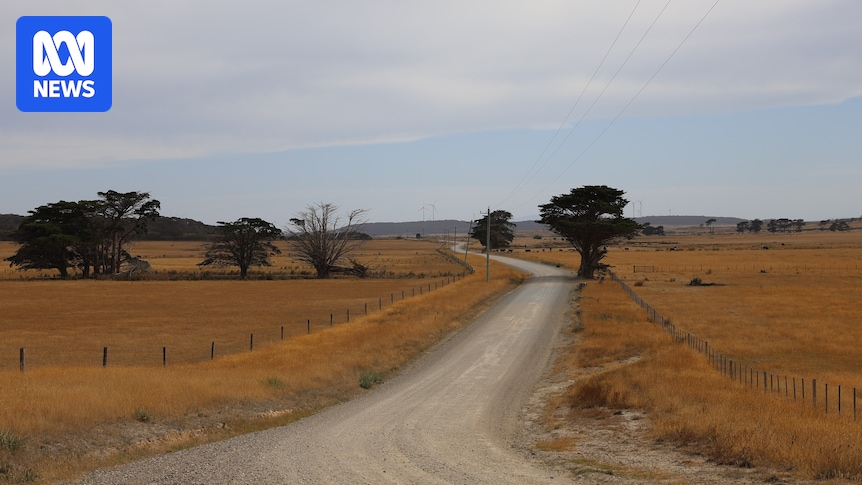
The Foreign Investment Review Board (FIRB) is expected to finalise its decision on the sale of Tasmania’s largest farm to a British forestry investment firm next week.
It has sparked concerns from nearby landowners about the potential conversion of agricultural land into pine plantations.
The FIRB had requested more time to review the application by Gresham House to buy the 22,000-hectare Rushy Lagoon property in the state’s north-east, owned by the Pye family.
The deal is expected to exceed $100 million.
Rushy Lagoon is a sprawling dairy, beef and cropping property about 140 kilometres north-east of Launceston.
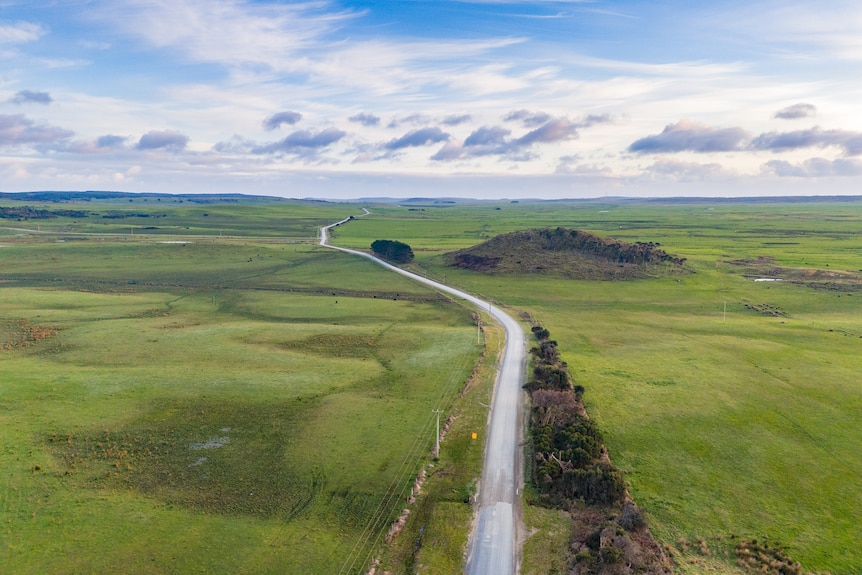
Rushy Lagoon is a sprawling 22,000-hectare property in the state’s north-east. (Supplied: RMS Advisory)
With 17 kilometres of Bass Strait frontage, it runs thousands of beef and dairy cattle, supplying milk to Fonterra.
But the farm’s potential new British owners are looking beyond just milk and beef to provide returns to their investors.
Large scale tree plantings are also planned.
Converting Rushy into pines
Gresham House is the UK’s largest forestry asset manager, overseeing almost $7 billion in forestry and natural capital assets.
Part of the company’s long-term strategy is to broaden its international footprint.
This includes tapping into Australia’s Nature Repair Market, earning biodiversity credits for carbon projects and drawing an income from growing pines for timber.
The size of Rushy Lagoon could provide the scale to do this.
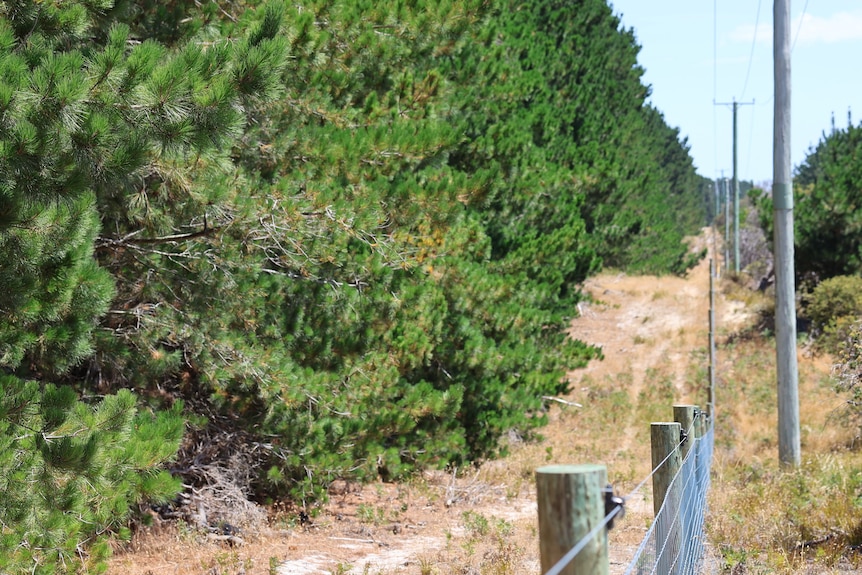
Mature pine trees on a farm at Waterhouse in north-east Tasmania. (ABC News: Laurissa Smith)
But some locals are concerned that planting pines is not the best use of agricultural land.
One of those is St Helens beef farmer and former Liberal MP John Tucker.
“You can’t eat pine trees, that’s a big one,” he said.
Mr Tucker knows the area well.
He runs Musselroe Estate, which neighbours Rushy Lagoon on its eastern boundary.
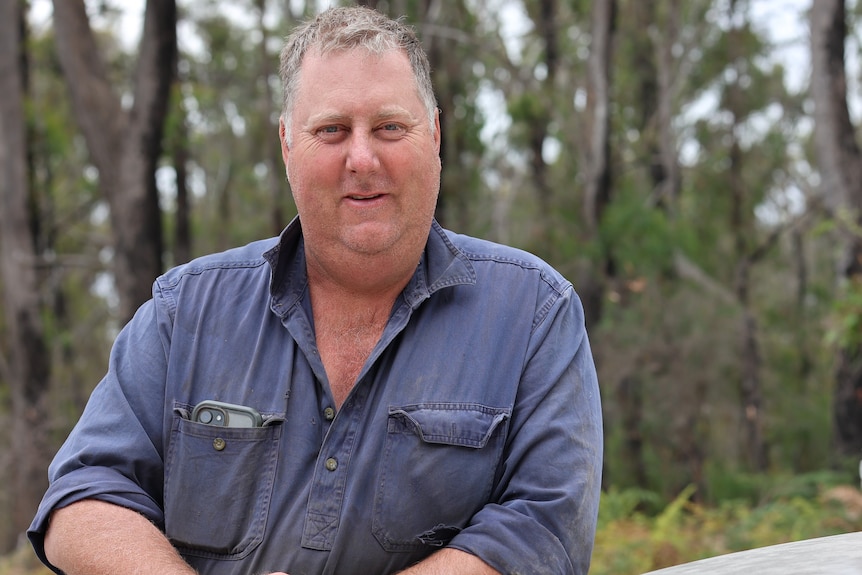
Farmer and former state Liberal MP John Tucker is concerned about the potential conversion of agricultural land into pine plantations. (ABC News: Laurissa Smith)
Mr Tucker’s relatives helped develop Rushy Lagoon, before it was sold to the British Tobacco Company in the 1960s.
“Rushy Lagoon used to run 55,000 sheep and 8,500 cows, so it was a pretty productive property back in the day,” he said.
“I think it’s got a lot of potential for livestock farming out in that area.
“A lot more potential in my opinion than trees.”
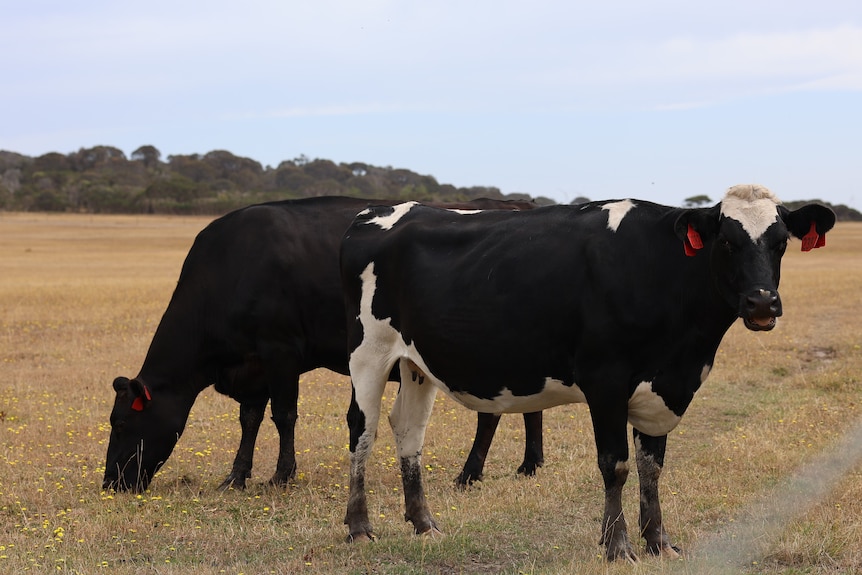
Rushy Lagoon runs thousands of head of cattle. (ABC News: Laurissa Smith)
Dorset Council mayor Rhys Beattie agrees.
“We’re not against forestry,” he said.
“But changing large scale agricultural land into forestry, there’s no checks to keep it under control or to see if any value is lost to the country in food security.”
Several properties in the far north-east were home to large scale eucalyptus nitens plantations in the past, but were caught up in failed Managed Investment Schemes (MIS).
“We’ve seen this before, we had Great Southern come into the area and plant a lot of trees,” Mr Tucker said.
“We saw how that finished up and I just hope this won’t turn into another MIS scheme.”
Ian Sauer, president of the state’s peak farm body TasFarmers, said the organisation is not opposed to plantations on farms.
But he said it is concerned about the wider implications for the local area if livestock operations on Rushy Lagoon were scaled back significantly.
“Whether that’s employment, cartage contractors, less money floating around,” Mr Sauer said.
“The processors that process the cattle and milk, there’s a flow-on effect there.”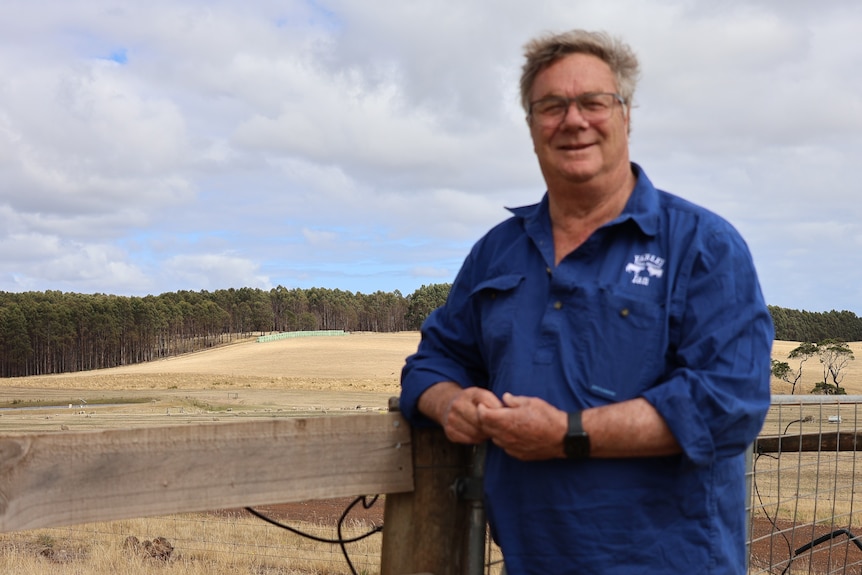
Ian Sauer, president of Tas Farmers, says the agricultural uses of Rushy Lagoon have flow-on effects into the local economy. (ABC Rural: Laurissa Smith)
Mr Sauer said there were also unconfirmed reports the federal government’s Clean Energy Finance Corporation has been involved in the deal.
The CEFC was contacted for comment.
Magnet for investors
It is not the first time Rushy Lagoon has attracted major investor interest.
Over the decades, a raft of major investors and local entrepreneurs have been drawn to the property for its agricultural potential.
This includes pioneering Scottsdale potato farmer Bert Farquhar.
He purchased the property from Cascade Brewing Company for $10 million in 1986, a record price paid for a Tasmanian farm by an individual.
Mr Farquhar had grand visions for Rushy Lagoon and developed an extensive irrigation scheme, which included more than 180 kilometres of channels to support future dairy and livestock production.
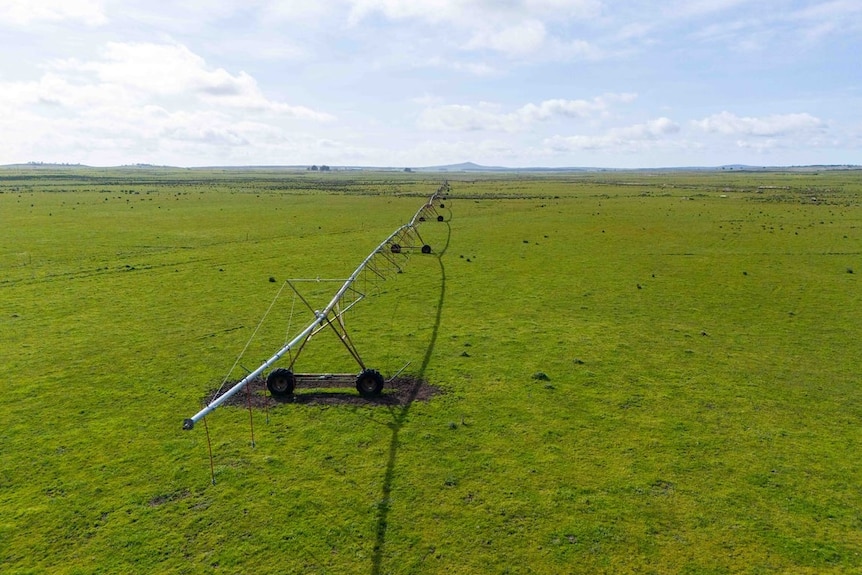
Tasmanian agricultural land has long been much sought after, but is increasingly valuable for renewable energy potential. (Supplied: RMS Advisory)
In 1996, New Zealand farming magnate, the late Allan Pye, paid $8.6 million for the property at auction and developed several dairies.
He put Rushy Lagoon up for sale in 2017.
It was expected to fetch $70 million, but was later withdrawn from the market.
After the death of Mr Pye, his estate re-listed the property in late 2024.
Green credentials
Rushy Lagoon has also been earmarked for a multi-billion-dollar wind farm development managed by ACEN Australia.
The project includes 210 wind turbines across sites at Rushy Lagoon and Waterhouse.
The North East Wind development was declared a project of state significance in 2022, a process that allows it to be assessed by a planning commission panel, rather than through the local council.
The rising value of Rushy Lagoon could reflect a wider trend in Tasmania.
The state’s farmland has the highest median price per hectare in the country.
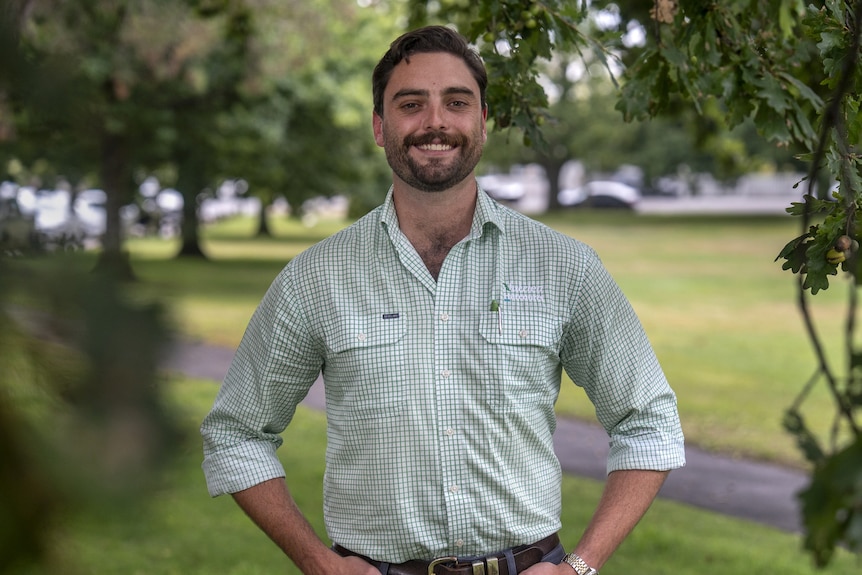
Tasmanian rural property consultant Max Calvert says buyers are looking at carbon projects to diversify farm income. (ABC News: Morgan Timms)
Rural property consultant Max Calvert said a stable climate, access to irrigation schemes and productive soils are the main drawcards for buyers.
But he said a farm’s green credentials feature more prominently on an investor’s wishlist.
“There has been a broader market shift to some sustainability- focused investment groups,” Mr Calvert said.
“As buyers do in the market, they like to explore multiple income streams and if a sustainability or carbon element to that is available, they’re going to explore it.”
Gresham House has been contacted for comment.
Loading…