
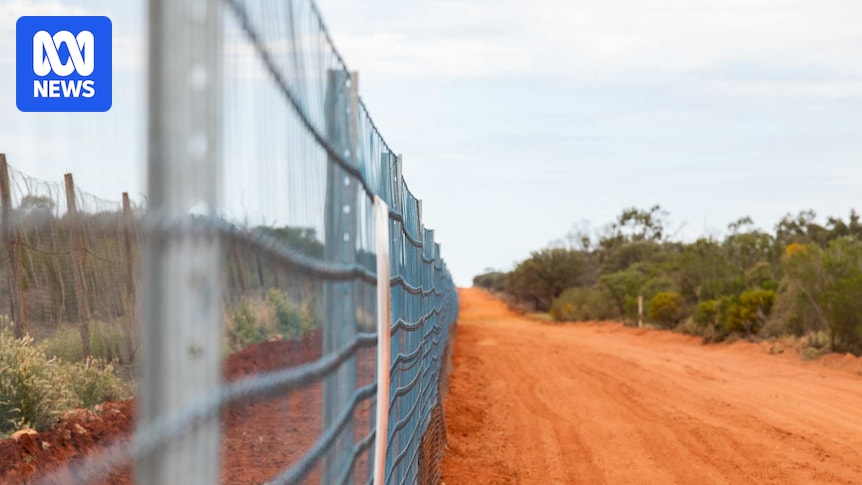
Sheep grazier Kylie Baty says dealing with wild dogs on her property near Hungerford, on the New South Wales-Queensland border, takes days of toil.
Warning: This article contains images some readers may find distressing.
“Some weeks it can be the equivalent of two to three days’ labour,” she said.
“It’s not just the case of going out into a paddock and setting a trap.”
Ms Baty was among the graziers who were eagerly awaiting the extension of the NSW Wild Dog Border Fence from Hungerford to Mungindi.
The $37.5 million project, proposed by locals in 2018, planned to add a stretch of about 420 kilometres to the existing fence designed to reduce the movement of wild dogs through grazing country.
Instead, just 23 kilometres of fence has been built on the NSW-Queensland border.
Bourke Shire Mayor Lachlan Ford said he was told in early 2025 that the project had been canned, but that message did not come from the state government.
“We’re very disappointed and angry,” Cr Ford said.
“This is a project the residents out here have wanted for a long time.
“It’s very important to our area and to find out it’s been closed with no consultation adds insult to injury.”
He said the council learned of the closure through third-party correspondence and spent nearly 12 months seeking clarity.
“We were promised things, and then all of a sudden, the money’s gone and we’re fighting again,” he said.
Bourke Shire Council said it would lobby for the fence project’s revival and was in direct contact with NSW Agriculture Minister Tara Moriarty.
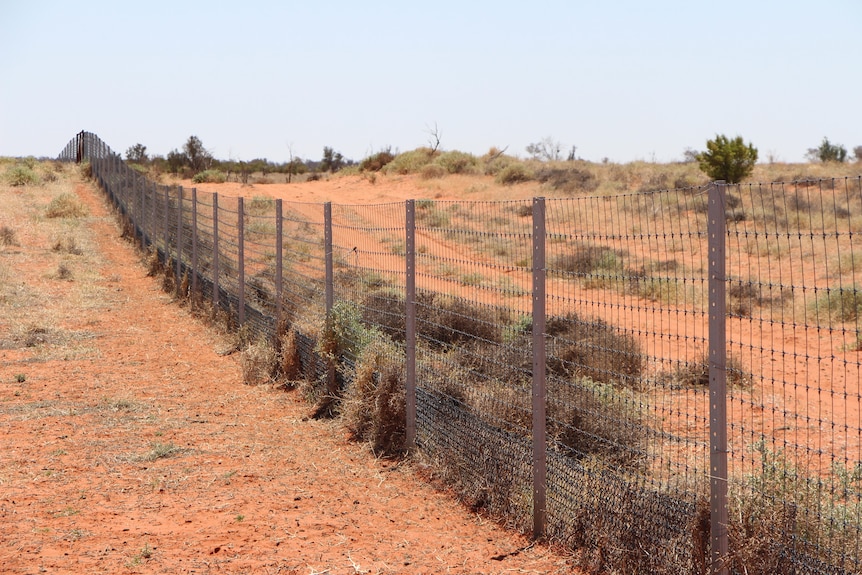
A portion of the NSW dog fence south of Broughams Gate, NSW. (ABC Broken Hill: Josh Mercer)
Meanwhile, Ms Baty said she was back at square one.
She said she was considering installing a pest control fence but was not sure her business would survive the expense.
“It’s a huge cost and we’re still working out whether the long-term benefits will offset the up-front costs,” Ms Baty said.
“It’s about having the financial resource to install the fence, it’s not something you can do in stages, an exclusion fence has to be put up in its entirety.”
A failed project
Wanaaring grazier Neill Leigo said he remembered the elation he felt when NSW Labor and the Coalition pledged funding to the fencing project ahead of the 2019 state election.
“That money was given to the NSW Soil Conservation Service, and they were tasked with designing and erecting the fence,” Mr Leigo said.
“We’re now seven and a half years down the track, and in total there’s been 32 kilometres of new fence erected along the South Australian border, and somewhere around 23 kilometres on the Queensland border.”
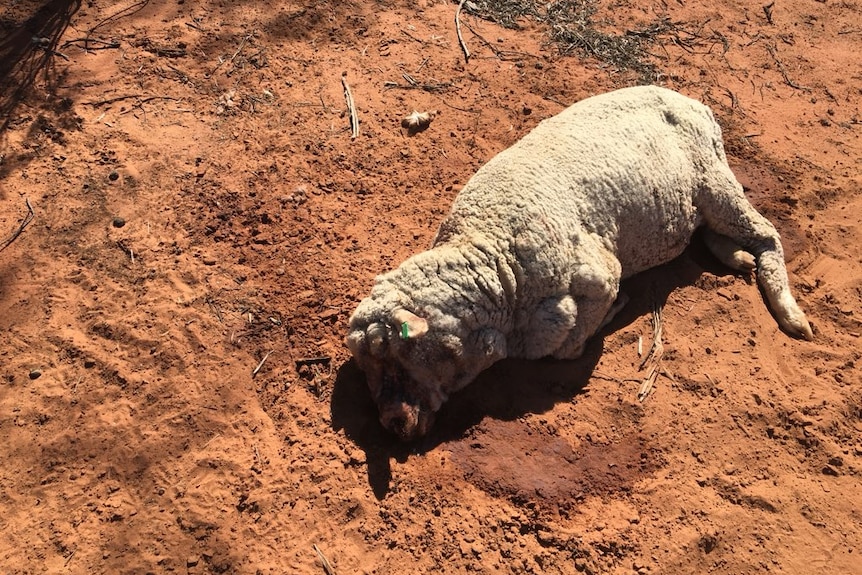
Wild dogs often do not kill livestock immediately, instead leaving them to die from their injuries. (Supplied: Kylie Baty)
In August last year, the NSW government completed a 32-kilometre section to close a gap between the Queensland and South Australian fences, creating a continuous 2,700-kilometre barrier from the Great Australian Bight to Hungerford.
“That eliminated any risk of dogs coming in from the pastoral cattle country in South Australia into western NSW, so that was a good job finished,” Mr Leigo said.
As a long-term member of the NSW Border Fence Maintenance Board, Mr Leigo is familiar with the benefits and the cost of upkeep, which is mostly shouldered by levies on local landholders.
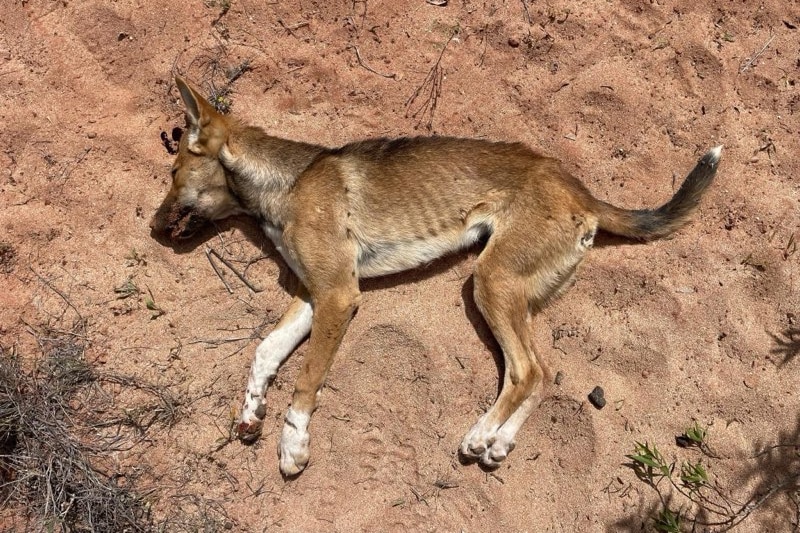
It can take days of work to trap or kill a wild dog. (Supplied: Lachlan Ford)
He said repeated delays may have blown out the costs of building the fence beyond the $37.5 million price tag put forward in a 2019 feasibility study.
But he said the fence would bring additional benefits such as restricting feral pig and goat movements, community safety, and protection for livestock industries further east.
In a statement, a spokesperson for the NSW Department of Primary Industries and Regional Development (DPIRD) said the fence extension would not provide good value for money.
“This best practice approach has led to the decision to not spend taxpayer funds on any new dog fence along the Queensland border because of the project’s high costs and low benefits in return,” the spokesperson said.
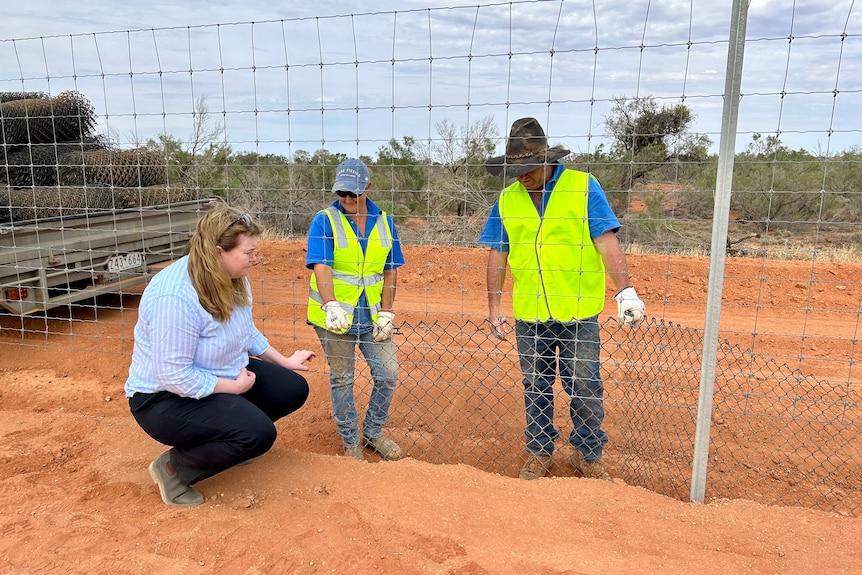
Tara Moriarty visited the fence in November 2024. (ABC Broken Hill: Lily McCure)
The spokesperson said remaining funds had been maximised by contracting the South Australian government to build up to 290 kilometres of new fence south from where the existing fence crossed into SA, an extension which was also included in the 2019 proposal.
They also said NSW was spending $1.05 billion on biosecurity this year, and more than $40 million had been spent on feral and pest animal control over the past three years.
But graziers said the absence of a fence left properties east of Hungerford increasingly exposed, with areas beyond the end of the fence on the Queensland border experiencing more wild dog pressure now than they did a decade ago.
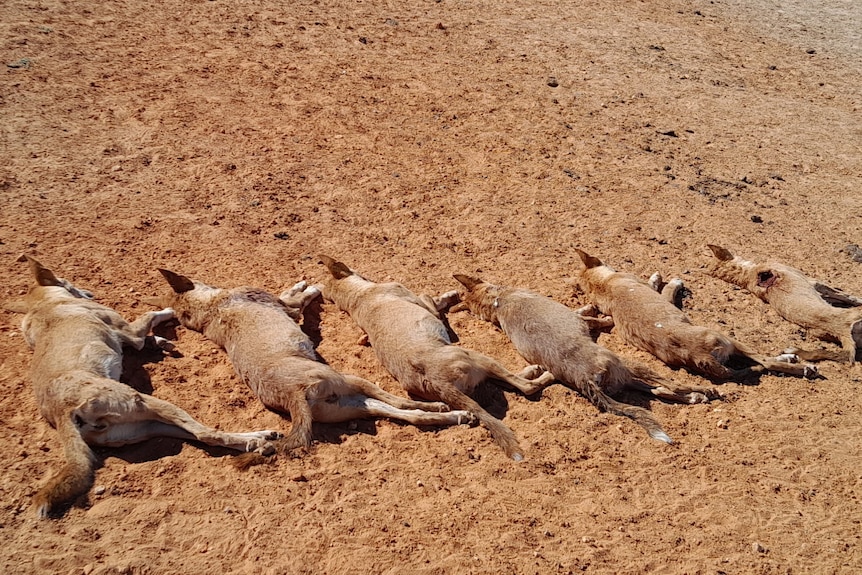
A grazier in western NSW shot six wild dogs on his property in a single day. (Supplied)
Ms Baty said the problem went beyond financial loss.
“Quite often, the ramifications of a dog attack aren’t just immediate death of the animal, it’s severe injury which causes prolonged, likely agonising death,” she said.
“It’s heartbreaking to see a wild dog attack on your animals, especially as we care for them so much.”