
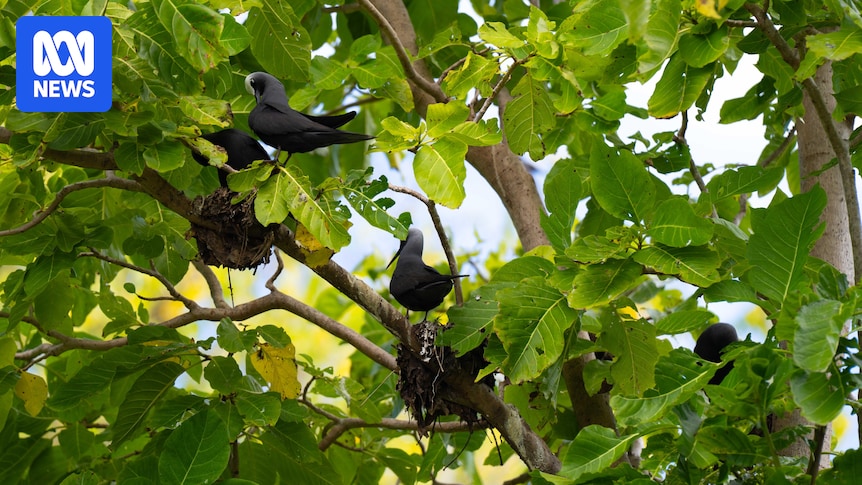
North West Island is home to hundreds of thousands of vulnerable seabirds and nesting turtles on the Great Barrier Reef.
So when invasive black rats were found on the coastal paradise four years ago, local rangers were quick to act.
“Rats on an island can go from two rats to 1,000 rats within a year,” senior ranger Damon Shearer said.
“They build up in big numbers very quickly because they have no predators out there.”
The discovery of black rats by a campground host in November 2022 came just three months after the island was declared free of invasive pest, the common house mice.
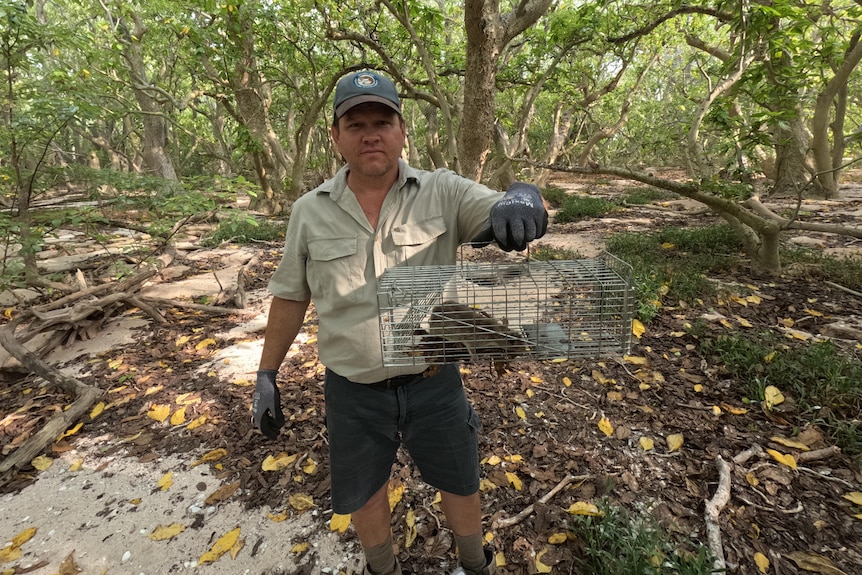
Steve Burke with a captured rat on North West Island. (Supplied: Queensland Parks and Wildlife Service)
“They [black rats] will start eating seabird chicks, turtle hatchlings, they also affect the vegetation, they will start eating plants and seeds, they affect the whole ecology of the island,” Mr Shearer said.
The size of the island, 120 hectares, meant aerial baiting was the most effective method to tackle the infestation.
Remote cameras, ink tracking monitoring stations and cage traps were also used on the ground.
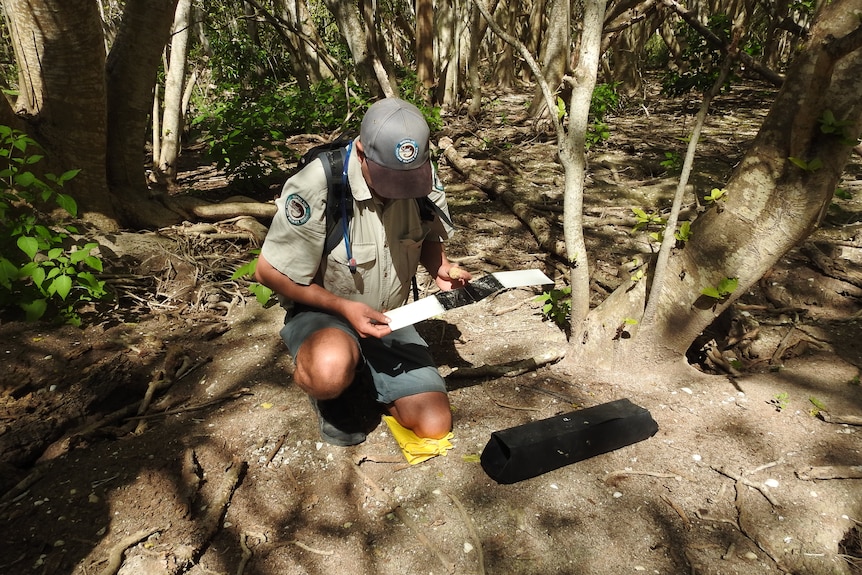
Ink monitoring stations were set up on the island to track the rats. (Supplied: Queensland Parks and Wildlife Service)
The island could be officially declared rat-free when no pests were detected for 12 months.
“Every time we weren’t seeing them it was another tick, so we were pretty relieved by the end of it when we had no detections,” Mr Shearer said.Significant breeding ground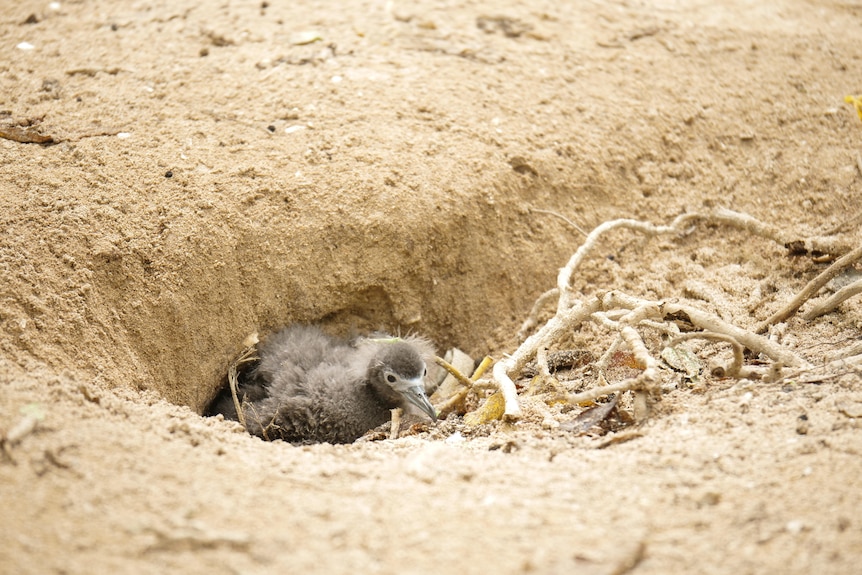
A baby east coast wedge-tailed shearwater chick nests in a burrow at North West Island. (ABC News: Erin Semmler)
North West Island is located 75 kilometres east of Gladstone in central Queensland, and is part of the Capricornia Cays National Park and Great Barrier Reef World Heritage protected area.
More than 70 per cent of Australia’s east coast wedge-tailed shearwater total breeding population, estimated to be 100,000 birds, nest on the island, leaving at dawn to feed at sea and return at dusk, heard from afar with their mournful howling call at night.
Up to 70,000 black noddies nest on the island’s Pisonia trees every summer.
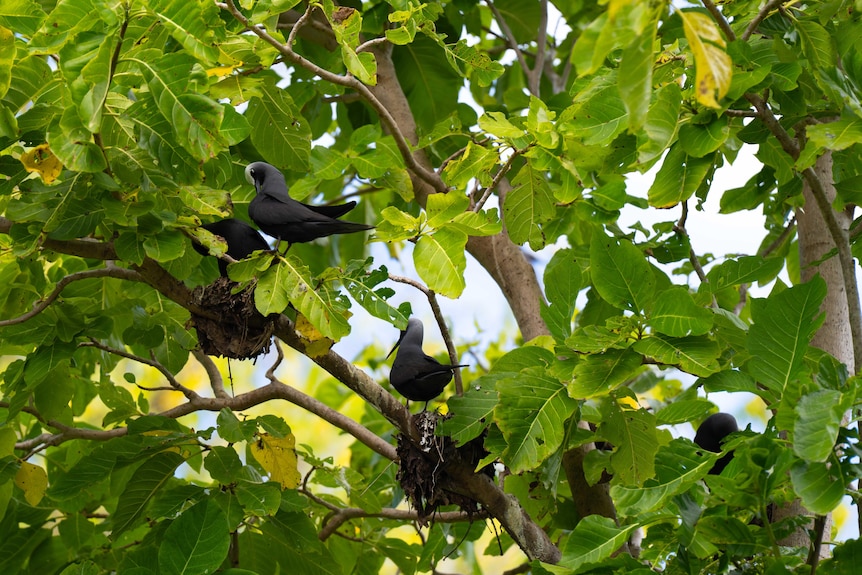
Black noddies come to nest in the trees at North West Island every year. (Supplied: Queensland Parks and Wildlife Service)
Other notable species include the buff-banded rail, subspecies of silvereye, white-bellied sea eagle and crested terns.
“[There are] quite rare species covered under a number of migratory agreements that we need to preserve,” Mr Shearer said.
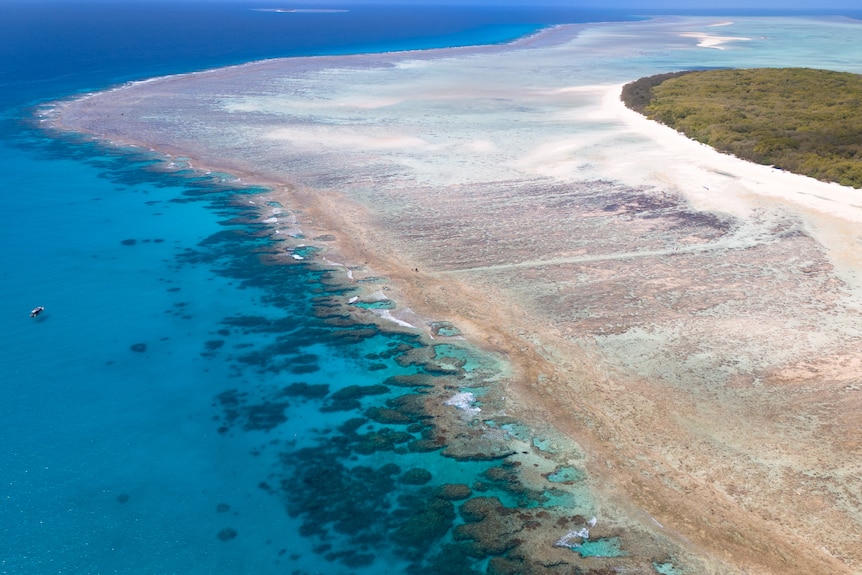
North West Island is part of the Capricornia Cays National Park. (Supplied: Queensland Parks and Wildlife Service)
The island is also a nesting site for the vulnerable green and endangered loggerhead turtles.
“Making sure they can nest unimpeded by pest species is vital,” Mr Shearer said.
Visitors can stop the spread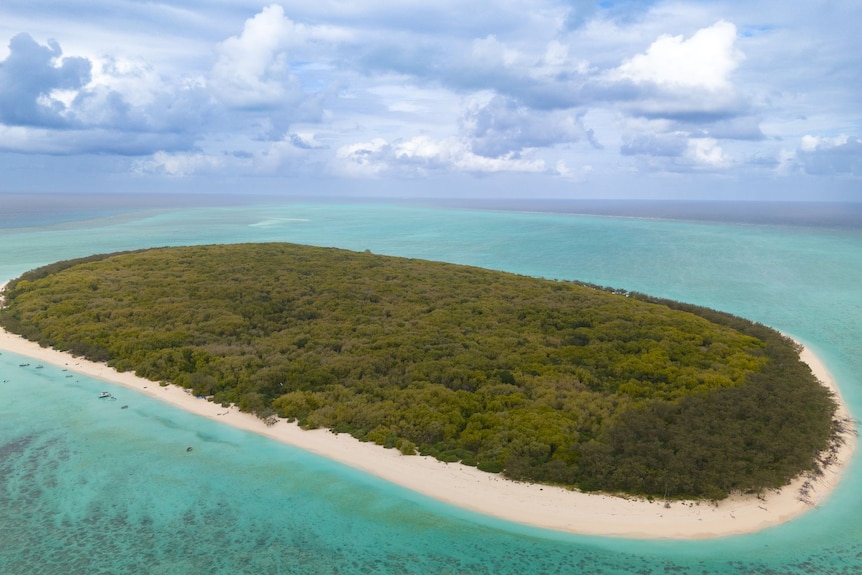
The island is a popular camping destination. (Supplied: Queensland Parks and Wildlife Service)
Rangers believe the rats most likely made it to the island as stowaways on boats or hidden in camping equipment brought by visitors to the island.
Mr Shearer said it was important all visitors checked their gear because the island was about to reopen to the public for the Easter school holidays after the annual seasonal closure.
“It’s a big job to get rid of them, so we’re really pushing the message of prevention. Let’s not get them there in the first place,” he said.
“Then the animals and systems out there can function as it should.”
North West Island is the largest campground in the Capricornia Cays, with spaces for 150 people.
In 2024, 10,481 campers visited the campsite. During that year, the site was closed for five months for safety during the pest eradication works.
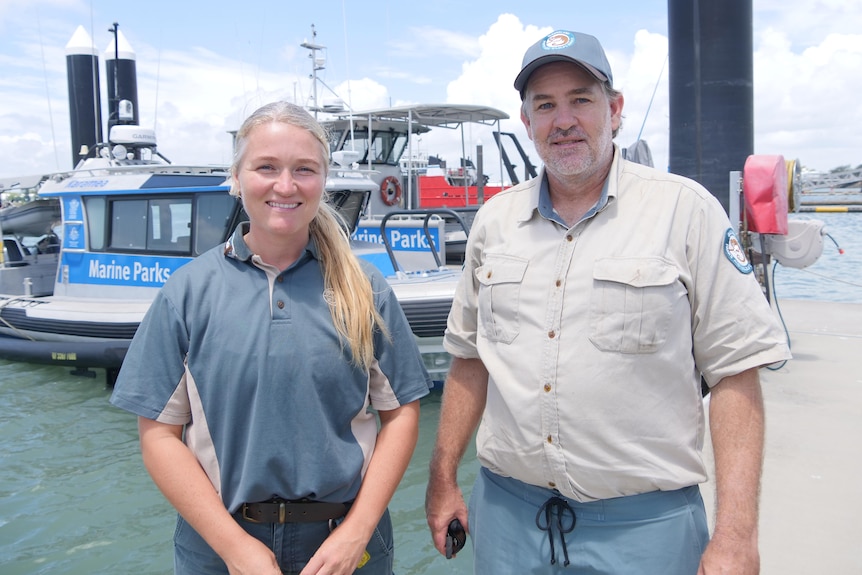
Anna Darby and Damon Shearer are stationed in Gladstone and work across the Capricornia Cays. (ABC Capricornia: Vanessa Jarrett)
But Mr Shearer said it was not just rats and mice that could cause destruction, and urged visitors to be on the lookout for any pests.
“It can be soils with microbes and bacteria that don’t exist out there, ant species, weed seeds can be a big problem, they can establish on the island and affect the sea turtle and seabird nesting areas,” he said.