
Earlier tonight, Iran’s President Masoud Pezeshkian gave a televised speech to his country, saying Iran’s temporary leadership council had approved suspending attacks on nearby countries.
The UAE, Kuwait, Qatar, Bahrain and Saudi Arabia have all reported drone and missile attacks over the past week.
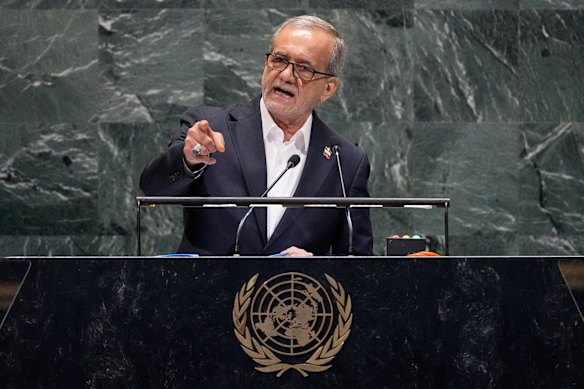 Iran President Masoud Pezeshkian. AP
He said Iran would still retaliate if an attack on Iran came from any of those nations.
“I personally apologise to neighbouring countries that were affected by Iran’s actions,” he said.
In the past few days, Gulf states have voiced outrage that their civilian infrastructure – hotels, ports and oil facilities – were struck despite their having had no part in the U.S.-Israeli attacks.
While Gulf states host U.S. military bases, they had told Washington they would not allow these to be used for any attacks on Iran.
Iran’s apparent strategy of maximum chaos has driven up the costs of the conflict by raising energy prices, hurting global business and logistics links and shaking trust in the stability of a critical region for the world’s economy.
It is too soon to say whether Pezeshkian’s comments mean Iran has decided to curtail that strategy in deference to future ties with Gulf neighbours, or if they should be read as a warning that Tehran remains ready to strike across the region.
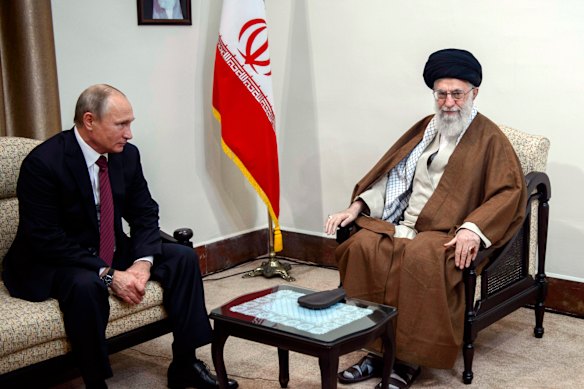 Putin meeting with the late Iranian Ayatollah Ali Khamenei in 2017.AP
Russian President Vladimir Putin expressed his condolences to Pezeshkian over the numerous civilian casualties resulting from “the armed Israeli-American aggression against Iran” and called for an immediate halt to hostilities, the Kremlin said.
Russia is expected to back Iran’s “legitimate rights against aggression” by using its international capabilities, Pezeshkian told Putin over the phone.
Reuters