

The US and Israeli strikes on Iran have raised concerns among Democrats and others about diminishing American stockpiles of certain weapons, illustrating a long-standing production problem that some experts say could present challenges if another conflict emerges.
Questions about the nation’s weapons stockpiles have grown as the US campaign against Iran escalates, with many Democratic lawmakers arguing that President Donald Trump is waging a “war of choice”. Missile defence systems are under the most strain, according to experts, with Patriot and Terminal High Altitude Area Defence, or THAAD, interceptors in high demand in Ukraine and Israel, respectively.
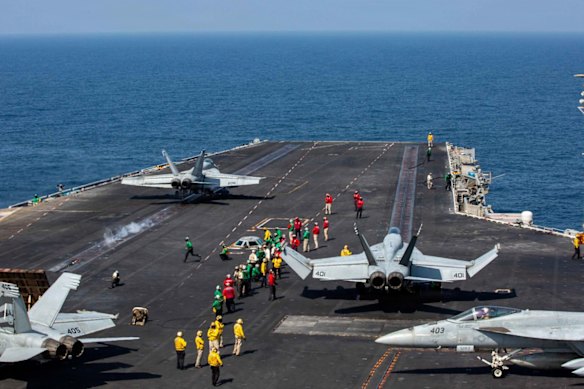 Aircraft on the flight deck of the USS Abraham Lincoln, in an image posted by the US Military Central Command on March 2, 2026.US Military Central Command
Sean Parnell, the Pentagon’s chief spokesman, said in a statement that the US military “has everything it needs to execute any mission at the time and place of the President’s choosing and on any timeline.”
Defence contractor Lockheed Martin posted on X late Friday that it had agreed to “quadruple critical munitions production” and “began this work months ago.” Trump and Lockheed did not offer a timetable for when the production increases would reach their target.
Some Democratic lawmakers, meanwhile, have questioned the long-term impact on the US and its allies.
“We’ve been told again and again and again one reason that we can’t provide interceptors for the Patriot system or other munitions for Ukraine is that they’re in short supply,” Democrat Senator Richard Blumenthal told CNN on Thursday.
Senator Mark Warner told reporters that American supplies are dwindling after the military fought the Houthi rebels in Yemen and engaged in more recent conflicts under the Republican administration. “Our munitions are low. That’s public knowledge,” Warner said. “It will require additional funding, funding where we have other domestic needs as well.”
AP