
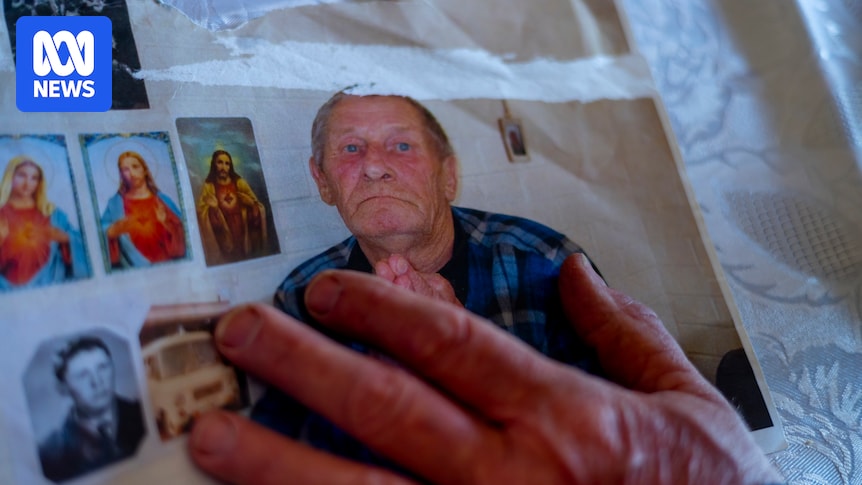
Attila’s shaky phone video of his brother lying dead in aged care documented bruises and blood. It was the start of a long campaign to understand what happened.
Prefer to listen to this story? Click here.
The mobile phone footage is shaky. The person filming enters a small room. We pass shoes neatly lined up against a wall, some suitcases, and a bedside table with a phone cable dangling. The camera is suddenly static, only feet on carpet fill the frame.
Warning: This story discusses a death in aged care and may distress some readers
Then the camera tilts up to a man lying on a single bed. His head is turned to the side, body prone. He wears a denim jacket. His lower half is covered with towels. Only the left side of his face is visible. It’s a mottled blue. He is unmistakably dead.
Off camera a woman pleads. “Attila can you please not.”
Attila Toma is filming the dead man in the bed: his brother, Jozsef.
“Poor thing,” he says. Attila walks around the foot of the bed still filming while the woman tries to dissuade him.
“Why, why there is blood on the floor?” Attila says.
The camera shows his brother’s right leg hangs so far off the mattress that his toes touch the floor. Attila takes his limp hand.
“He’s got bruises on his hand,” he says. “Lots of bruises.”
The camera moves closer. Attila lifts his brother’s arm and finds his underarm is soaked in blood which has seeped through his thick jacket and on to the sheets.
“And blood,” Attila says.
“Lots of blood.”
The woman, still unseen, repeats his name. After a moment, the recording stops.
An audio version of this story read by the author, Anne Connolly, is available here.
 The unwitnessed fall
Attila wasn’t expecting a call that morning. A staff member from Blakiston Lodge, the Geelong nursing home where Jozsef had lived for six months, rang to say his brother was dead.
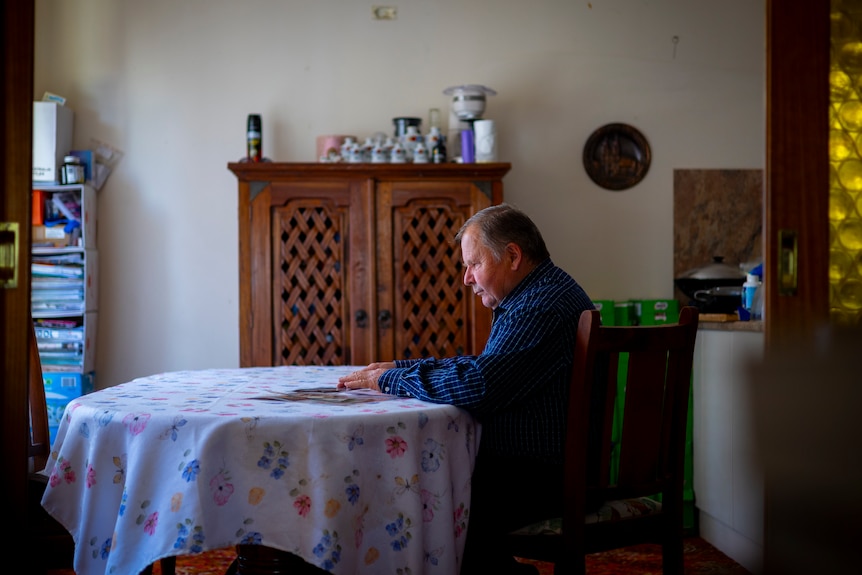 One day Attila received a phone call to tell him his brother had died after a fall.(ABC News: Danielle Bonica)
“When they rang me they couldn’t tell me what he died of,” says Attila, his accent still strong despite leaving Hungary decades ago.
“They just said he had passed away.”
“I thought his head would be on the pillow and he would look like he was asleep. That’s not what we found.”
Attila was working away from home when he got the phone call. He couldn’t get there quickly. He asked his partner, Hajnalka, to go ahead of him. When she arrived, Hajnalka was so concerned about the state of Jozsef’s body, she tried to film but says she was stopped by staff.
“The lady got angry,” Hajnalka says in halting English. “She pushed alarm and plenty of people came and stopped me.”
Hajnalka says she was put into another room and staff tried to make her delete the footage. Blakiston Lodge management says staff told her to stop filming because she was repositioning the body but denies she was removed from the room.
Hajnalka refutes that account.
 What happened in the courtyard?
Attila is invited into the manager’s office.
Blakiston Lodge is an aged care facility owned by Barwon Health. It’s effectively part of Victoria’s public health service and is funded by the state government.
Attila assumes his brother’s death will be referred to the coroner.
Under Victorian law unexpected, violent or suspicious deaths must be reported to the coroner.
Instead, the manager tells him that won’t be necessary because Jozsef’s death is due to a fall the day before.
Attila is surprised. Staff had made a routine call to him last night saying Jozsef had fallen in the courtyard while outside smoking. But he was told his brother was fine and there was nothing to worry about.
“No one said anything about him being injured, otherwise I would have come over to see him,” Attila says.
Attila can’t reconcile what he’s seen — Jozsef, 78, prone on the bed. The blood: despite the minor fall he was told about.
He starts to wonder whether something more happened in the courtyard or while he slept in bed. Perhaps his brother was assaulted by another resident and now it’s being covered up.
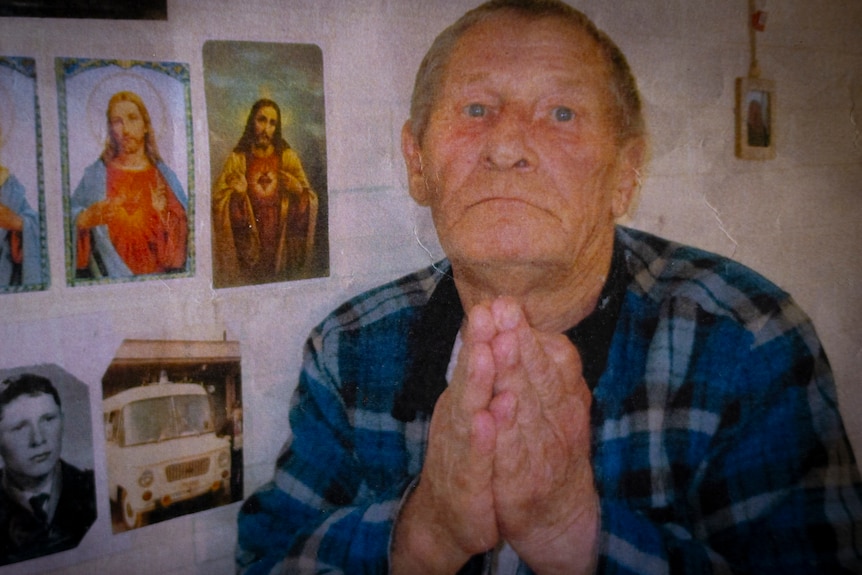 Jozsef was injured in an unwitnessed fall.(ABC News: Danielle Bonica)
Last year, there were more than 30,000 cases of “unreasonable use of force” in aged care facilities. In almost 90 per cent of those cases, another resident was responsible and in almost all cases, those people had a cognitive issue like dementia.
Blakiston Lodge is a specialised facility for people with dementia and psychiatric conditions who have complex behaviours.
That’s why Jozsef was there. Attila understood that his brother could be unpredictable, even volatile. The question that began to trouble him was whether someone else, in the end, had been volatile too.
 When a brother’s love is not enough
For much of his adult life, it was Attila who assumed the role of guardian for Jozsef, nine years his senior. The brothers were raised in Hungary, in the long shadow of the communist state. Jozsef drove trucks for a living and, for a time, an ambulance.
In the early 1980s, Jozsef and his young family defected and resettled in Melbourne, where Attila had already established himself.
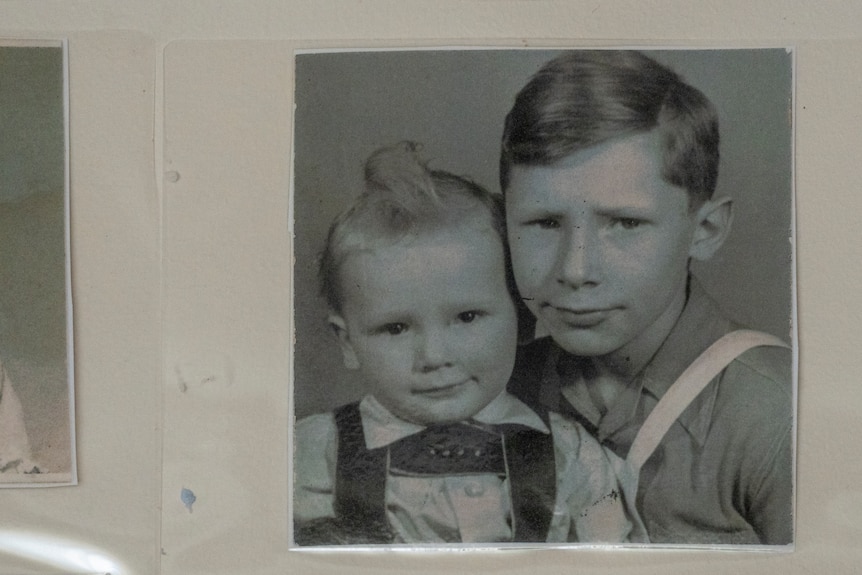 Atilla and Jozsef as boys.(ABC News: Danielle Bonica)
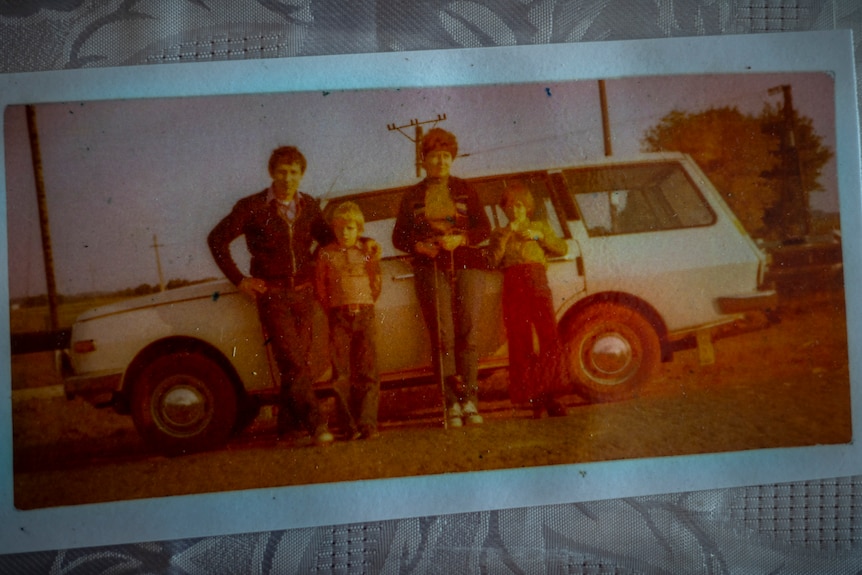 The Toma family(ABC News: Danielle Bonica)
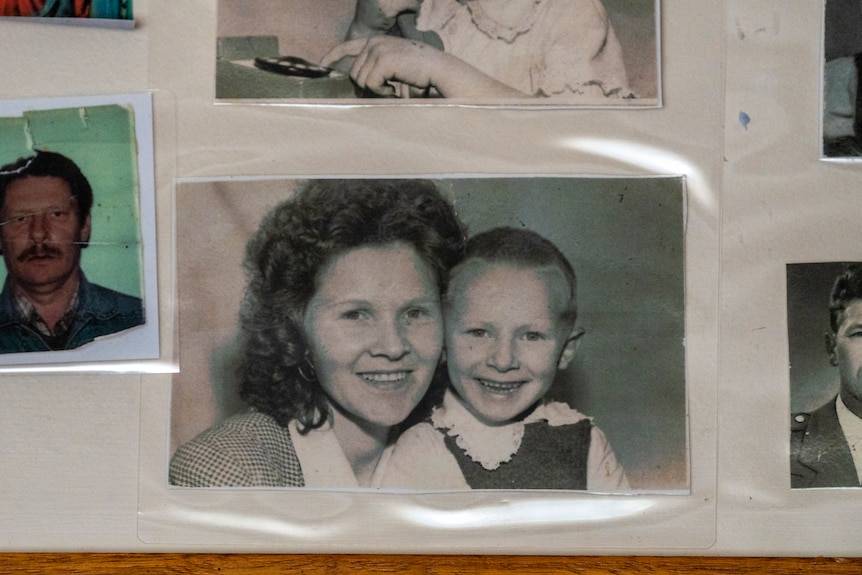 Jozsef as a boy, with his mother.(ABC News: Danielle Bonica)
Later Jozsef started to suffer with mental illness. He became fixated on the Bible, transcribing the text over and over into lined notebooks. He was diagnosed with schizophrenia. His marriage collapsed and he returned to Hungary.
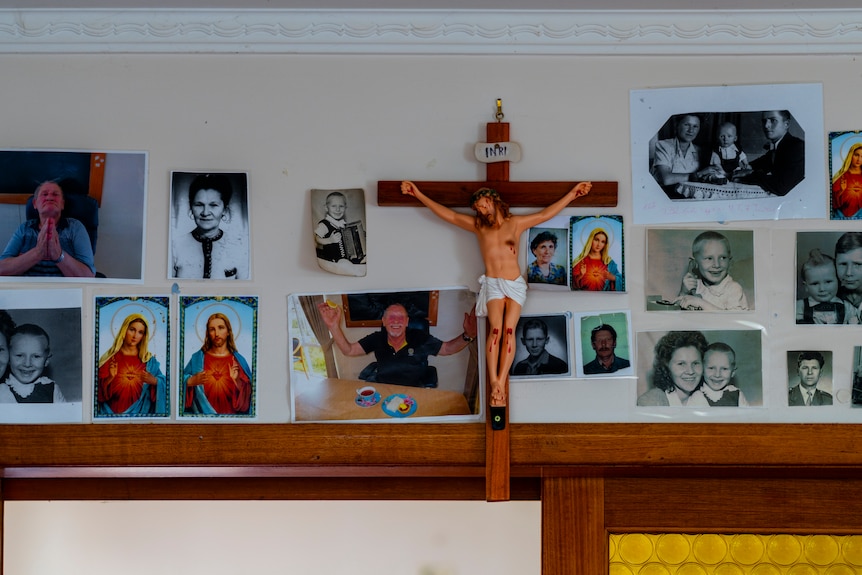 Joszef developed dementia and became fixated on the Bible, his brother Atilla says.(ABC News: Danielle Bonica)
When Jozsef developed dementia and his mental health worsened, Attila bought him a one-way ticket back to Melbourne, moving him into his own home. Jozsef was put on a community treatment order requiring regular injections of antipsychotic medication. Despite the meds, he was in and out of mental health facilities. He started regularly setting fires around Attila’s house.
In 2023, Jozsef went to an aged care facility but, after further problems with his behaviour, he was transferred to Blakiston Lodge for specialist nursing and psychiatric care.
Cause of death: ‘Pneumonia’
Blakiston Lodge won’t refer Jozsef’s death to the coroner. As next of kin, Attila can.
Before any autopsy is arranged, Jozsef’s body is released to a funeral home. By the following day, Attila is uneasy. If there is to be an inquest, he believes the visible injuries will matter. He goes to the funeral home and photographs his brother’s body.
He then asks to take a photo of the death certificate.
He finds that the cause of death has been recorded as “sepsis associated with community-acquired pneumonia”. The certificate said the duration of sepsis was one day.
“Nobody told me he had pneumonia,” Attila says. “How was he smoking there if he was gravely ill with pneumonia?
“There are lots of question marks here.”
At 6am all was quiet. At 8.20am Jozsef was dead
Attila is desperate for answers. He lodges a complaint with the government watchdog which regulates nursing homes, the Aged Care Quality and Safety Commission.
Six months later, after requesting written reports and the CCTV footage from Barwon Health, it issues its findings.
Jozsef, it said, was discovered in the courtyard on the afternoon of June 25, 2024 after an unwitnessed fall.
The commission viewed the CCTV footage and found no evidence that anyone else was present.
Staff documented injuries to Jozsef’s hands and face. They noted that he complained of pain in his right arm but said he wouldn’t allow them to examine it.
They used a hoist to lift him into a wheelchair and then into bed. A GP advised staff that, if he continued to resist assessment of his arm, he should be sent for an X-ray the following day.
Jozsef was given oxycodone. There are no records showing that his pain was monitored throughout the night.
At 6am a registered nurse recorded that Jozsef had a quiet night sleeping and kept to himself. At 8:20am, he was dead, found “lying half in bed in a prone position”.
Paramedics were called and did some observations to verify the death.
Something didn’t add up
But there’s something else in the Commission’s report that grabs Attila’s attention.
Less than 10 minutes after Jozsef was found dead, staff called the GP who had seen him the previous day. He couldn’t get to Blakiston Lodge but he told staff that Jozsef’s death “would be classified as a coroner’s case” due to the fall the day before.
Three hours later, the GP called back. Jozsef had been hospitalised with pneumonia two months earlier, he told staff. He believed he had displayed similar symptoms this time. The GP reported that “he did not believe his fall contributed to his death and that it was not a coroner’s case”. The GP never viewed the body.
The commission told Attila it had no power to investigate the GP’s handling of the death certificate.
It did criticise staff at Blakiston Lodge for failing to properly consider Jozsef’s risk of falling and for not properly monitoring his pain throughout the night.
Barwon Health said it had introduced staff training following his death. The commission said it was “satisfied with the continuous improvement measures the service has implemented to address the deficiencies”.
As Jozsef’s death was now before the coroner, the commission recommended no further action.
But Jozsef did not die from pneumonia
Jozsef’s body is at the funeral home for more than two months before it’s transported for an autopsy.
By the time the coroner reports, it’s October 2025 — almost 18 months since his death.
Coroner Audrey Jamieson finds that Jozsef didn’t die from pneumonia. A post-mortem examination shows the cause of death is complications from a “right humerus fracture with severe associated bruising to the right upper arm and chest”.
In lay terms, Jozsef died from a broken arm.
A fractured arm can set off a chain of events, causing a possible infection, blood clot or heart attack.
“Having considered the information available to me, I took Jozsef’s death to be reportable,” the coroner says. “Reportable deaths include deaths that are unexpected, unnatural or violent or result from accident or injury.”
Loading…
The report determined that, despite Attila’s concerns that his brother was assaulted and that Blakiston Lodge covered up the death, Jozsef died from a fall. The report said that, because Jozsef had refused to be examined properly, the plan to monitor him and refer him for an X-ray the following day was reasonable.
Even if Jozsef had been sent to hospital, the coroner says, his death would not have been prevented.
The blood Attila saw, the coroner says, is likely due to skin tears resulting from the fall.
Barwon Health submits a report saying it conducted an internal review which identified gaps in care, including the lack of monitoring of Jozsef’s pain, and had put in place staff training.
Taking the review into account, the coroner finds that Jozsef died following an unwitnessed fall and the care provided to him is “reasonable and appropriate”.
‘Who dies from a broken arm?’
Four months after the coroner’s findings, Attila is back at home in Moorabool, on the western edge of Geelong. The property is scattered with sheep. Two cattle dogs circle the yard, and cats meander around. He chose the place, he says, because Jozsef liked to wander and he thought out here, he would be more free.
“We were very good brothers, we had no issue,” Attila says. “I love him just like today.”
Despite the fact the coroner’s report vindicated Attila by finding that Jozsef’s death should have been reported to the coroner, the outcome offers little relief. His brother died alone and in pain.
Attila doesn’t understand why staff didn’t examine his arm after the fall, knowing that he had no insight into his condition, due to his schizophrenia and dementia
“Staff are supposed to be experts in handling these people,” Attila says.
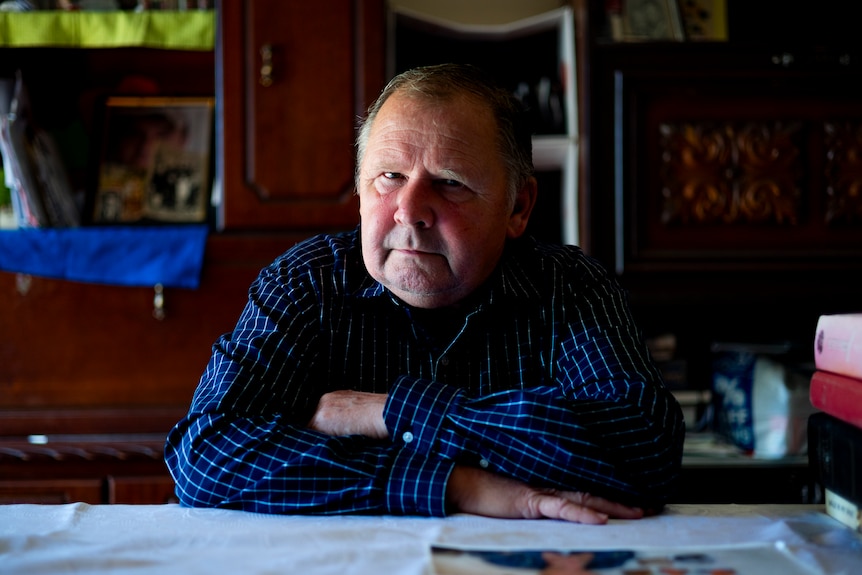
“His arm hurt so much they couldn’t even get his denim jacket off. If someone is ill, you call the ambulance.”
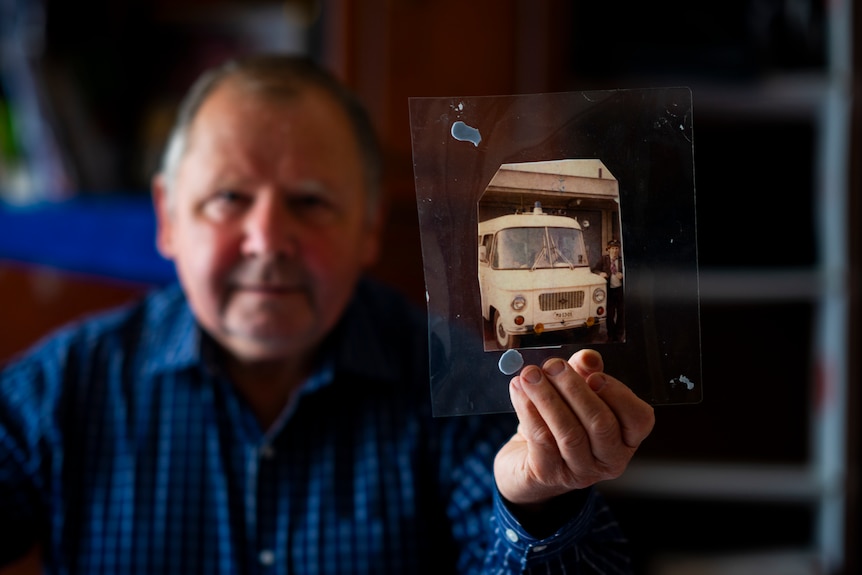
Attila finds it ironic that Jozsef, who drove ambulances for a living in Hungary, doesn’t get one when he needed it most.
“Surely he would not die, they would have saved his life,” Atilla says.
“From a broken arm — who dies from a broken arm?”
‘Unexpected’ deaths are rising
“Unexpected” deaths in nursing homes are defined as deaths where the facility failed to provide proper care or services to a resident and are meant to trigger scrutiny.
Aged care providers are required to report serious incidents — including “unexpected” deaths — to the regulator, the Aged Care Quality and Safety Commission. The Serious Incident Response Scheme (SIRS) records events such as neglect, emotional abuse, unlawful sexual conduct and the “unreasonable use of force” in nursing homes.
Over the past year, “unexpected” deaths in residential aged care have risen sharply from 990 to more than 1,100 — an increase of over 21 per cent.
The number of people living in residential care has also grown, but only modestly — by about 2.5 per cent over the same period.
Asked about the reason for the increase in deaths, the Aged Care Quality and Safety Commission could not give a definitive answer. The increase, it suggested, “may be due to improved reporting”, or to “changes in clinical complexity or higher acuity and frailty” among residents.
When asked whether it analyses the reports of “unexpected” deaths it receives to identify common causes, the regulator said it could not readily determine the leading factors. The circumstances surrounding such deaths, it said, were often “numerous and complex”.
“Neither we nor aged care providers always have access to information on an actual cause of death, as determined by a medical practitioner or coroner,” a spokesperson said, adding that the Commission was working to improve its data capabilities.
The Commission also does not know what proportion of “unexpected” deaths are referred to a coroner. Even when a coroner investigates, the regulator may never see the findings, because aged care providers are not required to provide those reports. In the case of Jozsef, for instance, neither Barwon Health nor the coroner forwarded the report to the Commission.
“Unexpected deaths need investigating and independent scrutiny,” says Anna Willis, CEO of Aged Care Justice.
The not-for-profit connects families with lawyers who give free legal advice and support to those whose loved ones have experienced concerning incidents in aged care.
Last year it referred 150 people to lawyers — 10 per cent of the complaints were about “unexpected” deaths and many of those were in relation to falls.
“If you were in a car accident and there was a fault with the car, you’d have a case,” Willis says.
“If someone dies unexpectedly in aged care and there’s a level of negligence, there are limited legal avenues for the family.”
Amina Schipp, of grassroots advocacy group Reform Aged Care Now, says families understand when loved ones die in nursing homes due to age-related issues.
What’s different, she says, is when people pass away suddenly, without explanation
“We are concerned that families aren’t given reasonable responses,” she says.
“They feel let down by the system that does not give a clear and investigated response to why a person died.”
‘Nobody cares’
Time has not softened Attila’s anger over what happened to his brother — nor the fact that no one has been penalised for it.
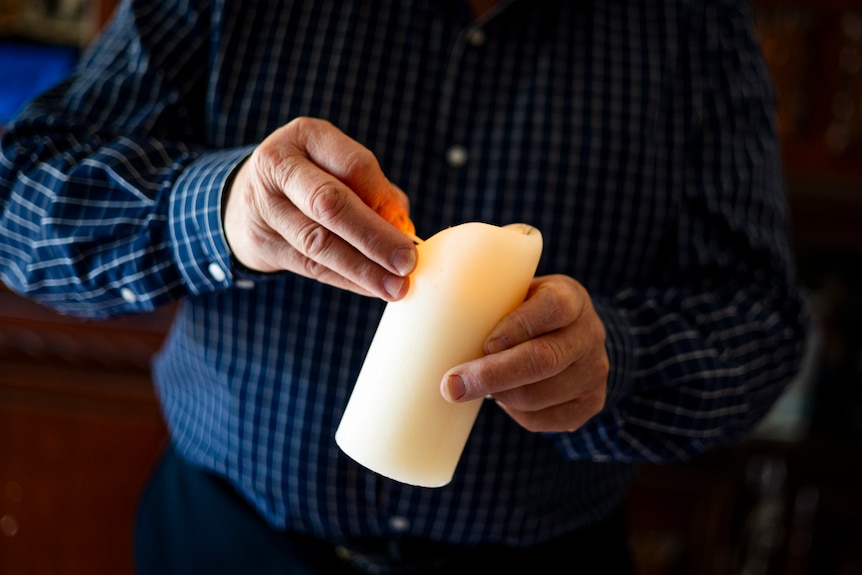 Atilla still struggles with feelings of anger over his brother’s death.(ABC News: Danielle Bonica)
The Aged Care Quality and Safety Commission has not audited Blakiston Lodge in more than three years. It has carried out no unannounced spot checks in that time.
Attila also lodged a complaint with the medical regulator, the Australian Health Practitioner Regulation Agency. He was told the GP who wrote his brother’s death certificate the previous day had done nothing wrong and no action was taken. The doctor did not respond to questions from the ABC.
For Attila, the experience has led to a bleak conclusion: that when an old person dies because of someone else’s mistake, it can be easily buried.
“They can be murdered in there and nobody would know,” he says.
“Nobody knows and nobody cares.”
Catch up on our latest Long ReadsCredits
Words: Anne Connolly
Photographs: Danielle Bonica
Illustrations: Kylie Silvester
Editing: Catherine Taylor