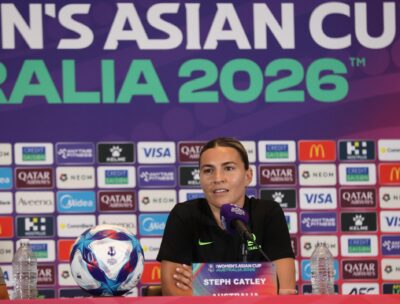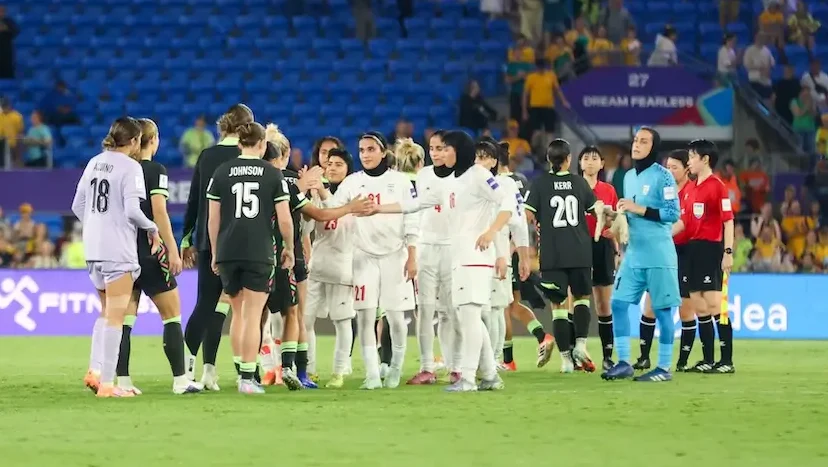
When Steph Catley was 21 years old, her Matildas teammates stood in front of a bundle of microphones and cameras on a Sydney street to announce the first ever strike by a women’s national sports team in Australia.
Just three months earlier, the team had made history by qualifying for the quarter-finals of the 2015 Women’s World Cup for the very first time. Upon their celebrated return, they were set to play two sold-out friendly matches against newly-crowned world champions, the USA, growing their profile, popularity, and pockets even more.
But when they arrived, everything ground to a halt. Their contracts with Football Federation Australia had run out, and the federation had stalled in their negotiations with the union. At that stage, the players were paid below minimum wage to represent the national team, with most having to work second jobs – some even on government benefits – to make ends meet. A vast difference from what was provided to the Socceroos.
With the USA series looming, the Matildas had no certainty or security around pay, minimum standards, health insurance, travel, or accommodation, and they were being asked to fly half-way around the world to play against a fully-professional world champion side.
So, they didn’t. For two months, the players refused to participate in any national team activity until the dispute was resolved. It was an incredibly courageous decision that could have ended their careers then and there, but they decided it was a sacrifice they were willing to make for future generations of Matildas.
Ten years on, that one act of solidarity and protest has had profound ripple-effects on the trajectory of the team. Reflecting the theme of this year’s International Women’s Day theme of “tipping the scales”, the Matildas today have shown what that can look like. They are one of the only nations in football that now has an equal revenue share with their men’s team, with some of the highest minimum standards and support for players anywhere in the game.
These changes have undoubtedly helped the team keep up with global competitiveness and, in turn, attract the tens of thousands of fans who are now flocking to see them contest the Women’s Asian Cup this month. The Matildas have since become a symbol of women’s empowerment, equality, and opportunity, not just in sport but in society broadly.
“I’ve been in this team a long, long time,” Catley said yesterday, on the eve of International Women’s Day.
“My career has gone along with the rise of women’s football, in a sense. When I first started playing, we were playing in front of family and friends and one or two people that were interested in what was going on.
“But now, we sell out stadiums, playing in front of 50-60,000 people regularly, and there’s genuine interest in what we’re doing.
“A lot of women in the Matildas came before us, but I think the group that’s here today – and that’s been around for a while – have really pushed boundaries, and we’re very proud of the work that we’ve put in to get to where we are today.
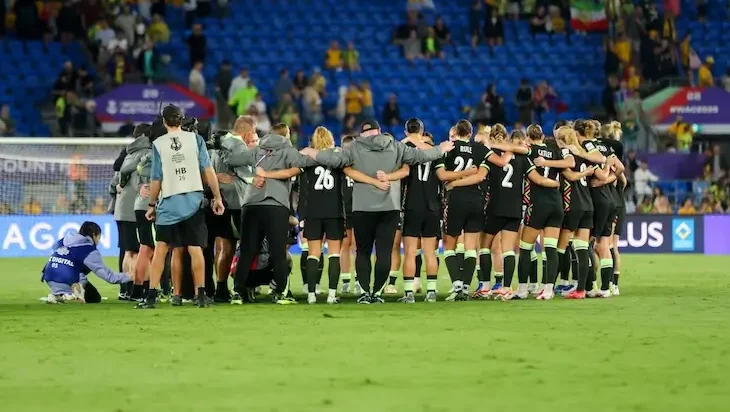 A united Matildas. Photo: Georgie Lewis / The Women’s Game
“It hasn’t been easy, and there’s lots of … room for growth still, but the fact that we are where we’re at right now is really incredible, and we’re definitely proud of it.”
The 2015 strike feels like ancient history for this team now, but the past ten years of their evolution – sparked by that one act of protest – has shown the kind of world that is possible when you stand up for what you believe in.
Unfortunately, though, the Matildas’ fairytale story is a rarity in our corner of the world, and this Asian Cup has highlighted just how glaringly real these same issues remain for the vast majority of women’s national teams in our confederation.
There are examples of these small and large acts of bravery throughout the tournament, from South Korea’s threat to go on strike to protest inadequate treatment and conditions from their federation to the boycott of Bangladesh’s senior players last year due to concerns about their head coach.
And then there’s Iran. Unlike the nations mentioned above, the players’ one sole act of empowerment has been to refuse to sing the anthem of the oppressive regime that has killed tens of thousands of its own citizens for simply expressing their right to protest; a protest in support of protest.
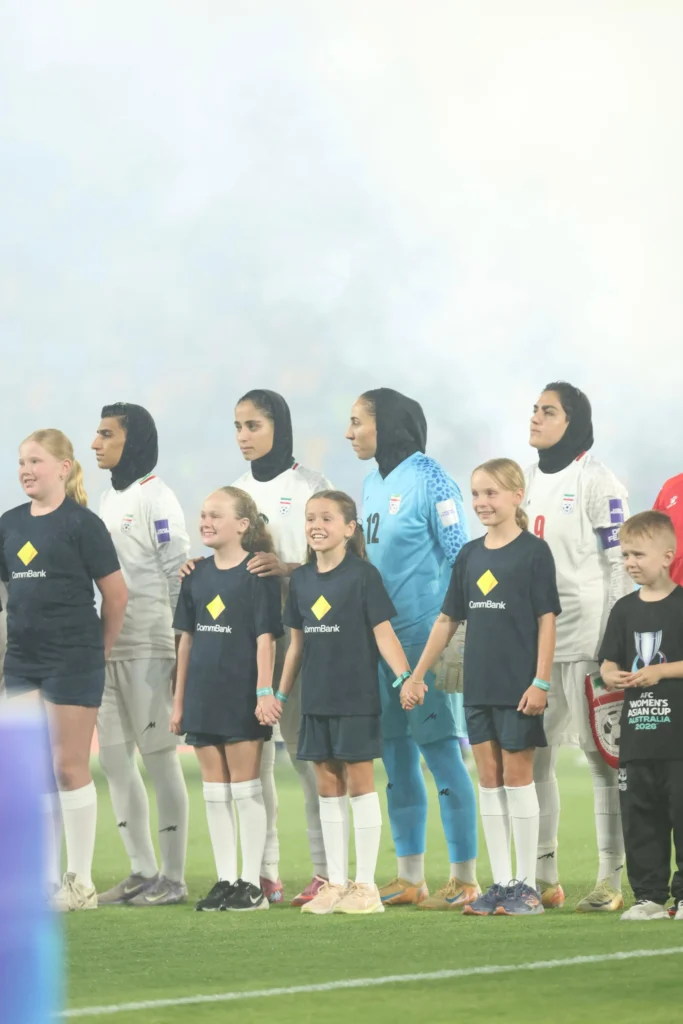 Iran’s players during the anthem. Photo: Georgie Lewis / The Women’s Game
Beyond those in the media spotlight, let us also not forget the players from nations like North Korea, Vietnam, China, India, Uzbekistan or the Philippines where freedoms of media, protest, religion, association, and personal identity are heavily restricted and punishable by the state.
Cutting across all of these nations, of course, is gender inequality, with the scales tipped heavily in favour of the patriarchal systems and cultures that have ignored, excluded, or even punished the extraordinary contribution of women and girls to the world.
What is football’s role in all of this? What responsibility does our sport – or, more specifically, those (mostly men) who run our sport – have in trying to address the many human rights issues that explode onto our pitches and screens in major tournaments like these? Can we hold out hope that better things are possible, that this sport really can be a lighthouse in the dark?
I have to believe it. Because today, on International Women’s Day, the teams who are playing across Australia – from the Matildas and South Korea to Iran and the Philippines – will spotlight players who have given more than most of us ever will to a world and a sport that they believe in.
They represent the spirit of a game that is flourishing despite spending a century in deliberate darkness, emerging quietly, decade by decade, team by team, player by player; a kind of intergenerational protest all on its own.
These women have sacrificed more than we will ever realise to try and push football forward, to create a better and safer game for those who will come after them. They have given up other lives, other careers, other paths to commit themselves to this one, this reality, these battles. Some of them may even give up their lives to stand up for what they think is right while playing the game they love.
This Asian Cup markets itself on concepts of empowerment, inclusion, freedom, and opportunity. The women we see out there today are the fullest and most inspiring embodiment of those principles, and all of football ought to watch them as they show us exactly what “dreaming fearless” really looks like.
“I think back on the World Cup, that tournament in itself showed the power of women’s football,” Catley said.
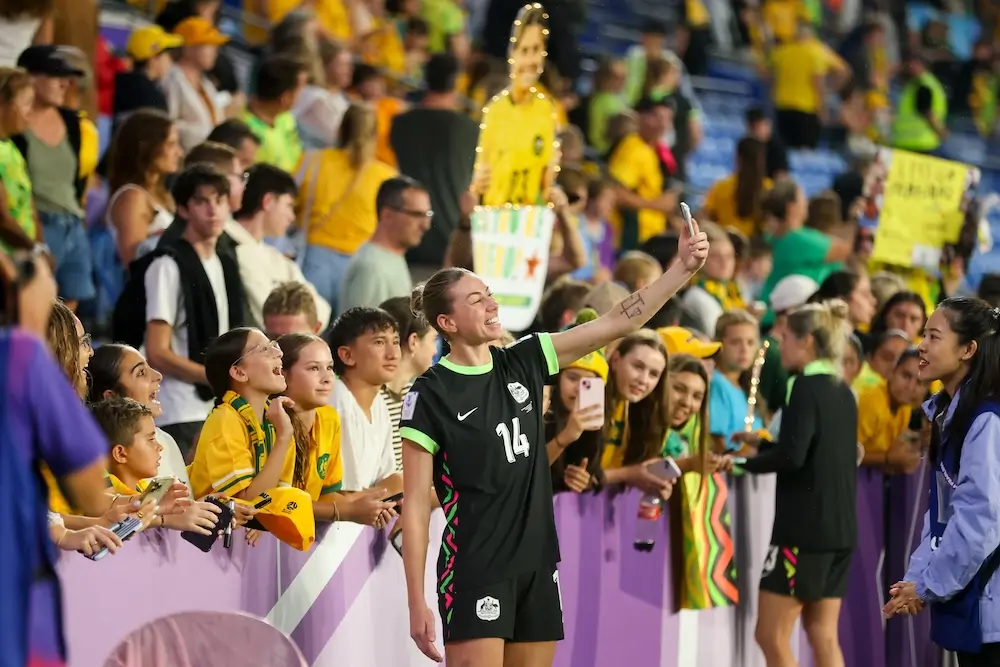 Alanna Kennedy is another player who has seen it all, now playing in front of packed houses. Photo: Georgie Lewis / The Women’s Game
“It brings so many people together and puts women on a platform that we’ve not always been on. It puts female leaders into rooms and gives them a voice, and shows young girls what’s possible.
“And I think it’s the same with this tournament. In the nations that don’t have the privileges that we have, we haven’t always had that either. It’s been a fight, it’s been a scrap at times, and it does drain you. You don’t want anyone to have to be going through that for just basic, simple rights as a footballer.
“We shouldn’t have to fight for those basic standards, but the reality is that there are still nations that are, and I think this platform just shows how incredible women’s football is, and hopefully that’s enough for these nations to take notice and give their teams what they need to go out and perform.”
When is Australia v Korea Republic?
Date: Sunday, 8 March 2026
Kick-off: 8.00pm ADST
Venue: Stadium Australia
TV Broadcast: Network 10, 10 and Paramount+
Your Next Read