
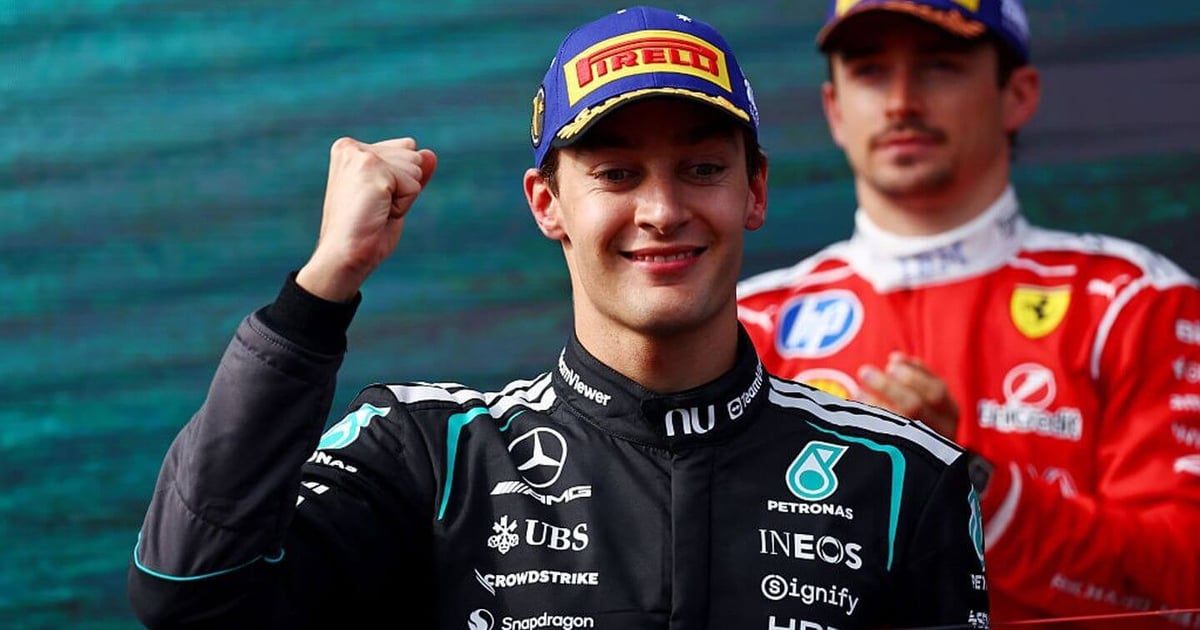
Given all the doom and gloom — much of it justified — about what these new-style F1 cars were like to drive in qualifying, the action in today’s race quickly made up for it.
Drivers feared overtaking could be difficult with the energy-starved nature of the new engine formula. Instead, we immediately got a series of back-and-forth moves for the lead, which swapped between Charles Leclerc and George Russell including twice in six corners at one stage.
The nature of the moves will naturally draw scrutiny. The battery power used to overtake and the subsequent challenge of regaining it, means the initial exchanges were no surprise.
But their frequency certainly did. Leclerc and Russell’s battle in particular seemed to highlight how raceable these new cars are, aided by the slightly smaller dimensions and their improved agility — as did the dicing between Ollie Bearman and Arvid Lindblad.
The idea put forward in preseason testing that F1 was now a game of ‘high-speed chess’ rang very true in the race. There are still definite fixes to be made to these cars, given how energy-starved they looked during qualifying — acknowledging this was always going to be one of the worst tracks — but as racing products go, F1 2026 made an encouraging start.