
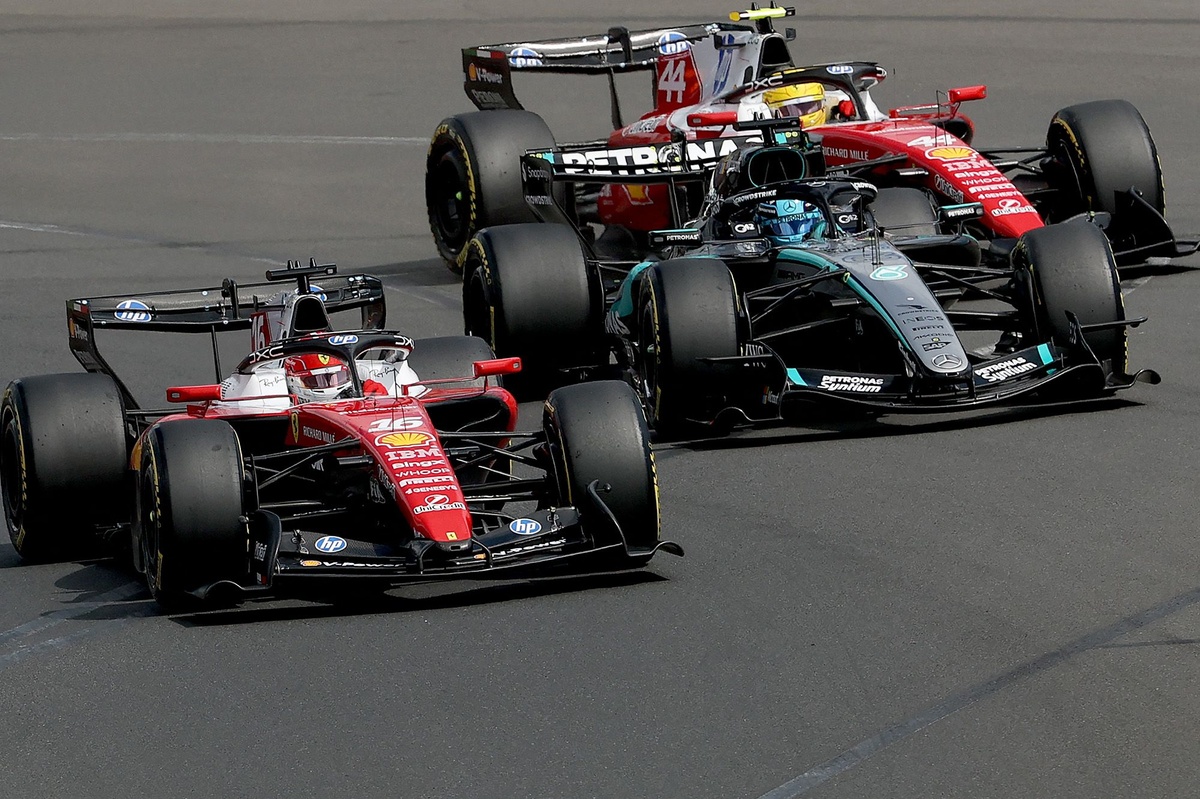
The run-up to 2026 has been exceptionally long, at least, it’s certainly felt that way. As early as 2023, the first utterances of discontent about the now-current cars were being aired, and it’s rather set the tone for everything to emerge afterwards.
Add to that the surprise ‘reveal’ of the regulations during 2024’s Montreal weekend, the subsequent bargaining from the teams to add more downforce, complaints about the deploy-and-harvest simulations, and the short off-season as F1 began again in January’s Barcelona test, and it’s no surprise that there’s already fatigue with the illusion of 2026’s racing product.
But now, the music has stopped. Australia’s season opener delivered a race that started off in thrilling fashion with a lap-to-lap battle for the lead, a strategic battle that knocked the dial either way, and then large patches of “normal F1 race” in the final 20 laps. All indications are that the 2026 machines are indeed challenging to drive, but it’s hard to have too much sympathy for the drivers who get paid millions of pounds to race them.
F1 needed a good race, such was the negativity around the new regulations – and the new visage to qualifying hadn’t exactly endeared 2026-spec F1 to those watching on TV. Did the clipping and coasting look incongruous to a qualifying lap? Yes, absolutely. Did it matter? No, not really.
Qualifying had been as expected a few months ago: Mercedes locked out the front row, with the other members of the Big Four largely sprinkled around the front of the pack – aside from Max Verstappen, whose Red Bull decided it would lock its rear axle in Q1 and carried the four-time champion on the express route into the wall. The Dutchman hurt his hand in the impact, although X-rays showed no there were no metacarpal breakages or fractures; he was good to go for Sunday. Isack Hadjar duly picked up the pieces and plonked his car third on the grid – fulfilling a role in his first outing for Red Bull that none of his predecessors had done for years.
Hadjar’s position on the grid had left Russell worried at the start. Mercedes had tried to alleviate the weight of its pre-season favourites mantle by unloading praise on Red Bull’s deployment capabilities, but this was more than mere gamesmanship; the potency of the Red Bull-Ford powertrain’s electric components had been singled out by the Brackley outfit as a threat. When Russell looked at his steering wheel at the start and realised he’d not accrued enough battery power for the run to Turn 1, he surmised that Hadjar might make a play for the lead.
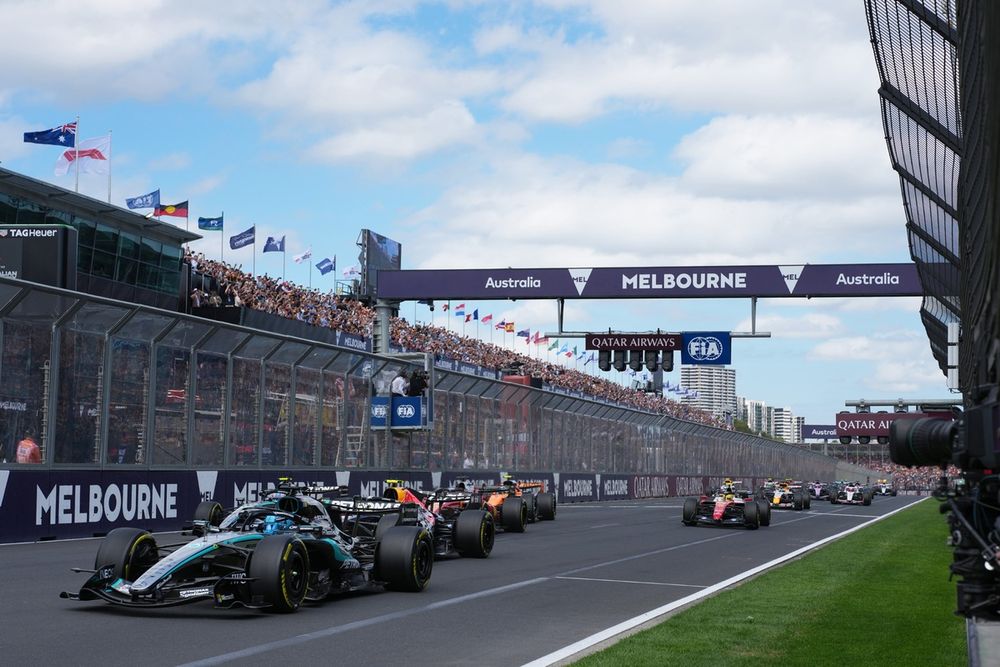
Russell’s concern about Hadjar at the start left him blind to the threat of Leclerc
Photo by: Jayce Illman / Getty Images
What he didn’t know was that Hadjar was struggling with a powertrain issue, one that hampered his deployment capabilities in the opening 10 laps and later one that accompanied a loss of hydraulic pressure. Instead, it was the fast-starting Charles Leclerc that presented the biggest challenge from fourth on the grid, after Hadjar’s early momentum petered out in the braking zone for the first corner.
Leclerc followed Hadjar past Antonelli, whose own glacial getaway was also accompanied by an empty battery symbol on his dashboard. Then, once Leclerc rounded Hadjar, he was in prime position to arc towards the inside line and slot in ahead of Russell. It was a rapid getaway, and one that Ferrari had threatened to make in the pre-season testing practice starts as its smaller turbo could get up to speed off the line and deliver the requisite torque needed to slingshot out of the blocks.
Lewis Hamilton also enjoyed a similarly effective start, albeit helped by the vacant grid spot in front of him; Oscar Piastri dumped his car into the wall at Turn 4 on the reconnaissance lap to the grid, a spike in torque caused him to fail to take to the start of his home grand prix. Cue mass disappointment from the legions of Piastri fans in attendance, all sporting the Aussie green-and-gold garb.
“We had this suspicion that it was going to be a bit of a yo-yo effect, and as soon as one of us got in front it just felt impossible to hold it” George Russell
Hamilton eventually shook out in third, but ran wide on the Turn 2 kerb which allowed Hadjar to trickle back past – and then left the seven-time champion vulnerable to a lovely outside-line overtake at Turn 3 from rookie Arvid Lindblad, who then snowballed that into a move on Hadjar. Either side of Turn 11, however, it was Hamilton who moved past the current and ex-Racing Bulls drivers. Russell was now in a less than enviable position, sandwiched by the two Ferraris and without Antonelli in the mix to serve as a disruptor.
But the newness of 2026’s formula contributed to exciting action in the opening laps. Leclerc and Russell began the race with differing deployment strategies, and it was always expected that there’d be an element of choosing whether to spend to defend, or simply rely on making the position back later on in the lap. Russell sunk some of his energy into an assault on the exit of Turn 10 on the second lap, duly overlapping Leclerc for the lead, but the Monegasque returned the favour on the following lap by cruising around the outside through Turn 9.
Russell admitted in the cooldown room that this was a point where he’d made a mistake, and hadn’t engaged his boost mode in attempting to make an immediate recovery. It was tete-a-tete and mano-a-mano; but Leclerc continued to defend from Russell’s attempts to pass. A lap 8 attempt from Russell into Turn 3 was batted away initially when Leclerc just kept off the brakes long enough to carry more speed into the tight right-hander, but the Mercedes lingered on the inside and reclaimed the lead. Leclerc then hit back, passing again at Turn 9. Russell returned with an attack at the start of the next lap, but locked a wheel on the approach to Turn 1; Leclerc thus held serve and won the first set.
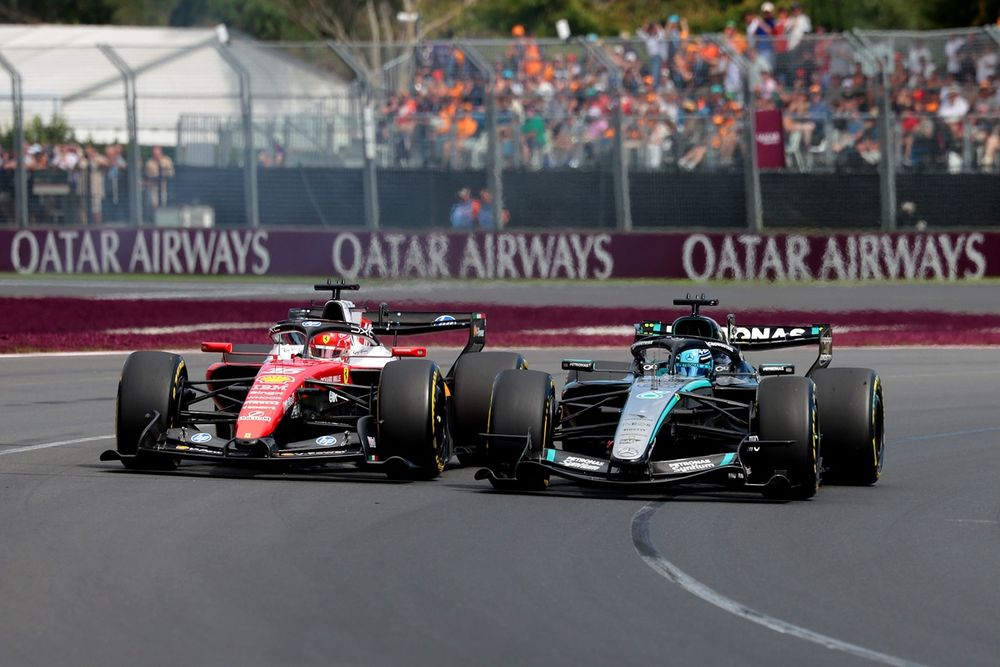
The duel between Russell and Leclerc created a thrilling opening 10 laps of F1’s new era
Photo by: Anni Graf – Formula 1 via Getty Images
“We had this suspicion that it was going to be a bit of a yo-yo effect, and as soon as one of us got in front it just felt impossible to hold it,” Russell recounted after the race, later adding: “I think on a circuit like this where you have four straights and you’ve got to split… Let’s say you’ve got 100% of battery, you’ve got to split that between four straights. No team is splitting that 25% per straight.
“Some teams are doing it more on one straight, some other teams are doing it more on the other, and if you use your overtake mode, your boost button, you will pass the driver in one straight and he will then pass back. So it was dicey for the two of us.”
Russell’s Turn 1 miscue let Hamilton join the party, and his ex-team-mate applied heavy pressure onto the Mercedes driver as Russell scrambled to recover. The lead battle had also helped Antonelli out once the Italian had cleared the likes of Hadjar, Lindblad, and Lando Norris – the reigning world champion at sea in the opening laps – and caught Hamilton to offer Russell some support up front. Yet, when Antonelli finally worked his way into the lead pack, Hadjar’s misbehaving power unit finally gave up the ghost on lap 11. The virtual safety car was called into play – one that arguably changed the fate of the race.
Until that point, Russell had been buzzing around Leclerc after his series of rebuffed overtakes, and had largely stabilised in second place. Since it was too late to pit at the end of the 11th tour, Mercedes elected to stop both for the hard tyres on the following lap to cede control of the race to Ferrari. It was an all-in play from Mercedes, even risking the double-stack to make use of the cheap pitstop.
Ferrari did not follow suit; it might have had a brief opportunity to do so at the end of lap 13 if it wanted to react, but the Italian squad figured that Mercedes might need to two-stop to make it to the end. Tyre graining had been a concern in the prelude to the race and, if Mercedes needed to two-stop, Ferrari had track position and could theoretically shake out ahead.
Yet, Mercedes maintained course for a one-stop. The C3 hards held on well and, despite patches of grained rubber lining the inside of Russell’s front tyres, he was able to cope with this and the graining eventually faded. Ferrari did not blink during a second VSC either when Valtteri Bottas‘ Cadillac came to a halt at the pitlane entry, although Leclerc was no longer far enough ahead to come out ahead of Russell at this stage.
Instead, Leclerc stopped on the 25th lap and rejoined behind the two Mercedes drivers; the hopes were still abound at Ferrari that Mercedes needed to stop again. Should a safety car have emerged between laps 13 and 25, Ferrari still had a window to come out ahead – but in this instance, the passive gameplay didn’t work out. Leclerc was locked into third place, and the gap to the Mercedes pair remained static.
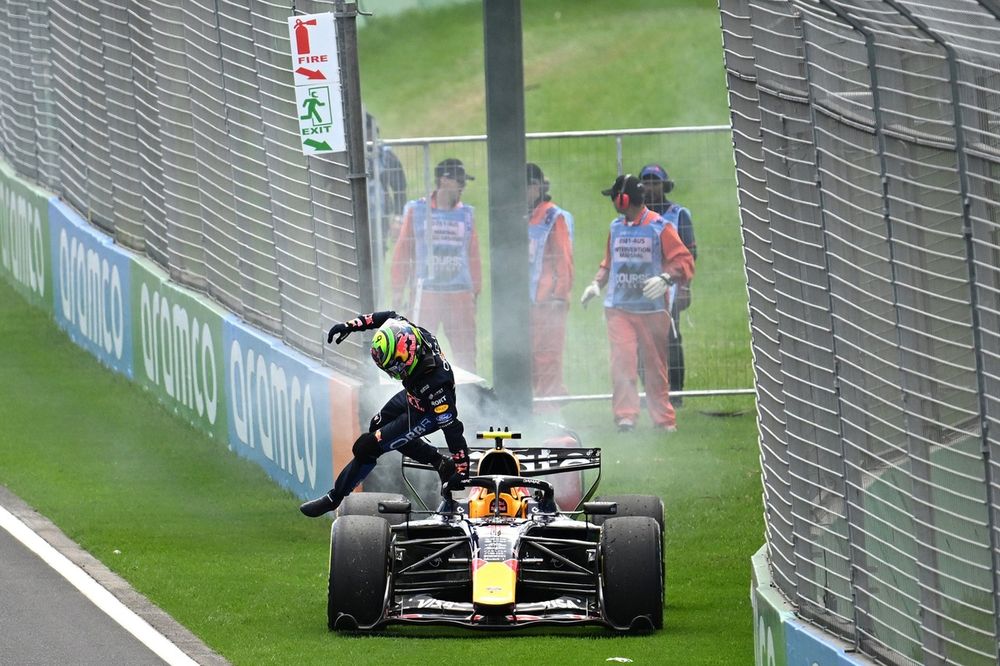
Hadjar’s dying Red Bull produced the sliding-doors VSC moment
Photo by: Sam Bagnall / Sutton Images via Getty Images
Ferrari was united in its assessment that third and fourth was the best that it could muster in Australia – but did it underplay its hand?
Before the VSC, Russell was almost exactly one second behind Leclerc; after his stop and the rescinding of the VSC, the gap was 12 seconds – so, an 11-second delta through pitting under the slower conditions.
Let’s compare that to Leclerc’s stop later on: when the Monegasque pitted under green flag conditions at the end of lap 25, he was 4.6s clear of Russell, and 16 seconds behind after the stop – let’s round up and call that 21 seconds. When you consider the pitstop alone, Russell saved himself 10 seconds in pitting under the virtual safety car, albeit with the penalty of having to corral his hard tyres into doing 46 laps. If you add in the gains that Russell made on fresh tyres, totalling about seven seconds as he lapped consistently in the high 1m22s, compared to Leclerc’s mid-1m23s, he made up 18 seconds as a result of stopping earlier than Leclerc.
Ultimately, Leclerc finished 15s down on Russell – and this was a gap that had remained pretty much consistent following the Ferrari driver’s stop. Here are the lap times between both drivers from lap 27 to 58.
Lap
Russell
Leclerc
Diff.
27
1m23.188s
1m23.106s
0.082s
28
1m23.390s
1m23.089s
0.301s
29
1m23.486s
1m22.987s
0.499s
30
1m23.272s
1m23.026s
0.246s
31
1m23.147s
1m22.934s
0.213s
32
1m23.540s
1m22.947s
0.593s
33
1m23.838s
1m23.174s
0.664s
34
1m37.592s
1m38.516s
-0.924s
35
1m23.017s
1m23.542s
-0.525s
36
1m22.729s
1m24.376s
-1.647s
37
1m22.839s
1m23.236s
-0.397s
38
1m22.863s
1m22.579s
0.284s
39
1m22.738s
1m22.728s
0.010s
40
1m22.915s
1m22.930s
-0.015s
41
1m23.073s
1m22.995s
0.078s
42
1m23.054s
1m22.846s
0.208s
43
1m22.893s
1m22.750s
0.143s
44
1m22.856s
1m23.094s
-0.238s
45
1m23.477s
1m23.160s
0.317s
46
1m23.751s
1m22.894s
0.857s
47
1m23.033s
1m22.952s
0.081s
48
1m23.034s
1m22.899s
0.135s
49
1m22.844s
1m23.364s
-0.520s
50
1m23.087s
1m23.200s
-0.113s
51
1m22.762s
1m22.989s
-0.227s
52
1m23.106s
1m23.049s
0.057s
53
1m23.069s
1m23.014s
0.055s
54
1m23.100s
1m23.045s
0.055s
55
1m22.670s
1m22.825s
-0.155s
56
1m22.757s
1m22.965s
-0.208s
57
1m23.188s
1m23.098s
0.090s
58
1m23.351s
1m23.317s
0.034s
What’s amazing is that their pace was so similar that, when you add the laps of that part of the grand prix together, Leclerc was faster by an infinitesimally small 0.033s – not across one lap, but across an entire 32 laps. That’s a tiny qualifying margin, let alone across a full stint.
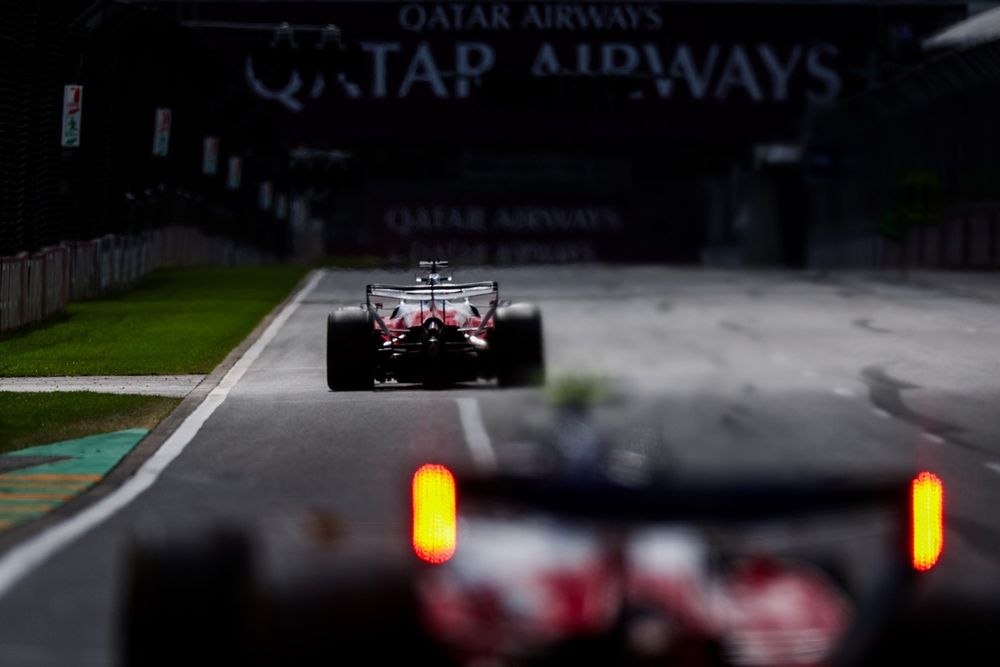
Leclerc had nobody but Hamilton for company late on – but could Ferrari have taken on Mercedes?
Photo by: Peter Fox / Getty Images
There’s some offset to consider here; Russell might have been a touch slower in that part of the race as he stared at his grained front tyres, but the seven seconds gained by stopping early for the hards can be partially attributed to Leclerc persisting with the mediums for another 13 laps. Assuming Leclerc pits at the same time under the VSC as Russell, this effectively wipes out that 18-second gain and theoretically puts the two drivers on equal footing for that final stint.
And, as Russell’s stint shows, the degradation was minimal once graining cleared up. He was just as able to reach the 1m22s in the final phases of the race as he had been 30 laps before; fuel loads burning off effectively cancelled out any degradation time loss.
Looking at this, one might surmise that Ferrari made a strategy error worthy of the reputation that precedes it. The question that remains open is that, if Leclerc had done another 13 laps on hards, would he have been able to maintain the same level of pace that he’d done from lap 27 and beyond: the answer could theoretically swing either way.
“I think at this stage of the race, nobody was expecting to do one stop. We targeted the optimum for us, and the optimum was to extend,” Ferrari boss Fred Vasseur stated. “The issue is not the strategy call, but just the pure pace.
“I think the pace of Mercedes was better than us. Even when they pitted they were three, four tenths faster than us. They kept this pace all the stint. Perhaps we were able to fight a little bit more at the beginning but perhaps pushing a bit more on the tyres.”
Vasseur might be right over the course of an equivalent length stint, of course, but there’s every chance that the Ferrari SF-26 could manage the hard tyres as well as the Mercedes pair. Hamilton, who rued at the time that Ferrari should have at least split its strategy, was probably right to consider this; even if Ferrari might have still finished third with Leclerc, there’s a case to make here that second place was on the table.
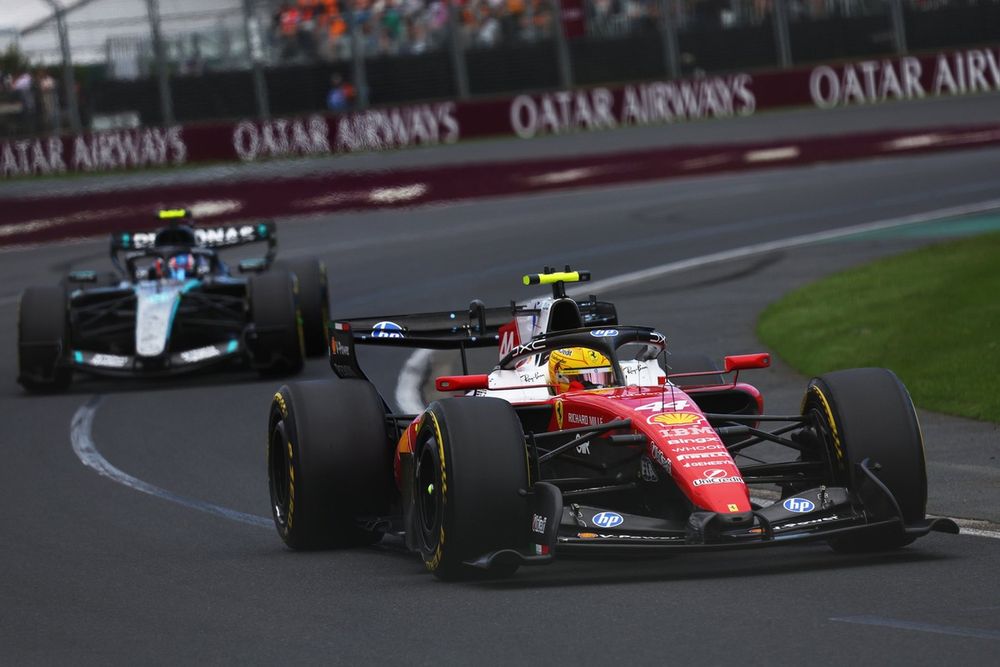
After a slow start, Antonelli swashbuckled his way back up to second
Photo by: Andy Hone/ LAT Images via Getty Images
There’s no doubt that, barring any misfortune, Leclerc would have held the lead over Russell had he pitted under the VSC. He might not have stayed there but, with Antonelli six seconds behind Russell after clearing the yet-to-stop Lindblad, Leclerc might have just been able to hang on.
Regardless, Ferrari’s calls at least made Mercedes’ day a little bit easier. It had been expected that the Silver Arrows would turn up in Melbourne in swaggering form, even if the team had attempted to keep expectations muted through the pre-season tests. And, although the qualifying margin looked huge, Ferrari didn’t get its final Q3 runs right. If Melbourne is any harbinger of form, and it usually isn’t, the season should be a lot closer between the two manufacturer entities.
And if that’s the case, Ferrari must be sure that it doesn’t end up ruing its decisions in Australia; it was arguably a 50-50 call, and those are the times you need to split to get the best of both worlds.
Read Also:
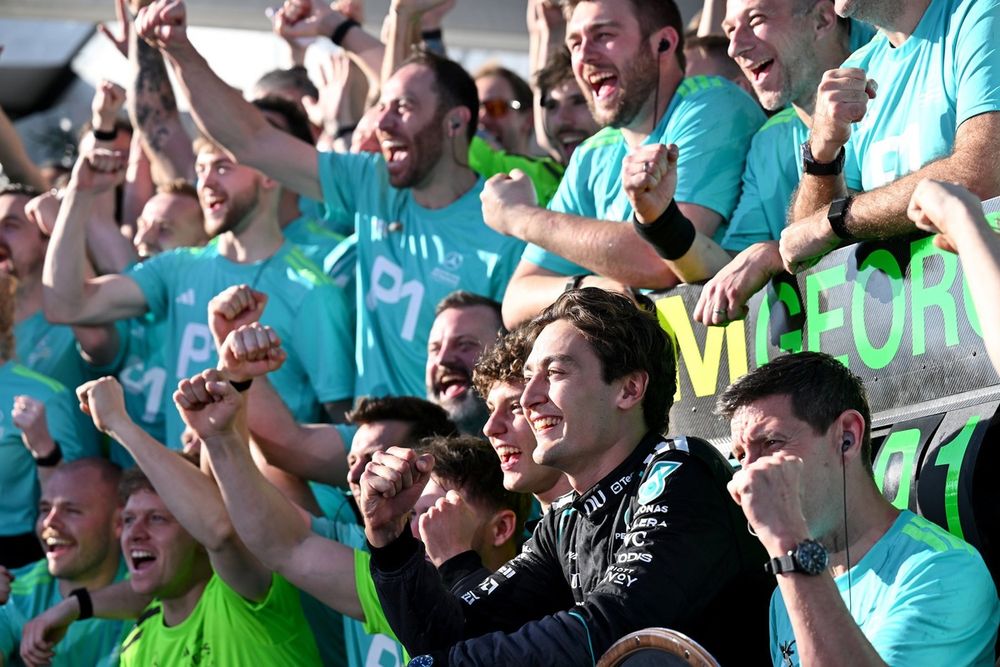
Mercedes had been the favourites in pre-season – and that tag won’t drop off any time soon
Photo by: Sam Bagnall / Sutton Images via Getty Images
We want to hear from you!
Let us know what you would like to see from us in the future.
– The Autosport.com Team