
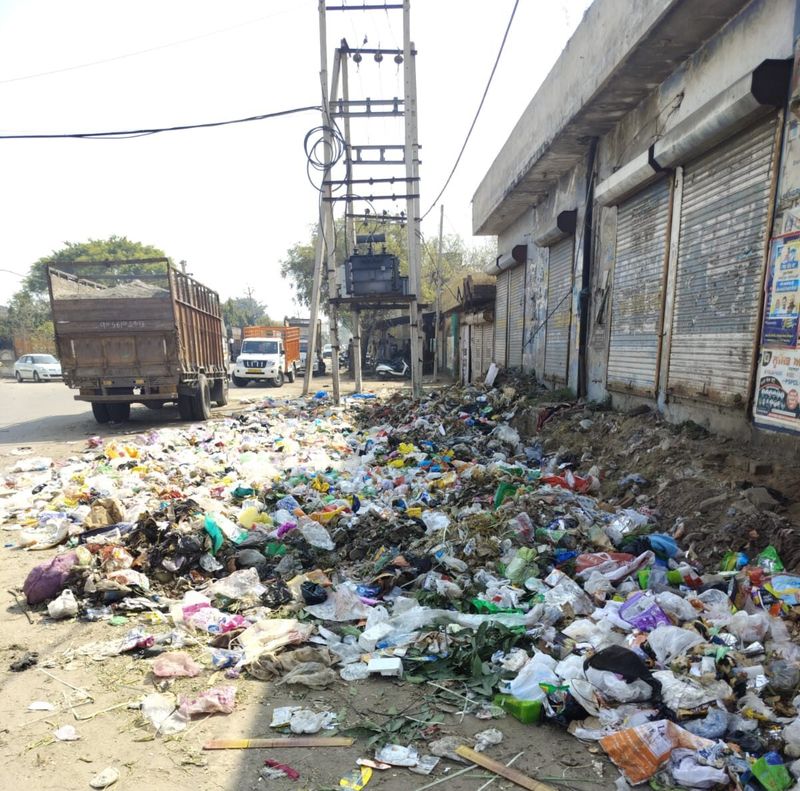
Already struggling with door-to-door collection, waste segregation and landfill management, Punjab faces an even steeper challenge as stricter Municipal Solid Waste (MSW) Rules come into effect from April 1, 2026.
Despite the 2016 Municipal Solid Waste (MSW) Rules being in force for a decade, Punjab’s urban landscape remains a testament to systemic failure. As the Union government prepares to roll out even more stringent MSW Rules effective April 1, 2026, the state’s 166 Urban Local Bodies (ULBs) find themselves buried under legacy waste, staggering legal penalties, and a profound lack of administrative will.
The rules mandate mapping and assessment of all legacy waste dumpsites and provide for time-bound biomining and bioremediation, with quarterly progress reporting through an online portal.
The revised rules integrate principles of Circular Economy and Extended Producer Responsibility, with a specific focus on efficient waste segregation and management.
The rules also provide for the levy of environmental compensation based on the ‘Polluter Pays’ principle for non-compliance, including operating without registration, submitting false reports, forged documentation or improper solid waste management practices. The Central Pollution Control Board (CPCB) will frame guidelines, while State Pollution Control Boards and Pollution Control Committees will impose penalties.
A senior government functionary admitted that implement would be “a tough task”, noting that successive governments made negligible efforts toward scientific clearing of waste sites and garbage dumping.
The mirage of 100 per cent collection
The 2016 mandate required ULBs to establish door-to-door collection, waste segregation and sanitary landfills within five years. Ten years later, the reality is starkly different.
While District Environment Plans for Sangrur, Malerkotla, and Patiala boast of 100 per cent door-to-door collection, mixed waste and 20-metre long trash heaps continue to line the roads.
In a recent National Green Tribunal (NGT) proceeding, the Sangrur Municipal Council claimed that waste sites had been cleared. However, applicants alleged that waste was merely moved temporarily before hearings. Consequently, the Tribunal has directed the Council to submit a time-bound action plan for legacy waste treatment within four weeks.
Taxpayers footing the bill for failure
Advocate Kamal Anand, who is spearheading the matter at the NGT, said the Punjab Pollution Control Board (PPCB) has imposed Rs 171 crore in environmental compensation on ULBs since 2021.
“The irony is that these penalties, based on the ‘Polluter Pays’ principle, are ultimately funded by victims, the taxpayers who already pay different taxes to ULBs and cow cess for services they never receive to the satisfactory. The state government should hold officers responsible till then nothing will change,” Anand told The Tribune.
Key provisions of SWM Rules, 2026Four-stream segregation: Mandatory separation into green (wet), blue (dry), red (sanitary), and black (hazardous) bins.
• Digital Tracking: A CPCB portal to monitor waste from generation to final disposal.
• Biomining deadline: All legacy sites to be remediated by October 2026.
• Industrial RDF use: Forcing industries to use refuse-derived fuel, manage plastic waste, set recycling targets, and ensure end-of-life disposal.
Despite these provisions, plastic litter and food packaging wraps continue to dot tourist places and cities across the state.