
 Save
Save
You have reached your maximum number of saved items.
Remove items from your saved list to add more.
Save this article for later
Add articles to your saved list and come back to them anytime.
Got it
AAA
A surge in petrol prices that will hit motorists this week could drive inflation to three-year highs and force the Reserve Bank into choosing between protecting a weakened economy or lifting interest rates to stop runaway prices.
Oil prices are climbing at their fastest rate in four decades, reaching $US91 a barrel at the weekend. Some analysts fear they could push through $US100 barrel in coming days due to the virtual collapse of oil and liquefied gas trade through the Strait of Hormuz.
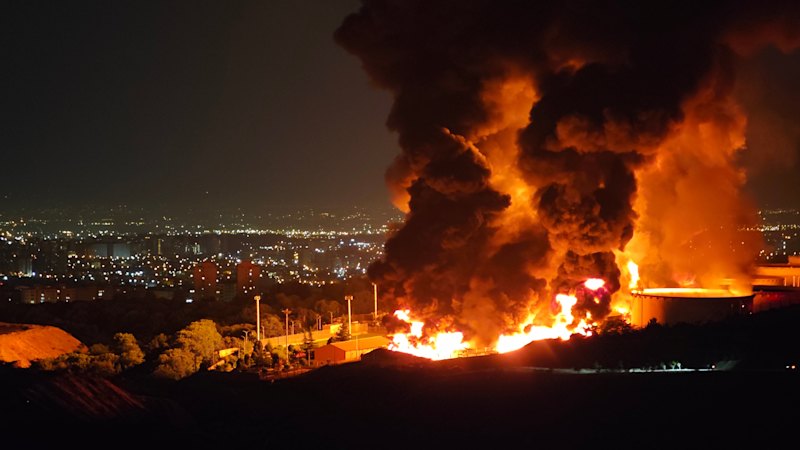
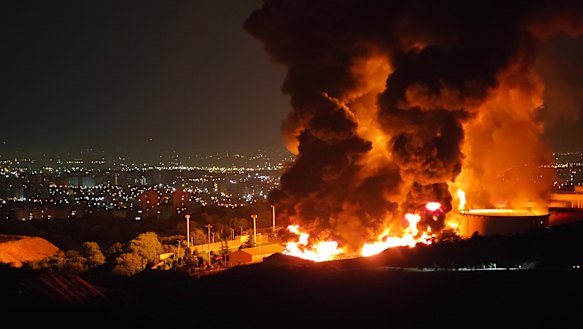 Fire and smoke rise into the sky after an Israeli attack on the Shahran oil depot in Tehran on Sunday. Oil prices across the globe are expected to climb even further if the war drags on.Getty Images
Bowser prices spiked in parts of the country last week but some of the increase was due to the timing of the Sydney and Melbourne petrol price cycles. In Sydney, unleaded was selling at the weekend at more than $2.09 a litre and Melbourne it is about 10¢ a litre cheaper.
But AMP chief economist Shane Oliver on Sunday said with the further increase in global oil prices, motorists should prepare for more near-term pain.
Related Article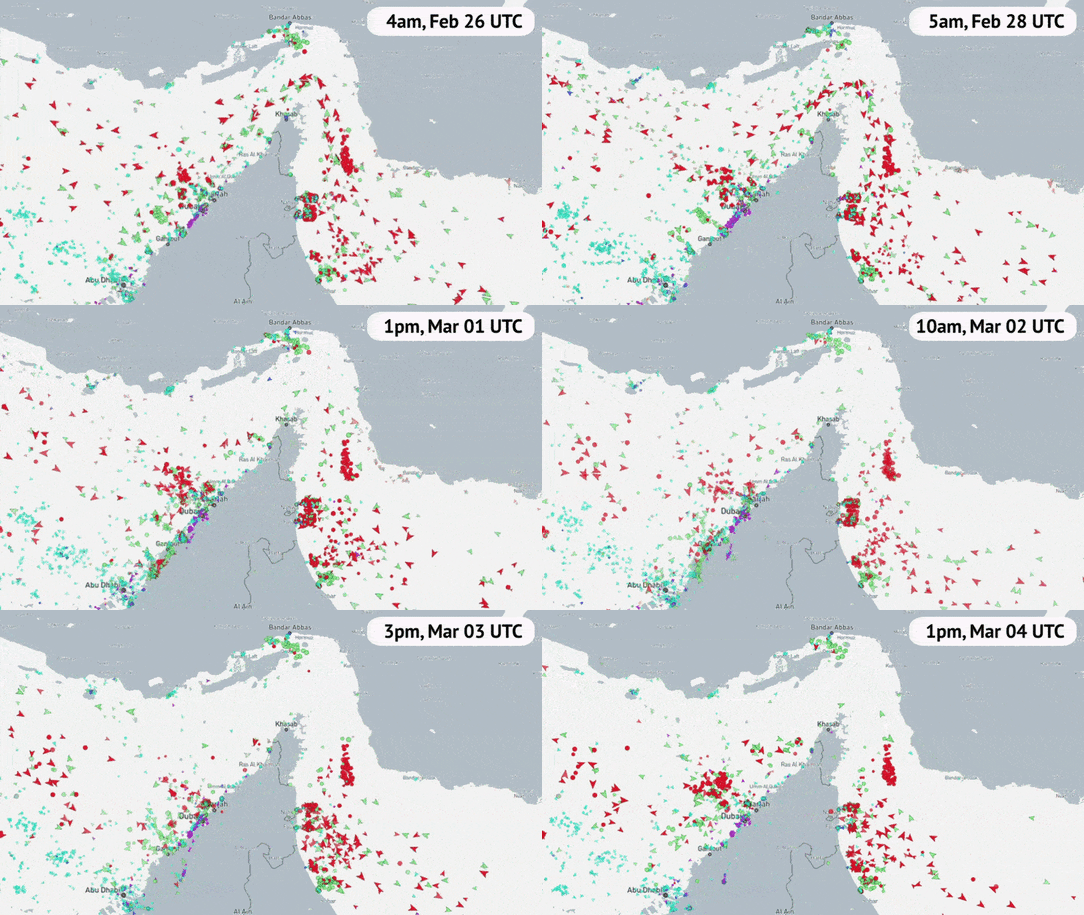
He said for every dollar increase in crude oil prices, bowser prices lifted by a cent. Ahead of the war, crude had reached $US67. It is now at $US91, and probably on its way to the $US100 mark, so the price of petrol was likely to increase by at least another 10¢ a litre.
For an ordinary household, the change in oil prices since the start of the war will cost at least $14 a week or more than $700 through the year.
“That’s not nothing. It means that people are likely to look for ways to save money elsewhere, cutting spending, so they can afford petrol for the car,” he said.
Oliver said it could also push up the inflation rate.
The Reserve Bank earlier this year forecast inflation would reach 4.2 per cent by June due largely to the ending of state and federal government electricity subsidies. It assumed the oil price would average $US63.80 a barrel.
But with the oil price already 40 per cent above that, inflation was likely to push higher to about 4.6 per cent. That would be the highest rate since late 2023.
The Reserve Bank’s monetary policy committee meets next week. While Oliver does not expect the bank to lift interest rates immediately, he said it would be worried that households and businesses would come to expect higher inflation.
“That’s why it’s worried about inflation expectations, that households could get used to higher inflation, which would mean pressure to lift wages while businesses might think they can push up margins,” he said.
In its February outlook on the economy, the Reserve said an increase in tensions across the Middle East could lift inflation, which could slow economic activity.
Betashares chief economist David Bassanese said the sharp lift in oil prices was a third stagflationary risk to the US economy on top of the Trump administration’s tariffs and its immigration crackdown.
US jobs figures released on Friday night showed a surprise 92,000 fall across America. Since Donald Trump’s “liberation day” tariff announcement in April last year, the US has shed more than 100,000 jobs.
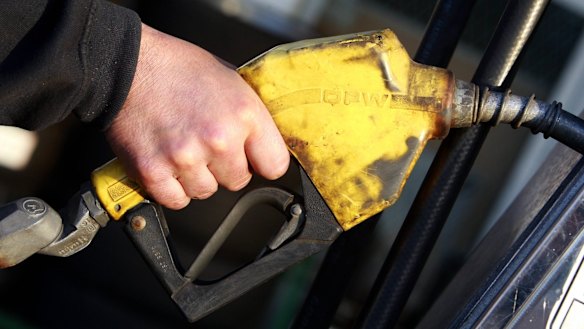 Bowser prices are expected to lift this week as the fallout from the war against Iran grows.James Davies
Bassanese said this was not only a problem for the US Federal Reserve, but that a slowdown in America with higher inflation was also a concern for the Reserve Bank.
“The RBA faces its own dilemma. New downside risks to the US economy must also be something the RBA will need to consider when next deciding on rates later this month,” he said.
“Yet at the same time, a prolonged rise in petrol prices will add to the risk of inflation staying uncomfortably higher for longer, potentially feeding into wage and price inflation expectations.”
Related Article
Another concern is food prices as farmers struggle to get access to fertiliser for autumn planting.
Nationals leader David Littleproud said there were already signs that farmers in his electorate in southern Queensland were struggling to get fuel. Some had reported that large deliveries to their properties had come to a halt.
He said it appeared the wholesale fuel market was not working properly.
“It’s important the government has a mechanism here to unlock that supply that’s sitting there,” he told Nine News.
“We have supplies, I’m told they’re sitting there, but they just simply will not be released to the independents, and that is going to be big trouble for this country if we don’t have food security.”
Start the day with a summary of the day’s most important and interesting stories, analysis and insights. Sign up for our Morning Edition newsletter.
Save
You have reached your maximum number of saved items.
Remove items from your saved list to add more.
 Shane Wright is a senior economics correspondent for The Age and The Sydney Morning Herald.Connect via X or email.From our partners