
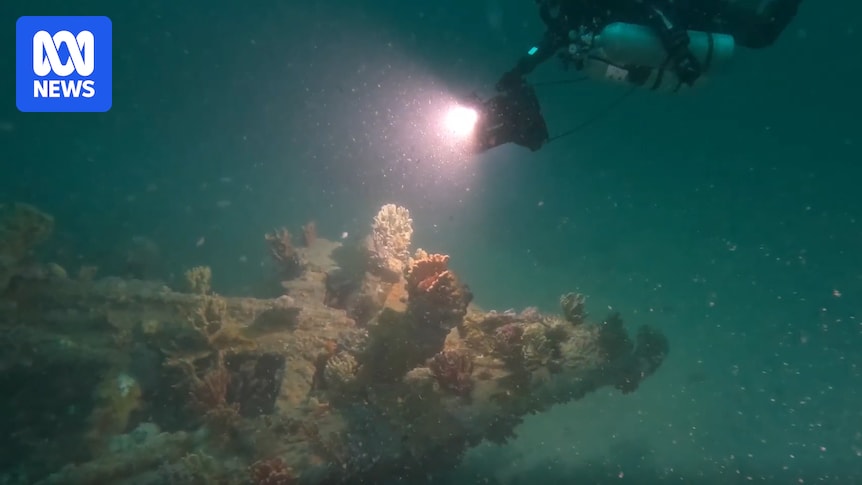
On July 21, 1877, an iron steamer left the New South Wales port city of Newcastle carrying 615 tonnes of coal, bound for Melbourne.
It never arrived.
Three days later, on July 24, the ship named City of Hobart, sustained damage off Victoria’s far-eastern Gippsland coast and began taking on water.
The crew was forced to deploy their lifeboats and abandon the ship.
The City of Hobart eventually sank, but as its location was never confirmed, where the wreckage came to rest on the ocean floor remained a mystery for almost 150 years.
There have been rumoured sightings of the wreck over the years, but none were officially confirmed.
Mark Ryan, a diver and team leader for the Southern Ocean Exploration group, said divers had been searching for the shipwreck since 2008.
“We spent about two or three years on the water, searching where our researcher thought it might be,” he said.
“Unfortunately, we didn’t find it and, as it turns out, we were 47 metres away.
“If we had done one more run we would have found it [then].”An unexpected discovery
Almost 20 years later, the crew has realised its dream.
But perhaps not in the way it initially intended.
The first officially documented sighting of the wreck was made during a survey by Iberdrola Australia, a renewable energy company that is developing plans for an offshore wind farm in the region.
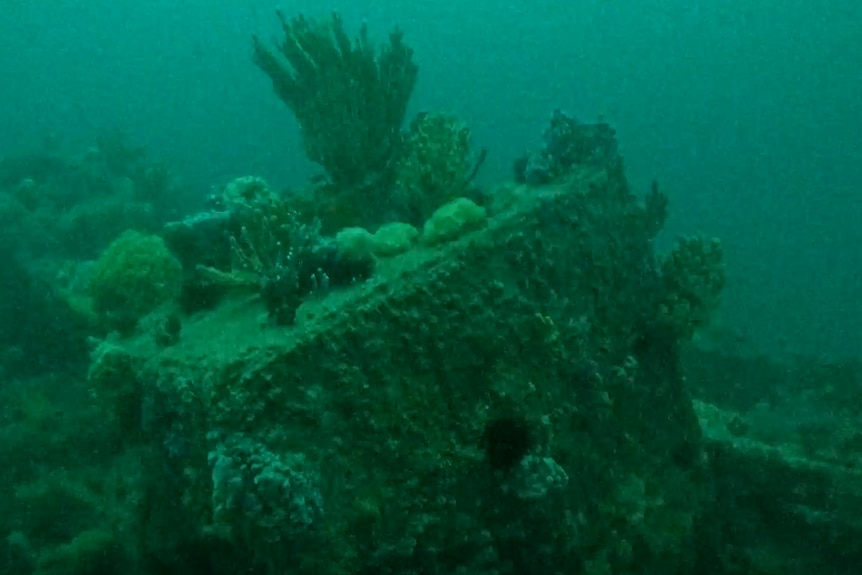
Divers have been searching for the City of Hobart wreckage for decades. (Supplied: Southern Ocean Explorers)
Using the survey data, technical crews from Southern Ocean Exploration recommenced their search in February this year and located the wreckage.
“It was quite an overcast day, so we had to get quite close to it before we could see it, but as we were descending down onto it, and the shape of the ship started to become visible … immediately I could tell that it was the City of Hobart,” Mr Ryan said.
“To dive a shipwreck for the first time is amazing, to be the very first divers on the wreck is absolutely mind-blowing.”A piece of history
The City of Hobart was a 645-tonne iron steamer built expressly for the Tasmanian trade route, in Glasgow, Scotland, in 1853.
For several years, the ship travelled between Victoria and Tasmania.
It also ran excursions around the Tasmanian coast, and was used internationally, servicing New Zealand, as well as running a mail service between Melbourne, Dunedin and Otago in 1862.
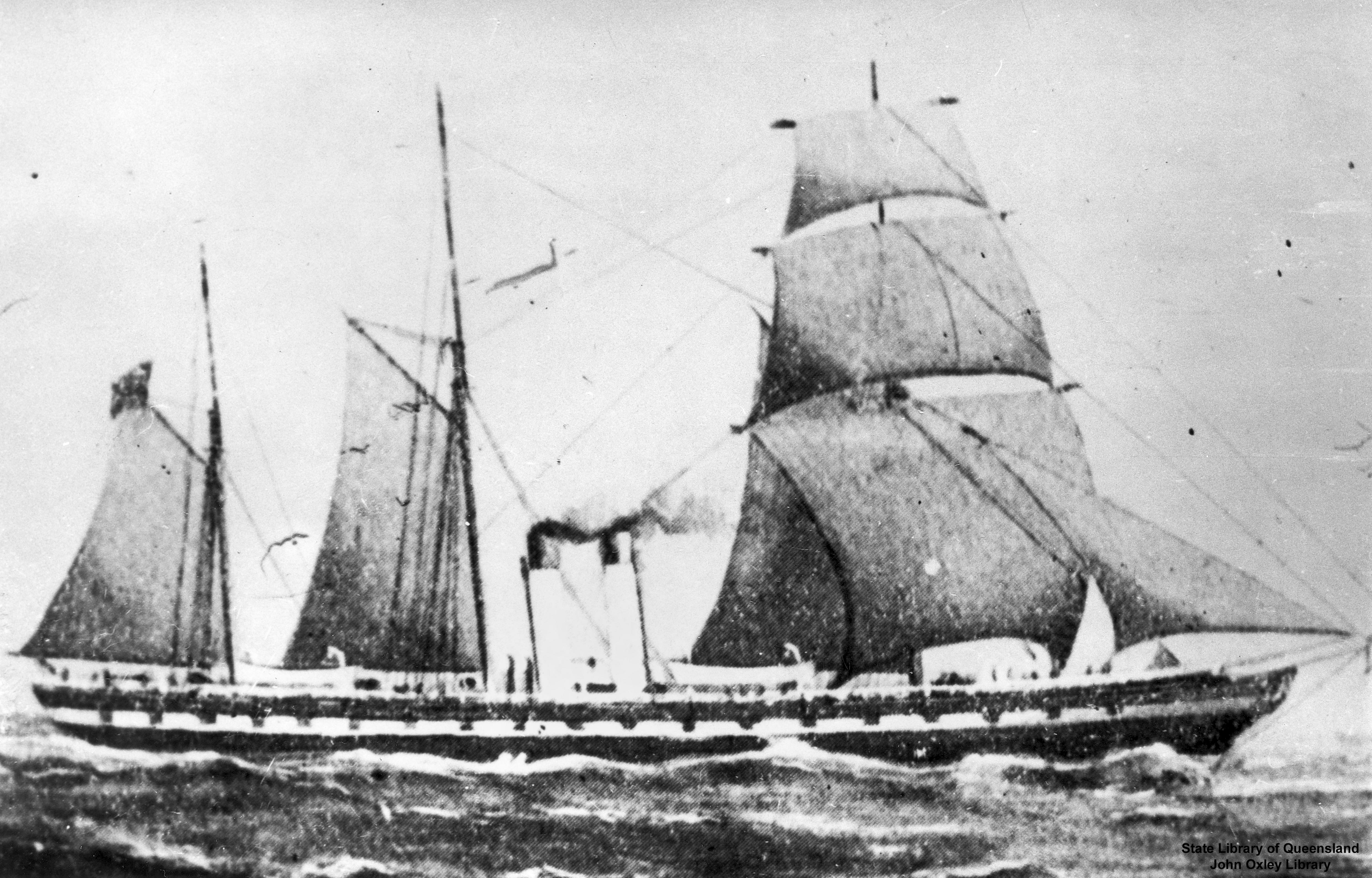
The City of Hobart was built in Scotland in the 1850s. (Supplied: John Oxley Library, State Library of Queensland)
Mr Ryan said the ship’s design was of historical importance.
“It was built in the 1850s, and it was the transition from timber sailing ships to iron steamships, and that’s why it was designed actually as a sailing ship, but built as a steamship,” he said.
“So it’s in that crossover period that makes it so significant.”
He said the ship’s rudder was also unique at the time.
“It had what’s referred to as a ‘Beattie Propeller’ and Beattie was a guy that designed the propeller to be at the back of the rudder,” Mr Ryan said.
“For most ships, the rudder is at the back of the propeller, and the propeller pushes the water over the rudder. But in this particular case, the propeller was at the back of the rudder, so it’s very significant.”
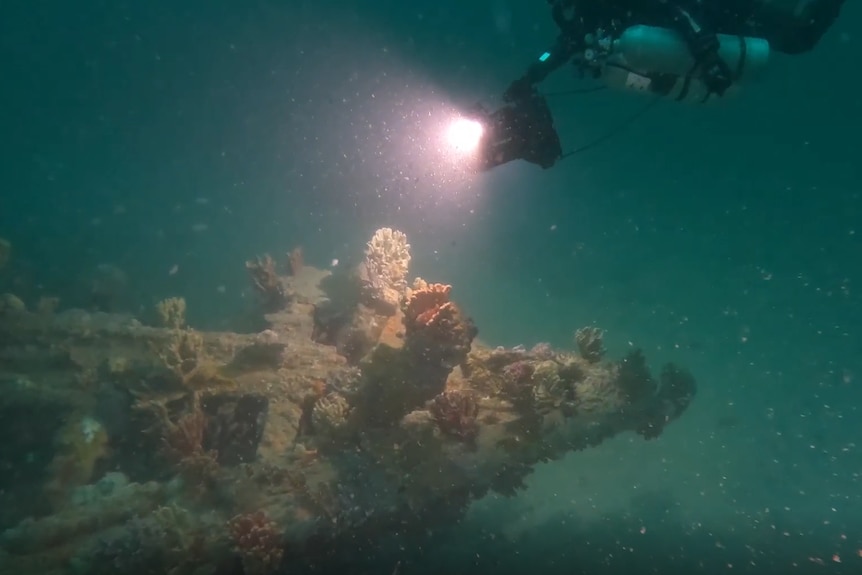
Divers uncover the wreckage of the City of Hobart steamliner. (Supplied: Southern Ocean Explorers)
Solving 150-year-old mystery
Geophysical surveys in early 2025 detected two shipwrecks in the proposed site. Iberdrola contacted authorities to help identify the wrecks.
Information provided to the authorities helped the technical divers confirm that one of the shipwrecks was the City of Hobart.
The other shipwreck has been confirmed as the previously identified SS Vicky.
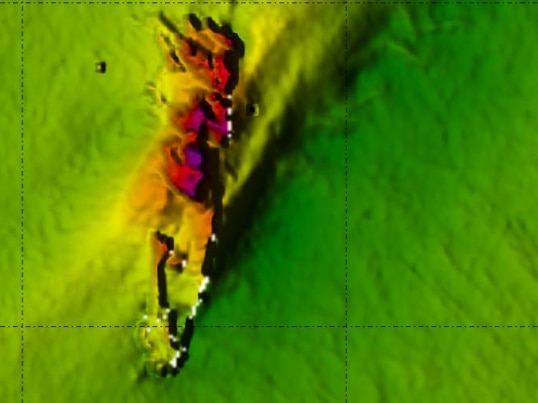
A survey image of the seabed, showing the wreckage of the City of Hobart. (Supplied: Iberdrola Australia)
Iberdrola Australia stakeholder engagement manager, Renee Kurowski, said it was a powerful moment for the company.
“We had already done some desktop research as part of the planning and looked at the database, which showed there were several shipwrecks in the area,” Ms Kurowski said.
“But to be able to find ones that had not formally been identified, that was the surprising part.
“For us to be able to solve that maritime mystery was really exciting.”Preserving the past
While the divers expect there will be plenty of interest in the site, the wreck is protected under federal law.
“No-one is allowed to remove anything from it, which we think is good because we want it left ‘in situ’ as it is,” Mr Ryan said.
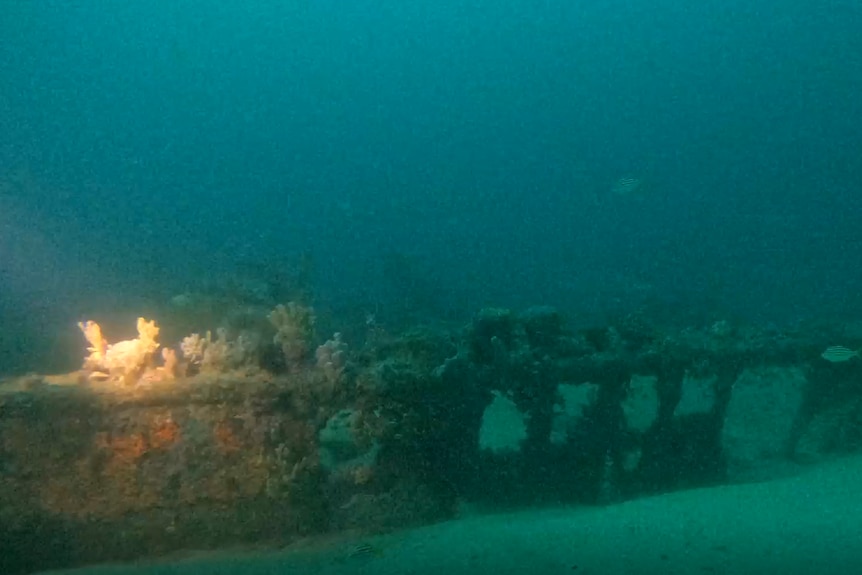
Divers hope to return to the wreck to obtain more imagery. (Supplied: Southern Ocean Explorers)
The crew plans to send another team to the site to film more video, and hopes to build a 3D model online.
Ms Kurowski said Iberdrola was committed to preserving the site.
“I think it’s ironic that the City of Hobart sank while carrying coal from Newcastle to Melbourne, before Gippsland’s own coal industry was established,” she said.
“Now Iberdrola Australia is developing the Aurora Green offshore wind project as the region shifts away from coal generation towards new clean energy.”