
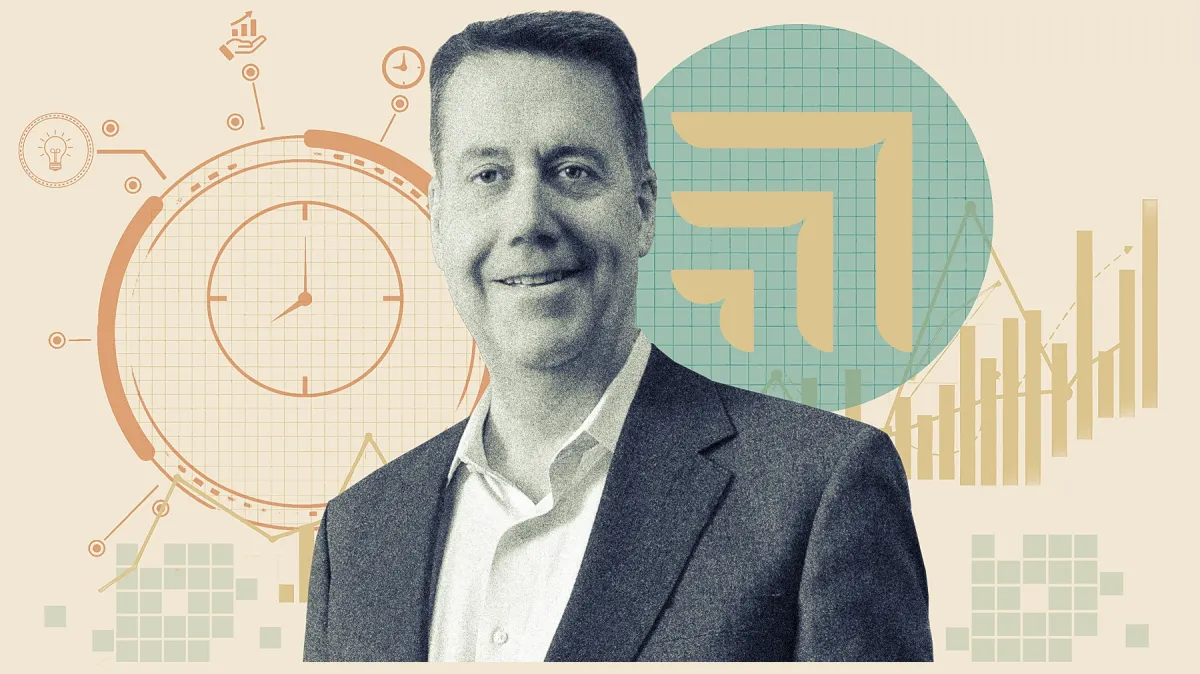
Andy Briggs jokes that he speaks loudly because of his three older sisters. In his flat nasal tones, he chortles that his voice “grew louder over time” as he fought to be heard over the household clamour.
This weekend, he’s raising his voice for another reason: he wants the City to know about his decision to change the name of Phoenix, the FTSE 100 insurer he has run for six years, to Standard Life.
“We’re a purpose-led, consumer-orientated retirement savings business,” the 59-year-old says earnestly. “It better describes that.”
The move means that Standard Life is once again on the stock market nine years after its £11 billion tie-up with rival Aberdeen Asset Management. Phoenix has taken the name after a series of complex transactions with the FTSE 250 fund manager (Aberdeen has abandoned its own rebranding to the vowel-depleted Abrdn), which still has a 10 per cent stake in what is now Standard Life.
Briggs does not have an office of his own in the insurer’s London head office, as he prefers to sit in the open-plan space. So he usually uses a meeting room named Richmond. As he lowers his 6ft 5in frame into a chair, he explains that the room is aptly named because he spends his weekends on the golf course in the southwest London borough.
“My handicap is four. It used to be three. I’m working too hard,” he proclaims.
Briggs has had to put in the hours since arriving in March 2020. On his watch, Phoenix has changed from an acquisition machine — built by buying “zombie” insurance firms closed to new business — to a company aiming to sell new products under the Standard Life brand.
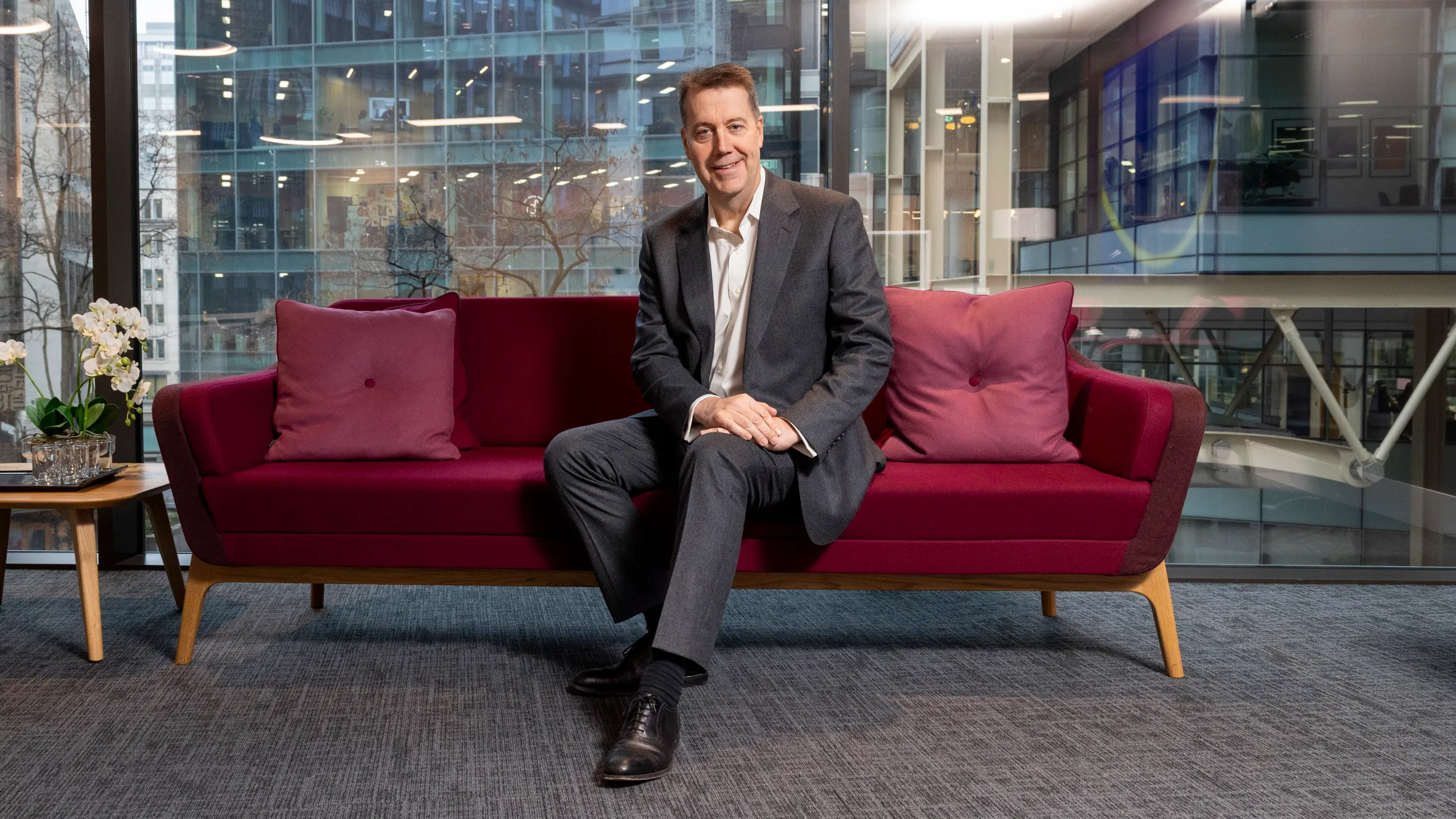 Andy Briggs, at Standard Life’s London office, has returned the company to the stock marketJOSHUA BRATT FOR THE SUNDAY TIMES
The business is valued at £7 billion on the stock market and manages £300 billion of assets for 12 million people. About 2,000 of the 5,000 staff are located in Edinburgh — where the old Standard Life used to be — with 700 of them in London.
Some wonder why he did not act sooner in rechristening Phoenix as Standard Life. Briggs insists it could not be rushed: “Changing the name doesn’t change the substance of the business. I wanted to get the substance in place first.”
Briggs says that he was always motivated by “leadership”. He arrived at Phoenix after missing out on the top job at FTSE 100 rival Aviva. “I played team sports as a kid and was often captain and loved the leadership side. My mates used to tease me about it, but very early on, I had this sense that management was what I wanted to do,” he explains.
“I played a lot of rugby, I was in the England under-20s squad for volleyball … not many people played and if you were quite tall, you had a chance,” he laughs. “I was 6 foot 5 at 16. My mum used to measure me all the time.”
Briggs grew up in Chelmsford, Essex, with parents who had been through hard times. His father had left school at 14 to care for his sick mother. “He left with pretty much no education,” recalls Briggs, who says his dad worked as a painter and decorator, painting the gates of Buckingham Palace and Wembley Stadium before attending night school to become a lecturer in interior design at a technical college. His mum stayed at home to look after their four children. When Briggs was in his teens, she took a job working on punch cards for computers.
Business newsletter
The business editor’s exclusive analysis of all the latest financial and economic news.
Sign up with one click
“They made sure I had a good education — that I was in good state schools — and it gave me a work ethic, which I’ve always been hugely grateful for,” he says. “I loved maths at school,” he adds, so he studied the subject at Southampton University.
Briggs joined Prudential as an actuary, with an eye on getting a management job. “Basically, anyone running an insurance company at the time was an actuary, so you sort of thought, well, this is a good route into a good sector to work in but also a route into senior leadership positions.”
He worked as an actuary for only a year but stayed at the Pru for 19, building up skills in roles in consumer services, marketing and sales. “I tried to get a real breadth early on in my career,” he says.
He moved to Scottish Widows, part of Lloyds Banking Group, where he spent five years before becoming chief executive of his first stock market company in June 2011 when he joined Friends Life, which was sold to Aviva three and a half years later. There he stayed until he quit in 2019, when Maurice Tulloch beat him to the chief executive role.
So, as someone motivated by being a manager, how does Briggs describe his style? “I like to talk to people, so I don’t send that many emails. I’m not a slave to email,” he says. “I do quite a lot of lists. I’ll have a list of three or four things I want to mention to each of my direct reports next time I bump into them. That will be more my modus operandi than lots of emails.”
Since arriving at what is now Standard Life, he has battled to bring down its leverage levels by generating £1.4 billion of cash profit — in essence, a measure of cashflow — each year.
The company’s share price endured its biggest drop for five years at the interim results in September, so Briggs will aim to reassure analysts when he presents the full-year figures next week. The City will also be looking for any update on whether he will buy the UK arm of Aegon, which is also said to be in the sights of Royal Bank of Canada, Barclays and Lloyds. “We’re having a look,” he confirms. “Whenever any business comes to market in the UK, we always have a look.”
Briggs will also be asked about progress on bringing in external partners to help buy up corporate pensions through what are known as bulk purchase annuities.
At its simplest, Briggs uses £1.1 billion of the cash profit to pay the dividend and pay down debt and is using the extra £300 million to get the debt back to the levels of his company’s rivals: “Investors have said to us, we’d like to see your leverage come down in line with peers. Once we’ve done that, from the end of this year, we’ll have that available for either additional shareholder returns or investment into growth.”
But investors have been concerned by problems implementing IFRS 17, a set of accounting rules that started in 2023 about governing insurance contracts, which led to the chief executive having £70,000 docked off his bonus last year.
Briggs credits his new finance director Nic Nicandrou, a former divisional head at Prudential, for a better relationship with the City. “Our share price was up 45 per cent last year. I don’t think it would have been up as much as that had we not brought Nic in,” says Briggs.
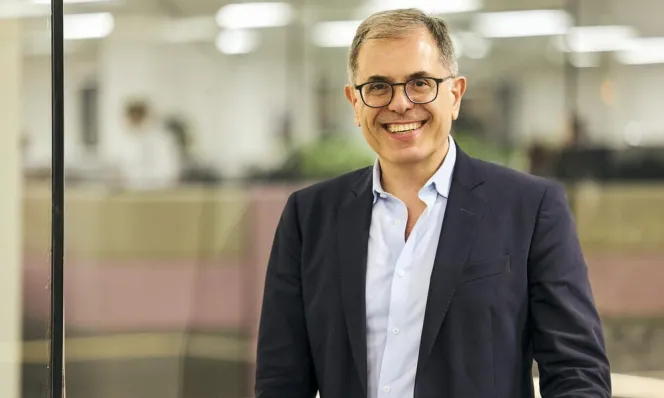 Nic NicandrouStandard Life
The City agrees with this assessment. Abid Hussain, an insurance analyst at investment bank Panmure Liberum, says: “They’ve had the fortune of hiring Nic Nicandrou, who is a heavy hitter and really settled the nerves of the market. If you look past the technicalities and accounting noise, there’s actually a decent business, which is moving in the right direction.”
The name change to Standard Life is part of Briggs’s determination to be a “champion” for people saving for their retirement.
“You can’t see [yet] that in 10, 20 years’ time, people retiring are going to have a really poor income and poor standing of living — and that’s why there needs to be a ‘champion’ to change that,” he explains. “So when we say ‘champion’, it is because consumers are not going to get the retirement they would like and expect unless something changes,” he says.
Briggs rattles off statistics: only one in seven people is saving enough for a decent retirement and only 10 per cent of savers receive financial advice.
While auto-enrolment in workplace pensions got more people saving after it was introduced in 2012, Briggs is concerned that the 8 per cent paid in — 5 per cent of an employee’s wages and 3 per cent on top from their employer — gives workers a false sense of security. Canadians, he says, save 20 per cent of their salaries and Australians 12 per cent.
“Most ordinary folk don’t understand this stuff very well,” he says. “They will labour under the misapprehension that if they are doing the government minimum rate, they will be fine — and they won’t be. That’s the bit I worry about the most.”
The government’s independent Pensions Commission is reviewing this and due to report next year. Briggs is clear: “I find it impossible to believe that an independent commission can possibly conclude 8 per cent is enough.” He advocates a rise to 12 per cent, in stages, which “is getting into better territory”.
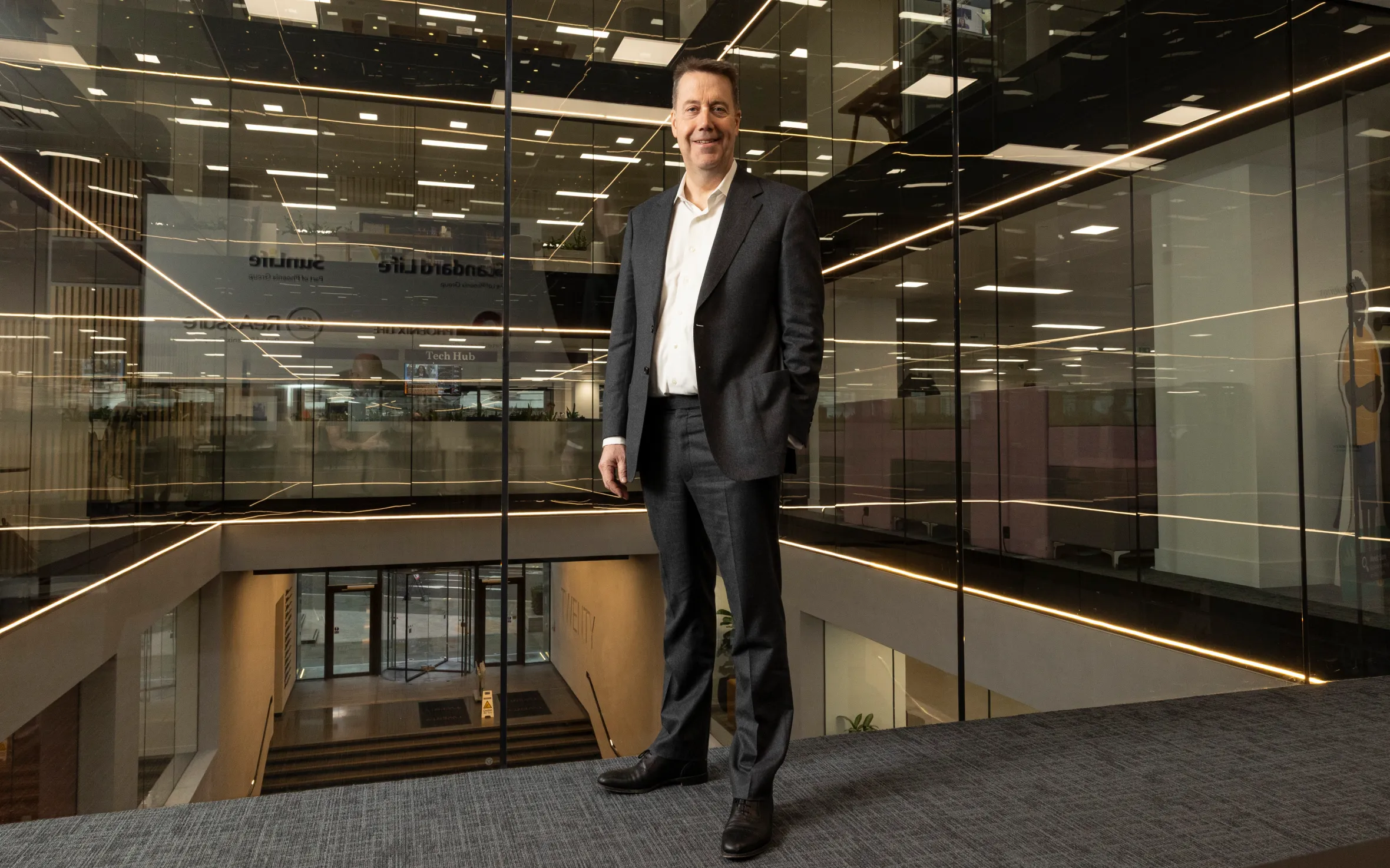 “In 10, 20 years’ time, people retiring are going to have a really poor income and poor standing of living,” says BriggsJOSHUA BRATT FOR THE SUNDAY TIMES
Getting to retirement should also take longer, he says, citing research showing that the retirement age should rise by eight years globally if the dependency ratio — the number of people working versus those who are retired — is to remain static. So, he advocates helping the over-50s to stay in work, particularly through flexible hours: “If the over-50s fall out of work, they are the group that are by far the least likely to get back into work.”
As for young people needing jobs, he says this will come if the economy grows more rapidly. “That will create jobs for the young folk and the over-50s,” he argues.
Fuelling economic growth was one of the issues tackled by Standard Life’s chairman, Sir Nicholas Lyons, when he was lord mayor of the City three years ago. He created the first iteration of the Mansion House Accord to encourage pension funds to invest 10 per cent of their workplace schemes in private assets such as infrastructure projects by 2030.
The Association of British Insurers, where Briggs is president, stepped up its fight last week to stop the government putting in a legislative backstop to mandate this level of investment, if it is not achieved voluntarily. Briggs is also clear that “it’s really critical we track the progress”.
“The politicians and the regulators, they do their bit of legislation or regulation and think, well that’s it, done. It’s only done when you see the outcome,” he says.
This is particularly true with new rules that allow individuals to receive “targeted” support rather than pay for financial advice, which he hopes will solve the issue of only 10 per cent of people getting advice. “Until you get to a place where it’s 50 per cent plus, we haven’t succeeded,” he says.
With all this talk of retirement, Briggs brings up his imminent big birthday. “Good work is good for you. I’m 60 this month and people often say to me, ‘Why don’t you retire?’ But I love it — I just really enjoy what I do. The job’s not done. I haven’t made enough progress over the years in helping people save more.”
 Briggs’s last holiday was a Christmas break in the CotswoldsAlamy