
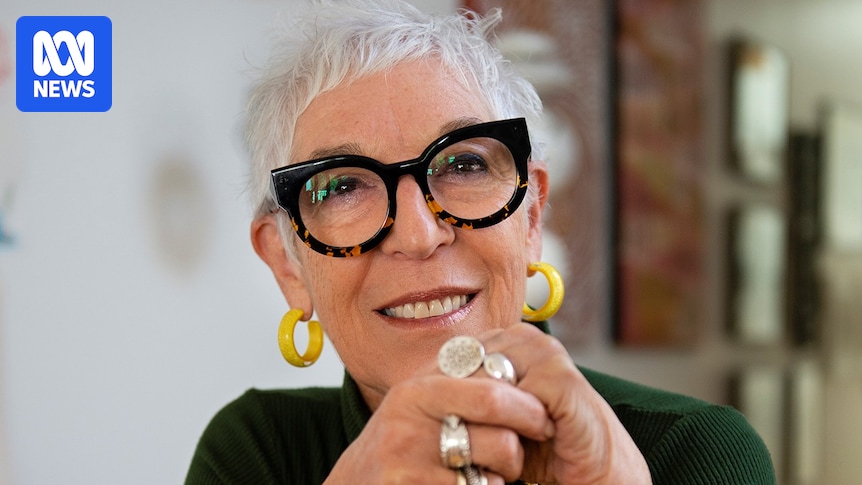
Ronni Kahn has many titles — Australian Local Hero of the Year, social entrepreneur, book author, and proud grandmother.
After spending more than four decades in this country and founding a charity that has delivered more than 350 million meals to fellow Australians in need, she says two letters signal that she belongs here — AO.
“I feel incredibly humbled that the work I’ve done is worthy. It is recognition at the highest level. It symbolises that I am valued in our country.”
Since the October 7, 2023, attack by Hamas on Israel and the war in Gaza, Kahn’s sense of acceptance — and her resolve to live openly as both an Australian and a Jew — has been tested like never before.
Kahn was born in South Africa and lived in Israel for 20 years.
A number of years after her brother-in-law was killed in the 1973 Yom Kippur War, she migrated to Australia as a young mother.
She says she never questioned her Jewish identity in Israel.
But after moving to Sydney, maintaining her Jewish heritage and traditions required greater commitment.
“In Israel, you don’t have to question your Jewishness,” she said.
“When we moved to Australia, I did not put my children into Jewish schools, because we came here to live in a multi-faith country and I was not going to be defined by my Jewishness.”
Kahn’s AO was awarded in 2019 for her work at the head of one of Australia’s leading charities, one she founded as a proudly multicultural and multi-faith organisation.
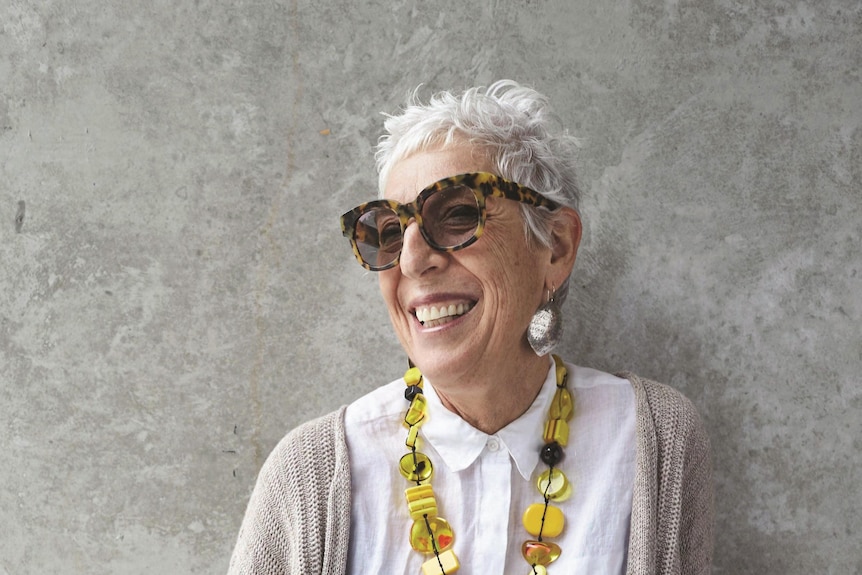
Ronni Kahn has spoken to the first ABC National Forum. (Supplied)
But Kahn says her desire to give back to society through charitable acts springs from a fundamental tenet of the Jewish faith known as Tikkun Olam — to help repair the world.
Kahn spoke to the ABC as part of the first ABC National Forum, which airs tonight on ABC TV and Radio National from 8:30pm AEDT.
Along with authors, teachers, students, parents and grandparents, Kahn will tell her story of life in Australia as a Jew, and her community’s determination not to be defined by the hatred of antisemitism.
‘Jews are not safe in Australia anymore’
Kahn says she never experienced antisemitism before October 7 — she was aware of it, but it did not directly impact her life. But she says something changed after Hamas attacked Israel and the war in Gaza.
“I took my grandkids to play in a park not far from a synagogue. They had erected concrete barriers around it, and there was a policeman in the vicinity. And I suddenly had a vision, one of the kids was on the slide and the other on the swings, and I thought, ‘what if someone came to attack us — what would I do, which child would I save?’
“I grabbed the kids, and I said, ‘Let’s go home.'”
‘I am a minority and often feel it’
Two years later, Sydney mother Jessica Rozen was confronted by the kind of antisemitic attack that Ronni Kahn had feared.
Rozen was celebrating Chanukah at Bondi with her family when two gunmen opened fire, killing 15 people around her. Separated from her husband and children, Rozen bravely sheltered and calmed a young girl as those around her were killed.
“I didn’t even have it as a fear — I did not think it could happen. I was wrong,” Rozen said.
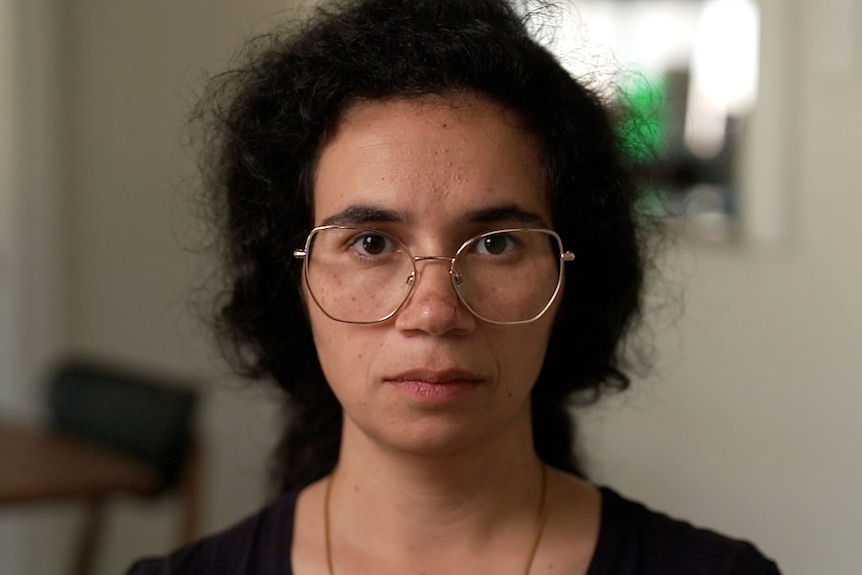
Jessica Rozen used her pregnant body to shield a girl during gunfire during the Bondi shooting. (Four Corners: Mark Hiney)
Rozen’s bravery on December 14 has been celebrated by the nation, but she does not want to be defined by that day. She wants Australians to understand that there is more to Jewish life than trauma and fear.
“It is spiritual, cultural and traditional. To me, it is a thousands-of-years-old history, taught to me by my parents, taught to them by their parents. It is a rich tradition.”
Rozen’s grandparents were Iraqi, and when her father moved to Australia from India as a 13-year-old, he encountered discrimination.
“He experienced racism and antisemitism as a matter of course, and described it as a fact of life,” she says.
“‘When they punch you in the face for being a bloody Jew — punch them back harder,'” she says he taught her.
She recalls her father telling her never to back down in the face of antisemitism.
“‘They will stop picking on you … but you will always be a bloody Jew.'”
In response to rising levels of antisemitism, Rozen says she has become more cautious.
Bondi survivors recount what they witnessed
“I am aware that being Jewish — and publicly Jewish — makes me a target,” she said.
“I am constantly aware of my surroundings, even in places which are familiar to me. I am scared of attending Jewish events.”
A pathway forward
Jessica Rozen doubts antisemitism will ever be eliminated, but she is determined to use her voice to create change.
“The truth is — I think I am going to be looking over my shoulder for a long time,” Rozen says.
“But I do believe it’s possible to create an environment where antisemitism is not tolerated, and where people who express hateful, violent views towards any group are not given our time or respect as a society.”
Ronni Kahn agrees, but urges Australians to do all they can to eliminate antisemitism from society.
“It can be reduced in its intensity and pervasiveness and is going to take education and interconnectedness — but let’s give it a damn good try and let us be at the forefront”