
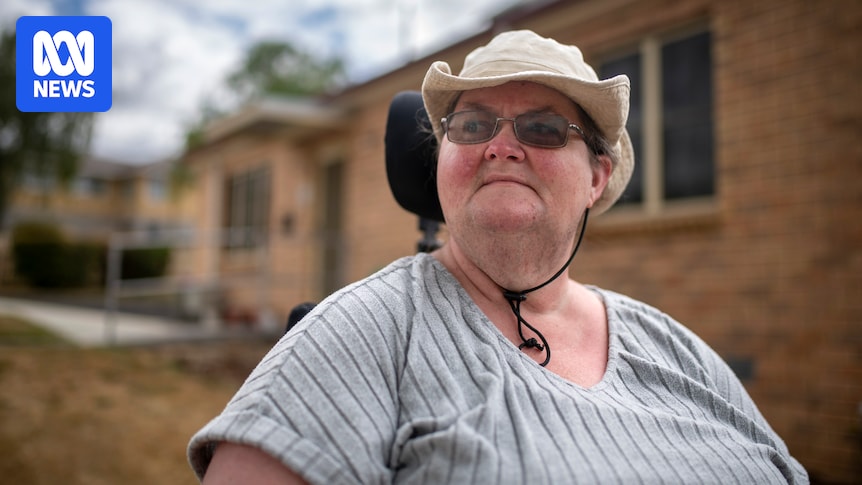
For two years and four months, Sharryn Johns has felt robbed of her freedom.
But when she first moved into her Launceston public housing property in late 2017, the born-and-raised Tasmanian — who requires an electric wheelchair — felt right at home.
“I loved it,” the 51-year-old said.
“I had a massive, big backyard … I could use my wheelchair here.”
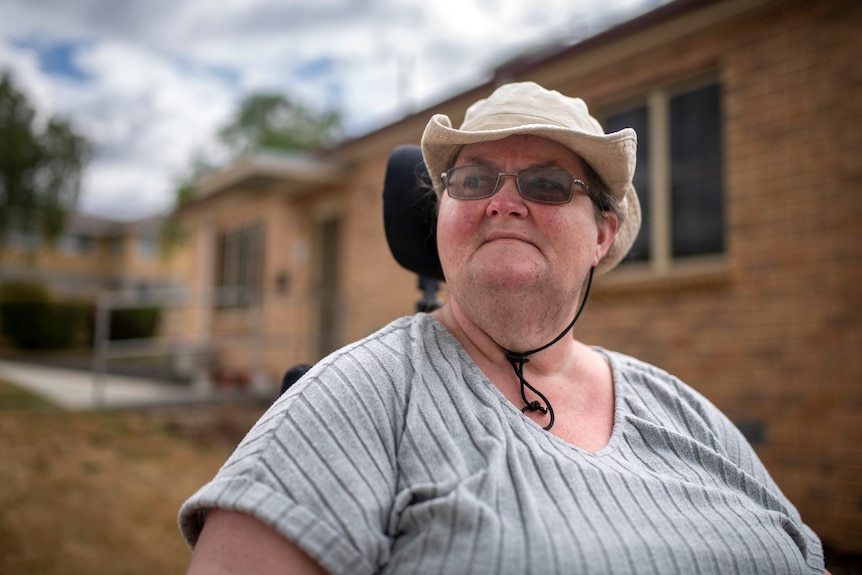
Sharryn Johns has lived in public housing for most of her life. (ABC News: Morgan Timms)
However, her quality of life took a “frustrating” turn for the worse after an “extreme” black mould problem emerged.
Alternative accommodation was arranged for Ms Johns while remedial plumbing work took place.
But when she finally returned, she found she could no longer access her backyard.
To address the drainage problem causing the black mould, a retaining wall and a ramp were installed in her backyard.
But, to her dismay, the ramp was far too narrow for her wheelchair to navigate.
She has been unable to directly access her backyard and clothesline since returning to the home in October 2023.
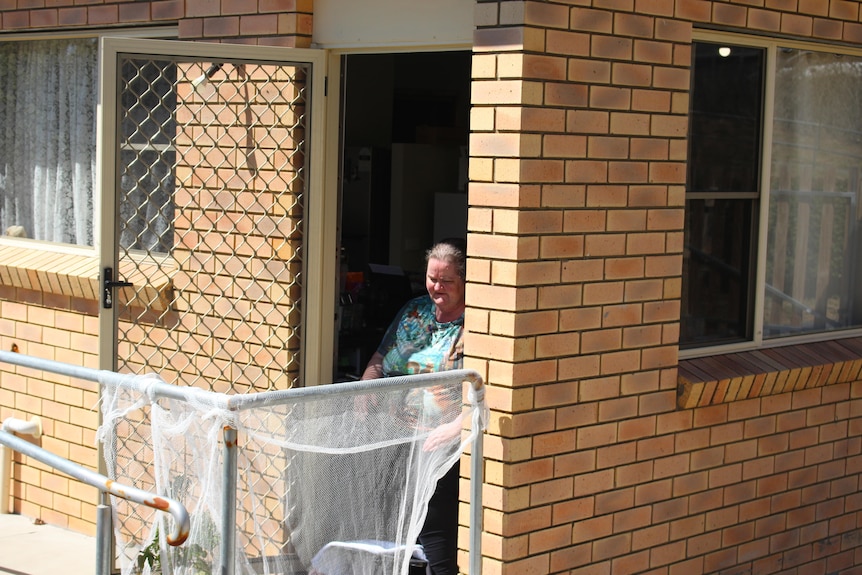
Ms Johns can’t use the ramp because it’s too narrow. (ABC News: Hayden Smith)
Ms Johns said she felt “angry and frustrated”, describing the modifications as “overkill”.
“They knew there was a person in a wheelchair coming back here,” she said.
“They’ve made it so I can’t use the backyard at all.”
Ms Johns suffers from a chronic neurological condition that impacts her mobility.
She has lived in public housing for most of her life.
Sharryn Johns says she knows of other people with disabilities who are struggling within their own homes. (ABC News: Morgan Timms)
Ms Johns said she “constantly” raised the issue with the housing authority, Homes Tasmania, but her efforts were in vain.
A letter addressed to Homes Tasmania by an occupational therapist, seen by the ABC, outlines Ms Johns’ “emotional distress” while calling for the removal of the ramp.
“This place was fine until they lowered the driveway to put extra drainage in there,” Ms Johns said.
“Now it’s a complete mess.”
Do you know more? Contact Hayden Smith at smith.hayden@abc.net.au
One email from ABC prompts action
Last month, the ABC sent a series of questions to Homes Tasmania regarding Ms Johns’ situation.
A few days later, the organisation provided a statement:
“Homes Tasmania recognises that a commonsense and compassionate approach is best needed here.
“The ramp installed at the residence is compliant with liveability standards but does not meet the needs of the current resident.
“We can confirm that work to understand how best to restore access to the backyard is underway.”
Housing Minister Kerry Vincent said he could not comment on individual circumstances.
“I want to see Homes Tasmania working with Tasmanians, not against them, and would expect these sorts of issues to be resolved with compassion and commonsense,” he said.
“There are limitations to the National Construction Code across a range of issues, which is something that as a government, we have made clear for a long time.”
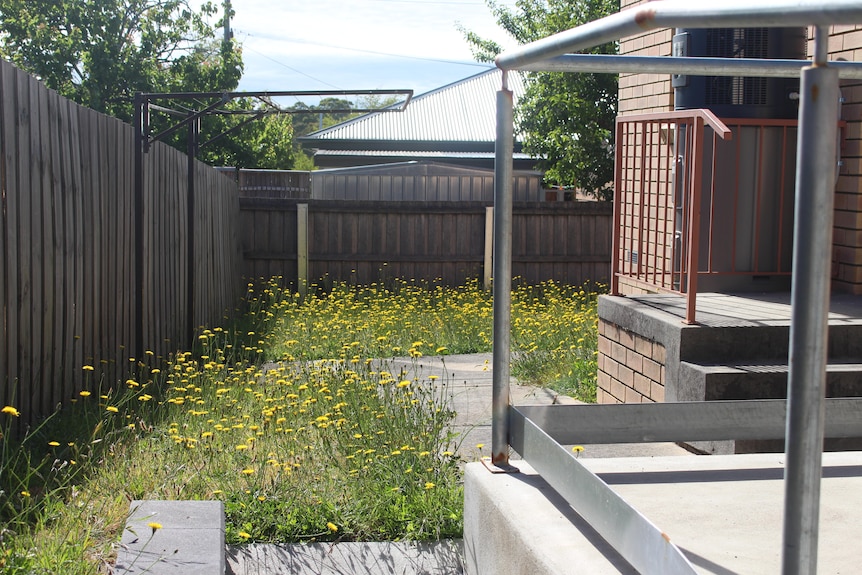
Homes Tasmania says it is now exploring ways of fixing the ramp. (ABC News: Hayden Smith)
While hopeful of a positive outcome, Ms Johns was miffed as to why her pleas for help went “ignored” for so long.
“I fought them for two years and four months,” she said.
“The ABC put one email in and the next thing I know I’ve got them measuring out my whole property… it’s just disgusting.”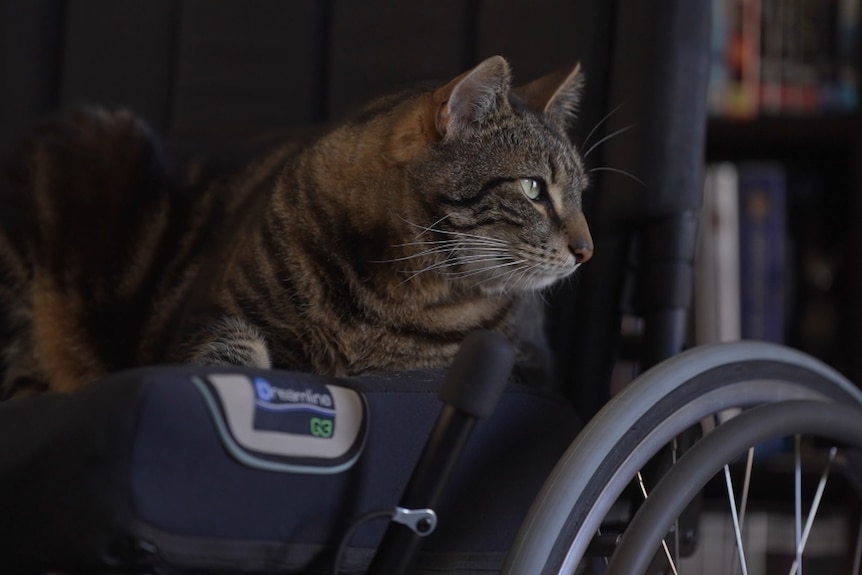
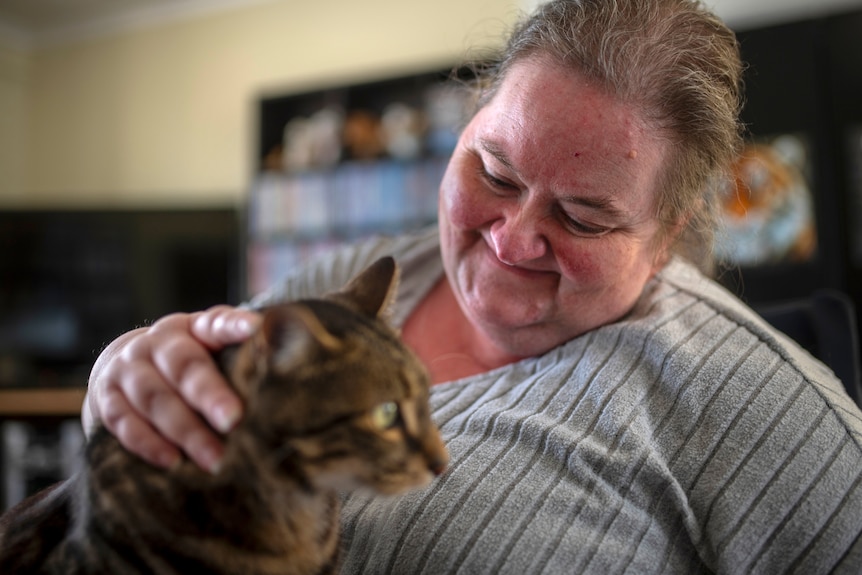
Ms Johns’ cat Ben keeps her company. (ABC News)
Changes to construction code
Disability Voices Tasmania chief executive Vaughn Bennison described Ms Johns’ situation as “appalling”.
But he also said it reflected a broader issue in Tasmania, which, at close to 30 per cent, has the highest proportion of residents living with a disability in the nation.
“It’s absolutely fair to say that disabled people have reduced access … to accessible public housing that meets their needs,” Mr Bennison, who is legally blind, said.
Recent changes to the National Construction Code require new homes to be built to the minimum silver standard, as outlined in the Liveable Housing Design Guidelines.
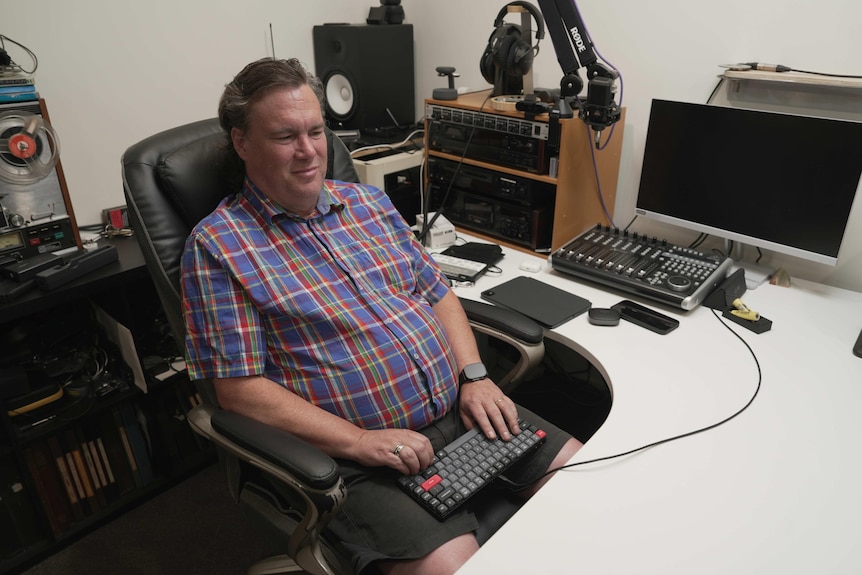
Vaughn Bennison believes public housing often fails to meet the needs of people living with disabilities. (ABC News: Edoardo Falcione)
However, it is up to each state and territory to opt in.
The Tasmanian government has committed to the new standard, while New South Wales and Western Australia are the only jurisdictions not to have agreed to the changes.
Joel Dignam, the Building Better Homes campaign leader for the Summer Foundation, said he was pleased to see “positive progress” in Tasmania.
Advocates fear pressure to meet social housing targets is making accessibility an “afterthought”. (ABC News)
But he was concerned about longstanding public housing tenants, like Ms Johns, who might be struggling every day within the walls of their own homes.
“Looking at the existing public housing stock and making sure that it is accessible for current occupants is crucial,” Mr Dignam said.
Homes Tasmania was founded in 2022, but is already being axed after falling behind on its targets.
A spokesperson for the organisation told the ABC it was “committed to providing accessible homes that meet the needs of our tenants now and into the future”.
Accessibility an ‘afterthought’
Publicly available data from Homes Tasmania shows that, from October 2020 to December 2025, 83 per cent of new social housing properties were built to the minimum liveability standard or higher.
However, more than 300 new homes built during this period did not meet the benchmark.
It comes as the Tasmanian government aims to build 10,000 new social and affordable homes between 2020 and 2032, at a cost of $1.5 billion.
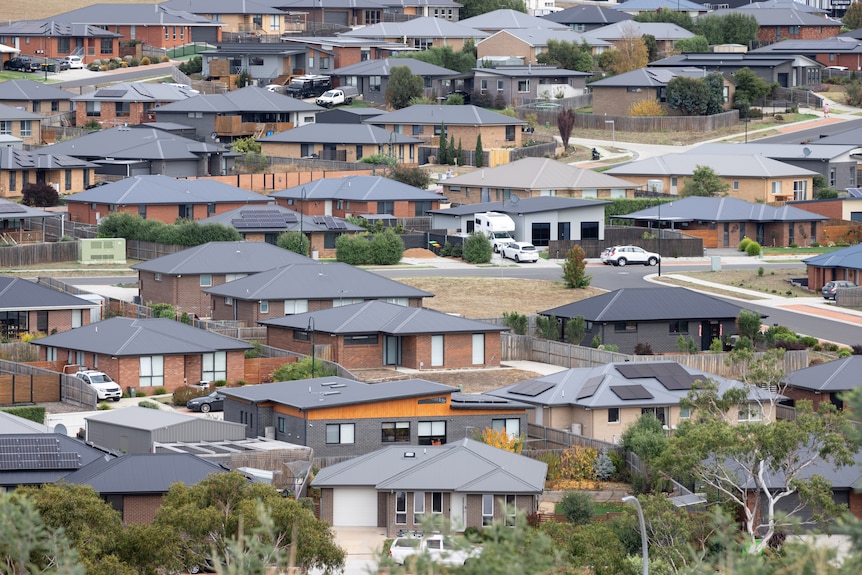
Tasmania is trying to meet new housing targets. (ABC News: Luke Bowden)
“There is a significant amount of pressure to get the housing built,” Mr Bennison said.
“Many times accessibility is an afterthought and not well considered.”
Mr Bennison said he knew many Tasmanians living with disabilities who faced daily accessibility challenges within their own homes.
“It is soul destroying,” he said.
“It can be absolutely disastrous for people’s mental health if they can’t look after themselves … simply because of the inaccessibility of their living environment.”