
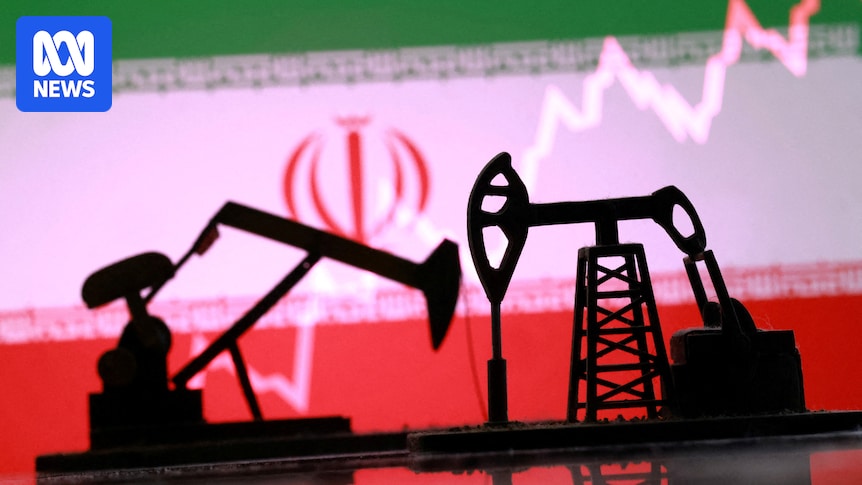
The US Department of War may well be conducting Operation Epic Fury but on Wall Street it looks more like Operation Epic Flurry as risky assets continued to be tossed aside in a swirling mass of fear.
Throw surging oil prices and a sudden deterioration in the US jobs market and Friday’s result was predictable.
S&P 500: -1.3%Dow: -1.0%Nasdaq: -1.6%
The US oil benchmark, West Texas Intermediate (WTI) crude jumped more than 12%, while the global benchmark, Brent crude was up almost 9% tracking towards $US100/barrel.
Officials in Qatar warned $US150/barrel was possible as the Strait of Hormuz, gateway to 20% of the world’s oil and LNG supplies, remains choked off.
The key European LNG TTF futures contract added another 5%, taking the weekly increase to 67%.
In the US, the obvious threat to inflation and the complications it causes for the hoped-for rate cuts is one thing, but it comes at a time when the wheels appear to be falling off the US jobs market, raising fears of the return of stagflation.
Non-farm payrolls fell by an unexpected 92,000 in February, against an expected gain of 55,000, while the unemployment rate jumped to 4.4%, indicating that the January surge in jobs was not sustainable.
That observation is supported by a rise in jobless claims published earlier in the week.
“The conflict now looks likely to last far longer than many had hoped, and oil prices are escalating as a result,” Man Group chief market strategist Kristina Hooper told Reuters.
“It raises the question of whether the Fed will even be able to cut rates.”
The markets’ so-called “fear index” the CBOE Volatility Index (VIX) closed at its highest point in four years.
“We are marching closer each day to $100 a barrel of oil, and that has caused much greater volatility and anxiety,” State Street’s chief investment strategist Michael Arone said.
US banks were again sold off — the S&P 500 bank index lost most than 2% — as anxieties about their ties to private credit and the quality of their loans remain front of mind.
BlackRock fell 7.1% on a decision to limit withdrawals from a major private credit fund.
Lender Western Alliance fell 8.4% after suing Jefferies for not making a payment for loans tied to bankrupt auto parts supplier First Brands Group. Jefferies dropped 13.5%.
The index tracking US airlines fell more than 4%.
European stocks suffered their largest fall in almost a year, having shed more than 5% across the week.
It all adds up to a bleak start on local markets with ASX 200 futures pointing to a 1.8% retreat on opening.
The inflation fears, sparked by higher oil prices, have seen global interest rates rise.
US two-year treasuries rose 16bps over the week, UK and German two-year yields rose 35 and 30 bps respectively.
Borrowing costs in Australia and Canada both rose around 20bps last week.
Gold edged higher as the weaker US jobs report kept the flickering hope of a rate cut alive, although it recorded its first weekly decline in five weeks.
Elsewhere in commodities, aluminium jumped more than 3% on the LME due to supply concerns out of the Middle East, while copper slipped 0.3% as LME inventories continued to mount.