
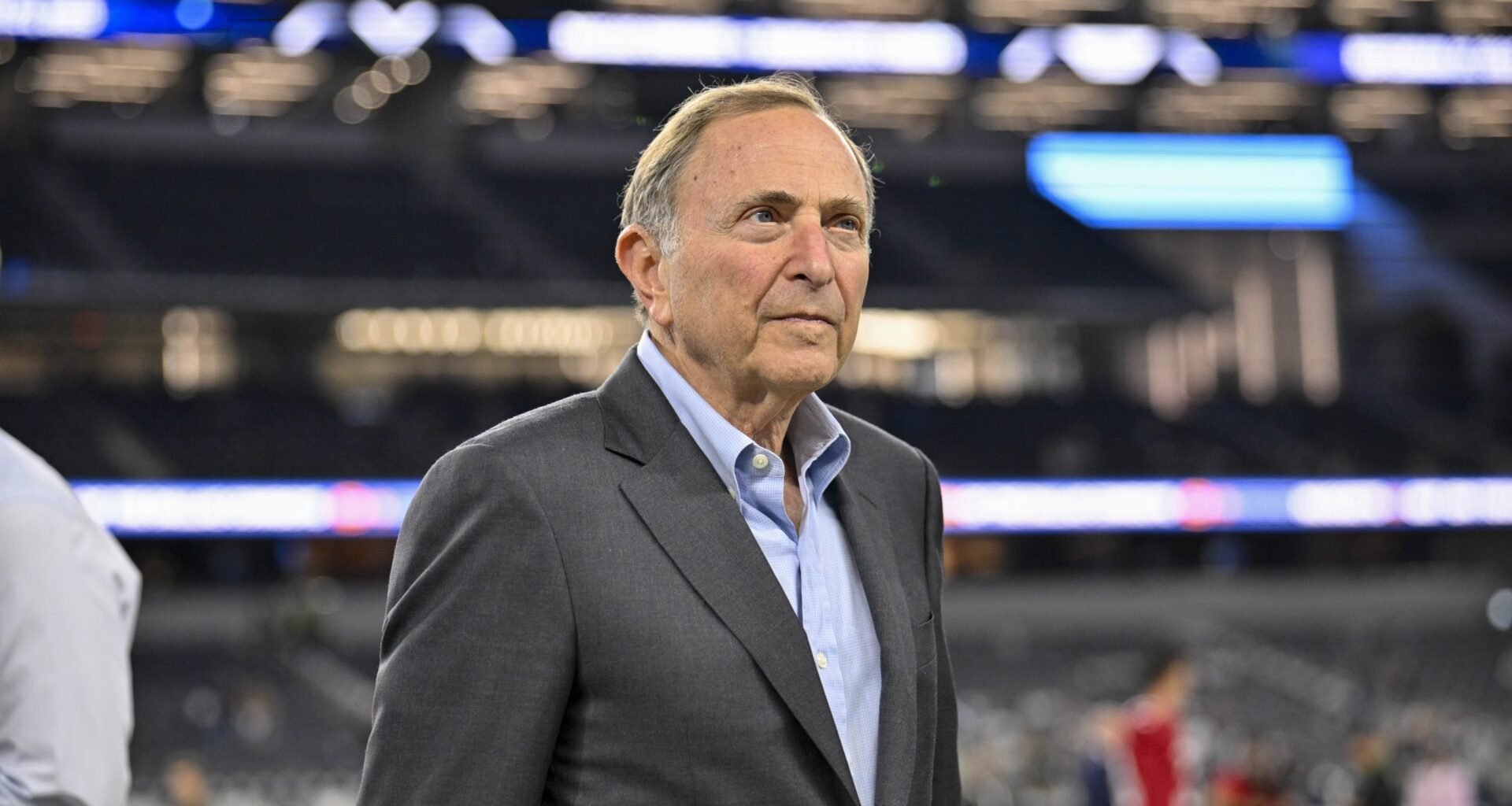
NHL commissioner Gary Bettman is keenly aware of the impact the NFL’s early negotiations could have on the media rights market ahead of his own league’s renegotiations.
In an interview with John Ourand on Puck’s “The Varsity” podcast, Bettman said the timing of the NHL’s media rights negotiations will depend in part on whether the NFL decides to reenter the marketplace later this year, as is widely expected. “Obviously, the NFL gets to call the shots in this marketplace,” Bettman said. “So we’ll have to wait and see what happens.”
The current NHL media rights deals expire after the 2027-28 season, and incumbent U.S. rightsholders Warner Bros. Discovery and ESPN will both have exclusive negotiating periods at some point between now and then. Bettman floated the possibility of getting to the negotiating table early — Ourand reported last month that the league had approached ESPN and WBD about that possibility — but also suggested that the league could wait out the storm. Bettman: “If the NFL is serious and is in the marketplace now, maybe we tuck under, maybe we wait til they’re done.”
Either way, Bettman appeared cognizant of the impact the NFL negotiations could have on the marketplace. “The NFL has a large footprint, to say the least, and in this environment, if they sneeze, we’ll probably get pneumonia.”
But despite the headwinds, Bettman signaled confidence about the league’s prospects: “I believe in the value of our product. And I believe that whether it’s now or in a couple of years … I think we’ll ultimately come out in a good place with the fair value that we deserve.”
He was particularly optimistic when the conversation centered on Paramount’s deal to acquire Warner Bros. Discovery. “I think for the NHL, what’s happening with Paramount and Warner Bros. Discovery is potentially very good for us,” he told Ourand. “So consider me a fan.”
Asked if the Paramount pending acquisition could result in TNT Sports NHL inventory airing on the CBS broadcast network, Bettman said that he has yet to have a conversation with Paramount CEO David Ellison — who he “can’t wait to meet” — but that he would be “very excited to see the opportunity that being with CBS and CBS Sports would present.”
Paramount has said it expects its WBD merger to be approved by Q3 of this year, though it seems fairly likely that there will be at least some legal challenge mounted by state attorneys general that presumably could delay that projection. Should the merger gain approval on that timeline, it would be complete in time for next year’s Stanley Cup Final, which is the last set to air exclusively on TNT Sports under the current rights deal.
While Bettman gave all indication that the NHL is satisfied with its current rightsholders, he hinted that the league may benefit from additional partners. After Ourand praised the NHL for the simplicity of having all games on either ESPN or TNT Sports, Bettman responded that having two partners is a “mixed bag.” Bettman: “On the one hand, it’s very fan and user friendly. But if you’re on six or seven outlets, you get promoted in six or seven places. I’m not complaining, and I do believe that ESPN/Disney and Warner Bros. Discovery do a great job promoting us, but the more places you are, the more visible you are.”
Given the possibility of all the major sports media players having to potentially double their NFL rights fees, it is not entirely clear just how many takers there might be for a third or fourth NHL package, beyond smaller players like Versant, Scripps or Nexstar.
Bettman also addressed the RSN situation, saying that his league is taking an “all of the above” approach to local rights distribution. “Some will stay on regional sports channels, a few of them are still viable. Some will go to direct streaming like AMPC [A Parent Media Co., owner of Victory+]. And some are going over the air.”
But the league does not appear to be pursuing the same kind of centralized local rights solution that baseball and the NBA are believed to be developing, at least not yet. “We’re just making sure we’re going down parallel paths because the economic model nobody’s quite figured out yet.”