
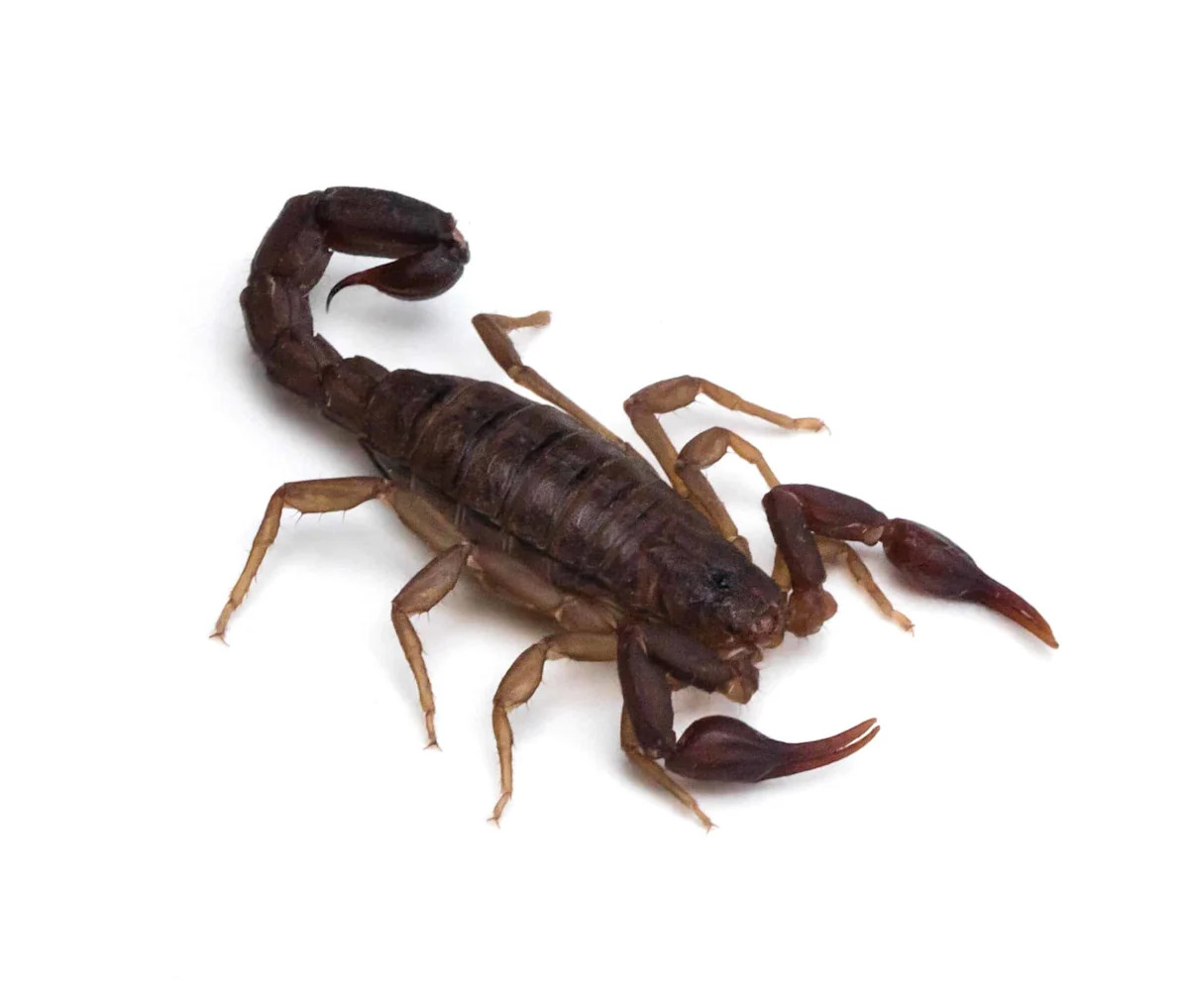
The post Scientists Can Now Predict Where the World’s Deadliest Scorpions Are Most Likely to Strike appeared first on A-Z Animals.
Quick Take
Scientists used field data and computer models to predict where dangerous scorpions are likely to live.
Soil type and temperature help determine where venomous species cluster.
The models create maps showing likely sting hotspots. These maps help health officials target treatment and prevention.
Across many warm regions of the world, scorpion stings are a serious health risk. A sting late at night can become a medical emergency in places where venomous species live near homes. Hundreds of thousands of people seek treatment for scorpion stings each year, and several thousand deaths occur when medical care or antivenom arrives too late. Until recently, health officials relied on scattered hospital records and rough distribution maps to estimate where the greatest danger existed. Researchers now use field surveys and computer modeling to predict which environments are most likely to support highly venomous scorpions. These models help doctors and emergency planners prepare before outbreaks of stings occur.
Why Scorpions Can Be Dangerous
Scorpions have existed for more than 400 million years. They survived mass extinctions, climate shifts, and the rise of mammals. Most of the roughly 2,000 known species carry venom used mainly to capture insects and small prey. Their stings cause pain but rarely threaten life. A smaller number of species possess venom strong enough to interfere with nerve signals, disrupt heart rhythm, or cause breathing failure. These species create serious public health risks in regions such as North Africa, the Middle East, Latin America, and South Asia.
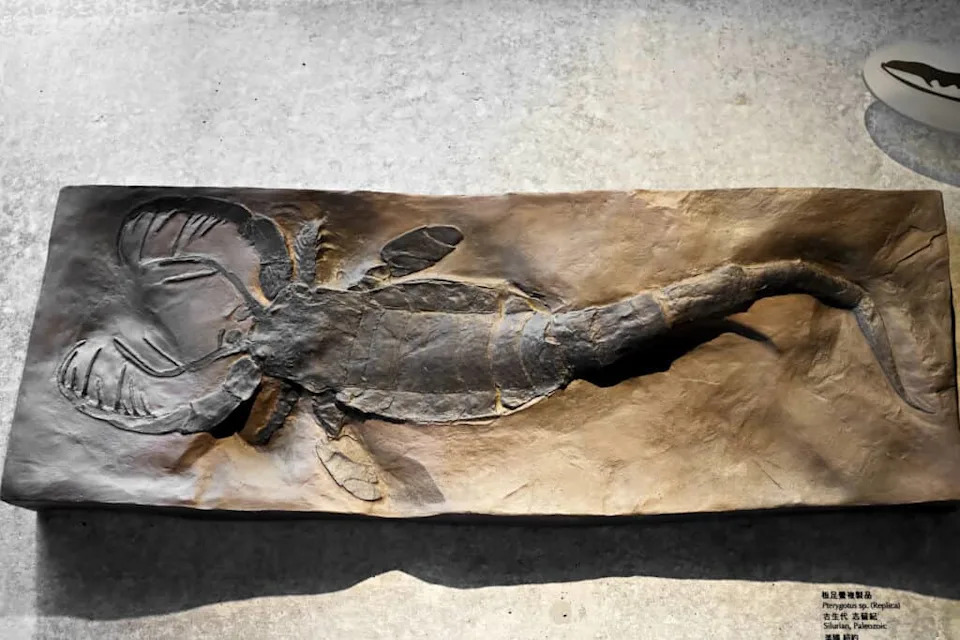
Fossil of a prehistoric sea scorpion
©topimages/Shutterstock.com
(topimages/Shutterstock.com)
Researchers estimate that at least 1.2 million people are stung by scorpions each year, resulting in approximately 3,000 deaths annually. Rural communities face the greatest danger because hospitals and antivenom supplies are often far away. Children face higher risk because their bodies react more strongly to venom, and they make up the majority of deaths from scorpion stings. In agricultural regions, farmers moving stones or working fields encounter scorpions frequently. People who sleep on the floor or walk barefoot at night are also vulnerable. Because the problem largely affects low income communities, global health organizations classify scorpion envenoming as a neglected tropical disease, though it is not officially listed as such by the World Health Organization.
Research Behind the New Prediction Models
Scientists recently tested whether environmental data could reveal where dangerous scorpions are most likely to occur. An international research team focused on several medically important species found in North Africa and the Middle East. Researchers gathered records from field surveys, museum collections, and verified observations. Each record included geographic coordinates showing where a scorpion had been discovered.
These observations were then combined with environmental information from satellite datasets. Scientists examined temperature patterns, rainfall levels, vegetation cover, and soil conditions. By comparing places where scorpions were known to occur with areas lacking records, the research team trained computer models to recognize environmental patterns linked to suitable habitat. This method allowed them to identify landscapes that match the conditions favored by highly venomous scorpions.
The resulting models generated maps showing where scorpion populations are most likely to occur. Early testing began in Morocco before expanding to other regions of Africa and the Middle East. The maps highlight areas where sting risk may be high even if official medical reports remain limited.
Understanding Ecological Niche Modeling
Ecological niche modeling is the scientific approach used to build these prediction maps. Every species survives within a specific range of environmental conditions. These conditions include temperature levels, soil types, available shelter, and prey abundance. Together they form the ecological niche that allows a species to reproduce and survive.
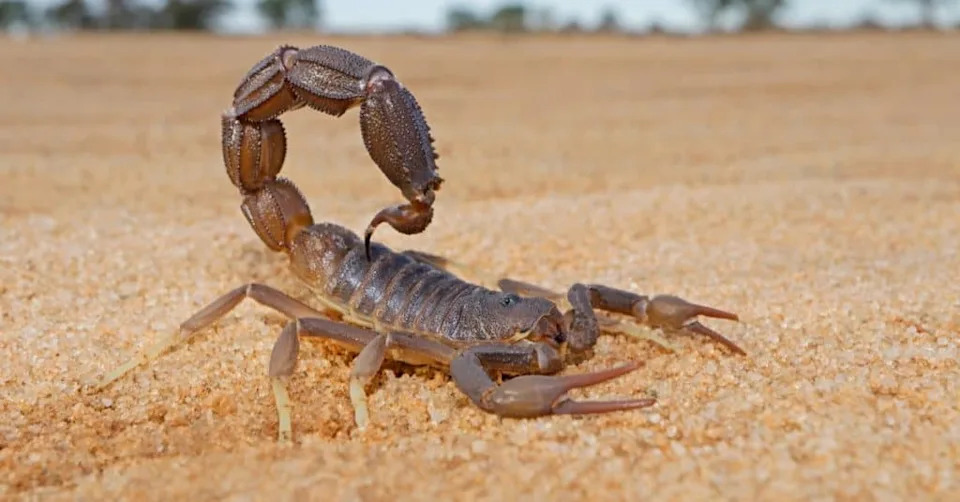
Granulated thick-tailed scorpion (Parabuthus granulatus) in the Kalahari desert, South Africa.
©EcoPrint/Shutterstock.com
(EcoPrint/Shutterstock.com)
The research team compared environmental conditions in places where venomous scorpions had been documented with conditions in surrounding landscapes. Computer algorithms then identified combinations of factors linked to scorpion presence. One widely used modeling technique called MaxEnt helped estimate where similar conditions occur across wider regions.
Scientists used several modeling methods and combined their results to reduce bias. This approach improves reliability because different models highlight different environmental relationships. The final maps show predicted habitats along with uncertainty levels. Regions with limited field data display wider uncertainty ranges, which signals the need for additional surveys.
Soil Type as a Key Factor
One important discovery from the modeling work involves soil composition. Soil type proved to be one of the strongest indicators of where dangerous scorpions occur. While climate remains important, the physical structure of the ground determines whether scorpions can dig burrows and hide during daylight. Many medically important species prefer firm soil that holds stable burrows but remains loose enough to dig easily. Rocky soils also provide hiding places within cracks and crevices. Extremely loose sand or heavily waterlogged ground tends to support fewer burrowing scorpions.
This finding explains why risk can vary over short distances. Two villages may share similar temperatures and rainfall, yet the soil beneath them differs. One location may support scorpion burrows while another may not. Including soil information in the models greatly improved prediction accuracy.
Temperature and Nighttime Activity
Temperature also plays a major role in scorpion ecology. These animals are most active within a specific temperature range. If temperatures fall too low, scorpions become sluggish and hunting becomes difficult. Excessive heat can lead to dehydration or overheating.
Researchers found that nighttime temperatures strongly influence scorpion activity. Warm nights allow scorpions to hunt longer and increase encounters with humans. In some regions, stings occur more frequently during warm seasons when people spend time outdoors in the evening.
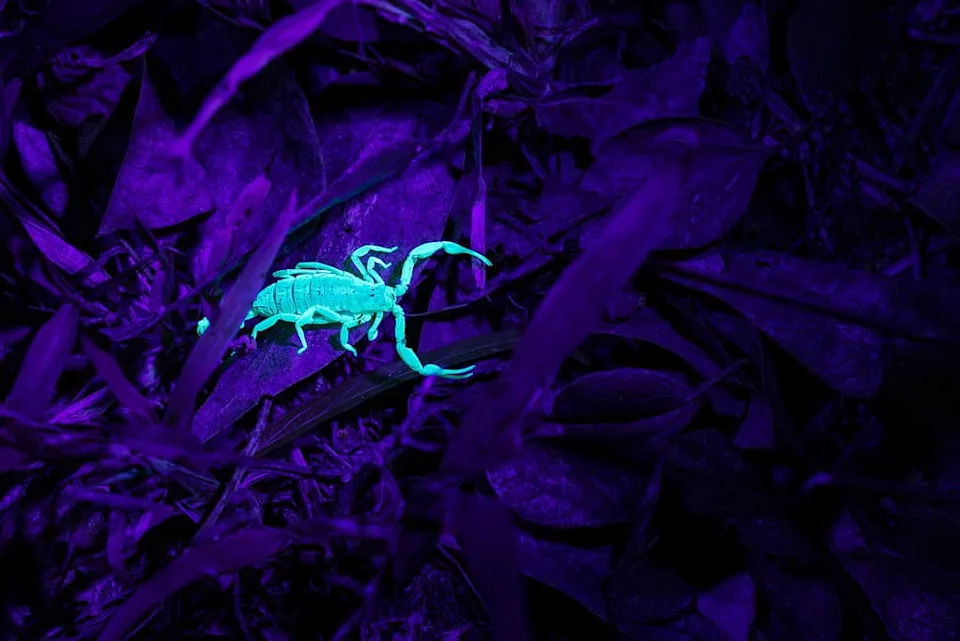
A scorpion glowing under black light illumination as it forages among leaves.
©Danita Delimont/Shutterstock.com
(Danita Delimont/Shutterstock.com)
Climate change may alter these patterns. Rising temperatures could expand suitable habitat into cooler regions while reducing suitability in extremely hot environments. Scientists can test these possibilities by applying projected climate data to their models.
Habitat Preferences Among Species
Different venomous scorpion species occupy distinct habitats. Some species inhabit rocky deserts where cliffs and stone walls offer shelter. Others prefer semi-arid grasslands or agricultural areas near villages. A few species thrive in environments shaped by human activity, such as livestock pens or construction debris.
The modeling approach accounts for these differences by generating separate habitat maps for each species. Researchers then combine those maps to produce regional risk assessments. In some areas, only one dangerous species dominates. In other regions, multiple species overlap, increasing the likelihood of serious envenoming. These maps help guide decisions about which antivenoms are needed in different regions. Some countries require several types of antivenom because different species produce different venom compositions.
Using Risk Maps for Public Health Planning
Prediction maps become useful when health agencies apply them to real world planning. Researchers working on scorpion models have partnered with public health officials to interpret the results. Maps reveal districts where sting incidents likely occur but remain underreported. Health ministries can use this information to improve training programs for rural medical workers. Nurses and community health staff learn how to recognize symptoms of dangerous envenoming and provide early treatment. In many cases rapid recognition of symptoms saves lives.
The maps also help determine where antivenom supplies should be stored. Antivenom remains expensive and must be refrigerated. By placing supplies near predicted hotspots, health systems improve response times while reducing waste.
Practical Safety in Scorpion Regions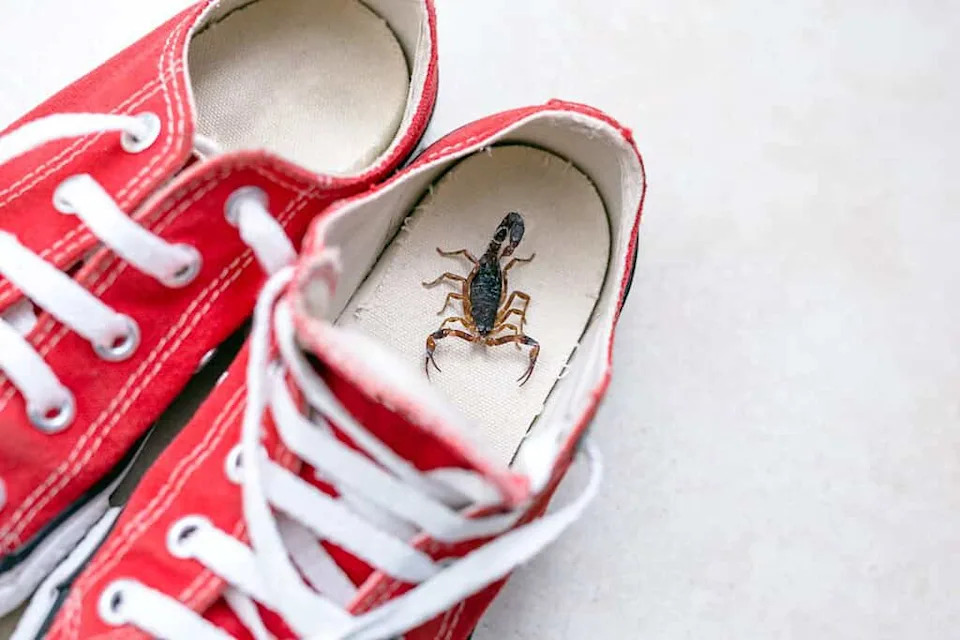
In areas where scorpions live, it’s wise to shake out your shoes before putting them on.
©RHJPhtotos/Shutterstock.com
(RHJPhtotos/Shutterstock.com)
People living in areas where scorpions occur can reduce risk through simple precautions. Shoes, clothing, and bedding should be shaken before use. Flashlights help detect scorpions when walking outside at night. Avoid placing hands beneath rocks or into dark crevices without looking first. Beds placed slightly above the floor reduce the chance of scorpions reaching sleeping people. Moving beds away from walls also helps prevent scorpions from climbing into blankets. Removing debris around homes reduces hiding places.
When a sting occurs, medical attention should be sought quickly. Severe pain, breathing difficulty, and excessive sweating signal potentially dangerous envenoming. Health workers can determine whether antivenom treatment is necessary based on symptoms and local species.
Mapping Risk to Reduce Deaths
Predicting scorpion hotspots marks a shift in how scientists approach venomous animal threats. By combining field data, environmental information, and advanced modeling tools, researchers can identify landscapes where dangerous scorpions are most likely to occur. This information helps governments place medical resources where they are needed most. Improved planning leads to faster treatment and better outcomes for patients. As these models expand to new regions, they may reduce the impact of a long-neglected health problem.
Predictive science cannot remove scorpions from the environment, but it can help communities prepare for them. With better data and careful planning, health officials hope to reduce the number of stings that lead to severe illness or death.
The post Scientists Can Now Predict Where the World’s Deadliest Scorpions Are Most Likely to Strike appeared first on A-Z Animals.