
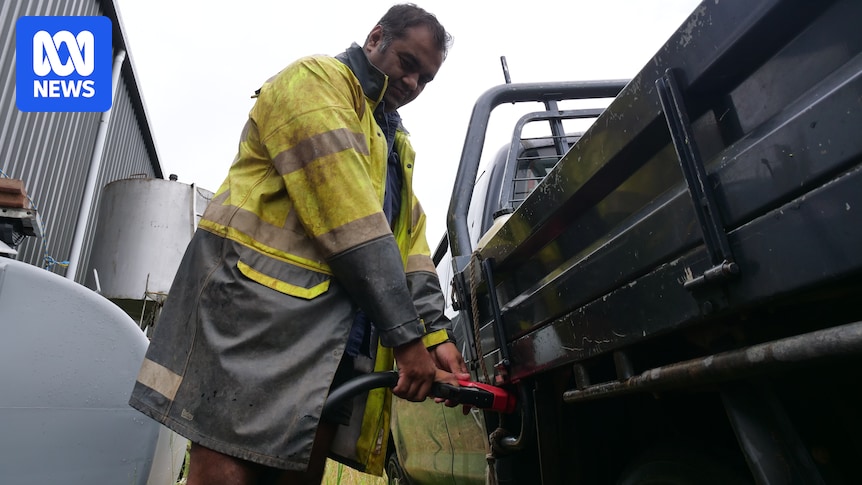
Farmers are warning consumers could soon feel the impact of fuel shortages and soaring prices at the checkout, as the closure of the Strait of Hormuz disrupts global supply chains.
Every major ocean carrier has suspended transit through the critical waterway following ongoing missile and drone attacks across Gulf countries, while major airports in the region have also been forced to close.
As a result, some Australian fuel wholesalers, such as United Petroleum, have begun rationing fuel, halting supply to regional fuel distributors.
Iran war live updates: For the latest news on the Middle East crisis read our blog.
While everyday motorists head to a bowser when they need petrol, farmers rely on fuel deliveries to run their large machinery.
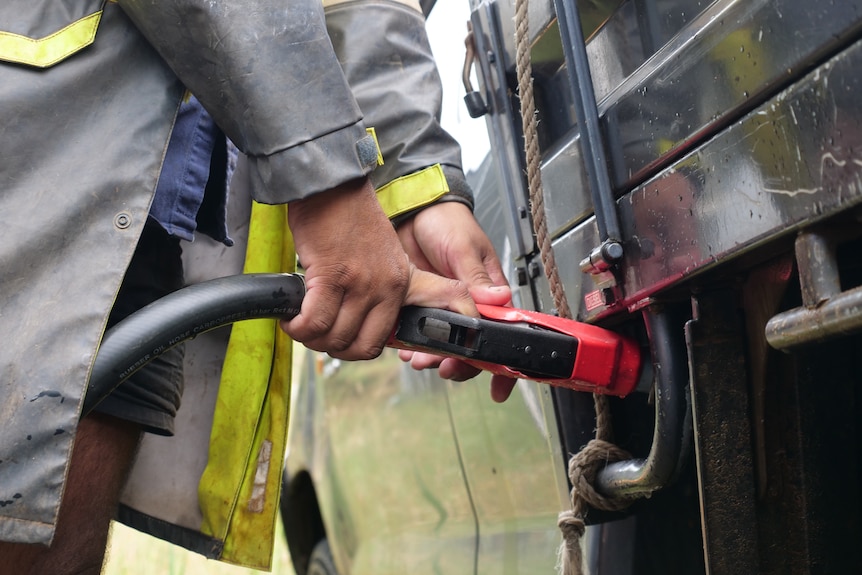
The government says the shortages affecting farmers are due to a spike in demand, not supply chain problems. (ABC News: Charles Rushforth)
“We can’t just drive the tractors and equipment down to the local service station to fill up so we really need an on-farm fuel supply,” New South Wales Farmers’ Grains Committee Chair Justin Everitt said.
“If we run dry we’re sort of stuck, we can’t move and we can’t do much.
“It’s getting very hard to actually get fuel, the price has skyrocketed, but even just getting deliveries on farm is proving difficult.
“People are only getting a quarter of what they’ve actually ordered or they’re not getting it at all and they’re not sure when the next delivery might arrive.”
Danny Kreutzer, a fuel distributor who delivers diesel to farms and transport companies, said his supply had gone from up to 450,000 litres a day to about 45,000.
“A lot of companies are keeping it for retail sites and we need some of it for farmers as well,” he said.
“Foodstocks, if they can’t get their produce to market, cattle fed, transported to abattoirs, there’s going to be a problem.
“So we need the government to look after everyone in the fuel industry and make sure we are able to load our trucks at the terminal.
“We don’t expect to get all of what we normally get but we just want some.”LoadingStockpiling and price spikes
NSW banana and avocado farmer Paul Shoker said he placed a bulk fuel order two days before the conflict escalated, only to be told two days later that the supplier was inundated with panic orders from farmers — some purchasing upwards of 50,000 litres.
“There have been a number of stories involving farmers and other fuel users looking to stockpile fuel because they are uncertain whether they’ll have fuel in the coming weeks and months,” he said.
Mr Shoker, who is based at Coffs Harbour, said producers had noticed sharp price increases since the conflict began, with some paying upwards of $2.30 per litre for premium diesel, a jump of 50 cents in a single week.

Paul Shoker says producers have noticed sharp increases in fuel prices. (ABC News: Charles Rushforth)
Farmers are also contending with rising fertiliser costs, including urea, which is critical for winter crop planting now underway.
While Australian fertiliser importers have diverse supply sources, they are also reliant on suppliers from the Middle East.
Mr Shocker warned that without immediate relief, grocery prices would rise in the coming months as farmers reached the limits of what they could absorb.
“We often talk about Australia being the lucky country and I’m concerned that our luck is fast running out because we shouldn’t be in this position right now,” he said.
Read more about the Iran war:
David Bobbermen from the Queensland Seafood Industry Association said some commercial fishers were also being denied their fuel delivery and experiencing price hikes.
“There will be a lot of small businesses going to the wall if the government does not monitor this situation closely and steps in and provides some sort of support for businesses if the price of diesel particularly rises much over $2,” he said.
Government defends stockpile level
In 2022, the federal government introduced the Minimum Stockholding Obligation (MSO) as a key measure of domestic fuel security.
It requires fuel importers and refiners to hold minimum amounts of petrol, diesel and jet fuel in Australia — which includes cargoes that are on ships.
The International Energy Agency also has a 90-day requirement designed so countries can release oil during global supply crises to help stabilise international oil markets.
The ABC understands that as of March 3, Australia’s strategic reserve stands at 36 days of petrol, 32 days of diesel and 29 days of jet fuel.
Expert analysis on the Middle East:
The stockpile could be used in the event of a complete, or impending, stop to international supply lines.
“Australians can be confident that the rules put in place in 2022 to ensure that Australia has a stock of petrol and diesel on hand here in Australia, not in Texas or Louisiana or anywhere else, puts us in a good position,” Energy Minister Chris Bowen said.
“We enter this international crisis well prepared, better prepared than [when] we have entered similar crises.”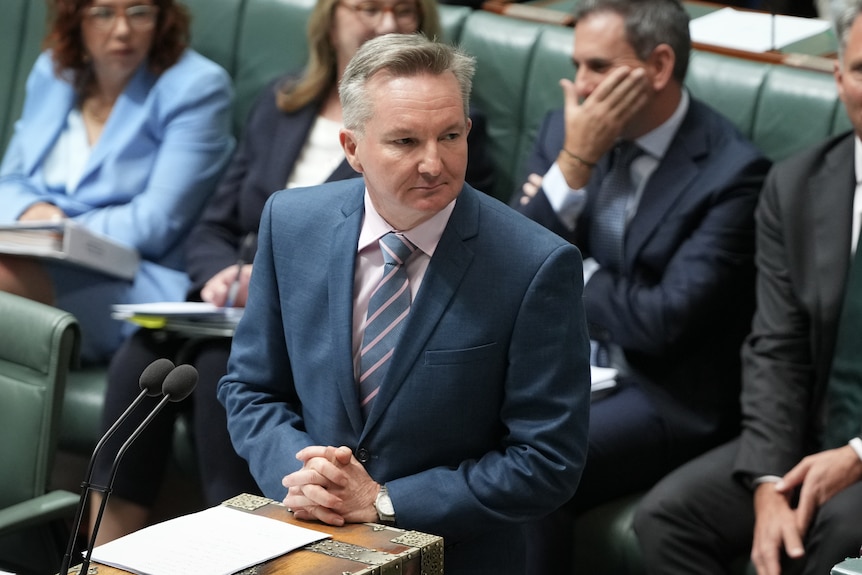
Chris Bowen is urging Australians not to panic-buy fuel. (ABC News: Matt Roberts)
Mr Bowen said the current challenges faced by farmers were due to a “huge spike in demand” rather than a supply problem, but conversations were happening with industry about how to best manage this.
“I have been speaking to the industry this morning, they’ve confirmed to me that every single contract is being honoured,” he said.
“There has been a big spike in extra orders over and above contracts, spot orders if you like … and inevitably, when you’re seeing a huge increase in demand, they’re having trouble keeping up with that.”
Nationals Leader David Littleproud said the big fuel companies had made a “commercial decision” that had a real impact on fuel security and the supply chain.
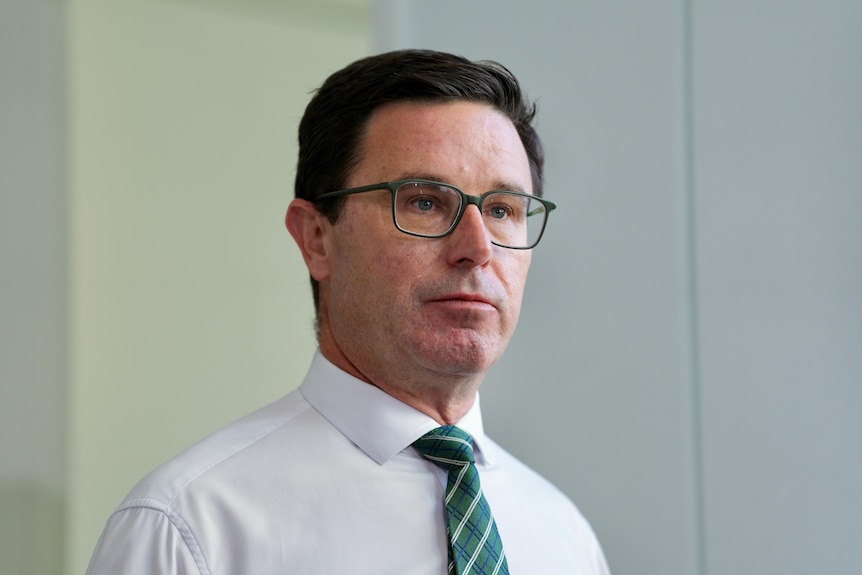
David Littleproud says some farmers have run out of fuel in their tanks and cannot operate tractors to produce food. (ABC: Callum Flinn)
“They’re hedging against a future price shock where they could get caught with fuel they paid more for than what they can get,” he said.
“It’s important that government reaches in and understands that the ACCC needs to move to look at the wholesale market and they need to move in making sure that supply is unlocked to those second-tier wholesalers to ensure supply chains keep going.”
Loading…