
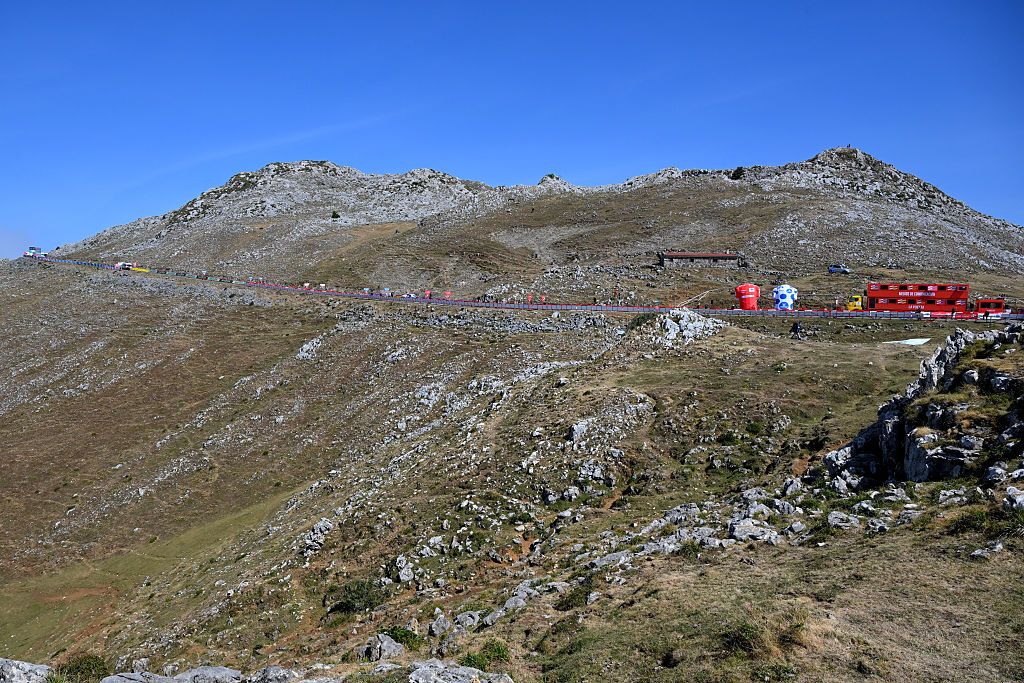
It may still be Classics season, but the 2026 women’s calendar will be defined by the mountains, with iconic summits featured in all three Grand Tours. The Tour de France Femmes has Mont Ventoux, the Giro d’Italia Women featuring the Colle delle Finestre, and it was confirmed on Monday that the Vuelta Femenina will tackle the Alto de L’Angliru, one of the sport’s most fearsome climbs.
The 2026 Vuelta Femenina route, revealed in Madrid, features a gentle build-up through Galicia and Léon, before a mammoth double header finale in Asturias, with stage 6 finishing atop Les Praeres, and stage 7 tackling the Angliru.
At 13km in length with an average gradient of 9.7% – though it’s closer to 13% in the second half – the Angliru already looks hard on paper, and historic men’s Vuelta battles on its slopes have cemented in our minds just what a beastly climb this is. So, for the women’s race to finish at its peak is an exciting and important moment, but it wasn’t one that the Vuelta organisers came to easily or on a whim.
Article continues below
You may like
“We always like to be in touch with the teams and with the riders, and until now we have had a few doubts about [whether] to do it or not,” Kiko García, the Vuelta’s technical director, told Cyclingnews. “Because a few teams say ‘yes, it’s a good idea to do it’ and other ones say ‘maybe it’s too early, maybe just wait a couple of years’ because we were still building women’s cycling.
“We really think that it’s a good time to be able to go with the women to these climbs. It was a little bit challenging because, as you can imagine, they are both very steep climbs, and especially Angliru on the last day, after a week of racing, probably the legs will be a little bit tired for the last day,” García said. “But we are convinced that it’s a fantastic challenge for the girls and it will be for sure a big show – we expect a great result with a fantastic final with these two climbs at the end.”
Even when the inclusion of the Angliru was still just a rumour last week, the debate over whether female pros ‘could’ or ‘should’ take on the climb had already begun, with El País going as far as asking a physiologist to weigh in, but García was unequivocal in his feelings.
A balanced course
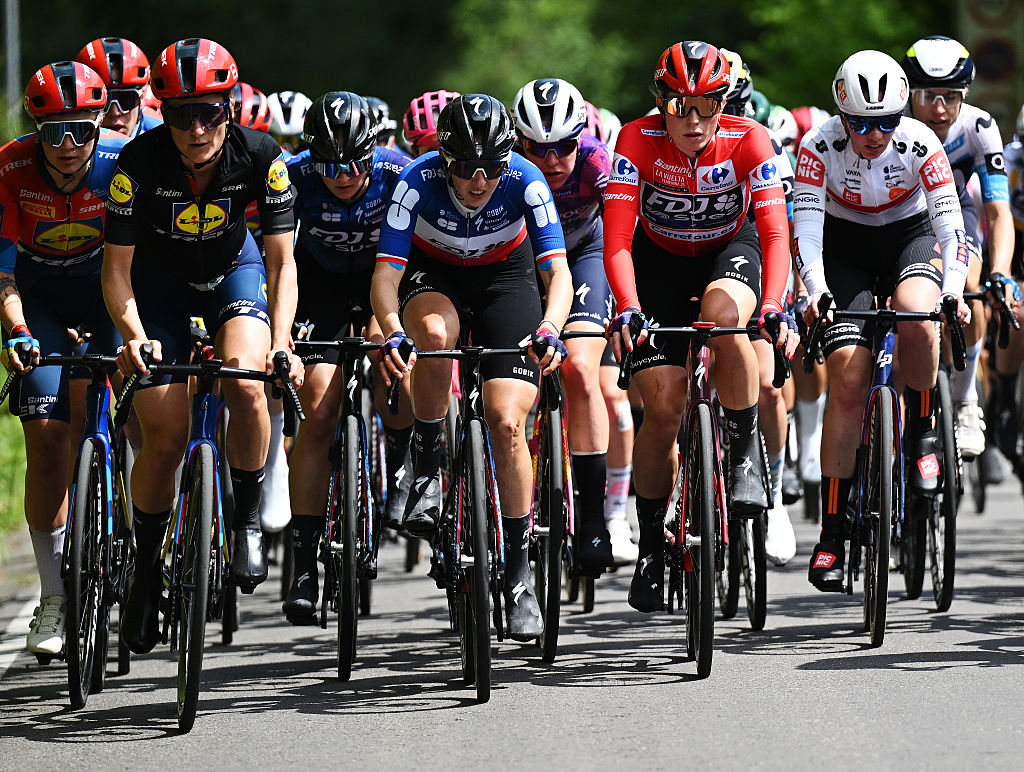
The peloton racing at the 2025 La Vuelta Femenina (Image credit: Getty Images)
To that end, García and race director Fernando Escartín have put together a course that really does build to the finale, though don’t write off the rolling terrain of northeastern Spain as easy.
What to read next
“Galicia, the region where we start, is not easy. It’s not flat, it’s up and down and up and down, but without any big, big climbs. So it’s the kind of racing that many riders know. Also, our stages are not too long; we try to always keep the balance in the middle. We expect for the riders to go from the beginning to the finish with good condition, with a good level, to offer the fans a big spectacle until the end.”
The other key difference, which may well keep the GC open for longer, is the lack of a time trial. The women’s Vuelta, in its various guises, has long included a stage against the clock, most recently in a series of TTT openers.
“It’s something new, and it was a bit challenging, not easy to decide,” García said about dropping the TTT. Sometimes we see that placing a TT in a race, you put the balance a little bit between the climbers and the and the TT specialists, but this time we want to see what happens. Maybe it will open more chances and more opportunities to the breakaways, maybe for the all-round riders it’s a good opportunity to try something else, for many riders they will need to try other strategies to try to drop the climbers before the two last days.
“It’s something very exciting for us, to see the final result, without the TT.”
Though the Vuelta is the first Grand Tour of the year, it is the last to announce its route, and though teams have been given some details about the route, they do not have all the information. The route was announced around the same time last year, which drew some criticism, but García defended the organisation’s timing.
“Our difficulty is that we finish the men’s race in September, and as soon as possible we need to do the recons for the men’s and women’s next editions, because normally we present the men’s race before the end of the year, so we are very busy on timing for everything,” he said.
As for any concerns about safety after the last men’s Vuelta was heavily disrupted and ultimately cut short by protests and road invasions – sparked by the presence of an Israel-branded team, which won’t be present in either men’s or women’s Vuelta this year – García was short in his response.
“It’s time to turn the page. 2025 was 2025, and now it’s 2026, and it’s time to look ahead and just focus on cycling,” he said.
A fast-growing event, now time to reflect
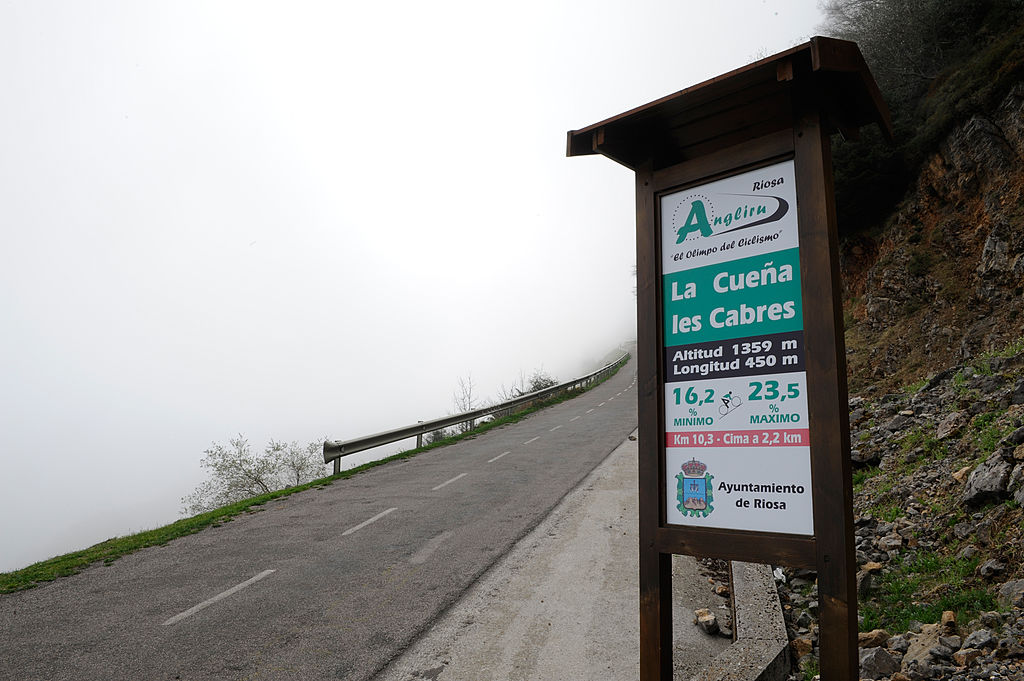
Views of Angliru, a steep mountain road in Asturias, Spain (Image credit: Getty Images)
2026 will be the 12th year of existence for the Vuelta Femenina, which started life as a criterium in Madrid at the end of the men’s race, and has now grown into the bona fide third Grand Tour, increasing in difficulty every year.
“It has been a long way for us, starting with a one-day race and then growing step by step and coming with the women’s Vuelta Challenge becoming the Vuelta Femenina,” García reflected. “It was a challenge to grow together with women’s cycling – with the teams, with the riders, with the calendar – and it’s very exciting to see how we have been able to build something like this in not a long process. It has been challenging, and it has been only possible thanks to the hard work of each family: riders, organisers, teams, and the UCI.”
Though the progress has been strong and so far successful, there is also a feeling that the only way is not always up, and perhaps now – the race’s fourth year as a seven-day event – is also a chance to assess the foundations.
“Very quickly, maybe – and this is a personal opinion – maybe too quick, because now we need to slow down a little bit and take time to check what’s not so good, what we need to improve,” Garcia said. “For example, we can see from last year that we lost one WorldTour team, we are losing a couple of races in the calendar, so we need to be careful, we need to be sure that this structure is solid.
“The challenge was to build something, now we have a fantastic calendar, races, teams and everything, but now it’s time to breathe a little bit, see what we can improve, we need to be comfortable with everything, and be always all together and to be sure that we can move ahead step by step.”
That’s not to say García doesn’t have hopes for the race to continue developing – “Let’s see. As I said, we are still growing, we are still building,” he affirmed – but it’s about doing it in a sensible way, and also in a way that doesn’t only seek to replicate men’s cycling.
“We don’t need to be exactly the same way [as men’s cycling], probably we need to do something new for the girls, why not? A new format, new models, new classifications,” he said.
“It’s a question, and it’s something that we need to work on all together and see if we need exactly the same thing and copy-paste from the men’s cycling to women’s cycling, or if we need to be smart and build something exciting, something different – different models of races, different finishes. I’m not saying it’s an obligation to do something different, but sometimes we only think to do the same thing, and maybe we have an opportunity to do something different.”
For this year, though, García is hoping for just one thing: a finale befitting of the iconic climb they’ve chosen for it.
“For an organiser, it’s always a dream to arrive at the last stage with an open classification, with the opportunity to have five or six riders hoping to win, and to have a nice tribute to the Angliru as an iconic climb, but also a tribute to women’s cycling with a fantastic finish,” he said. “Hopefully with good weather, because Asturias in good weather is a real paradise, and I hope that the fans around the world will really enjoy this finish.”