
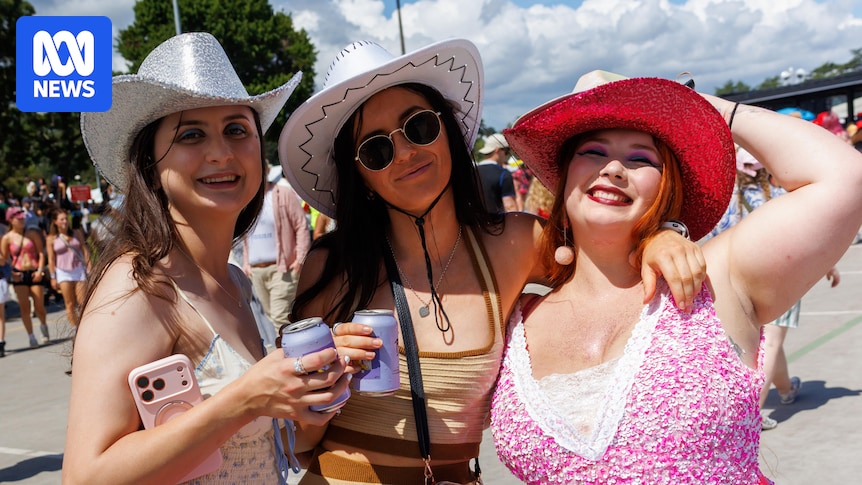
Cowgirl hats, riding boots and big-buckled belts.
Once the domain of outback Australia, these days you’re as likely to find country clobber on a city street as a stockyard.
The American Western-inspired aesthetic — dubbed “cowboy core” — is having a moment in women’s fashion, with celebrities such as Beyoncé, Taylor Swift, Chappell Roan and Bella Hadid fuelling the trend.
For Australian country brands like Ringers Western, Akubra and RM Williams, the mainstream fashion trend has been good for business.
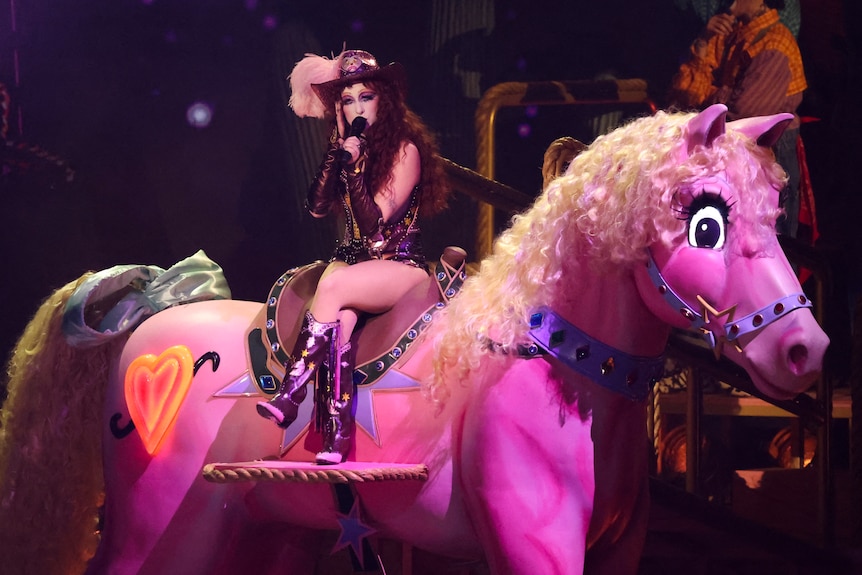
Cowgirl-coded Chappell Roan performing at last year’s Grammy Awards. (Reuters: Mario Anzuoni)
Despite the name, this isn’t a trend solely for the cowboys. It’s been appearing in women’s fashion since early 2024, according to Carol Tan from RMIT’s School of Fashion and Textiles.
“Western‑inspired ‘cowboy’ leans into cinematic Americana,” she says.
“It blends traditional western elements with contemporary streetwear and luxury styling.”
What the trend looks like:Pointed-toe bootsBoot-cut denimFringe jacketsHigh-crown hatsPearl snap-button shirtsBelts with artistic carvings and large bucklesThe cowboy comeback
But this isn’t western fashion’s first rodeo.
Commercial fashion designer and senior lecturer at Queensland University of Technology Tim Lindgren says there’s been a continual and cyclical cowboy influence in parts of our fashion culture.
“The theme just rises closer to the surface when cultural phenomena empower it,” he says.
Dr Tan agrees.
“We saw a big cowboy boot moment in the early 2000s. In 2004, in particular, Sienna Miller made distressed, embroidered pairs [of boots] a must-have,” she says.
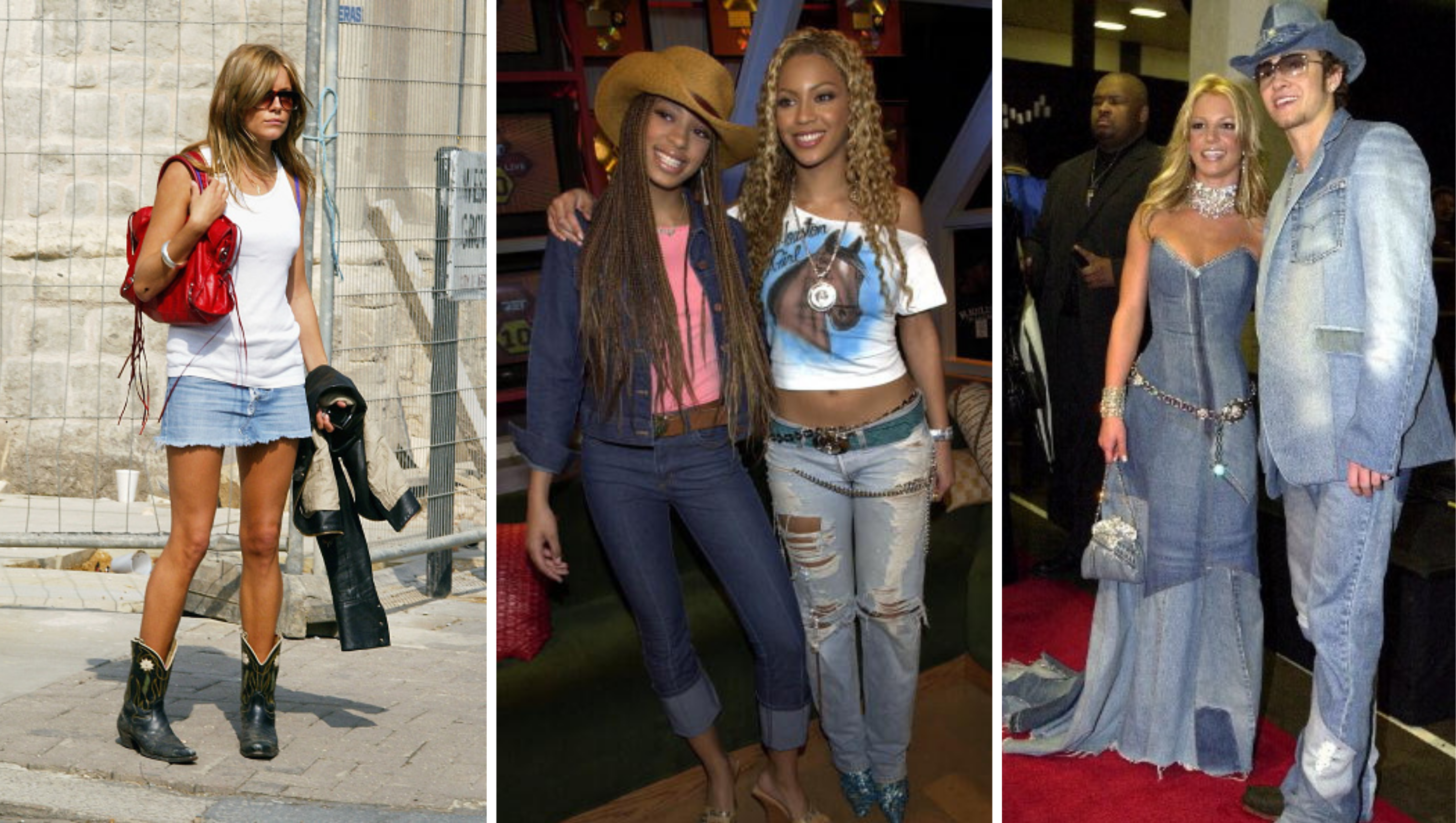
Sienna Miller, Solange and Beyoncé Knowles and Britney Spears and Justin Timberlake all leaned in to noughties Western trends. (Getty: Gareth Cattermole/KMazur, AFP: Lucy Nicholson)
This time around, though, it’s been amplified by social media.
“TikTok and Instagram have pushed #CowboyCore into everyday dressing and festival looks, moving it beyond a niche or costume category,” Dr Tan says.
Beyoncé’s Cowboy Carter album has been widely credited with reigniting the style trend.
Loading Instagram content
In fact, last year, Shopify reported its merchants saw a 141 per cent increase in cowboy hat sales, year on year, which it attributed to Beyoncé’s Cowboy Carter tour of the United States, England and France.
But the trend is not just being fuelled by female influencers.
The record-breaking popularity of Yellowstone — the contemporary US western TV drama starring Kevin Costner — has created the “Yellowstone Effect”.
“It’s kept ranch aesthetics and wide‑open‑landscape iconography front of mind, reinforcing interest in western styling,” Dr Tan says.
“There are also K‑pop idols and international performers wearing embroidered jackets, boots and bolo ties onstage, signalling the trend’s globalisation.”
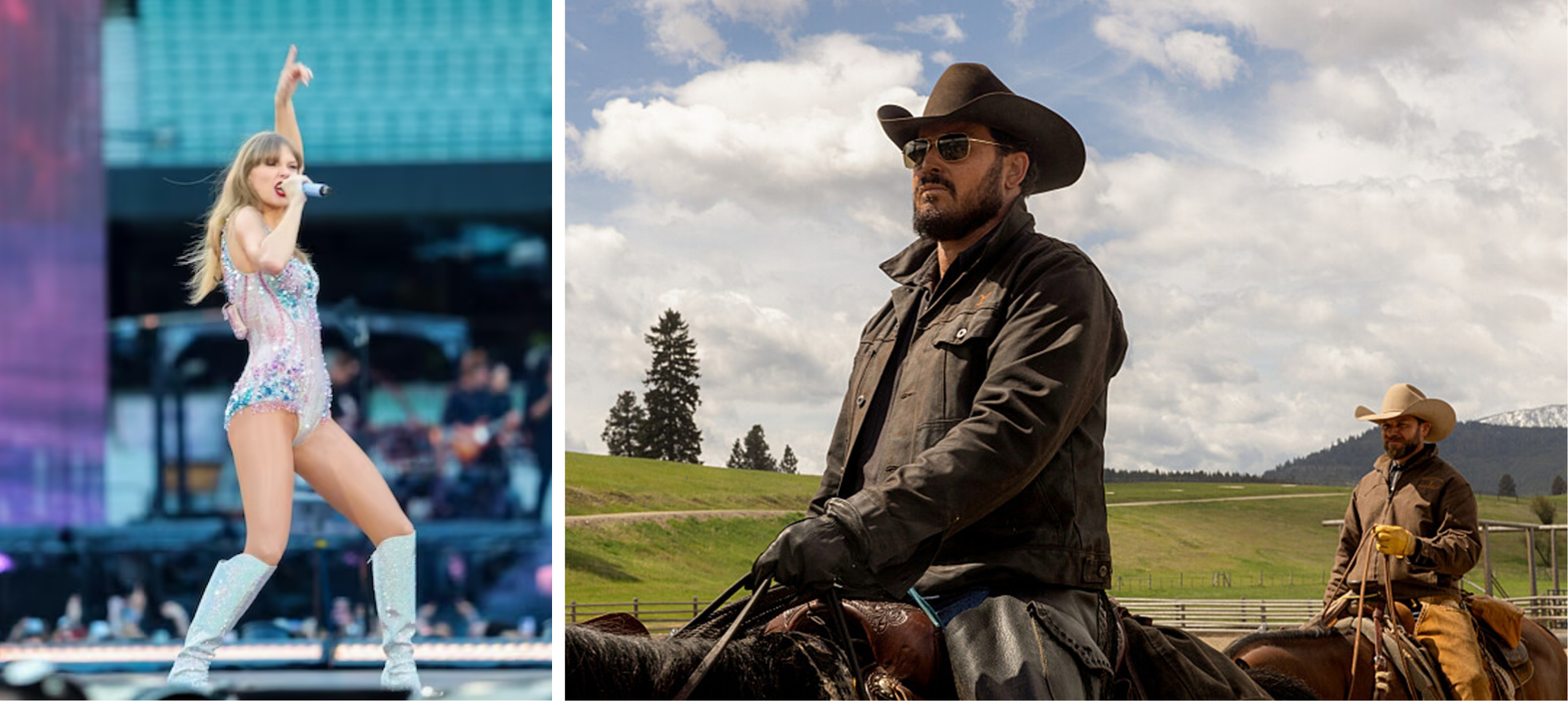
Pop culture figures such as Taylor Swift and modern Western drama Yellowstone have propelled cowboy core into the mainstream. (ABC News/Paramount)
Americana meets Aussie bush
But while the cowboy trend has gone global, it’s surfaced locally with a distinctly Australian twist.
The US western cowboy aesthetic embraces theatrical styling (think rhinestones, silver and turquoise jewellery and fringed chaps) while Dr Tan says Australia has a more “understated, rugged and practical” take on the look.
Learn how boots are made in Dr Karl’s How Things Work
“Think oilskin coats, wide-brimmed felt hats for sun protection, and elastic-sided boots designed for long days outdoors.”
Dr Tan says Australian brands long associated with country styling — like RM Williams, Akubra, Driza-Bone and Rossi — stand to benefit from the trend.
“Consumers engaging with cowboy core tend to prefer ‘real’ makers over costume versions,” she says.
“They are gravitating to pieces with provenance and craft … with leatherwork, repairable boots, hatmaking, and heritage denim that feel built to last.”
She says that aligns directly with these brands’ DNA.
And while some of these labels have almost become cultural icons in themselves, Dr Lindgren says they’re also mid-market luxury brands that exist outside of the fashion cycle.
“The RM Williams boot is more likely seen on a banker than on a farmer or a stockman or a horseman,” he says.

QUT’s Tim Lindgren and RMIT’s Carol Tan agree our upmarket heritage brands are here to stay. (Supplied)
According to RM Williams’s head designer Amy Barnes, there’s been growing popularity in products with a distinct cowboy feel.
“We’ve definitely seen increased interest in some of the archive pieces, like the original rodeo-top boots… which essentially were created back in the ’40s and ’50s for rodeo riders,” she says.
But they’re not the only Australian brand seeing a shift in their customer.
“The resurgence of the western trend has definitely helped us, particularly with reaching a new audience and by showing people how to dress or connect to western attire,” says Akubra’s chief commercial officer, Peter Fowler.
While Akubra has been making unisex western hats since the ’70s, last year the brand released its first collection specifically for women.
“We’ve done something with an Australian lens on what could be seen as American western apparel,” Mr Fowler says.
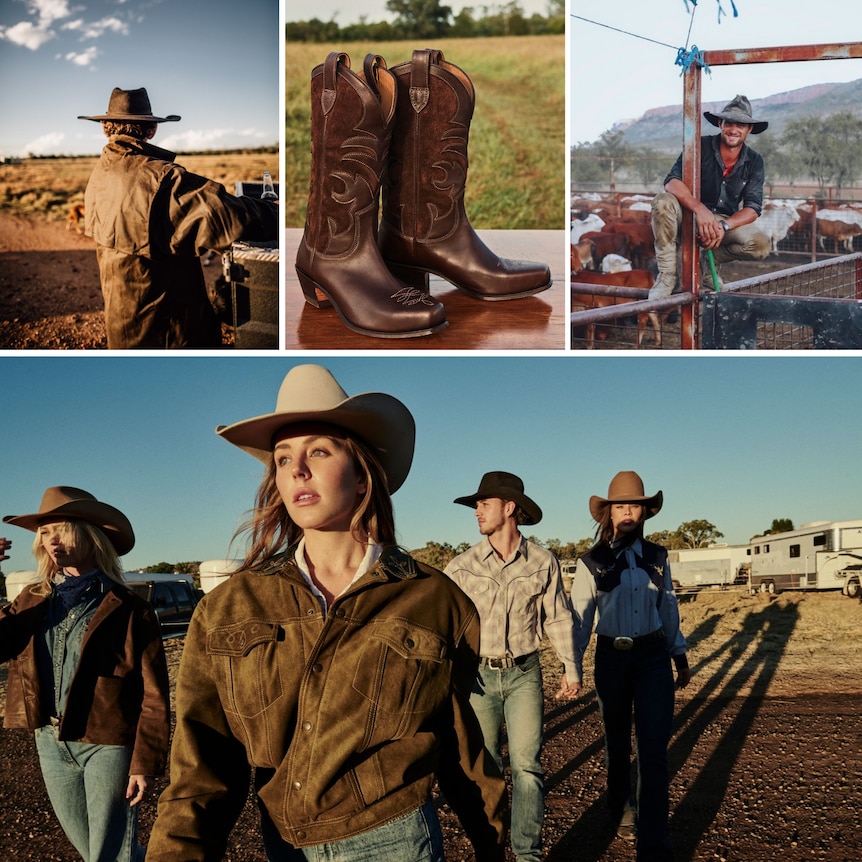
Australian brands are riding the cowboy-core wave in their own way. (Supplied: Driza-Bone/RM Williams/Ringers Western/Akubra)
After starting out making hats for people in the city and then later targeting a country market, the brand is having a full-circle moment as its demographic shifts to include a more urban and slightly younger customer.
“Now we’re bringing it back and having it in both parts of the world,” Mr Fowler says.
Selling a sense of belonging
But heritage brands aren’t alone in riding the cowboy wave, with local lifestyle label Ringers Western increasingly seen in festival crowds and as inner-city casual weekend wear.
Featuring a bold logo and a distinctive western feel, the brand’s clothing is now stocked in major retailers, spurring its popularity.
Dr Lindgren suggests the brand has developed mainstream appeal by creating a sub-culture that’s akin to a club.
And he says thanks to branded events and sponsorships, it’s attracting workers on the land just as much as “outdoor-aspirational” urban folks from the suburbs.
“People are generally isolated and they need to feel like they belong … the product simply displays to your peer group that you have paid the price to join,” Dr Lindgren says.
As for what a real-life cowgirl thinks about city folks donning country and western attire — the uniform of the bush?
Country influencer, beef producer and self-described Australian cowgirl Madeline Curr says “the more the merrier”.
“The more people that want to be involved with the lifestyle and be part of the community the better — and that includes what we wear. I love it!”
