
Increasing fuel prices are putting pressure on an already struggling road transport industry, with the potential to impact the price of everything from furniture to food for people across the country.
Global oil prices have spiked over the past week, reaching highs near $US120 a barrel on Monday, as geopolitical tensions rise in the Middle East and disrupt shipments of the commodity through a key waterway.
Iran war live updates: For the latest news on the Middle East crisis read our blog.
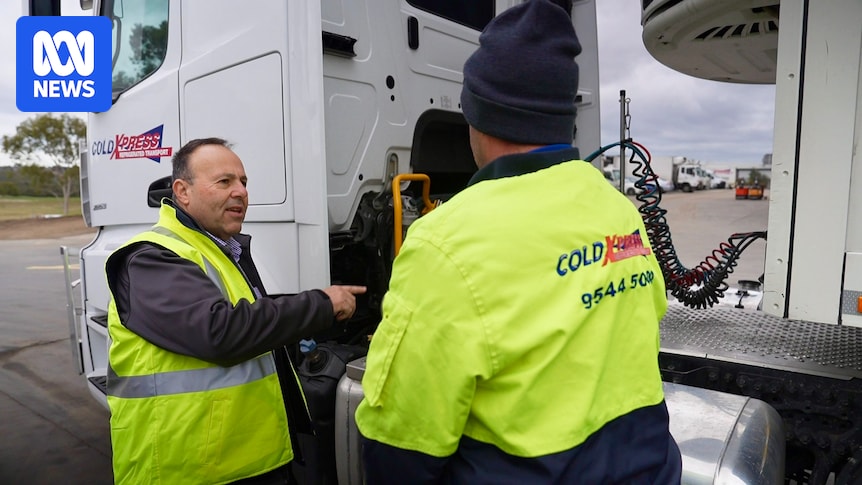
It leaves trucking companies like Cold Xpress in the difficult position of either trying to absorb the costs or pass them on to clients.
“We can’t absorb the increase,” said John Di-Losa, the chief executive of the refrigerated trucking firm.
“We are passing the cost on [to our clients] so it doesn’t impact us. For every 5 cents fuel goes up we add 1.55 per cent to an invoice,” he said.
Those clients include major manufacturers, food processors and distributors — so when their costs go up, Australians will feel the flow on effects, including to their grocery bills or cafe orders.
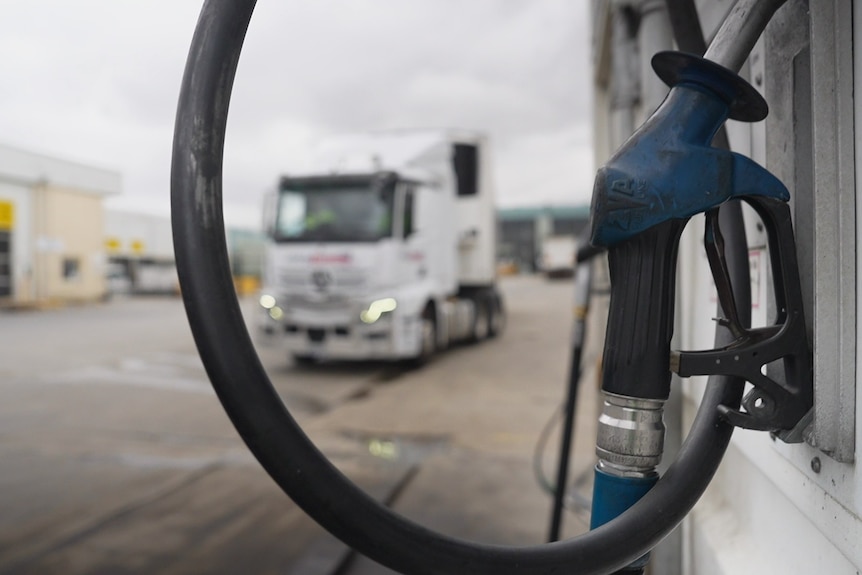
In 2025, one in 12 road transport businesses closed their doors. (ABC News: Darryl Torpy)
CreditorWatch chief executive Patrick Coghlan said while the transport industry can seem quite “niche”, the impacts were widespread.
“It actually moves everything that you buy in the shops or have delivered, so it’s a hugely important part of the national economy,” he said.
As global oil prices remain volatile, and Australian companies and motorists already feel the hit of higher fuel costs, economists at NAB have warned inflation could peak above 5 per cent by the middle of the year.
The Reserve Bank board is preparing to meet to consider interest rates next week, with households and businesses bracing for the potential for even higher interest rates to also hit their budgets.
Trucking companies report shrinking bottom lines prior to Middle East war
The chief executive of Australia’s Trucking Association, Mathew Munro, said for an industry that was already under extreme pressure, trucking companies should not be expected to absorb these rising fuel costs.
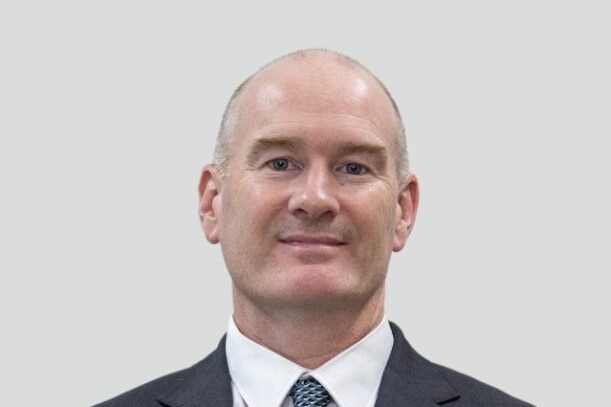
Mathew Munro says trucking companies should not be expected to absorb rising fuel costs. (Supplied: Mathew Munro)
“Fuel is typically one of the top three costs for a trucking business. Any increase in fuel prices has a big impact,” he said.
“Trucking businesses need to review their costs and, if necessary, have open conversations with their customers about the need to bring forward the next fuel levy adjustment or rate review.”
Prior to the US-Israeli attacks on Iran last month, Mr Di-Losa had already made multiple changes to his trucking business to ensure his company could stay afloat this year.
Loading
Despite having up to 180 trucks on the road on any given day, he said his margins were decreasing.
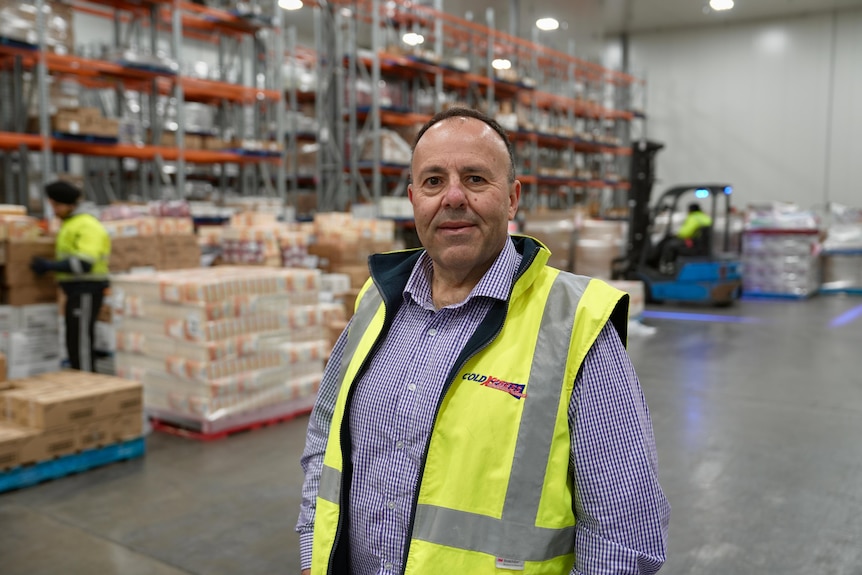
John Di-Losa says he pays nearly $1 million a year in land tax. (ABC News: Darryl Torpy)
“Every year we’re growing but the bottom line seems to be shrinking,” he said.
“We’re doing everything we can, we’re looking at synergies, we’re into the digital revolution, we use AI now to keep ourselves ahead of the game, but it’s still difficult.”
The hidden forces driving Trump’s attack on Iran
Last year, one in 12 road transport operators closed their doors after struggling to keep up with accelerating costs, according to data from CreditorWatch.
“They’re under a lot of pressure at the moment, we’ve seen a significant increase in the number of insolvencies [and] we’re seeing pressure on those remaining solvent businesses,” said CreditorWatch’s Mr Coghlan.
For example, at the end of 2025, Ron Couch Transport and Don Watson Transport, which had each been in the industry for decades, went into administration.
Read more about the Iran war:Hundreds of thousands in land tax
John Di-Losa has been in the road transport industry for more than four decades, and today, he feels the financial pressures in every corner of his business.
“We’ve got mechanical bills that have shot up, refrigeration costs have gone up, we have land tax and rates on our sites,” he said.
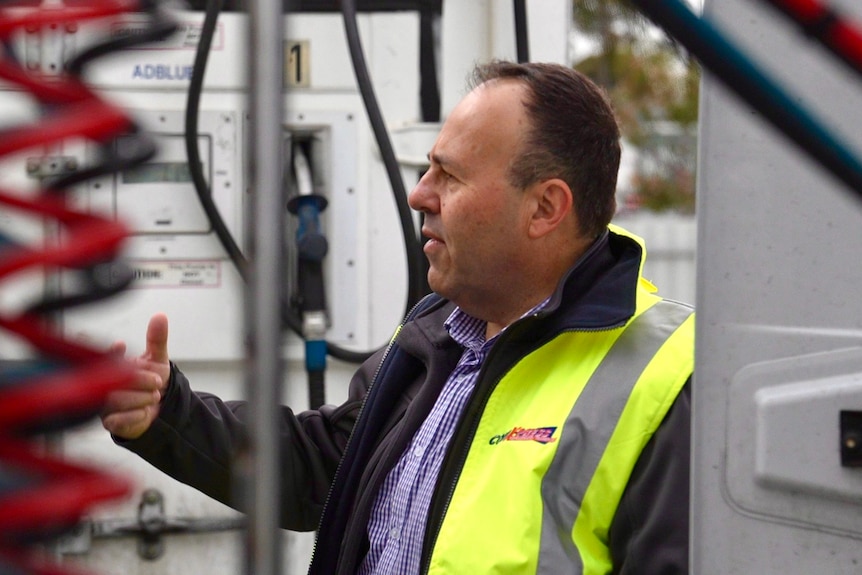
John Di-Losa has come up with new ways to make revenue through his road transport business. (ABC News: Darryl Torpy)
He owns two sites to house his trucks in Melbourne, where the land tax was $96,000 and $80,000 in 2021. Then last year, those figures shot up to $402,000 and $322,000 respectively.
To keep up with the rising costs, and to avoid passing more costs on to his clients, Mr Di-Losa has diversified his business model, now offering more services like pick and packing for customers, and line haul, which is basically taking pallets of stock from one state to another.
“We’re looking at every possible angle to get some extra income streams coming in because it’s too hard to rely on just one income stream,” he said.
CreditorWatch chief executive Patrick Coghlan said last year’s insolvencies reflected about a 40 per cent increase compared to 2024.

Patrick Coghlan says input costs are going up for road transport businesses, while discretionary spending is going down. (ABC News: John Gunn)
“All the input costs are generally going up, and then you combine that with a reduction in discretionary spend from the consumer, so think about buying less retail or going out and buying less from the shops [or] hospitality,” he said.
“So all of a sudden there’s a lot less that needs to actually be delivered.”
Australians likely face price hikes
Mr Coghlan said there had also been a 100 per cent increase in the trading partners of these road freight businesses lodging defaults for non-payment of invoices, including fuel companies, finance companies, or insurance companies.
“We know the payment defaults when they’re lodged against a company, it means there’s a significant increase in the probability of that company failing in the next 12 months,” he said.
Profit margins less than 3 per cent
Resilience is slim in the road transport industry, especially when there is mounting external pressure, because margins are already so tight.
“Most operators have profit margins of less than 3 per cent, which means they have very limited capacity to absorb increasing costs, particularly when several costs are going up at the same time,” said director at NineSquared Phil Bullock.

Phil Bullock says most trucking operators have margins of less than 3 per cent. (ABC News: John Gunn)
His firm specialises in economics and public policy consulting, with a focus on transport and freight, for the government and private sector.
Mr Bullock says on top of increasing costs, including rising interest rates, the sector faced underlying systemic issues.
“The industry as a whole is really grappling with driver shortages at the moment and more recently, the industry has expressed concerns around illegal contracting as well,” he said.
Long queues form at servos as fuel prices climb
He said these pressures may be driving unsustainable levels of price competition in what was already a very competitive industry.
The freight and logistics industry is a major player, contributing about 8 per cent to Australia’s GDP, and moving 90 per cent of everyday goods across the country.
When the industry is affected, Mr Bullock says, everyone suffers.
“When the trucking industry is under pressure, supply chains are under pressure and that pressure can then impact on the prices and availability of goods for businesses and consumers,” he said.
“I think the main immediate impact that people might see is that it starts to impact on the goods that they need and when they can be delivered.”
But Mr Bullock said there were steps the government could take to support the industry.
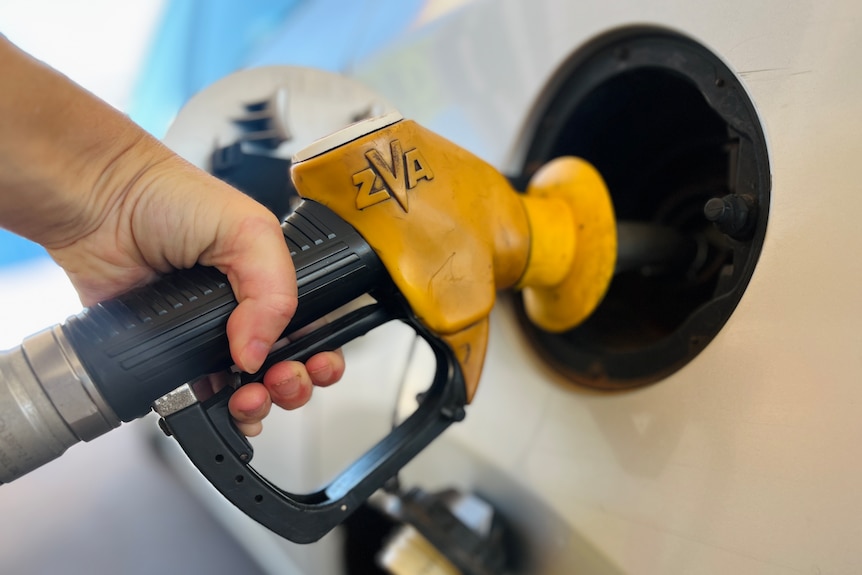
The cost of petrol and diesel has been impacted by rising conflict in the Middle East. (ABC News: Erin Parke)
“I think government can look at how it can more actively support the industry to address systemic challenges like driver shortages,” he said.
“And I think fairer contracting is also important, including compliance section to make sure that operators are complying with the law and to help stop the good operators going out of business.”
Government says it is working on reforms
In a statement to the ABC, a spokesperson for the federal government said it was working towards removing “sham contracting”.
“This includes our Closing Loopholes reforms, which commenced in 2024, making it harder for employers to get away with sham contracting,” they said.
“These reforms give the Fair Work Commission the power to set enforceable minimum standards for road transport contractors, targeting businesses that use contracting arrangements to undercut pay and conditions.
“Under the reforms, employers must prove they reasonably believed a worker was correctly classified as an independent contractor. These changes help protect workers and ensure fair competition in the industry and we have begun to see these reforms pay dividends.”
Loading…