
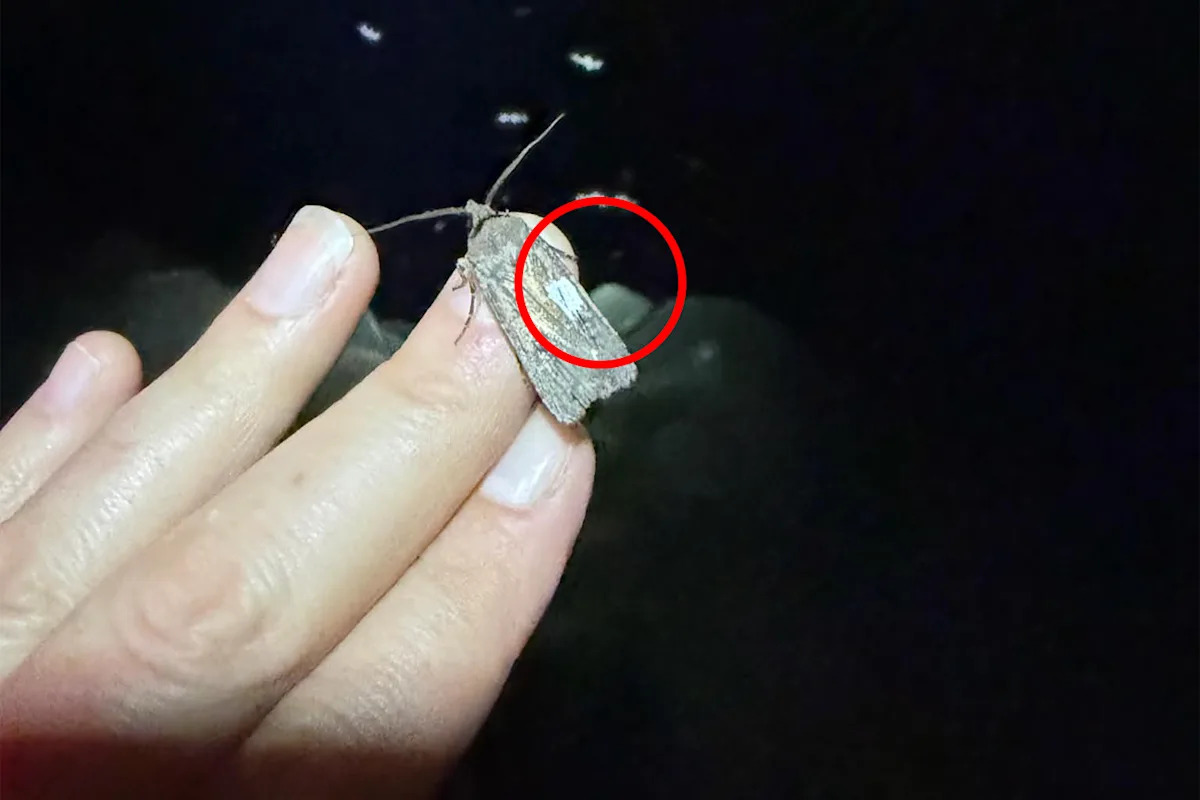
Next time a moth gets trapped inside your home, take a close look at its wings before you help it outside. Your efforts could help prevent the extinction of one of Australia’s most important creatures.
More than 14,700 bogong moths living in Australia’s High Country caves have been tagged with either white stickers or white paint to help solve a years-long mystery.
For decades, the species was so numerous that their swarms blacked out the moon during their annual migration of up to 1,000km, and they were a key food of alpine species like the mountain pygmy possum.
But in the summer of 2017-2018, the species suffered a near-total collapse, and they were listed as endangered.
What do I do if I spot a marked bogong moth?
In 2026, as they migrate up to 1,000km home, scientists from Invertebrates Australia and Western Sydney University are hoping Aussies will notice the paint or sticker and register their sighting.
It took this team of around 20 people the best part of 10 days to catch the moths inside the alpine caves of Mount Kosciuszko.
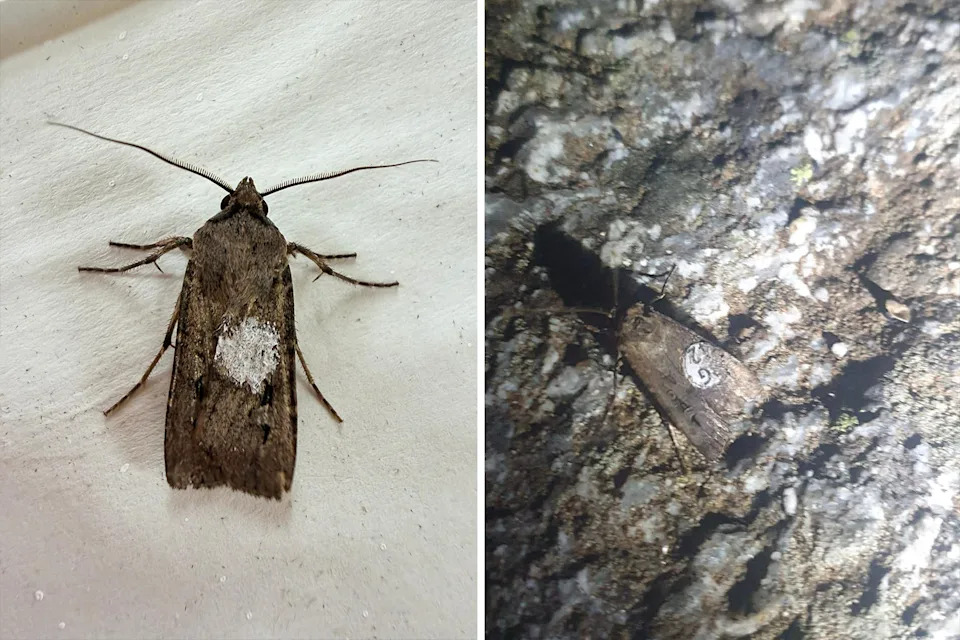
The moths are marked with either a white splotch of paint (seen left) or a small sticker (right). Source: Invertebrates Australia
And now they’re hoping the public will take five minutes to help them out by logging their sighting on either the iNaturalist website or on Bogong.org.
Any sightings of the species are welcome, as they can help build our understanding of their preferred habitat and migration path.
But they can be hard to distinguish from other species, and so the white marking certainly helps identify them.
Massive gap in bogong moth knowledge
It’s suspected that the ongoing drought played a role in their decline, but other theories single out factors like insecticides used in agricultural settings.
Until scientists know what sort of environments they rely on, it’s hard to understand how much this extreme weather event impacted them.
They are known to live in diverse ecosystems, but can be blown off course, and sometimes end up in New Zealand.
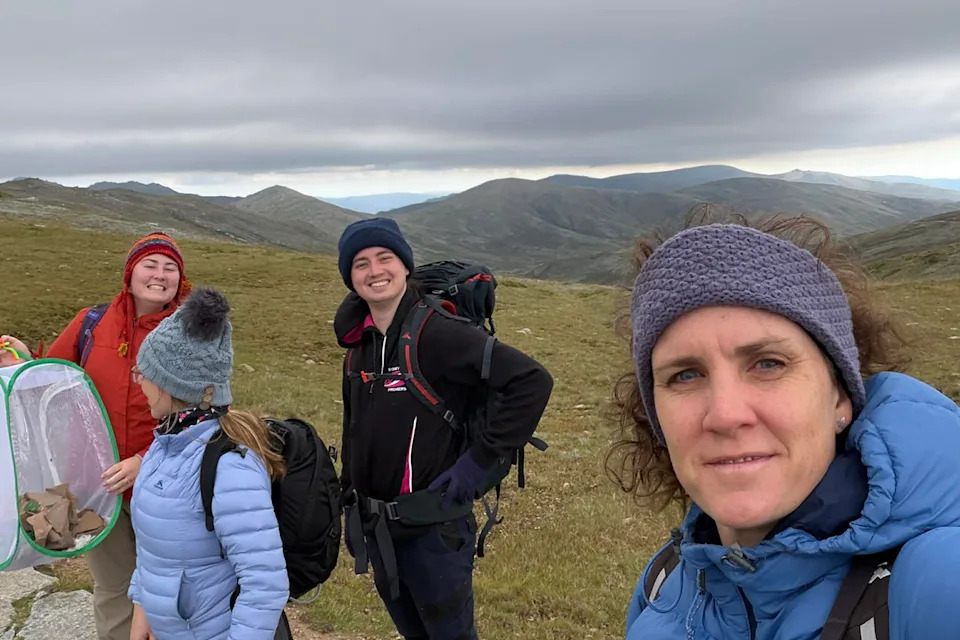
The Invertebrates Australia team, including Prof Kate Umbers on the right, captured and marked almost 15,000 moths. Source: Invertebrates Australia
Associate Professor Kate Umbers, the managing director of Invertebrates Australia, said the recovery has taken years, and so there are likely multiple factors impacting numbers.
Umbers explained there is a “massive gap in knowledge” about bogong behaviour that needs to be understood.
“After the crash happened, we realised a big problem was that we didn’t know what they were doing after they left the mountains,” she said.
Do you have a story tip? Email: newsroomau@yahoonews.com.
You can also follow us on Facebook, Instagram, TikTok, Twitter and YouTube.