
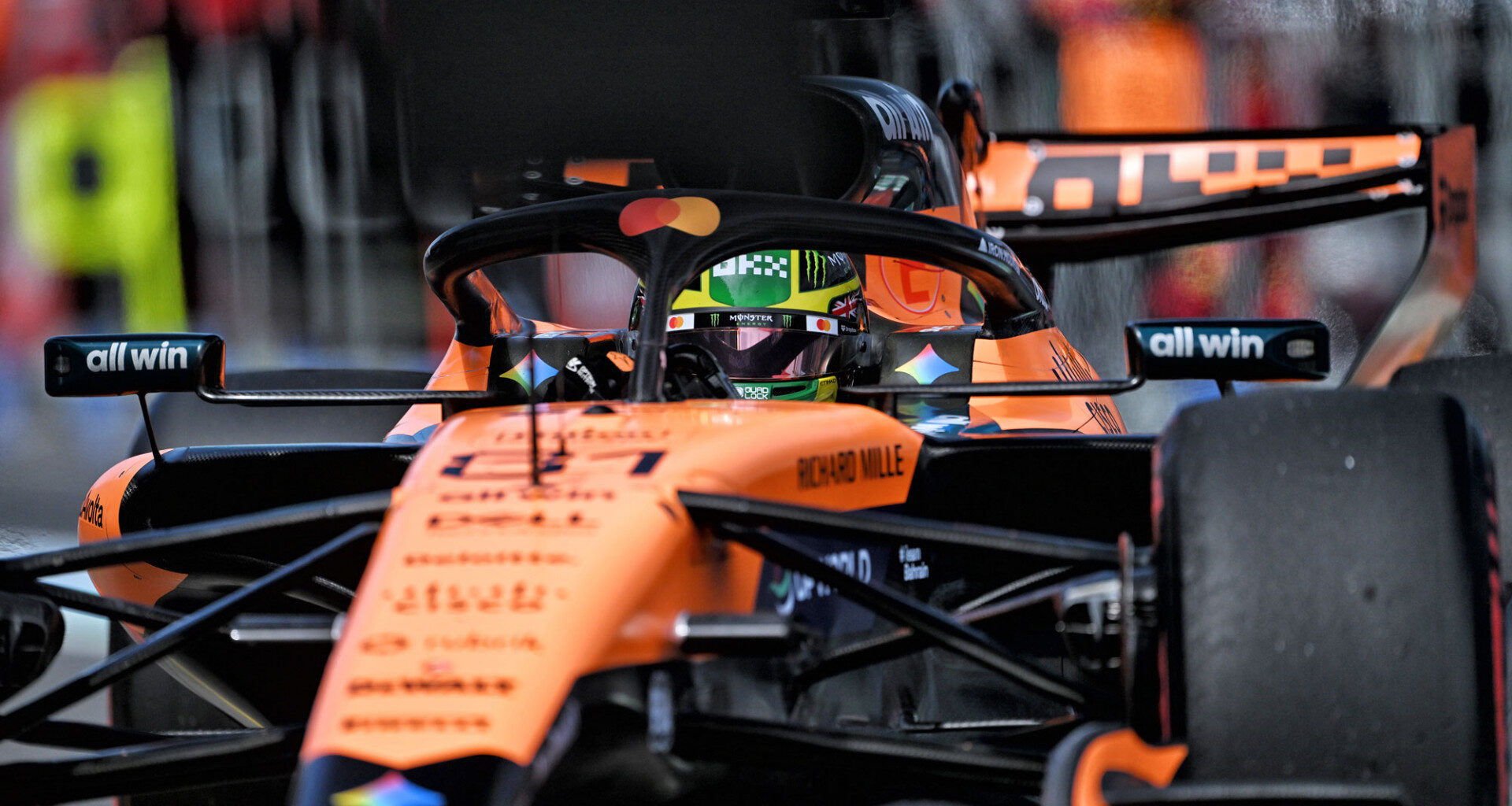
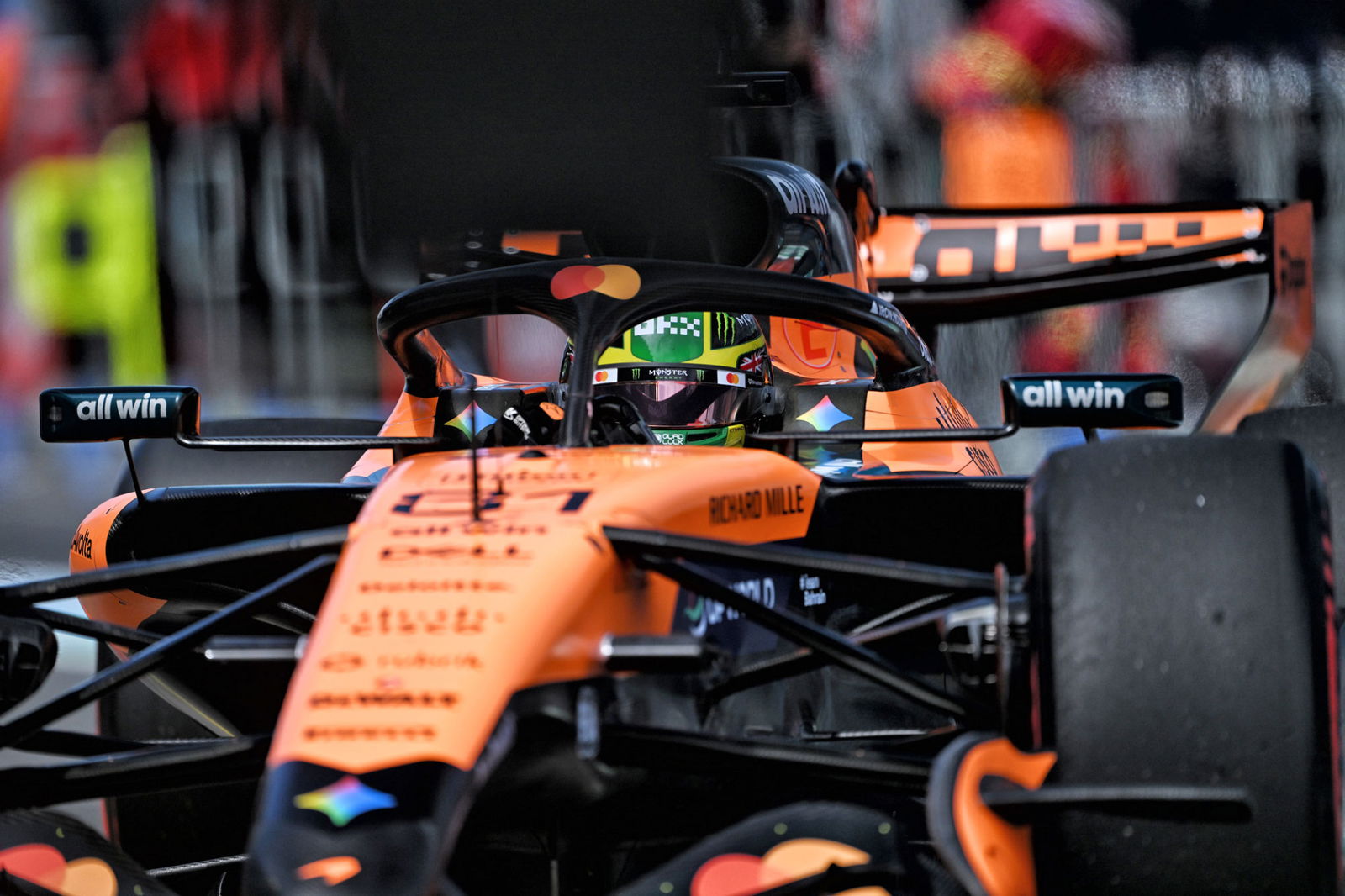
Oscar Piastri in Melbourne. Image: XPB Images
McLaren team principal Andrea Stella admitted following the season-opener that the team remains “a little puzzled” as to the performance difference, despite sharing the same power unit.
Piastri topped Free Practice 2 on Friday and was ahead of teammate Lando Norris for much of the weekend, but any thought the local hero could be a truly competitive force was shattered in qualifying.
In Piastri’s own words, “the sandbags well and truly got dropped out” during the session, at the end of which the Australian was 0.8s adrift of polesitter George Russell.
While Piastri did not compete in the race, defending world champion Norris took the chequered flag fifth and more than 50 seconds adrift of Russell, who led a Mercedes 1-2.
Stella admits McLaren has work to do on its package to match the Mercedes in the corners, but GPS analysis showed considerable time was also being lost on the straights.
“We remain a little puzzled by the difference we see in the data between the speed of our car and the speed of other cars using the same power unit,” he surmised.
“[It] clearly indicates that we should be doing a better job in understanding how to utilise the power unit with the complexities that came with the 2026 regulations.”
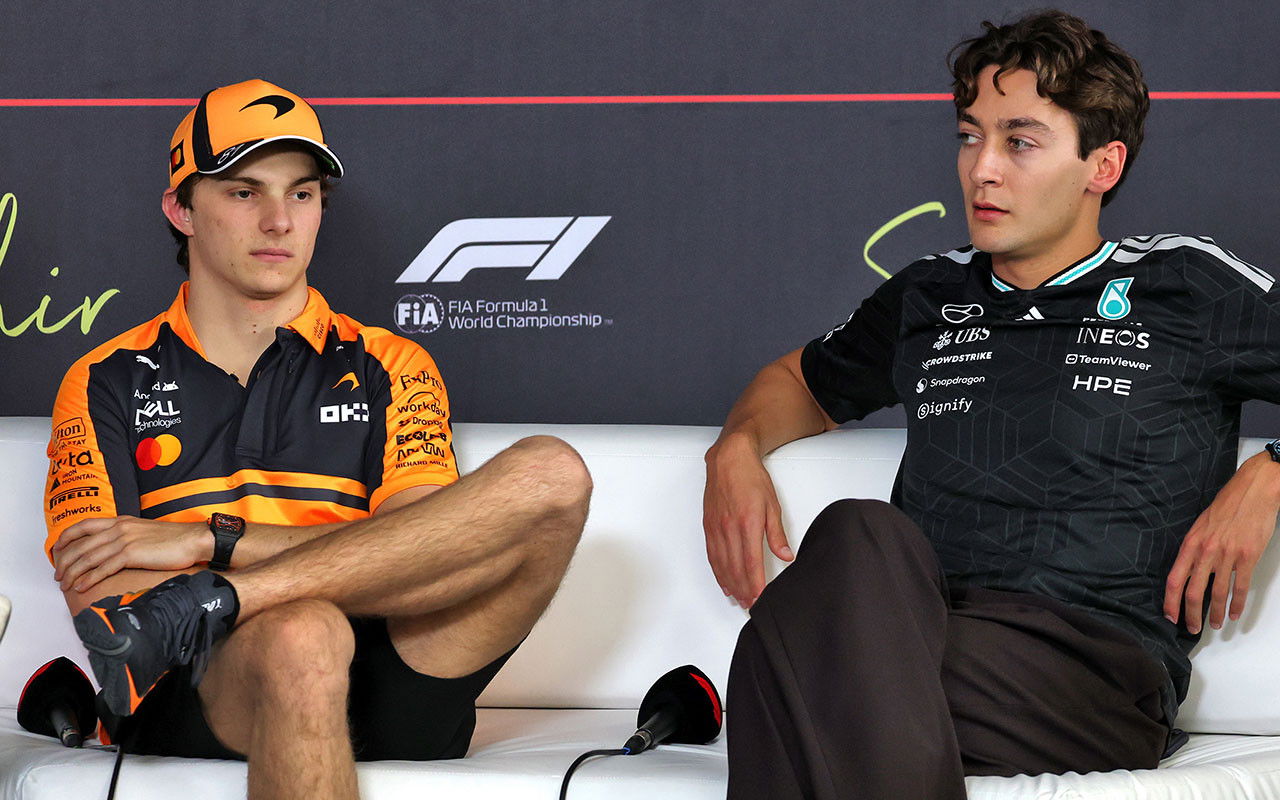
Oscar Piastri and George Russell. Image: XPB Images
Williams team principal James Vowles admitted earlier in the weekend that he was “caught off-guard” by what Mercedes was able to extract from its power unit.
F1 regulations state that power unit manufacturers must make the same hardware and software available to all teams.
However, the new power unit rules place a far greater reliance on electrical energy and therefore the management of harvesting and deployment.
Stella said McLaren will work with engineers from Mercedes’ High Performance Powertrain (HPP) division to try and get on top of the situation.
“Our understanding is that there is some low hanging fruit that we should be able to cash in,” he said.
“When it comes to, is this all that is available and that we are under-exploiting? I am not sure.
“I think we will need some more analysis to understand whether this is only about parameters that we can control, or driver’s input that we can control, or there are some other factors more systemic that not necessarily a customer team can control.”
McLaren’s promise to Piastri after Australian GP crash
That last point is particularly alarming for Piastri’s hopes of challenging for the world title this year.
Stella said it’s only natural that the works team would have more information about the engine during its initial development.
Mercedes is known to have run a different specification of the engine in its own cars during pre-season testing compared to that of its customers.
However, the situation of customer teams being behind the eight-ball is not something experienced in recent years.
“In testing, we were pretty much going on track, running the car, looking at the data, ‘Oh, that’s what we have. Good, now we react’. That’s not how you work in Formula 1,” Stella said.
“Formula 1, what happens on track, you simulate, you know what is happening, you know what you are programming, you know how the car is going to behave… so you also have your plans as to how you evolve it.
“I have to say, in the three years since we are a customer team, this is the first time that we feel we are on the back foot, even when it comes to the ability to predict how the car will behave and the ability to anticipate how we can improve the car.”
Stella, though, also stressed how much of an impact driver inputs are having when it comes to performance on track in this new era of F1 defined by the use of the battery.
“Everything is very sensitive,” he said.
“You may change the amount of lift and coast before corner one, and this affects the deployment through the entire lap, which is also what puts off the drivers when they have to optimise the battery.
“This is a fundamental way of driving Formula 1 now, you’re driving the battery. So when everything is so sensitive, the reliance on the tools is even more important.
“Last year, when everything was calmer in terms of power unit behaviour and electrical energy deployment, we had the tools, but we weren’t so reliant on the tools.
“But now it’s pretty much all about the tools, because changing a detail in one place affects something much bigger in a very far away place of the circuit, which is just difficult to predict.”
