
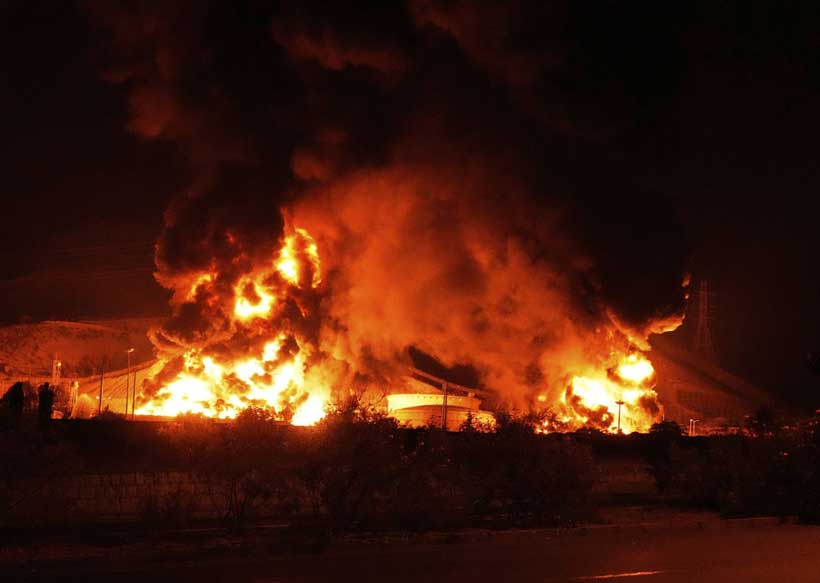
The surge in oil prices triggered by the war in Iran is increasingly becoming a major concern for global central banks, which are closely monitoring the potential economic and financial consequences of the shock.
More than a week of conflict in the Middle East has disrupted energy supply routes and pushed crude prices sharply higher, raising fresh fears about inflation. For policymakers already grappling with fragile economic conditions, the oil spike presents a complex policy dilemma.
Historically, oil shocks have posed a difficult challenge for central banks. Rising energy prices can drive inflation higher while simultaneously weakening consumer spending and business activity by raising costs. In such circumstances, policymakers face an uncomfortable choice: tighten policy to control inflation or ease financial conditions to support economic growth and employment.
The current situation could potentially produce both outcomes at once, creating a scenario where inflation rises even as economic demand weakens a combination that complicates monetary policy decisions.
Inflation Versus Economic Growth
Central banks traditionally respond to inflationary pressures by raising interest rates or maintaining tighter monetary policy. Some policymakers argue that responding quickly to inflation triggered by an oil shock can prevent inflation expectations from becoming entrenched and reduce longer-term economic damage.
Others, however, advocate “looking through” temporary energy-driven price spikes, arguing that aggressive tightening could unnecessarily damage economic growth. This approach gained prominence after the pandemic, when many central banks initially viewed inflation as temporary a judgment widely criticised in hindsight.
The decision facing policymakers now depends on several uncertainties, including how long the conflict lasts, how severely energy supplies are disrupted, and whether governments intervene with subsidies or price caps to protect consumers.
Given these unknowns, many central banks may prefer to adopt a cautious approach, waiting to see how markets and economic conditions evolve before making significant policy adjustments.
Financial Stability Risks Enter the Picture
Beyond inflation and growth concerns, central banks must also consider a third responsibility that has gained prominence since the global financial crisis: financial stability.
Senior policymakers worry that the oil shock could expose vulnerabilities that have been building in global financial markets for years. A large macroeconomic disturbance involving energy prices, inflation, interest rates and currency volatility could trigger a broader financial stress event.
Much of the concern centres on the growing role of “shadow banking” institutions, financial intermediaries operating outside traditional banking regulation. These entities have become increasingly important providers of credit to companies and governments.
One major area of focus is the rapid expansion of private credit funds, which now manage more than $3 trillion globally. These funds allow asset managers to lend directly to businesses, often outside the scrutiny of public markets or traditional banking standards.
Regulators worry that during a major shock, investors could rapidly withdraw funds from these vehicles, potentially creating liquidity problems for borrowers and spillover risks for banks that help finance or manage the funds.
Pressure in Bond and Repo Markets
Another major source of concern lies in government bond markets, where highly leveraged hedge funds have become increasingly active. Many of these funds use repurchase agreements, or “repo” markets, to borrow money and finance large trades involving government bonds.
These strategies often rely on exploiting small price differences between cash bonds and futures contracts, but they involve substantial leverage. While such activity can help smooth government financing, it can also create systemic vulnerabilities during periods of market stress.
The Financial Stability Board, which monitors risks to the global financial system for the G20, warned earlier this year that sudden deleveraging in repo markets could disrupt sovereign bond markets.
More than $16 trillion in repo transactions backed by government bonds were outstanding last year, with about 60% concentrated in the United States. A sudden withdrawal of leveraged investors could therefore have significant ripple effects across global financial markets.
New Fragilities: Stablecoins and Technology Stocks
Regulators are also monitoring emerging risks linked to digital finance. Stablecoins cryptocurrencies pegged to traditional currencies such as the U.S. dollar have grown rapidly and are increasingly investing reserves in government bonds.
With the stablecoin market now worth roughly $300 billion and expanding, any loss of confidence in these assets could trigger large-scale sales of the bonds that back them. Such an event could add stress to already volatile financial markets.
At the same time, some investors remain concerned about high valuations and heavy market concentration in the rapidly growing artificial intelligence sector, which could amplify market volatility during periods of economic uncertainty.
Analysis: Oil Shock Could Trigger Wider Financial Stress
The Iran war oil shock illustrates how geopolitical crises can interact with financial vulnerabilities to create broader economic risks.
Higher energy prices directly increase inflation and strain household finances. At the same time, they can force central banks to reconsider interest-rate policies, potentially leading to higher borrowing costs and greater volatility in financial markets.
Such conditions could expose weaknesses in highly leveraged sectors of the financial system, particularly in shadow banking, hedge funds and digital financial markets.
Although previous shocks including the economic turmoil following Russia’s invasion of Ukraine did not ultimately trigger a major financial crisis, policymakers remain cautious. The brief turmoil in the U.S. regional banking sector in 2023 demonstrated how quickly financial stress can emerge when economic conditions shift.
If oil prices remain elevated and central banks are forced to respond aggressively, the resulting tightening of financial conditions could amplify existing vulnerabilities across markets.
For now, the disturbances appear manageable. But the combination of geopolitical conflict, energy market disruption and financial fragility ensures that central banks will continue to watch the situation with increasing concern.
With information from Reuters.