

March 10, 2026 — 4:10pm
Save
You have reached your maximum number of saved items.
Remove items from your saved list to add more.
Save this article for later
Add articles to your saved list and come back to them anytime.
Got it
AAA
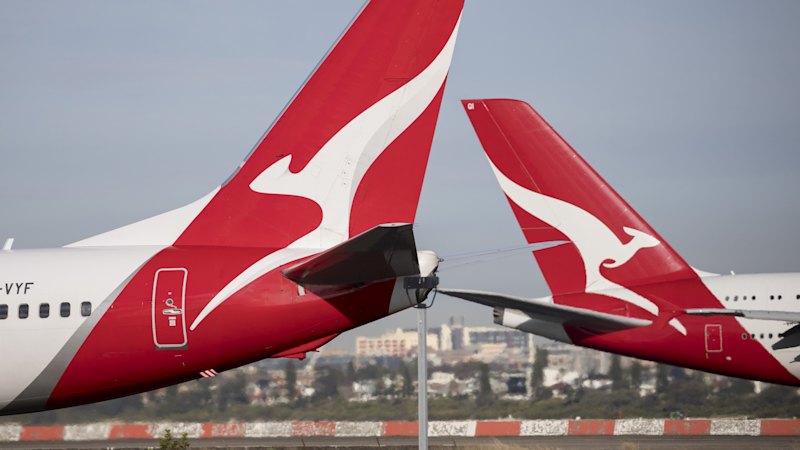
Qantas has announced it is increasing fares on international routes this week, blaming a surge in jet fuel costs caused by the war in the Middle East.
While stressing that the airline does not “operate any flights to the Middle East” and saying flights to and from Europe are continuing to operate as scheduled, the airline said “volatility in jet fuel prices” has nonetheless spurred the price increase.
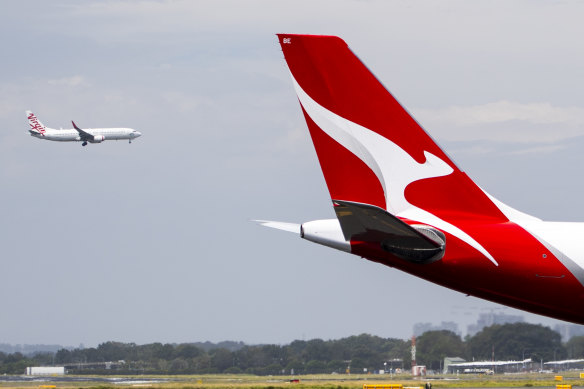 Qantas is hiking the cost of its fares.Jeremy Piper
“We are continuing to closely monitor the impact the conflict in the Middle East is having on the volatility in jet fuel prices, which have risen by up to 150 per cent over the past fortnight,” a spokesperson for the airline said.
“Given the high demand for international flights, particularly to Europe, lower fare options are selling more quickly than usual, and we encourage customers to book early to secure the best available deals.”
The increases will vary from route to route and are expected to be in the range of about 5 per cent.
The move by Qantas came after Air New Zealand said it had begun hiking ticket prices to offset rising fuel costs, as it shelved its profit forecasts, citing “unprecedented volatility” in fuel markets.
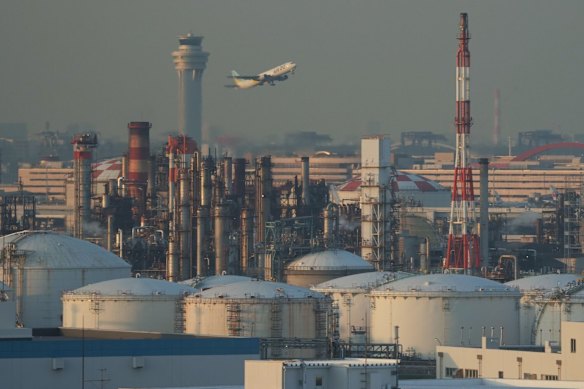 Oil storage tanks: Jet fuel prices are set to soar.Bloomberg
Since the conflict erupted – and Iran shut down fuel shipments in the crucial Strait of Hormuz, while countering US and Israeli missiles with its own drones – Brent crude, the international standard, has risen as high as $US119.50 a barrel before easing back below $US95 on Tuesday, after US President Donald Trump seemed to suggest the conflict could end “soon”.
The price for jet fuel, which has smaller inventories than regular petrol and needs specialised storage, has spiralled to between $US150 and $US200 a barrel. The International Air Transport Association’s jet fuel price monitor said the global average jet fuel price last week soared 58.4 per cent to $US157.41 from the week earlier.
While carriers such as Qantas and Virgin Australia have used fuel-hedging strategies to mitigate the impact, others face more direct exposure to the price shocks.
Related Article
Air New Zealand assumed average jet fuel prices of $US85 a barrel last month when it made its full-year profit forecast – close to their level before the United States and Israel attacked Iran.
“Due to this unprecedented volatility, the jet fuel price assumption underlying Air New Zealand’s February 26, 2026 guidance is no longer appropriate,” the airline said on Tuesday, warning that the war was “expected to meaningfully affect second-half earnings”.
“In response, the airline has implemented initial fare adjustments,” it said.
Air New Zealand cautioned that if the Iran war led to “continued elevated jet fuel costs”, the airline may need to push up prices even further and adjust its network and schedules.
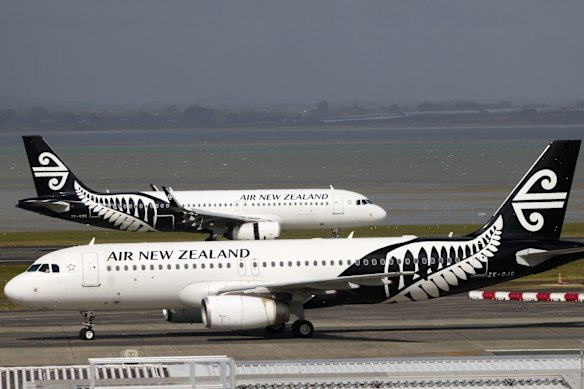 Air New Zealand has abandoned its profit forecasts due to spiralling fuel costs.Bloomberg
Both Qantas and Virgin Australia, in their half-year results last month, revealed they had hedged the majority of their fuel contracts in fiscal year 2026. Qantas said 81 per cent of its fuel was hedged for the second half of the financial year.
Flight Centre Travel Group said flights into Europe for that peak period have generally been booked and paid for well in advance.
“[Fuel cost pressures] will start to show up on unsold tickets alongside supply and demand for last-minute travel,” said James Kavanagh, who heads the leisure customer business at Flight Centre.
So far, pricing for flights into July and August is still very competitive, between $1648 and $2778 a round trip. The average fare price for a return ticket in July and August is about $2500 via an Asian hub en route to Europe, Flight Centre said.
Jet fuel prices are comprised of Brent crude and what’s known as the “crack spread”, or the difference between crude oil and the price of refined jet fuel.
Air New Zealand noted that since the conflict began, the crack spread had also been “particularly volatile”, widening from about $US22 a barrel before the war to as high as $US115 a barrel.
Since the onset of the conflict, prices for Brent crude and refinery margins “have risen significantly”, said Moody’s Ratings analyst Sean Williams.
Related Article
“Refining margins, which have been historically relatively stable, are not typically hedged by the airlines due to the cost involved.
“As a result, across the industry we expect that higher jet fuel prices will affect the profitability of ticketed flights in the near term, particularly as fares are paid in advance.”
Qantas does not hedge refinery margins.
Fuel prices are not the only driver of rising costs for airlines. Airspace closures in the Middle East – in addition to those in place over Ukraine and Russia – result in longer flight times.
Subhas Menon, head of the Association of Asia Pacific Airlines, said that “if crude is rising 20 per cent, jet fuel is rising several times more as it is even more scarce, adding significant cost to operations together with crew resources, which are stretched due to longer flying times when airspace is closed”.
Even if Australian – and Middle Eastern – airlines can contain fuel costs in the short term through hedging, the jet fuel price spike is already having an effect elsewhere.
In an interview, United chief executive Scott Kirby warned that spiralling jet fuel prices will have a “meaningful” impact on the carrier’s first-quarter results.
“If it continues, we’ll feel it in [the second quarter] also,” he told US broadcaster CNBC.
Kirby also said United was seeing an uptick in Australians and New Zealanders booking through the US to get to Europe, with more than 1000 “each day this week”.
“Last year, we booked less than one a day,” he said.
Ellis Taylor, the Asia editor of aviation analytics company Cirium, said the US transit trend was “certainly … interesting, especially when you consider that most US airports are tricky to do an international-to-international transfer, as you still have to clear immigration and customs before checking in for your next flight”.
The Market Recap newsletter is a wrap of the day’s trading. Get it each weekday afternoon.
Save
You have reached your maximum number of saved items.
Remove items from your saved list to add more.
 Chris Zappone is a senior reporter covering aviation and business. He is former digital foreign editor.Connect via X, Facebook or email.From our partners